He Sold For $8M and Regrets It, And The Reason Why Is Shocking
Thibault (Tibo) sold Tweet Hunter for $10M — but only walked away with $3M after taxes. Now his indie product portfolio does $1M/month. He explains why he regrets the sale, the psychology of earn-outs, and why he'll never sell a company again.
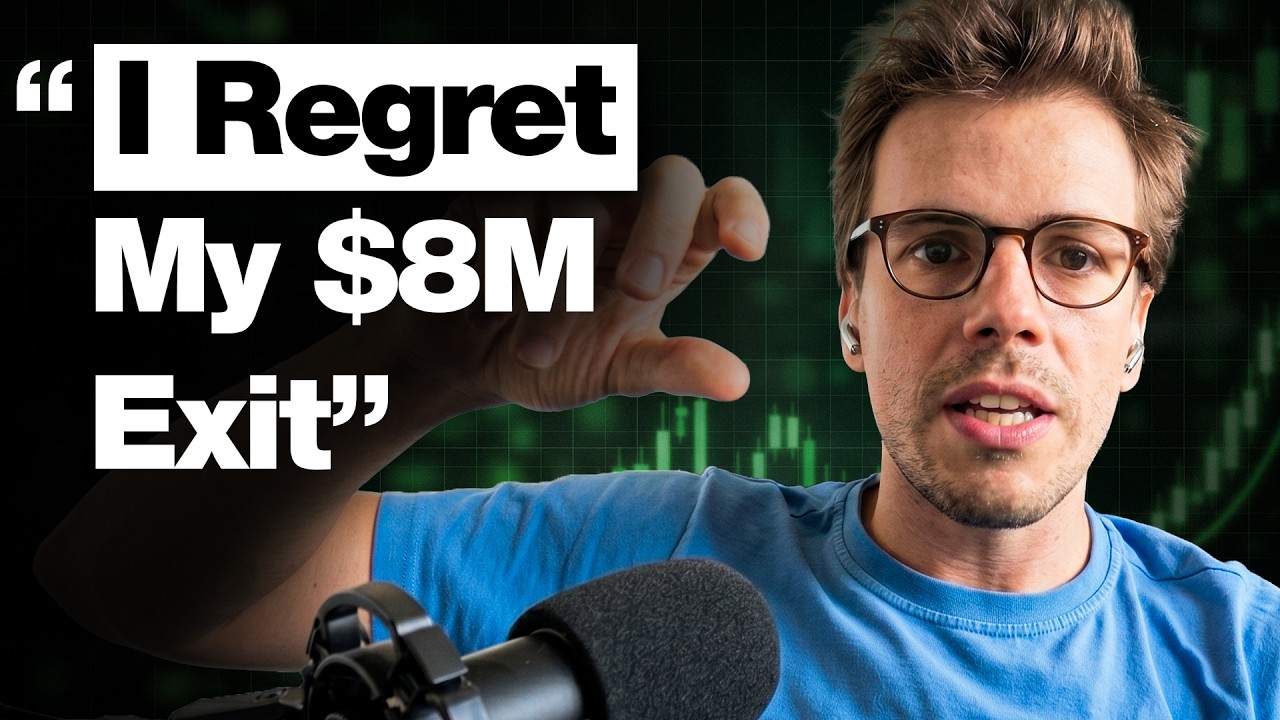
Thibault — known online as Tibo — is a French indie hacker who spent six years failing at startups before building Tweet Hunter during COVID lockdown. He and his co-founder scaled it alongside a sister product, Taplio, and eventually sold both to Lemlist for a headline price of $10 million. But the real number was more complicated: $2 million upfront, $8 million in earn-out tied to aggressive revenue milestones. After 18 months of grinding, he collected $8 million total and walked away with just under $3 million after French taxes. He says he regrets the sale entirely.
Like all Moneywise episodes, Thibault breaks down his net worth, income, portfolio, and monthly expenses — and then I, your humble host, pick it all apart.
We also went deep on: six years of failed startups before COVID forced a reset, the 25% profit-share deal with an influencer that supercharged Tweet Hunter's growth, the brutal psychology of an 18-month earn-out, why he says he'll never sell a company again, his current product portfolio doing $1M/month in revenue, keeping 50% of his net worth in cash, spending only $8K/month despite earning over $100K, and how he's raising his kids around wealth without ruining their drive.
Below you'll find my summary of the episode along with the entire transcript.
And by the way...this podcast, the concept of it came from Hampton. Hampton is a private, highly vetted community for high net worth founders hosted by Daniel Berk. Members range from companies doing 3-5 million in revenue all the way up to hundreds of millions. The reason we started this podcast is because there are amazing conversations about money and growing companies that typically happen only behind closed doors, and we thought it would be awesome to share all of this information. If you're a CEO, founder, or business owner, check this out. New Moneywise episodes come out weekly.
Listen to this episode on:
Now, below are the notes and the full transcript.
Thibault's Numbers
- Exit price (headline): $10M for Tweet Hunter + Taplio ($2M upfront, $8M earn-out)
- Total collected: $8M ($2M upfront + $6M from earn-out milestones)
- Personal take after co-founder split, influencer share, and French taxes: ~$3M
- Current portfolio revenue: $1M/month across Revvit.ai, Outrank.so, SuperX, Feather, Post Syncer, and 2 stealth products
- Personal profit share: $100K+/month
- Net worth estimate: $5–10M (excluding active business valuations)
- Investment allocation: ~50% cash (2% EUR / 4% USD accounts), ~50% S&P 500 + some AI stocks
- Monthly personal spend: ~$6–8K (rent $2K, food $2K, tech gadgets ~$500, misc)
- Big purchase: Dream chalet in the French Alps (~$2M total: $1M purchase + $1M renovation)
- Financial advisor: None he fully trusts — manages everything himself
Six Years of Failure, Then COVID Changed Everything
Thibault spent six years trying to build startups the traditional way and failed at all of them. He eventually took a CTO role at a scale-up for stability — his first child was on the way. But when his daughter got critically ill at two months old and spent a month in the hospital, he and his wife both quit their jobs and planned to travel the world.
The timing was terrible. It was early 2020. COVID locked them inside a small Parisian apartment with a five-month-old. With no job and no ability to leave, Thibault went back to coding alone at home. He adopted the indie hacker approach: build one product per week until something sticks. He failed at ten products before the eleventh — Tweet Hunter — took off from day one.
"I did all the mistakes that you can possibly think of. During six years, I worked on two failed products. Didn't really go well. I had some very down moments. And then because of COVID and personal issues, I got back to startup-ing in a new way — the indie hacker way, where you just hack stuff yourself."
The 25% Influencer Deal That Changed the Trajectory
Early on, Thibault and his co-founder made what sounds like a crazy decision: they gave a prominent Twitter influencer 25% of profits and 25% of exit proceeds for Tweet Hunter in exchange for distribution. The influencer organized launches, ran affiliate campaigns, and built the marketing engine. In three weeks, revenue jumped from $3K/month to $18K/month.
The strategy worked so well they replicated it with Taplio, their LinkedIn product. Despite giving away a large share of the upside, Thibault says it's the deal he regrets the least — because without that distribution partner, Tweet Hunter may never have broken through.
"Even if it sounds crazy, I hardly imagine us putting up the Tweet Hunter product and making it so trendy in 2021 without this guy. We were basically like nobody at that time."
The $10M Exit That Was Really $8M (and Felt Like Less)
The acquisition by Lemlist was structured as $2M upfront plus $8M in earn-out milestones. To collect the full amount, Thibault had to scale Tweet Hunter and Taplio from $1.5M ARR to $10M ARR. They made it to $8M ARR — collecting $6M of the $8M earn-out — for a total of $8M. After a 50/50 split with his co-founder, the influencer's share, and French taxes, Thibault personally walked away with just under $3M.
The 18-month earn-out period was psychologically brutal. Instead of celebrating milestones, every month felt like the potential loss of millions. And six months after the sale, Elon Musk changed Twitter's API policies in a way that could have killed Tweet Hunter entirely. They found a workaround, but the close call reframed the whole decision.
"It was a bad decision financially because we ended up getting eight million for an eight million annual revenue product. And at the same time, I went through a very unpleasant time during the acquisition."
The "Frozen State" and Why He'll Never Sell Again
After the earn-out, Thibault experienced what he calls the "frozen state" — a psychological paralysis where everyone sees you as a successful exited founder, and shipping anything new feels like risking that perception. He talked to Peter Levels about it before selling and was warned: getting a huge lump sum of money is one of the most unhealthy things that can happen to an individual, because you don't have time to adapt to the new standard.
This is why Thibault says he'll never sell again. It's not about the money — it's about protecting his ability to keep building without fear.
"I basically do not want to fall into a frozen state where I would be afraid about shipping anything new."
$1M/Month: The Portfolio That Outgrew the Exit
Thibault's current portfolio of SaaS products just crossed $1M/month in revenue. The biggest product, Revvit.ai, does about $600K/month on its own. Ironically, both his most successful product (Revvit) and his least successful (Feather) were acquisitions — he saw something on X, reached out to the founder, and bought it.
He now operates as the "influencer and distribution guy" working with developer co-founders on each product — the exact inverse of his Tweet Hunter days. He's looking to acquire 2-3 more companies and is exploring a creative investment model where influential founders get small equity stakes in exchange for distribution support.
"It's crazy to me that my most successful product right now and my least successful product come pretty much from the same story. I saw something on X, reached out to the founder, and acquired them."
$8K/Month in France with $100K+ Coming In
Despite taking home over $100K/month in profit, Thibault spends about $6-8K/month. Rent is $2K in rural Brittany. Food is $2K (high quality). Tech gadgets run about $500. There's no expensive private school nearby, and no major services beyond house cleaning. He's building a dream chalet in the French Alps for about $2M total, but he's funding it entirely from monthly cash flow — refusing to spend more than he earns in any given month.
His investment strategy is deliberately boring: 50% in cash at low interest rates, 50% in S&P 500 with some extra AI stock exposure. He's been waiting for a dip for two years and acknowledges it's probably been a bad call. He has no financial advisor he trusts — everyone he's met just wants him to wire money into their recommended investments.
"I optimize my life and my product for flexibility and freedom. Having no loan, having money in boring and safe investments — that's what's going to generate the least mental load."
Raising Kids Around Wealth Without Ruining Them
Thibault has two young kids and wrestles with the same question many wealthy founders face: how do you raise driven children when they don't need to struggle? His answer is simple: focus on movement. He doesn't care what his kids do — sports, crafting, building, even video games — as long as they're passionate and active. What he won't tolerate is passive consumption: endless TikTok or doing nothing.
He also believes deeply in making his children feel unconditionally safe. Looking at many successful tech founders, he sees a pattern: they had safe childhoods that gave them the confidence to take risks later. That's what he's trying to replicate.
"The only thing that matters is movement. You need to do things. You need to work or have strong hobbies. You need to spend time building things or crafting things. But what I would not stand is having my kids scrolling TikTok all day."
Other Key Quotes
- "We would go from 1.5 million per year to 8 million in just 18 months, but it happened."
- "It puts you in this mindset where if you do not work enough, if you do not achieve your goals, you're gonna lose something and you're gonna be like a loser."
- "The only way for us to sell for a 10x multiplier was with this very risky deal — small upfront money and big upside based on the earn-out."
- "If I don't have work, what would I do? I have no answer to that. So the best answer is just that I have no idea what to do except that."
- "They called me Grandpa Thibault. I didn't like it."
- "It's very important that kids feel safe. If you look at many successful tech entrepreneurs, they had unconditional love. That's super important if you want your kids to take risk."
Links You Might Like
Full Transcript
Daniel Berk: Hey guys. I'm Daniel Berk, the host of Moneywise. We want to be a top 10 podcast, and the only way that happens is if we're making the right content for you. The problem is, I know nothing about who's listening. You could be a billionaire. You could be my mom. In fact, my mom's probably listening, so hey, Mom. We did make a very super short survey to solve this problem. It literally takes 30 seconds, so please, if you have a second, go to joinhampton.com/moneywisefeedback. That's joinhampton.com/moneywisefeedback. This is super, super helpful for us to make sure we're making the right content for the right listeners, and I super appreciate you taking 30 seconds to go answer. Joinhampton.com/moneywisefeedback. Okay. Show starts now.
Thibault: We would go from 1.5 million per year to 8 million in just 18 month, but it happened.
Daniel Berk: Thibaud spent six years failing at startups. Then, during COVID lockdown, he started building software products by himself. One of them was Tweet Hunter. It took off fast, and within a year and a half, he and his co-founder had scaled it. They eventually sold it to a company called Lemlist for a headline price of $10 million.
Thibault: It was bad decision financially because we ended up getting 8 million for an 8 million annual revenue product.
Daniel Berk: Thibaud's story is one of the more unusual ones we've had on the show because the exit didn't really end the story. It just complicated it.
Thibault: It, it puts you in this, in this mindset where if you do not work enough, if you do not achieve your goals, you're gonna lose something and you're gonna be like a loser.
Daniel Berk: Now he's building a product portfolio that's generating more revenue than the exit itself.
Thibault: Yeah. I, I basically do not want to fall into a frozen state where I would be afraid about, uh, shipping anything new.
Daniel Berk: We get into exactly what that looks like, what he does day to day, how he's spending his money, how he thinks about deploying the money he's generating, uh, personal spending habits.
Thibault: A lot more liquid, in fact, than what a lot of people would think is, is worth doing.
Daniel Berk: My Moneywise guest today is Thibaud. He's a French indie hacker and software entrepreneur, and he's one of the more unique financial stories we've had on Moneywise. Thibaud spent six years failing at startups. Then, during COVID lockdown, he started building software products by himself. One of them was Tweet Hunter, which was a tool for growing an audience on X. It took off fast, and within a year and a half, he and his co-founder had scaled it alongside a second product called Taplio. They eventually sold it to a company called Lemlist for a headline price of $10 million. $2 million was up front, and $8 million was tied to an earn-out. He ended up collecting 8 million total, and after taxes in France, he walked away with just under 3 million personally. So in part one, we really talk about how the money got made and why the deal was actually a bit more complicated with the earn-out period and some of the different revenue milestones he was assigned. Then, what happened after was, in a way, a lot more interesting. Thibaud kept building, and today his portfolio of software products is doing over a million dollars a month in revenue. We get into exactly what he's building, what he keeps, what he's acquiring, and how he thinks about deploying the money he's generating. His personal spend is around only $8,000 a month, even though he generates a personal income of more than 10 times that. He keeps roughly 50% of his net, net worth in cash, and he has no financial advisor he fully trusts. Almost everything investable is in index funds. It's a very specific and very deliberate setup, and he explains exactly why. And then in part three of the conversation today, I keep coming back to Thibaud has publicly said he never wants to sell a company again. We get into why, and it's really not just about money, but also about all the stress that that sale came with.
Daniel Berk: It's about what selling did to him psychologically, what he calls the frozen state, and how the pressure of the earn-out changed the way he thinks about his own work. This is a super honest episode, and the way that Thibaud kind of divulges the way he thinks about money, sales, and building companies is really, really impressive. I hope you enjoy. Again, this is Thibaud, and I'm Daniel Burke on Moneywise. Thibaud, thanks for joining us today on Moneywise. Appreciate you being here. You look great. Optimist. I love the shirt. That's, uh, for anyone listening- ... he is wearing a shirt that says "optimist," which is great. Thanks for joining us today, Thibaud. Like, I, I, I guess that's the mindset.
Thibault: Thank you very much for having me.
Daniel Berk: Of course. I wanna start with the history of who you are. Tell me kind of what brings you to the episode today. Tell me about yourself, and tell me what, you know, you have kind of done in your life that's led to this moment.
Thibault: Well, I think I did, uh, six years, uh, startup-ing. I think in a, in a very bad way. Like, I did all the mistakes that you can possibly think of. During six years, I worked on, uh, two failed products. Didn't really go well. I had, like, some very down moments. And then I, I... because of COVID and because of, like, personal issues, I got back to startup-ing, but in a kind of new way, uh, more like the indie hacker way, where you just hack stuff yourself and build, build yourself. And it worked very well for me. Like, in 2021, I got into this challenge where I was building one new product every week until something stick. And, uh, I think I, I failed at 10 products, and the eighth one was Tweet Hunter, which was, like, super successful from the very start. That was the, like, the real beginning for me. Like, Tweet Hunter led to Taplio. Both, both tool, Tweet Hunter and Taplio, got acquired by a company called, uh, Lemlist, uh, which is still su- super successful today. And, um, I went through a hard transition period with them. We can, we can talk more about that. I... It, it was really not a pleasant experience. Um-
Daniel Berk: Mm-hmm
Thibault: ... but I was super happy to get back into building after that, and I'm now building this, uh, amazing and small portfolio of SaaS products. I love what I'm doing right now and happy talk, talk about that.
Daniel Berk: The Moneywise podcast lives inside Hampton, which is a private community for founders and CEOs. The people you're gonna hear on Moneywise are all typically Hampton members. These are conversations that were already happening inside that room, and I just get to bring them out into the open.Thibault is exactly the kind of person that Hampton was originally built for. He built something, he sold it, and then he went through the full emotional aftermath of that, and then went back and built something even bigger. If that sounds familiar to you, you're probably in the right place. If you're a founder doing at least three million in revenue, check out Hampton at joinhampton.com. Yeah. So let's talk about Tweet Hunter for a second. You sold to Taplio, and I've seen a bunch of stories about it. You're, you know, fairly vocal about it on Twitter. The headline shows, like, a $10 million exit, but reading your own account, it looks like the actual deal was somewhere around two million upfront, and then eight million based on hitting milestones. Tell me more about that sale and the payment structure, and then, you know, how it felt when the wire actually hit your account. Like, what, what did it feel like to get millions of dollars all at once when you sold Tweet Hunter to Taplio? Before Thibault answers that, I wanna make sure we're clear about the actual deal structure because it's important to really get how this earn-out looked like. The headline number on Thibault's acquisition was $10 million, but only $2 million came upfront.
Daniel Berk: The other eight was an earn-out, meaning it was contingent on hitting very specific, and what we'll see, stressful revenue milestones after the sale. You keep building the product, and you hit targets, and you get paid, but if you miss them, you actually end up leaving a lot of money on the table. Thibault ended up collecting eight million total, but as you're about to hear, the path to that number was a lot more complicated than the headlines suggest.
Thibault: So it was a super risky acquisition, I guess, for, for Lemlist. Uh, we were pretty much a little bit more than a year old product, uh, well, actually two products, and the platform dependency was incredible. Like, it was, uh, it-- I, I don't know if you remember, but that was pretty much the time where Elon Musk bought Twitter, and so n-nobody around there was, uh, aware about what's, what we gonna do. And our second product, Taplio, was not really, uh, LinkedIn compliance. Um, so what, what happened there is, um, Guillaume, this guy from Lemlist, uh, by the way, the, the crazy story that, uh, this guy was in middle school with me. Uh, so-
Daniel Berk: Wow
Thibault: ... we just, uh, we, we knew each other but, like, totally lost track about, uh, each other after that. Uh-
Daniel Berk: Serendipitous
Thibault: ... but so we talked, uh, and that was Guillaume who mentioned this, this idea that the only way for us to sell for a ten times multiplier, like ten times on annual revenue, was with this very risky, uh, deal with small upfront money and, uh, and big upside with, uh, ba- based on the earn-out. Okay. And that was exactly the deal that you mentioned, like two million upfront and eight million in additional, uh, earn-out based on, uh, strict and very, um, very high, uh, revenue milestones. Basically, we had to-
Daniel Berk: Did you end up getting the full eight million with that earn-out?
Thibault: Not the full one. So the-
Daniel Berk: No
Thibault: ... we, we-- Total, we got eight million. So we got the two at the, the, the two upfront and then six additional based on the earn-out.
Daniel Berk: Okay.
Thibault: Uh, to get that, we, we went from one point five in, one point five million in annual revenue to eight million in annual revenue, and we-
Daniel Berk: Okay
Thibault: ... we had to go into ten to get the full package.
Daniel Berk: And h- what was the actual split with that between you and your co-founder? H-how much did you personally receive, and what were the mechanics of the deal with the upfront, the earn-out, and the actual taxes you had to pay? Pre and post-tax earn-out, I know in France the taxes are a bit different. Walk me through what that-
Thibault: ... actual earn-out looks like. Uh, it was a basic fifty-fifty with my co-founder, with one slight, um, slight, uh, uh, thing, like, uh, uh, which actually was quite big. But, like, very early on with Tweet Hunter, and by, by the way, it was a strategy that was so successful that we replicated that on Taplio.
Daniel Berk: Mm-hmm.
Thibault: Very early, we decided to partner with a very famous Twitter influencer. Uh, and we, we kind of gave him twenty-five percent of equity, which was not actually equity. Like, it was more like a distribution right, dis- distribution-
Daniel Berk: Okay
Thibault: ... share, uh, up to twenty-five percent of the product, but also, um, an, a percentage that would apply on the exit of the product. And so-
Daniel Berk: So the twenty-five percent was paid out in the revenue, the recurring revenue, or was it all deferred?
Thibault: On the profits.
Daniel Berk: It was the profit, so it was a twenty-five percent profit share?
Thibault: Yeah, it was twenty-five percent profit share and at twenty-five percent of the initial upfront amounts of the Tweet Hunter sale.
Daniel Berk: Of that two million that you received?
Thibault: Yeah. Yeah.
Daniel Berk: Okay.
Thibault: Of-- Which a little bit more complicated than that, but it was the part of the two million that was attributed to Tweet Hunter because we were selling-
Daniel Berk: Yeah
Thibault: ... two product, like Tweet Hunter and Taplio.
Daniel Berk: Okay. Understood. Would you do that again? That sounds crazy to me that you gave away-
Thibault: Yeah
Daniel Berk: ... a quarter of your company effectively at the very beginning. I mean, did you-- So I guess-
Thibault: Which is insane. I'm, I'm-- Yeah.
Daniel Berk: It's-- Did you-- There's two ways I think of this. Did you, one, just not think you would sell for millions of dollars? I think that's one reason I would give away a quarter of the company. Or two, was that the only way to increase your viral coefficients that early on? Did you think there was really no other way to, to get the word out about this product idea?
Thibault: So there are many deals that we, we made, like including the acquisition deal, and I think the deal that I regret the least is this one.
Daniel Berk: Uh- Okay ...
Thibault: because even if it, it sounds crazy, I, I hardly imagine us putting up the Tweet Hunter product and make it m-make it, like, so trendy as it was in twenty twenty-one, uh, without this guy.
Daniel Berk: Yeah.
Thibault: And so-What, what happened in our mind at, at that time is that we, we were basically like nobody. Uh, ri-right now it feel very differently because, like, I have this track record, I have my small, uh, audience on, on X.
Daniel Berk: Mm-hmm.
Thibault: And so I have, I have a voice and, uh, I'm comfortable talking about a new product and get feedback and get, like, th-these, this first initial push that, that make it work.
Daniel Berk: Yeah.
Thibault: But at that time it felt like we needed that. And so this guy was promoting through Twitter courses this exact methodology that we were, uh, pushing with Tweet Hunter. Like, it, it, it was such a perfect alignment in, in how we worked. And by working with him, just by launching on Twitter, we went from 3K in monthly revenue to 18K in three weeks. And, and then-
Daniel Berk: Oh, wow. And you attribute most of that to his posting and-
Thibault: Yeah ... okay, marketing. Totally. Like, n-not, not just posting, but, like, having him organizing the launch, uh, thinking of the launch mechanism and executing the launch and doing, like, hiring, uh, affiliate people and just building this, this, uh, launch and distribution system. It, it worked very well, and it didn't stop there. Like, he, he was running campaigns after campaigns. It worked so well that despite the product being successful and despite seeing all the money coming from us to, to this guy, we, we looked to replicate this strategy on our LinkedIn products, Taplio.
Daniel Berk: Yeah.
Thibault: And we did that-- we did that.
Daniel Berk: Okay. That's, uh, that's crazy. I mean, I, I, I, I want to circle back to something you said. This is the acquisition you regret the least. Um, but I actually first I want to ask you about more of the, the history of kind of what led you to Tweet Hunter. I've, I've-- in my research, I, you know, came across that you were a nu- a CTO at a number of companies, and then COVID happened, of course. And so when was the moment that you decided, "I need to actually build something for myself," and walk me through that journey.
Thibault: So it w- It's, it's kind of a crazy story, but, um, it, it's crazy how life works sometimes because, uh, so I, I was a CTO at this big s-scale-up company because, uh, because, like, I was, I was sick of, uh, startuping. Like, I had some, th-those periods that I talked about. And so I wanted to just, uh, get a, a stable revenue because my first kid was coming.
Daniel Berk: Oh.
Thibault: And crazy thing, when my first kid came, uh, she got sick, like super sick at two-month-old. She almost died.
Daniel Berk: Mm.
Thibault: Uh, we spent a month in the hospital, and it just-- it was like, uh, we were in shock, I guess. And so both my wife and I quit our job, uh, to, to just, like, start traveling the world. Like, the idea was just-
Daniel Berk: Wow ... take a year off to travel.
Thibault: But that was early twenty twenty. And so COVID, COVID happened.
Daniel Berk: Bad timing.
Thibault: Yeah, exactly. Like, worst timing ever because in-- it was March twenty twenty, no job, a kid, like a, a five, a five-month-old kid at home. Uh, not possible to go out in Paris, like small apartments, completely locked. That was the worst, worst time, worst setup, I guess.
Daniel Berk: Wow.
Thibault: And so I got, I got back to coding, like at home alone, and, and it worked.
Daniel Berk: That's great. I'd love to walk through all the numbers specifically.
Daniel Berk: So you, you sold for two million upfront with an eight million potential earn-out and ultimately got six of that. You've shared it across your co-founder, uh, someone you gave twenty-five percent to upfront. So where does that bring your current net worth to today?
Thibault: So from that acquisition, I got about four million, uh, which after tax in France is a little bit less than three million. Uh, and that's-- that will be like a large portion of my net worth. What's, what's, uh, a bit crazy right now is my most successful, like, my, my most successful product is actually not Tweet Hunter and Taplio. My most successful product are, uh, Revit.ai and, uh, Outrank.so, which are like my current focus. And they are working so well that my, my portfolio of product just hits a, a million per month. Uh, and just-
Daniel Berk: Is that revenue or profit?
Thibault: It's, it's revenue. Okay. It's a million per month in revenue. And profits is, is very comfortable because, like, the margin on those products is pretty high. Um, and so it's very hard to say because I do not count the active companies I-- as my net worth because, like, I don't have real numbers for them, but it's gonna be between five and ten million, I guess.
Daniel Berk: Okay. And so it sounds like, uh, would you say three to five of that is liquid, or is this mostly, uh, in investments? And I would love to understand what those investments look like. How do you think about investing that money?
Thibault: Pretty much, pretty much all of that is, is liquid, I guess. Uh, that's, that would be my-
Daniel Berk: Okay. Walk me through that ...
Thibault: my liquid net worth. Cash liquid.
Daniel Berk: Yeah. So five to ten liquid net worth, and what does liquid mean in this sense? Is it all in a cash account, or do you have it, you know, in savings or investments? What does that, what does that mean, liquid?
Thibault: So, um, okay. So I have my, um... I'm actually building my, uh, dream chalet in the, in the French Alps right now. And so my, my, uh, I'm, I'm just moving, uh, some of my new money from my, uh, assets and portfolio to this dream chalet that is, is gonna be very costly. Uh, but if you ex-exclude that, uh, I guess I have about fifty percent of my money as cash just sitting there doing nothing at a, like a, a boring two percents, uh, two percent-
Daniel Berk: Really?
Thibault: Yeah. Uh, it-- I'm, I'm, I'm very, I'm very like, um, scared, I guess.
Daniel Berk: About what's happening right now, like the, the stock market-
Thibault: Yeah ... is super inflated, uh, right now. Uh, but still, like, the fifty percent, uh, remaining of my, uh, net worth is in, in the stock market s- which is basically for me, mostly S&P five hundred.
Daniel Berk: Okay. And a little bit more exposure to the big AI companies like, uh, Google, Tesla, uh, and the others.
Thibault: Sure.
Daniel Berk: Okay. Fifty percent of liquid and a two percent cash account, a lot of people would say even with some of the uncertainty that that's crazy. Uh, walk me through why-
Thibault: Yeah, it's-
Daniel Berk: ... you're doing that even as opposed to like a, a CD or something closer to four or five percent.
Thibault: So I'm saying two percent because this is exactly, uh, what I get in, in, uh, in euro, like in a-
Daniel Berk: I see ...
Thibault: low risk account in euro. But, uh, you're right, like half of that is actually USD for me.
Daniel Berk: Okay.
Thibault: And it's more than, it is more like four percent in, uh, USD bound safe, safe accounts in the US. Fair enough. Um, but so to, to come back to like, uh, having only fifty percent of my net worth as, um, uh, stocks, it, it's, it's actually quite a bad decision because if you look at, it's, it's been two years that it's, uh, pretty much like this for me, and it's been two years that I was expecting some kind of dips in the stock market, but it's not happening and so it's, it's gonna be-
Daniel Berk: Yeah ...
Thibault: that story where you, you wait for the dip and when, when you are just sick of waiting, you're gonna put all the, your money there and then the dip happens, you know?
Daniel Berk: Yeah. Yeah, I always tell people the dip's gonna happen the second I buy the stock, so just follow-
Thibault: Exactly ...
Daniel Berk: my stock advice because the moment I buy, everything's going to the, to the bottom. Um, so you, you, you said a million across your portfolio, so that includes Revvit.ai, Outrank, right? You have SuperX. Is that one of your, uh, companies in your portfolio? Feather SO. Yeah. I know Post Syncer. So across all of those, you're doing a million a month right now in revenue.
Thibault: Yep.
Daniel Berk: What do you take from that?
Thibault: The biggest one is-- Um, so I ha- have actually an interesting take because it's, um, I'm, I'm talking a lot, like I'm, I'm thinking about, a lot about like how to go further, you know? Like, uh, it's, it's one, it's one million per, per, uh, per month and, uh, the, the crazy thing is when you try to replicate the successful strategy, you think about the origin of each of the products. Yeah. And so I have, I have Revvit at the very top. Uh, like it's, it's doing, uh, something like, uh, six hundred K per month. And I have Feather at the very bottom. And both of those products, I have acquired them.
Daniel Berk: Uh- For sure ... all the others I have built or partner on that.
Thibault: So it's, it's crazy to me that my most successful product right now and my least successful product come pretty much from the same, uh, story. I, I saw something crazy on, on X. Uh, I reached out to the founder and, and I acquired them.
Daniel Berk: Wow. Insane.
Thibault: Yeah, that is insane. And so I'm, I'm curious what, at the heart of you building now, a, a million a month, I, I mean, I think there's two sides to the coin. Some people receive a life-changing exit of, you know, five to ten million dollars. Of course, the earn out and all the difference and nuances there, but I mean, that's a life-changing amount of money for a lot of people. And so to then go build a portfolio where you're still generating a million dollars a month, I think some people will look at that and like, "Well, why?" Was it not enough money that you sold for or do you just prefer to have that stable income still even post-exit life?
Thibault: So I, I'm, I'm thinking a lot about this question that like I, I don't have a real answer for the why. Uh, I, I more, I more like have an answer about, uh, why would I do if I just not do that, you know? Uh, so I have, I have kids, uh, and I, I don't really feel like a absent father. I'm, I'm here, like I'm taking care of the kids every morning. I'm taking care of the kids after school. Uh, I'm, I'm lucky now that I can just stop working at 5:00 or 6:00-ish and, uh, have fun with them. Uh, I have hobbies, like I'm, I'm just, uh, learning about h- how to fly a plane, which feel is insane. I'm almost got, al- almost about to get my, my, uh, flying, uh, license.
Daniel Berk: That's awesome. And so- Very cool. Yeah, yeah, I love that. It's, it's so fun.
Thibault: But so I w- I would really be like, if I don't have this, if I don't have work, if I don't have this space where I'm, um, decent, good at, uh, like what would I do? And have like, I have no answer to that. So I think the, the best answer is just that I have no idea what to do except that.
Daniel Berk: Yeah. Uh, that makes sense to me. That makes sense to you. What Thibault just said, that he keeps building because he genuinely doesn't know what else he'd do, that's something I hear over and over again from founders who come on this show, and it's something that opens up constantly inside of the Hampton community. There's this assumption that once you hit a certain number, everything clicks and you have to figure out what you actually want. But most of the people I've talked to say the opposite. The money clarifies some things but completely scrambles others. Hampton's full of founders who are somewhere in the middle, not really done building, not sure what's next, trying to figure out around other people who actually get it. Go to joinhampton.com if that's you. Yeah, it does. I think, uh, I'm in a similar stage of life. I have two kids at home.
Daniel Berk: Uh, I still work, as this podcast is proof of, and you know, I, I often wonder, man, if I just, if I had $100 million, I could just stop. But the question then becomes, well, what would I do? I mean, I mean, what really would I do? Maybe three to six to twelve months I would have fun and vacation and travel the world, but eventually, you know, I'm still young. I have a lot of life left in me. I feel like there's, there's things to be built. So I wrestle-
Thibault: Yeah
Daniel Berk: ... with the same question that you're wrestling with.
Thibault: What, what we do, and I think it's, it's, uh, more the case for you, it's kind of an excuse to meet incredibly, um, successful and interesting people. Uh-
Daniel Berk: Yeah
Thibault: ... like you, you, you get, you get to talk to, uh, the, the best people in, in your space. And so it's, it's such like a interesting, deep, uh, conversation that make you think about the future, and that's, that's totally what I am into.
Daniel Berk: Yeah. Me too. I wanna ask you about something you've posted before. You've talked a lot about the Tweet Hunter, Taplio payout and, and earn-out, and the actual exit, and you've said recently that getting a ton of money upfront feels kind of unhealthy, is the word you used, compared to earning it steadily. But now that you're making over a million dollars a month, I mean, that's not really slow. That is steady, of course, but that's a lot of money every month, and I'm curious if at some point, someone offered you $30 or $50 million for this portfolio, are you going to sell that, or are you gonna hold the line with this philosophy you have about really never selling another company? I know you've mentioned you don't want to sell it again. You've had some issues publicly about your past sales. So walk me through, like, is that, is that a hard line, or is enough money going to convince you to sell anyways?
Thibault: It's a very good question. I it's hard, hard to answer. E- every time I get asked this question, I remember this conversation that I had with, uh, Peter Levels, like, one, one of the top voice-
Daniel Berk: Yeah
Thibault: ... on, on X, and it was when we were about to sell. I was living in Thailand at the, at the time. Uh, we met a few times with Peter Levels, and we were having this conversation on, on Telegram, and he was really telling me that there was, there was just-- It, it's really, like, the most unhealthy thing that you can-- that can happens to a, an individual because people, and we, we can, we kinda see this with AI right now. People, like, need time to adapt to new standards, and when you sell your company, you get a huge bunch of money at once, and you have no idea what to do with this. Like, we-- you didn't properly get the time to accommodate to, to, to that, and so you, you take bad decision. Uh, you-- Like, as an individual, you do not identify as the same person as before, uh, and you get, like, get very fast go crazy. And the, the, the thing that happened to me is when I-- So after this earn-out period, like, when, when, when I was back, back at building, uh, everyone around you identify you as a successful person, and so you get completely freeze when it, when it comes to shipping new product. It's, it's like you do not want to change the current perception of people that are seeing you as a successful person. And I, I talked about that with many other founders that, that sold their company. It's very hard for them to ship the next product after selling something because you do not want to change then that, um, that perception of, of people having about you. And so this is why that I think I would not sell again.
Daniel Berk: Very interesting. So it's, it's, it's a perception issue then. It's I, I don't want the perception of the success and the exit that I had to be changed by a potentially unsuccessful exit. Is that what you're-- Is that what you're saying?
Thibault: Yeah. I, I basically do not want to fall into a s- uh, like, a, a frozen state where I would be afraid about, uh, shipping anything new.
Daniel Berk: This frozen state that Thibault just described is something that most founders who come on this show share some version of in their exit or in their building stage. The exit doesn't really make you more confident about the next thing. Not always. It actually makes some people more scared about losing what they have because now you have a reputation to protect, and you have actual, real, meaningful money. You're known as the person who sold for X amount of money, and shipping something new means risking being seen as someone whose best days are behind them. What's interesting about Thibault is that he has continued to find ways around this, you know, fear of reputation failure because he just continues to launch big things publicly using the audience that he's built for himself. He continues to build small things, products you've probably never heard of, until one of them becomes larger than anything he's done before, and then he uses his audience to really lean into that viral coefficient. And so instead of l- leaning on one specific exit and just calling it a day, Thibault's continued to build a portfolio of products that actually generate meaningful monthly recurring revenue for himself, where he takes a, a, a large chunk of profit home from that portfolio on top of the exit money he's built for himself. So he's both an exited founder and a founder now of many indie products where he's continuing to create revenue that's, that's meaningful. It's kind of doing both things that a lot of people choose between. Thibault's doing them both. It's cool.
Thibault: Yeah. Uh- I, I would-- Like, yeah, I think it's, it's very hard to fight, like, this, this mental state.
Daniel Berk: Yeah. That brings me to my next question about something you said with that earn-out. The-- You said very high revenue milestones were required in order to get that full eight million dollar earn-out. It sounds-- To me, that sounds incredibly stressful. So how stressed-
Thibault: It is ...
Daniel Berk: were you actually? Yeah, I mean, were there months where you thought you weren't gonna hit it and were gonna lose millions of dollars? Or walk me through that earn-out period. It sounds like a painful experience as you talk about it.
Thibault: Yeah, yeah. You, you-- Like, you completely nailed it. It's, it's exactly this. And this is, by the way, like, totally not the fault of the buyer. Uh, it was something that we heavily pushed to, uh, but the, the thing is, when your product is growing, you are very happy about all the milestonesUh, with this acquisition, it was completely reversed. We, we went from positive moments when every milestone is reached to the potential loss of a huge bunch of money if we don't reach the milestones. And it has been proven many, many times that the, the negative sentiment, the, the, the perception of loss is a much stronger sentiment than the potential win when you, when you get something new. And so it, it puts you in this m- in this mindset where if you do not work enough, if you do not achieve your goals, you're gonna lose something, and you're gonna be, like, a loser. And so it was-
Daniel Berk: Yeah ...
Thibault: it was a very hard 18 month. We were very autonomous as we ask during this, this period, like, we were completely handling the growth of the product, even if it was, like, not ours. So yeah, that was, that was super hard. Like, I- it's really something-- it was-- it's really a, a period of time that I didn't enjoy that much.
Daniel Berk: Yeah. Yeah, I imagine. I mean, that sounds stressful. Do you regret the sale if you were to do it all over again?
Thibault: Yeah, I do. I, I, I do regret it. Like, it's-- so it was really not obvious at the beginning. Just, just to give you a perspective, but, like, uh, six month after the sale, Elon Musk, with his new policy on X, like, he, he just cut off our access. And so-
Daniel Berk: Mm-hmm ...
Thibault: Tweet Hunter, w-which was doing, like, two hundred K per month at that time, it could have just collapsed at that time.
Thibault: We, we found a loophole, and we found a way to just work through that, and so it, it got okay. But if that was still our product, it would have been, like, an, an incredibly more stressful time.
Daniel Berk: Tweet Hunter was doing around two hundred thousand dollars a month in revenue when Thibault sold it. It ran entirely on Twitter's API, and six months after the sale, Elon Musk bought Twitter and changed the API policies in a way that could have actually shut down the entire product entirely. Thibault says they found a workaround, but if they hadn't, the earn-out he'd spent eighteen months grinding towards might have gone to zero. He sold the product right before it got hit by something completely out of his control. And whether you call that luck or good timing, it really frames this entire sale as a potential downside when, in reality, if he had more control over that situation at that time and he could see Tweet Hunter all the way through to the ultimate eight million dollar annual recurring revenue that happened at the end of his earn-out period, I mean, the financials change quite substantially. And so the conversation around the sale and whether or not Thibault regrets selling is really framed through the lens of what-ifs and hindsight being twenty/twenty. It's a hard question to ask. You never really know what you would do differently because you can't go back and do it again. Uh, but learning from people like Thibault and the experience they had in these situations is very helpful if you're in a similar situation yourself.
Thibault: Insane. So it was very hard to say that time, but yes, I think it was a bad decision. It was, it was a bad decision financially because after the earn-out, we ended up paying-- we earned-- we ended up getting eight million for an eight million annual revenue product.
Daniel Berk: Mm.
Thibault: And at the same time, I went through a very unpleasant time with the-- during the acquisition. So it was not a good decision given how it, it turned out, and at the same time, it put me in a mental state that I didn't really enjoy. But once again, it's really not the fault of the buyer. Uh, it was, like, the Lemlist team has been very accommodating with us in giving us the independence and the, the freedom that we wanted. And so it-
Daniel Berk: Yeah ... it's really about more the, the, the acquisition process. One of the most common conversations inside Hampton is the one that Thibault just described. Not, "How do I build a company?" Because that's everywhere. But it's, "Someone wants to buy a company, and I have no idea if I should take the deal." The math is never straightforward. The earn-out structures are complicated, and the emotional aftermath, which is the part Thibault just walked us through, that's something almost no one talks about publicly. That's exactly what Hampton is built for. Founders who are far enough along with these questions that they're real, and they're talking honestly with other people who've actually been through it. If that's your world, go to joinhampton.com to see more. So the end of that earn-out period, Tweet Hunter and Taplio together were doing eight million in annual revenue?
Thibault: Yep.
Daniel Berk: So if you had just kept onto it, I guess the thought is, "Well, I could have generated the same amount I did in the sale and sold for maybe five to ten x that." Is that the thought?
Thibault: True. True. It was, it was very hard to say that we would go from one point five million per year to eight million in just eighteen month, but it happened.
Daniel Berk: Yeah, I mean, you never could have, I mean, no one has the crystal ball there, but obviously hindsight is twenty/twenty. That's, yeah, that's a, that's a hard, that's a hard thought of, of what-ifs, you know? And you can always think about what-ifs. I wanna ask you something-
Thibault: Yeah ...
Daniel Berk: that I think about for myself.
Daniel Berk: Uh, if you never got the eight million and Tweet Hunter and Taplio just kept running, and now you're making the million dollars a month plus what Tweet Hunter and Taplio are doing, do you think you'd be happier today?
Thibault: I have no idea. Like, this is, this is a tough question. I, I don't know. Uh, honestly, it's, it's so hard to, to see what would have happened. Uh, I guess I would have still built the portfolio product. Uh, I think so, but it's, it's so hard-
Daniel Berk: Yeah ...
Thibault: to see.
Daniel Berk: Yeah, I think about this all the time with my own stuff. Like, is the number from the sale what I want, or do I actually just want more income than I'll ever need forever? And I, I don't know. I don't actually know the answer for myself, and so I'm curious talking to someone like you who has the sale and the recurring revenue now with what you're building. You've experienced both-
Thibault: So what I-
Daniel Berk: ... in a, in a sense.
Thibault: Yeah. W-what I love with this experience is that, um, with Tweet Hunter, I was the developer, and I partnered up with an influencer, and soUm, the influencer was bringing the distribution, and I was the developer building the product. And after the, the end of the earn-out, like when I got to building again, I completely reversed this schema. I'm, I'm now basically the influencer and the distribution guy working with developers, uh, and have, like one, one maker co-founder for every single one of my, of my product. And I like that. I, I guess doing this transition from a building guy to distribution guy would have been more difficult if I would still be working on TweetHunter and Taplio.
Daniel Berk: Yeah. Yeah, and I think part of the success from TweetHunter and Taplio, I imagine, led to what you're experiencing now on Twitter with the group that you're in with builders, like you mentioned Levels, and then obviously you have, what is it, like 150 or so thousand followers, 150,000, um, followers on X that is. I don't know elsewhere how much that adds up to, but obviously you, like you mentioned, you are the influencer now. Uh, so the turntables, as it were, uh, it's, it's an ex- you know, an experience I think wouldn't have really played out the same if you hadn't sold TweetHunter, possibly.
Thibault: True. Yeah, true.
Daniel Berk: Uh, I wanna ask you more about your travels during COVID. Uh, how does wealth now change what you would have done then? And let's assume COVID didn't happen, 'cause i- it sounds like you traveled the world right when it was the worst and, and most impossible time to travel. But, you know, you have a wife, you have kids, and you have money. Do you do that again, if given the opportunity, and start traveling the world? And how long? Where do you go?
Thibault: Well, I just did that, and, and I loved it. Like I, I got invited in this, uh, hacker residency in, uh, Da Nang, Vietnam, and I'm just getting back, getting back in France right now. Like I, I'm back, uh, uh, I'm back, uh, since, uh, like for, for two weeks.
Daniel Berk: Okay.
Thibault: Uh, it has been such an amazing experience. Uh, so we spent six weeks in Vietnam with my wife and the two kids, gathered, uh, in a, like, big villa with 15 other entrepreneurs just talking about our, our product. And it, it made me realize that how lonely we are in France. Like it's, of course we have, we have friends and family around, but it's so hard for me, like lost in the countryside with-- in, in my small village to meet, uh, like-minded people, like people working on AI product like me. It's insanely hard. And so-
Daniel Berk: Yeah ...
Thibault: it, it made me realize, like how important it is to have this, uh, deep conversation about the future, uh, like about, uh, what, what each other is, is doing right now. It, it was, it was so, such an amazing thing. And so I'm, I'm now thinking that, um, I will try to do such a thing like at least once a year, even if it's very hard with kids. Obviously, like it's, it's such a pain to, to take a plane, uh, but I will try to do it anyway.
Daniel Berk: Do you fly first class when you travel with your family or just coach?
Thibault: Uh, so we just started, uh, 'cause Sure. There, there was this guy telling me that you have to delay flying business as much as possible because, like once you try, you will never go back. It's, uh-
Daniel Berk: I've heard the same thing ... it's gonna get very expensive.
Thibault: Yeah. I, uh, I flew, I flew first class home from New York City the other week, and I usually don't fly first class. I'll usually do business, or not even business, but Coach Plus, and, uh, it, it's nice. It's, it's a, it's a big upgrade. I have two kids as well, and when we travel, we're flying, uh, you know, in two weeks, uh, the four of us. I will not be flying first class. And the conversation my wife and I have all the time is, you know, we want our kids to experience the blessings that we have in our lives, but also like there's a, there's a almost a safety barrier you have to create for them to experience, like-
Daniel Berk: Yeah ... limitations. You know?
Thibault: Sure. They don't-- You can't just give them everything all the time because then they, they just grow up expecting everything all the time. So we wrestle with that in our own lives.
Daniel Berk: Did a lot of people bring their families to this hacker house as well? Or was it mostly-
Thibault: No ... just single founders and you were your only--
Daniel Berk: So tell me, how, what was that like?
Thibault: I definitely identify as a young person, but, uh, I kind of w- I was like the, the oldest guy around there.
Daniel Berk: You were the boomer in the room. I, I know how that feels.
Thibault: Yeah. They called me Grandpa Thibault. I didn't like it.
Daniel Berk: Oh, that is really funny. Um-
Thibault: Yeah ... does your wife know all about the finances behind the acquisition and the revenue you generate now, and even like your life online? Is she pretty tuned into all that?
Thibault: Yeah, definitely. Like she's, uh, she's a very, uh, uh, intelligent, uh, food marketer, and so she, she even helped with some of my product. Uh, like I-
Daniel Berk: That's cool ... such a smart person.
Thibault: Yeah. That's awesome.
Daniel Berk: I always-- I hear two sides of the coin. Sometimes, even in my own life, I'll, you know, leave my office and tell my wife about a conversation I had on X, and it just-- she's like, "You live in a very different world than me." I mean, meme culture and some of the silly conversations I have with founders and, um, you know, it's, it's, it's interesting, the, the divide. So with the finances and the budget keeping and stuff, are you personally over your wealth or do you have a financial planner or do you and your wife kind of co, you know, collaborate on that? Who actually manages your wealth?
Thibault: Um, so I do, but, uh, it's, it's more like I have-- So I have met a few people, and even, even people that have been recommended to me and so, but it's, I find it very hard to trust those persons. So you, you talk a lot, uh, they advise a lot, and when it comes the time to, like, wire the money to those people because they have been recommended this amazing, uh, investment that is gonna be great over the next five years-I'm always very skeptical of, of, uh, what's gonna happen. And so I find it much, much easier, safe, and I think relevant and, uh, yeah, I think more relevance to just put everything on the S&P 500. And so it makes me able to just move assets very easily. Uh, yeah, no issue with that.
Daniel Berk: Yeah. I, I invest quite similarly. I, I put the most cash in S&P 500. I have a, a few other ones, like what you mentioned with, like, Nvidia and some different AI, uh, stocks, but big S&P 500 maxi here. Uh, tell me what number needs to be in your cash account before you feel safe and don't have to keep building. I mean, I know you love building, but do you have to build right now? Is that a, is that a financial decision-
Thibault: So-
Daniel Berk: ... or is it just something you love doing without the financial decision?
Thibault: Um, so I, I know that this is a very different culture in the US, but, like, it's, um, I would be very, like, very stressed about spending more money than I have.
Thibault: And so I-- Like, this, this, uh, mountain chalet that I'm building right now, I try to s- to tell myself that I can spend this money if I am earning as much money as I'm spending, uh, month over month. And so the, the chalet is being built over a year, and so I'm trying to get the renovation money over the same year, you know? And so I'm, I'm gonna t-try, like, never spend more than I'm, than I'm earning month over month. Uh-
Daniel Berk: Okay ...
Thibault: so I'm, I'm not like a-- I know that you're gonna tell me that, um, I'm not using the r- the right levers, that I could just, uh, increase my exposure, but, uh, I'm, I'm just not borrowing any money.
Daniel Berk: Yeah.
Thibault: Uh, I, I find it, like, you-- I optimize my life and my product for flexibility and freedom.
Daniel Berk: Mm-hmm.
Thibault: And, um, what's, what's gonna generate the least number of new mental load is having a very lean and clean, uh, financial state.
Daniel Berk: Yeah.
Thibault: And so having no loan, having the money on, uh, uh, like, boring and safe investment is, is what gonna generate the least mental load, I guess.
Daniel Berk: So walk me through with the chalet, but also everything else. What is your personal spending month to month? And when you say you spend less than you earn, that million dollars in revenue, of course, is not what you're earning. What are you earning personally per month from your different assets?
Thibault: Uh, it's hard to-- So we're getting very personal here, but I can say that my personal profit share of my company is, uh, more than a hundred K per month.
Daniel Berk: Okay.
Thibault: Uh, which is way bigger than what I'm spending month over month on the chalet renovation.
Daniel Berk: Okay.
Thibault: Uh, I think this, this chalet is overall gonna cost us about two million, uh, split like half in the renovation and half in, like, the actual buying of the, of the property to renovate.
Daniel Berk: Okay. And then through actual personal expenses, through home and life, what are you typically spending and on what month to month?
Thibault: So I think, I think compared to the, um, average US person, it's gonna sound very cheap, but, like, I think we do not spend more than six K or seven K per month.
Daniel Berk: Really?
Thibault: Maybe eight K per month. Yeah. We have, so we have a, a big house in Brittany, in France. It's, it's not a very expensive place. Uh, we do not have much services, like we do a lot of our stuff on, on our own, like, uh, uh, except, except cleaning the house. But we, like, we don't really have high costs. We-- Like, there is, there is not even a, a very expensive private school around there, so it's not even like we can buy-
Daniel Berk: Okay ...
Thibault: uh, like, uh, get our school in, uh, get our kids in a very high, expensive, high-end, uh, private school. And so, yeah, things are very lean right now.
Daniel Berk: That's much lower than I expected.
Thibault: Yeah.
Daniel Berk: That is-
Thibault: Really?
Daniel Berk: ... incredibly lean. Yeah. So eight K, break that down for me. You're, you're spending on your house, I assume. So-
Thibault: And what, what is the cost of that? Yeah, we are renting the house right now. It costs two K per month.
Daniel Berk: Two K a month. The-
Thibault: Okay ... I guess the food is gonna be two K too. Like, we, uh, we, we buy, um, very, like, high quality food products and so-
Daniel Berk: Yeah ... yeah, it's gonna be two K.
Thibault: And then, um, I'm gonna buy, like, all the tech gadget that I can find.
Daniel Berk: Yeah.
Thibault: That might be, like, a new five hundred per month. Just fun tech collector. And, uh, yeah. And I don't know about the rest.
Daniel Berk: Okay. Yeah, just miscellaneous residual spending.
Thibault: Yeah, I guess. It's, it's really, like, not the case when we travel, so of course-
Daniel Berk: Sure ...
Thibault: like, since we, we just, we're just coming back from Vietnam, uh, we spent way more just by flying business there.
Daniel Berk: Yeah.
Thibault: Um, but, uh, yeah, I think we have a very lean, uh, way of life.
Daniel Berk: And all of that additional income that you're not spending, is that all going into the S&P five hundred and the cash account? Or what do you do with that residual? I mean, that's, the delta's ninety K a month from what you're earning.
Daniel Berk: What do you do with all that money?
Thibault: Um, so right now it's, uh, staying on the company bank accounts, and it's split into, uh, of course, S&P five hundred. And what I'm trying to do is buying more, buying more companies. Like, I-
Daniel Berk: Okay
Thibault: ... I want to, I want to find ways to, like, buy products, buy companies, and buy new distribution channels. And so, um- It's not something that I've-- Like, I-- It's not like I have a playbook that I could just outline, but I want to take, uh, twenty or thirty or forty percent of a product that I could just at the same time, like, advise, but also, uh, make the founder able to just live through that-
Daniel Berk: Yeah
Thibault: ... live through that money because, like, the, the product itself doesn't need money. But often the founder needs money just quit his current job and work full-time on the product. And so I want to finance that and, uh, and, uh, have a, have that-- find a way to make this sustainable.
Daniel Berk: Yeah. That's very cool. So do you know how many total companies you want in your portfolio? You have five now. How many more are you looking to acquire? Or are you just taking it-
Thibault: Yeah. I have-
Daniel Berk: ... one at a time?
Thibault: So I have five right now. I have, um, two stealth company that I haven't, haven't announced yet. Um, I think, uh, at, at that stage, I can take, like, two or three more, but then I would need to find a new way. Like, it, it would need to find a new structure where each product is not as much as, like, um, reliant on me because, like, I, my, my time is super limited. I need to hire more or find new AI to just do the job for me. I don't know. But I need to update the structure if I want to scale more, and that's gonna be one of the challenge of twenty twenty-six.
Daniel Berk: Yeah. And I, I saw you-- Go ahead.
Thibault: Yeah. It's, it's also that my, my products are-- Like, my, all my products, they are trying to serve the same people.
Daniel Berk: Yeah.
Thibault: And they are trying to solve pretty much the same issue, uh, like, uh, um, basically, uh, building product to help founders, uh, solve distribution.
Daniel Berk: Yeah.
Thibault: Um, but there is no, like, there are no bridges between the products. And so I'm, I, I would love to build an agent-based product, um, which would be the bridge between all my project because it would, like, it would under the hood use Outrank, Revit, uh, like, Post thinker to do the social posting, et cetera.
Daniel Berk: Yeah, that's a good idea. I saw you tweet yesterday along the lines of effectively seeking investors into your portfolio. Tell me your thinking behind that.
Thibault: So everything that I do right now is focused on building more distribution. And it's kind of a way to do that. Like, I, uh, y- I don't feel like I need the money behind selling shares of my company, but I would love to build, uh, a huge, uh, group of people that is highly incentivized to my success. Uh, that's, like, it's, it's just, it's such an incredible distribution and fair advantage, you know? We, we did that with Tweet Center, by the way. Like, we, we created this group of seventeen, we, we call that creative investors.
Daniel Berk: Mm-hmm.
Thibault: Seventeen people who got, uh, point one percent of our profits every year. It was, like, just, um, very influencer, like, very high influencers on, on X at the time, and it worked pretty well. Like, for every single one of our launches with Tweet Center, we got this core group of seventeen influencers that could just retweet and comment and just share everything that we do. And so that's the thinking moving forward is to do-
Daniel Berk: Yeah ... creative investments, not necessarily, like, cash investments?
Thibault: Yeah, exactly. It's, it's very hard to do. Like, the, the legal structure behind it is, is incredibly hard to find. But-
Daniel Berk: Yeah
Thibault: ... um, especially since this is my holding company, and so, uh, I, I guess I would need to create another holding because I don't want to expose my personal investment from the holding to, uh, those people. Uh, so it's, it's very hard to, to do, but, uh, I-- It's, it's something that I'm exploring right now.
Thibault: I w- I would love, I would love to like, to, to lead this new kind of investment possibilities.
Daniel Berk: Yeah. Okay. I like that thinking. I, I wanna ask you one last question. I'm a new dad. Well, uh, my oldest is four now, so I don't know if I qualify as a new dad anymore. But I think about this constantly. I have a four-year-old, and I have a two-year-old. Um, I grew up, you know, middle class. Uh, I didn't have millions of dollars. I wasn't totally poor, but I, I wasn't, I wouldn't have considered myself, you know, ultra wealthy. And I personally don't really know how to raise kids to have the same drive that I have right now. I'm learning in real time. And you said you want your net worth to come from ongoing business rather than a big exit. But now you also have kids. So what's your plan for them? Are you going to kind of bring them along for, you know, everything that you're doing and understanding kind of what you've done to get to this point? Do they get trusts? Uh, do you want them to work? Do they see any of your money? I mean, walk me through your plan for your kids.
Thibault: That's such a good question. And w- I was talking with, uh, all the friends the other day about how I would be completely lost right now if I had a, a fifteen-year-old at home. It's like the, the job market right now.
Daniel Berk: Same.
Thibault: Like, you, you have, like, you have no idea what to advise. It's, it's insane. Like, I-- So, um, I, I don't have a clear answer to this. The only thing that I know and the, the-- I think the one thing that I try to, um, teach to my kids is that, um, the only thing that matters is, is movement. Basically, like, movement in a way that, uh, no matter what you choose, you need to just do things. That's it. Like, you need to, you need to, to work or to, um, have a, like, strong hobbies. Uh, you need to spend times doing things, building things, or crafting things or, uh, doing sports. But, uh, what I would not stand is having my kids just, um, doing video games at home all day or, uh, scrolling, scrolling TikTok all days. Even video games could be a thing, but I would just, uh, want my kids to be passionate about things, and I would, I would push them to just go further in tho- in those passions.
Daniel Berk: Yeah. I think it's, it's such a hard balance. And I've, you know, I've heard responses really all across the board on this of there's gonna be a trust that they'll get when they're 18 or 25 or 35, or even, you know, earn out distributions like for, you know, for decades. I've heard, "Oh, no, my, my kids aren't gonna work a second in their life if they don't want to." And I've heard people say that, "I'm not giving them anything. Uh, they won't see a cent of, of my earnings," which personally I, I think is a little bit out there. I mean, I would love to set up my kids for life if I can. Um, but it's an interesting battle we face as dads. Like, what, what do we-
Thibault: So I-
Daniel Berk: ... make sure they have to do versus what do we alleviate from that load of theirs?
Thibault: I think it's very important that they feel safe. Uh-
Daniel Berk: Yeah ...
Thibault: so if, if you look at many of the very successful tech entrepreneurs in, in the US, um, they had, like, a very safe, um, childhood. Like, they, they had, um, that un- unconditional love. And, and I, I feel like that's super important if you want your kids to take risk. You need, they need to feel safe and to feel this unconditional love. Uh, this is what I'm trying to just make them feel every day, and at the same time I just try to push them in, in doing more things, like, uh, crafting more stuff. Um, and I guess for the rest, I'm gonna just figure it out on the go.
Daniel Berk: Yeah. I love that. I think that's, uh, you know, the heart of figuring it out on the go is my MO for being a dad. I, I-
Thibault: ... don't know what I'm doing.
Daniel Berk: I don't know how to raise a five-year-old, but my kid is four right now, and so I'll figure it out when he turns five, you know what I'm saying? So this has been a really good episode, Thibault.
Daniel Berk: I, I really appreciate you coming on the show today. Um, you have a really interesting perspective on investing and on even distributing wealth and even currently earning. I mean, I just, I love the approach you have to, to building now post-exit life. It's very cool, uh, and I appreciate you sharing that with us here today on Moneywise.
Thibault: Well, thank you very much for having me. It was such a pleasure. I loved it.
Daniel Berk: Of course. Talk soon. Take care.

Personally, I find being the CEO of a startup to be downright exhilarating. But, as I'm sure you well know, it can also be a bit lonely and stressful at times, too.
Because, let's be honest, if you're the kind of person with the guts to actually launch and run a startup, then you can bet everyone will always be asking you a thousand questions, expecting you to have all the right answers -- all the time.
And that's okay! Navigating this kind of pressure is the job.
But what about all the difficult questions that you have as you reach each new level of growth and success? For tax questions, you have an accountant. For legal, your attorney. And for tech. your dev team.
This is where Hampton comes in.
Hampton's a private and highly vetted network for high-growth founders and CEOs.