He Made $400k/Month Before 30... Then Realized It Meant Nothing
Nathan May grew up in one of the poorest neighborhoods in Ohio. By 28, his agency was doing $400k months. But the week he hit $1M, his mom died, and none of it mattered. In this Moneywise episode, Nathan gets radically honest about money, community, and what actually makes founders happy.
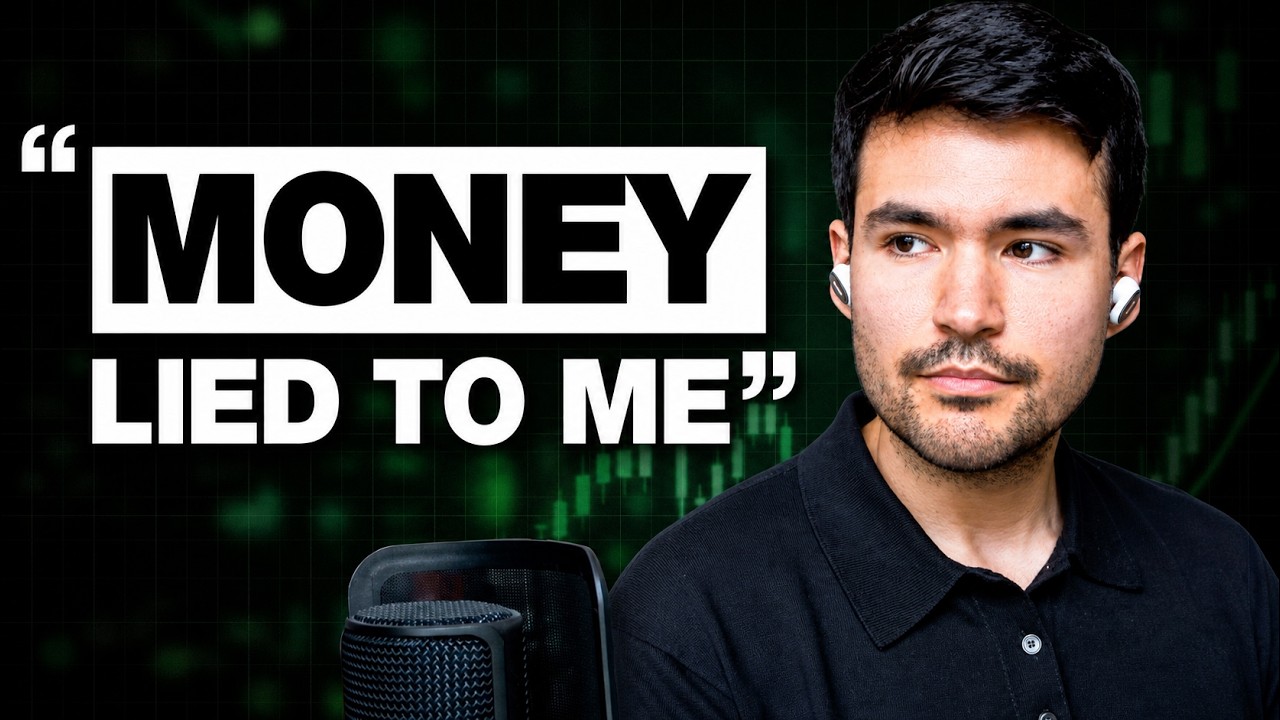
Nathan May grew up in one of the poorest neighborhoods in Ohio. His mom made $32,000 a year. He never left the state until he was 18, when he got on a Greyhound bus to Philadelphia. By 15, he was selling custom Minecraft maps to famous YouTubers and had made his first $100K. He went to Wharton, joined BCG, quit, and built one of the fastest-growing newsletter agencies in the country before turning 30. His biggest month was $400,000. But the week he hit his first million dollars, his mom died. And he felt nothing.
Like all Moneywise episodes, Nathan breaks down his net worth, income, portfolio, and monthly expenses and then I, your humble host, pick it all apart.
We also went deep on: growing up in poverty and never leaving Ohio until 18, how a Minecraft addiction became his first real business, leaving a six-figure BCG career to bet on himself, his actual net worth and why he keeps almost no cash, the Media Mafia and why IRL community is the highest-leverage thing a founder can build, and why the wealthiest people he knows are often the least happy.
Below you'll find my summary of the episode along with the entire transcript.
And by the way...this podcast, the concept of it came from Hampton. Hampton is a private, highly vetted community for high net worth founders hosted by Daniel Berk. Members range from companies doing 3-5 million in revenue all the way up to hundreds of millions. The reason we started this podcast is because there are amazing conversations about money and growing companies that typically happen only behind closed doors, and we thought it would be awesome to share all of this information. If you're a CEO, founder, or business owner, check this out. New Moneywise episodes come out weekly.
Listen to this episode on:
Now, below are the notes and the full transcript.
Nathan's Numbers
- Agency revenue: $400K in his best month (January), on pace for several million annually
- Cash on hand: ~$75K in business bank account. Everything else goes into his personal brokerage
- Investment strategy: ~$1M in leverage on his stock portfolio to juice long-term returns
- Target number: $10M liquid, calculated via ChatGPT based on ~$180K/year spend
- Withdrawal plan: Sell 2% of stock per year (long-term capital gains) + ~1% dividend yield
- Age: 28
From Ohio Poverty to Minecraft Millionaire
Nathan's childhood was defined by scarcity. His mom was a hoarder who stockpiled Campbell's soup cans and owned four Shake Weights. There was no money for vacations, no trips outside Ohio, nothing.
But at 15, Nathan's video game addiction became his first business. He and a team were selling custom Minecraft maps to famous YouTubers, and he made his first $100K before finishing high school. That money eventually grew to over a million through stock investments.
He originally wanted to be an actor (stage, not film), but his mom pushed him toward business. He ended up at Wharton, got pulled into the Wall Street pipeline, and landed at BCG. The consulting experience taught him how to think about business at scale, but it wasn't where he wanted to stay.
The $1M Milestone That Meant Nothing
Nathan's mom passed away from stage three lung cancer when he was 22. He was on a BCG ski trip when he got the call from his cousin at 6 AM. He couldn't tell anyone. He sat crying in the bathroom for an hour, then had to sit with it for the rest of the drive home.
The timing was brutal. He had become a millionaire within weeks of her passing. And the realization hit hard: "All the stuff that people told me was gonna make me happy, totally, no, wrong. Every single thing. I did not feel happy from the money at all."
Worse, because he'd gotten lucky with the Minecraft money and stock gains, he didn't feel like he had a repeatable skill. He felt like his best achievement was already behind him. No business, no close friends from BCG, no mom. Just him.
That moment became the catalyst. He quit BCG, moved back to Ohio to cut expenses, and went all-in on building something real.
The Media Mafia: Seven Founders, One Office, One Leaderboard
Nathan recognized a pattern in his own life: every major breakthrough came from being around the right person at the right time. Losing 70 pounds in seventh grade happened because his buddy Morgan ran stairs with him. Every inflection point traced back to a friendship.
So when he moved back to New York on January 1st, he was deliberate about finding his people. He started co-working with his friend Matt Epstein out of Chelsea Piers Fitness. They found Seamus Madden three days after he dropped out of college (now doing $200K+ per month at age 20). The group grew to seven or eight founders, all doing millions in revenue, all using media and content to grow their businesses.
They call themselves the Media Mafia. They share an office. They have a monthly revenue and profit leaderboard in a group text. Nathan initially thought the leaderboard was toxic, but he's become a believer: "It is so motivating, and it's so transparent. I've just become such a big fan of community, extreme transparency on numbers."
The office also serves as a magnet. If each of the seven members invites two people per month, that's 14 interesting founders walking through the door every month. Austin Rief from Morning Brew visited and immediately wanted to host a Shabbat dinner there.
Why Nathan Joined Hampton
Nathan heard about Hampton early, around when it launched in 2022. He already had the Media Mafia, but he saw Hampton as a way to 40x the feeling he got from his small group. With hundreds of members in New York alone, the surface area for meaningful connections exploded.
At a recent Hampton dinner, Nathan sat next to someone whose business was in Minecraft. They'd been on competing build teams at age 15 without knowing it. "That is such a drug, the meeting of people and feeling like you're part of something. I want a big hit of that every day."
The $10M Number
Nathan used ChatGPT to figure out his "enough" number. He mapped out every expense he could imagine wanting: personal trainer, restaurants, a comfortable life without extravagance. The total came to about $15-16K/month, or $180K/year.
Grossed up for taxes using a 2% annual stock sale (long-term capital gains at 20%) plus a 1% dividend yield, he needs $9.6-9.7M liquid. Call it $10M.
That's his threshold. Not a lifestyle number driven by status, but a math problem he solved to feel safe. His agency is the vehicle to get there over the next five-plus years.
Money Creates Distance, Community Closes It
Nathan's closing observation is one of the sharpest in recent Moneywise episodes. His dad is a Bolivian immigrant with very little money. His house has an open-door policy. On Friday nights, grandmas and aunts are coming in and out, people are dancing until midnight. They're some of the happiest people Nathan knows.
"And then when you get really wealthy, what do you tend to do? You get a big house. You get a big yard. You put space between yourself and other people. You create unhappiness for yourself."
Nathan lives across Union Square from his best friend on purpose. When he's stressed at 8 PM on a Tuesday, he texts him, walks over, and they play Mario Kart. That's the system. Not more money, not a bigger apartment. Proximity to the people who make him feel whole.
"I think community and doing something that you feel is meaningful, I think that is successful."
Other Key Quotes
"All the stuff that people told me was gonna make me happy, totally, no, wrong. Every single thing. I did not feel happy from the money at all. — Nathan May"
"Every single major accomplishment I've had, there's always been a person who I'm around in a very dark moment that slingshots me into something that ends up being really good. — Nathan May"
"When you get really wealthy, what do you tend to do? You get a big house. You get a big yard. You put space between yourself and other people. You create unhappiness for yourself. — Nathan May"
"I think community and doing something that you feel is meaningful, I think that is successful. — Nathan May"
"The future will look a lot more human than the past. — Nathan May"
Links You Might Like
- Join Hampton Community: https://joinhampton.com
- Explore Hampton Membership
- Daily Body Coach: dailybodycoach.com/hampton
- MoneyWise Podcast: Full episode archive
Full Transcript
Guest: We're selling custom Minecraft maps. It's how I made my first $100,000.
Daniel Berk: You sold Minecraft, you made $100,000, and, and at one point you even made much more than that, right?
Guest: The first, like, net worth milestone I had ever had, uh, w- was a million dollars. I thought, like, that was the whole goal, was to, like, be a millionaire. I grew up in one of the poorest neighborhoods, um, in Ohio. My mom made $31,000, $32,000 a year. I had become a millionaire within, within a couple weeks, literally weeks, of her passing. She, uh, passed away from stage three lung cancer. I remember getting a call from my cousin, and I was on a ski trip for, for BCG.
Daniel Berk: Do you think there's a way to be successful without the community?
Guest: All the stuff that people told me was gonna make me happy, um, totally, no, wrong. Every single thing. The, the... I, I did not feel, like, happy from the money at all. And I think, like, community a- a- and doing something that you feel is, like, meaningful, I think that is successful.
Daniel Berk: Today's guest is Nathan May. He grew up in one of the poorest neighborhoods in Ohio, and never even left the state until he was 18. Now his company did $400,000 in a single month, and he rents out a huge office space with eight other business entrepreneurs in New York City. This is Nathan May on Money Wise. Welcome back to another episode of Money Wise. I have a guest here, Nathan May. Thanks so much for joining us today, Nathan. How you doing?
Guest: I'm doing fr- fantastic, dude. Happy Friday. I'm feeling great.
Daniel Berk: Fantastic. Okay. What about your life today is fantastic? Tell me about what, what brings you to the episode this morning, and why today is fantastic.
Guest: Not that many calls, and, like, stuff like this, where I just get to, like... The whole day is just, I get to be playful. That's, like, number one thing.
Daniel Berk: I love that. I love building my life around as many playful moments as possible. To the listeners, I know Nathan outside of this podcast as well, and so it's kind of a fun, unique moment for us to, you know, be on a podcast like this, but also just, uh, reconnect. It's been a while. I'll see him in New York in a few weeks, and, uh, it's just good to, to be with friends on podcasts.
Guest: It's cool, dude. I've never done this, like, with a, with a friend like this before, so I'm, like, excited to, to jam. We, we knew each other a little bit, but not, like, super, super well, and so, like, in my head, like, I, I have a... I mean, it's, it's, it's 1:00 PM, so I don't have, like, a, a whiskey sour and espresso martini. But y- theoretically, I, I do, and I, I wanna-
Daniel Berk: Yes ...
Guest: I wanna jam with you today. I'm, I'm pumped.
Daniel Berk: That's so cool, man. Yeah, I think a great place to start, just tell us a little bit about who you are, how you grew up, the way that you've really built your life around business building, growing other people's businesses with your agency, but also making money for yourself, and kind of the, the why behind Nathan. Who are you?
Guest: So my main business right now is an agency. We do a couple million dollars a year. Our biggest month was, was January. We did about $400,000 in, in January. We won't do that every month, but we're on our way. Business is two old, two years old. My life did not start that way. I grew up in Ohio. I grew up in one of the poorest neighborhoods in Ohio. My mom made, I don't know, something like 30, $31,000, $32,000 a year. And so I, I feel like a lot of the, like, last, like, 10 years of my life has been, like, sort of everything has changed, particularly, like, the last, like, two years, and I'm kind of figuring out, like, how to spend. And, like, I, I have friends I, I never thought I would have, and people I get to spend time with I never thought I would get to, and I'm just kind of adjusting and, and figuring shit out. But it, but it, it's all good.
Daniel Berk: I love that. You mentioned before our call, we were kinda shooting the breeze together a little bit, and y- you, you work in New York, you live in New York.
Daniel Berk: Have you been there, uh, your entire career? Or when did you leave Ohio to the big city?
Guest: I left way later than I should have. So is this... I don't know if you knew this. So I, I didn't leave Ohio, I didn't step foot out of Ohio until I was 18 years old. I got on a, a Greyhound bus.
Daniel Berk: Like, you literally never left the, the state?
Guest: We didn't have money for vacations. We didn't have money-
Daniel Berk: Wow
Guest: ... for, for any of that, dude. My mom was like, she did the best that she could, but she was like, she was a hoarder. So, so we, we were not making a ton of money, but, like, every additional, like, dollar that was made was like, she would buy crazy stuff, dude. Like, our whole basement... I don't know, she thought, like, the world was gonna end or something, but our whole basement had, like, Campbell chicken noodle soup cans, and, like, Heinz, like, we had 20 Heinz ketchup 'cause she thought the world was gonna, like, get nuked or something. She had, like... Do you remember Shake Weight at all?
Daniel Berk: Yeah. Were you around for Shake Weight?
Guest: I, I sure do. Yeah.
Daniel Berk: Yeah.
Guest: She had, like, four... She had four Shake Weights, which is, like, you know, like-
Daniel Berk: Are you serious?
Guest: Dude, yeah.
Daniel Berk: Did she use them, or just there collecting dust?
Guest: No, they're four. And, like, 'cause you've, you have two hands. Like, how do you do more than-
Daniel Berk: How are you gonna like... How the fuck do you have four Shake Weights?
Guest: I don't know. Maybe one runs out of batteries and you just have another one available. I guess you just shake it 24 hours a day.
Daniel Berk: That's funny. Yeah, I've never, I don't know if I've ever met anyone who has a single Shake Weight. But having four, that's unique.
Guest: Yeah, dude. So there was no, like, you know... We, we weren't going anywhere, man. And so I wanted to get out of there. I want, I wanted to leave Ohio. I wanted to, like, see the world. And so I ended up going to college in Philadelphia at this, this, like, fancy schmancy school, which was different and threw me into this whole other world. I moved to New York right after, 'cause everybody did. Everybody from my college, you gotta become, like, an investment banker, private equity person, hedge fund, this and that. And so I've been in New York on and off since 20- 2019, 2020.
Daniel Berk: That's very cool. So five, six years now. So you're 25 years old?
Guest: I'm 20, uh, eight. Yeah. 28.
Daniel Berk: Yeah. I don't know why I said 25. You, you said something-
Guest: No, you're good
Daniel Berk: ... about 25 before the call, and I, I got those things confused. So tell me about the story-
Guest: Yeah, I w- dude, I wish-
Daniel Berk: ... with BCG.
Guest: I know. I just like- It's like I'm, I'm aging so fast. I just bought some, some face cream from a buddy of mine who, uh, who launched a new product. And I'm like, "Oh, I guess I'm in my a- my, my stage of life where, like, I have to think about the wrinkles on my forehead and stuff." That's fun. That's new. Never thought I'd say that on air, but, uh, here we are.
Daniel Berk: Tell me about your, your BCG experience and, and kinda, like, the business reason for why you joined BCG, the, the personal reasons, and then what actually kinda happened in, in your, your serendipity, as it were, after, and what, what brings you to today.
Guest: Yeah. So I originally wanted to be an actor. So when I got on that Greyhound bus, and, like, I, I did a, as a trip to New York to, like, audition for, like, NYU Tisch and all these schools. And I did well at that stuff, but my, my mom-
Daniel Berk: Like a playwright actor or, like, a movie actor, or both?
Guest: Stage. Stage, yeah. I think it's good to-
Daniel Berk: You wanna be far away from my face.
Guest: Yeah, I'm more, I'm more of a projector, more, more of a yapper. I'm, I'm actually not-
Daniel Berk: Should be more-
Guest: I'm not surprised about that. Like, I, I'm like I, I can see that. I could see Nathan May, actor. That makes sense.
Daniel Berk: Yeah.
Guest: I love it, so d- but I had a business when I was in high school. We were selling custom Minecraft maps. That's how I made my first $100,000 to... We sold them to famous YouTubers.
Daniel Berk: And that to me was like, oh- Walk me through that before we actually get to BCG, because you sold Minecraft, you made $100,000. And, and at one point, you made much more than that, right? Your first 100 grand came from Minecraft maps, and then more? I mean, am I right to say even a million dollars came from that eventually?
Guest: Yeah. I would, I would say I feel like the, I think the million was more luck. But yeah, so, so on the Minecraft stuff, so I, I was a video game addict, which is actually very common among founders. I, I feel like a lot of people ended up addicted to games or something, and you just kind of-
Daniel Berk: And when you say addict-
Guest: ... you point to that addiction ...
Daniel Berk: do you, do you mean like literal, like you couldn't stop playing-
Guest: ... or like you just played g- video games a lot?
Guest: Dude, I had a 2.1 GPA in middle school. But I would, I would get home from middle school at, like, 2:45. I would get onto World of Warcraft or RuneScape, and I would not stop playing until 2:00 AM. I would forget to sleep. I'd forget to eat. And a lot of that was because our housing situation was just really messed up. Like, it was a horror h- like, there was like one path of, like, r- and all this shit from, like, my bedroom to my gaming chair. And I, so I, I, I think about this a lot now. Like, I think I used that, uh, in a lot of ways as, like, a, a crutch. But it ended up turning out really good 'cause I got addicted to this thing called Minecraft. And Minecraft, for people who don't know, if you don't know, it's like Legos. You, you know Minecraft at all?
Daniel Berk: Yeah, yeah. Like, it's like digital Legos more or less but, like, open world. Minecraft addiction to building, you know, six, seven-figure business from Minecraft. Like, walk me through that journey and, and how you actually started selling them at 15. M- That's unique.
Guest: Yeah, so the addiction luckily became really useful 'cause m- my, my final addiction-
Daniel Berk: ... was, like, building these, like, maps, and I got obsessed what YouTubers were building, and I got really good. I built dragons and trees and castles, like all kinds of cool shit. And I, I got together with these two other guys, and we formed this company basically where we would sell custom Minecraft maps to other people. And at first it was like w- was, you know, some sweaty teenager who wants to pay, like, $100 for some Minecraft spawn. What it ended up being were these famous YouTubers. So here's h- how we got lucky. It's quite interesting. At the time, all these YouTubers were making most of their money from YouTube AdSense, and people were complaining that YouTube was taking too much money. They wanted their own monetization. So they all started opening up their own Minecraft servers, which was great for them because they get to play with their fans, so then now their fans are like, "Oh, whoa, I could be, you know, in a video with CaptainSparklez or Ali-A," like, whoa. And so you get this rush of tens of thousands of people come in, and they sell in-game benefits. And those benefits, you, that's 100% margin. Like, you don't have to give anything to YouTube for that. So it was a really great business model, and so it created all this demand for you to have amazing maps and castles, stuff that would make people go, "Wow," and, like, so you could compete and be, like, the best Minecraft server of all time. The other thing that got very lucky was the Hunger Games movies had come out, and there's this game mode in Minecraft called Survival Games that was basically like you play, like, a Hunger Games thing. And so now people wanted, like, 20 maps, 30 maps, different Hunger Games maps. And so we just quickly started working with a lot of the biggest YouTubers. We'd sell projects for 10, $15,000, you know, at, at the, at the peak, and it, it totally changed my life.
Daniel Berk: Wow. So how did that lead to the leaving Ohio at 18 and ultimately back to the, the question originally of, of BCG?
Guest: Yeah. So I made a good amount of money from that.
Daniel Berk: How much total did you leave from that?
Guest: I probably personally netted, like, 100 grand, and then I invested it in stocks when I was in high school and then in college. And the only stock I ever knew or heard, heard of, which was Apple. And so that-
Daniel Berk: There you go ...
Guest: i- it is a longer story, but, like, it worked out well, and I was very sad act- actually. W- we can talk about that i- in terms of, like, accumulating money but not feeling like I had, like, a ton of skills. But for the, the BCG thing, went to college. I w- did the business school 'cause I thought I, I did this business thing. Maybe I should do that. I was very lucky to get in this, this Wharton School of, of Business, and I, I didn't really know much about it at the time. But I, I got there, and it was one of the most wild places that I'd ever been to. I don't think I'd ever spent more than, like... I remember my budget in, like, middle school. We'd go to Kohl's, and my budget for, like, clothes would be, like, $150 for, like, the year. And I remember, like, the first I show up, I meet one of my best friends, this guy James Allen. He's, like, getting rid of old clothes, and he gives me this, like, Tommy Hilfiger shirt, and the shirt's, like, 80 bucks. I look it up, and I'm like, "Holy shit." Like, I've never even, like, I've never even t- like, an $80 shirt. Like, I, dude, I, I would wear that shirt. I felt like I was a millionaire, dude, in that shirt. I felt like, I felt like a baller. But so that, that school was why. I had, like, Spanish class with, with Nick Biden. Like, like, the, the Trumps were there when... It, it was all these crazy... I'd never seen anything like that.
Daniel Berk: Yeah.
Guest: And all those people valued was Wall Street consulting. You had to do those things if you wanted to be, like, high status. So I was like, "Okay, I wanna, like, be cool. I wanna do the right thing." And so it pushed me into the consulting stuff. I loved it. There's lots of things I didn't like about it, but that, that job changed my life.
Daniel Berk: What about your life changed? Why'd it, why'd it change your life?
Guest: I remember I got the internship for that company in, like, 2018 out in LA. And did you know a lot about these, like, consulting firms at all?
Daniel Berk: Yeah. Yeah, like Deloitte and yeah, McKinsey-
Guest: Yeah ... and all, and Rand.
Daniel Berk: Yeah, yeah.
Guest: The experience of an intern is crazy. They, with a wine and dine you. So I remember w- uh, my, my project was out in, in San Francisco, and they took us to the French Laundry for dinner one time, which is, like, one of the most prolific restaurants up in, like, Napa, Sonoma Valley. It's, like, $800 a person. And, and dude, like, my, like... Uh, just to give you a sense, like, I still felt very poor at the time, and, like, I was going to, like, info sessions for, like, Goldman Sachs, even though I didn't even wanna work in investment banking, 'cause they would serve, like, free Chipotle. Like, uh, like, to th- that to, like, the crazy... I was like, "What is this? This is wild."
Daniel Berk: Yeah.
Guest: And when I got that job, I felt, like, I remember back then, like, I think you, you would make, like, $100,000 your first year. And in my head, that for me was like I can never go below that. Like, no matter what happens to me, I'm gonna be okay. Like, I'm not gonna have to go back to Ohio, go back to, like, the way that I grew up. And that for me was, like, almost like a mental, like, things are gonna be okay moment for me. I, I still have... I don't have it up yet, but I, I have my first... I actually have... So in the back here, there's, like, I have menus framed from, like, that internship 'cause it was, like, special. I saved it. I was like, "I'm gonna remember this for the rest of my life." And I, I, I have the first paycheck I ever got from BCG. I'm gonna frame that up and, and put it somewhere, too.
Daniel Berk: Yeah. That's cool. So n- now fast-forward to what you're doing now.
Daniel Berk: You own an agency of your own, and you're managing-Millions, probably eight figures at least of ad spend for large media companies. And so tell me kinda more about what you do and, and the way that you think about money when some of the people building audiences that you're, you know, really owning the operations for spend, you know, eight figures, uh, for their own growth. Walk me through-
Guest: Yeah ...
Daniel Berk: your thinking on that.
Guest: So we're the largest, uh, agency for, like, newsletter growth. We work with a lot of, like, cool personal brands. Arnold Schwarzenegger and Jay Shetty and Tyler Denk, all kinds of cool folks like that, and like big AI media companies, all kinds of folks like that. That changed-- So a couple things that are interesting about that. I was at BCG. I was unhappy with the work. I looked at the partners. They were-- You know, if you become a partner at BCG, you'll be thirty-two years old, you'll make about a million dollars that year, and the, and the most senior partners make three to five million dollars. And I looked at their life and, like, the, the lack of time they got to spend with their kids, with their friends, like how much of their 30s were dedicated to flying around the country to clients and just grinding. And I, I looked at that and I go, "I, yeah, I don't want that." And I remember, I remember like, okay, I thought back. I did this exercise. Like, when was I happiest? When was, when was the happiest time in my life? It was not like-- I be-became a millionaire when I was twenty-two. I, I, I found the lowest highs in my life. It was not any of that stuff. It was when I was, like, broke, you know, on Minecraft, like, with these, like, guys we were doing these builds with, not sleeping, not eating, because I just felt like I was, I was in it. I felt like we could take on the fucking world, dude. Like, it just felt like we were unstoppable. And I thought, "Oh, I-- What was that?" Like, it was, it was like an agency ba-basically, and I was like, "Well, I, what if I did a, a business kind of like that again?" And the, the first thing I remember, so this came out of, uh, my, my job after BCGA was helping build a big mobile app portfolio. We were buying apps from indie entrepreneurs, and these guys had scaled to one to five million dollars a year. I thought the way you build a business was you go to A sixteen Z, you go to Sequoia, you raise a bunch of money. That's how you build a business. You had people dropping out of, you know, Baruch making millions of dollars a year. That wasn't even on the, on the radar for me. I was like, "This is crazy. You can just, like, go out and do things." And two of those guys were these guys, Dave and Joel, these two brothers. They had a twelve million dollar mobile app portfolio. They did not know how to code, and they were making twelve million dollars. This is before AI and all that, all this shit. They make-
Daniel Berk: Yeah ...
Guest: twelve million dollars with an app. They had this, like, Indian developer team that did everything. They pay that Indian developer team maybe four hundred thousand dollars a year on twelve million dollars of revenue, right? That's your whole cost of attraction. It was crazy. They had a newsletter, they did a million dollars a year. They had, like, an e-commerce here with all this stuff. So I didn't know how to code, but I was like, "Oh, dude, they have this, this newsletter. That's pretty interesting. I could write. I could do a newsletter." And so I start this little newsletter, and I just copy this company called The Milk Road, 'cause I was into crypto at the time, like they're the biggest crypto newsletter.
Daniel Berk: Yep.
Guest: And Dave and Joel knew about Sean Perry and The Milk Road. They go, "That, that's a good newsletter. You should look at that." I was like, "Oh, I'm gonna do that." And we scaled up a little bit, ended up making a couple grand a month, nothing big. We end up selling it to The Milk Road. And I end up rolling into, like, I hated the mobile app stuff.
Guest: Like, I hated, I'm not good at, like, talking to engineers and stuff, but I love marketing. Marketing would operate in the little Facebook ad account, felt like video games. It, it f- just felt like-
Daniel Berk: Yeah ...
Guest: Call of Duty and, like, World of Warcraft all over again. And so, um, long story short, I end up doing growth for newsletters 'cause I really enjoyed the growth part of the ad stuff, and I had had the newsletter. We got very lucky that some, some big newsletter companies were, like, up and coming, like, right when I got started. That was, like, another, like, life-changing thing for me.
Daniel Berk: That's so cool. Uh, what's your relationship with money like right now then? What's your actual checking account look like on a given, you know, on a given day, your personal spending? And, uh, how would you compare it now versus the, the story you told in Ohio where, you know, there was, you know, shaker weights and, and stuff laying all over the house? Like, what, what does that, you know, juxtaposition look like from then to now?
Guest: So in terms of, like, net worth and stuff, I have, uh, low single digit millions. Like, I, I'll, uh, if I could end this year at, like, you know, four million to five million dollars of net worth, I would be pretty happy with that. I think that's fairly-
Daniel Berk: And is that mostly liquid cash, or is it, you know, built up in illiquid assets and investments?
Guest: I keep no cash, and I don't have a ton of expenses. So my mom, this is, my mom was, like, a hoarder. I have noticed, like, I actually really don't like buying things, and I th- I think deep, like, that somebody got programming where, like, ownership is, like, bad. If I, I'm gonna, if I own stuff, I'm gonna become a hoarder. So I don't really spend, like, a tremendous amount of money. I keep about fifteen thousand dollars in my checking account, in my Wells Fargo.
Daniel Berk: Real quick pause because this is important. If you're running a company, you already understand leverage. You apply it everywhere in your business. Most founders, they treat health like it's a rounding error. Inconsistent training, reactive eating, good weeks, bad weeks, start, stop, repeat. That was me. I didn't need motivation because I had plenty of that. What I needed was structure. I needed systems, better energy, lower body fat, more muscle, something that actually stuck and not some twelve-week sprint that I would abandon when things got busy. And so I hired a coach, and it was one of the best decisions I ever made. Training built around my schedule, nutrition that survives travel, clear targets, clear metrics, daily accountability, no guesswork. And so today's sponsor is brought to you by Daily Body Coach. They are premium online coaching for entrepreneurs and executives who want their body keeping up with their business. It's run by an exited software founder who's already a Hampton member, and yes, a bunch of Hampton members already use it. Everything's personalized, they're coaches, they're available seven days a week, and the habits they help you build survive board meetings, late nights, and back-to-back travel weeks. This isn't about looking good on the beach. It's about being strong and sharp in your 40s, 50s, and 60s. So if you're serious about it, go to dailybodycoach.com/hampton. Like, dailybodycoach.com/hampton.
Guest: I keep about seventy-five thousand dollars in my business bank account. Everything else goes back into the business or into my own, like, personal brokerage. I'm a huge saver. In fact, my, my little, like, media mafia group of friends, like, we talk about this a lot 'cause, like, I, not only do I try to save every dollar I make, I take leverage on that. So, so I, I've got maybe a million dollars in leverage on my stock portfolio 'cause it juices your returns a little bit, and over actually ten, twenty years-
Daniel Berk: Oh ...
Guest: that's worth millions of dollars.
Guest: That's, I'm trying to get to ten million liquid, and I think that's-Like more than enough
Daniel Berk: And is that 10 million the, the, your, I guess we'll call it a threshold number, your number where you're at 10 million, you don't need any more? That's gonna make you happy, and you can, you know, effectively not grow any more from there and be good for the rest of your life. Is it 10 million?
Guest: I think so. So I, I put this into ChatGPT, and I was having a-- I was like, "What? Let me figure out what I could spend." Right? What, what's the most I think I could spend if I got everything I want and da-da-da and all this, and it came up with like, you know, if I had like a personal trainer, if I ate out at restaurants like this many times a week. I don't want like, you know, ton of fancy stuff, just like with all that together would be something like 15 or $16,000 a month, so roughly a hundred, $180,000 a year in spend. When you gross that up for taxes, I need something like nine point six or nine point seven million dollars liquid, and then what I would do at that point is I would sell about two percent of my stock each year, and that would have long-term capital gains taxes, right? So only, only 20%. And I would have dividends for, for the other like one percent or a one percent dividend yield, which also has dividends or tax at a much, uh, lower rate. That would get me to roughly 180K of spend, and I think that is the point at which I would feel like truly like safe. Like, you know, I don't, I don't have to like worry, worry about anything.
Daniel Berk: And you mentioned the Media Mafia a couple times, and, uh, you told me ahead of the episode a little bit about that. Tell the listeners kinda what this group, this community is that you have outside of your business, and then what you're building with that group. And tell me a little bit more also about Hampton. Sounds like you're really involved with a couple different communities, and I'd love to know a little bit more about what those mean to you personally, how they're helping in the way that you grow your business, in the way that you just conduct your life. Just walk us through Media Mafia and all of those things.
Guest: Media Mafia is like a community of like my close friends. There's like seven or eight of us. We all, you know, have companies that do millions of dollars a year. We generally use like contact and like, like media to help get clients. I think like Sam is s- I can't remember. S-Sam or Austin or somebody is the one who like started calling us like Media Mafia. It was like, cool. How this came about was... The group is awesome, by the way, and we, we have an office together. Like, we, we share like, uh, like what's working in each other's businesses. Like, we have like deep conversations, like when, when fucked up shit happens, like it goes in the text chat, and we're like kind of triage and like help people. Like, it's a really close group of like my, my good friends. One of the reasons I, I really wanted this, so when I started my company, I did it out of-- I flew back to Ohio. I cut all my expenses. I lived in like a furnitureless apartment. I just reduced risk. But I felt alone during that. And I have noticed when looking back at my life, every single major accomplishment I've had, I, I actually think I'm pretty dominant. I don't think I'm like that unique or smart, but I think what has been very helpful to me is there's always been a person who I'm around in like a very dark moment that slingshots me into something that ends up being really good. So like when I was in seventh grade, I, I told you I had like a, whatever, some really shitty GPA. I weighed 200 pounds. I was like significantly overweight. I lost 70 pounds in one year. It's because my buddy Morgan Ly, we'd run up and down our, our respective basement stairs. Like, this has happened-
Daniel Berk: Wow
Guest: ... again and again and again for every major part of my life. I recognize to get to the next level of business, I need that again.
Guest: I, I need people. I need to be around people. And I got introduced to some- my, my buddy Matt Epstein over the phone while I was in Ohio. I decided, "I need to fly back to New York." I flew back on January 1st, like, I need to make friends in real life. Matt and I started co-working together out of a gym in New York City called Chelsea Piers Fitness. Eventually, like five or six of us, we grabbed this kid, Seamus Madden, who's, who's now making like, you know, almost 200K a month, 200K-plus a month. He's 20 years old. I, I-- we found him like three days after he dropped, dropped out of college. We're like, "You've gotta do our group," and we just built our companies together in this gym. That's how it all came together.
Daniel Berk: That's so cool. Uh, it sounds like you're more or less at this precipice in your own company building where you're building something really unique and really successful, but you haven't quite crossed the, to the other side yet. What's that like? Is that exciting, terrifying, a little bit of both? I mean, walk me through how, how that feels being kinda right at the, at the cusp of, of that threshold number you mentioned earlier, and you're building your business to that.
Guest: I think it depends on the day, dude. Like, I like, I'll have days where like I wake up and the, the, the morning goes super well, and I'm like, "I, I'm the man. I c- I can do anything." And then like, whatever, I'll have like a bad call or something at 1:00, and I'll be like, "Fuck, I suck. Like, this, this isn't gonna work," da, da, da, da. And, and what's nice is like with this group, like, dude, we all have that. Like, everybody's riding the same wave, and like you're fucking, you're doing the sine wave at different times as other people, but you, you get to see the highs and lows of everybody else, and it makes it feel like it's not so bad. It normalizes that stuff. And so I would say like largely, in the moment, if you caught me on my most stressful days, I feel like I know the business is gonna be successful. I worry about like how much of me that requires. I don't go on a lot of dates right now. I, I don't go to the gym as much as I should, and I worry about like all my eggs, like all my time is spent on this thing. I worry about not maximizing for someone like these other... Or as a mother. I'm gonna be 30 in two years, man. Like, I wanna like, I wanna be dating. And so that is on my mind, and I need to get to a place where I'm allocating time to that. At the macro level, I'm extremely happy. I get to like spend time around like people I never even thought I would meet. I get to like hang out with these guys, and like that is incredibly motivating. Like, I'll give you an example. It's like good and bad. They came up with this idea in the text chat where once a month everybody puts, at the very end of the month, so, so in 13 days from now, their revenue and their profit, every, every single one of us in the Media Mafia in the text chat, and then there's a leaderboard of revenue and profit. When they first started doing that, I was like, "Dude, this is kinda toxic. I don't think that's like really healthy." But it is so motivating, and it's so-
Daniel Berk: Yeah ...
Guest: transparent, and I've just become such a big fan of like community, extreme transparency on like numbers. I feel safe with this group.
Daniel Berk: That's cool. A little off the cuff, but given you work with audiences in media, I was talking to another founder earlier today, and I think with the shift of AI right now and technology, there's just gonna be so much more community-driven IRL events that really do drive the conversation. And to your point Uh, even make the successful more successful or even the non-successful given some of these, like, catapulting opportunities. Like, hey, shake the right person's hand, be in the right place at the right time, and your, your life will get 10 times better.
Daniel Berk: How do you think when you look at some of the businesses you work with and some of the rooms that you're sitting in in The Media Mafia, but in also just your agency, how are people thinking about audience in real life? Audience building online, newsletters, social media, you know, business growth in general, but how does community and actual IRL community really drive some of the success and outcome right now?
Guest: I went to this newsletter conference thing. Dude, you and I were both there. You, you'll remember this.
Daniel Berk: That's right. Yeah.
Guest: And the- there's the woman who had the IRL is, is, is greater than URL hat on.
Daniel Berk: Oh, yeah.
Guest: And I was like-
Daniel Berk: I remember that ... fuck yeah. I like that.
Guest: That, uh, that's, that's that's my mantra this year, man. I'll give you some examples. So I, I'm trying to rapidly take the people that I'm, like, meeting online and bring them in person, and the office that we all have together is super conducive to that. So for instance, I don't know if you know Os- Austin Rief or not, but the, the Morning Brew guy. He came in-
Daniel Berk: Yeah, I know ... uh, a couple weeks ago.
Guest: We have cool people like that because there's seven of us. Like, if one person invites two people to the office a month, that's 14 extremely interesting people every single month that you get to meet in real life. That is, like, the pinnacle, like, extremely high leverage. And so, like, for Austin coming in, he didn't come in through me. He came in through, uh, through Josh, through Josh Suggs. And he gets there, and he has the same reaction that many people do, which is like, "Dude, this is crazy. Like, the, the, all of you guys are working here with your, your teams? This is wild." Maybe in- individually, each of you are mildly interesting, but, like, together, this is like a bear on a bicycle. This is, like, pretty, this is pretty unique.
Daniel Berk: Yeah, yeah.
Guest: And so then he's like, "We should come do a Shabbat dinner," like, you know, uh, us and-
Daniel Berk: Yeah ... Sam and, and, like, a bunch of people.
Guest: And that, like-
Daniel Berk: Show and tell, but that's you is the show and tell.
Guest: Yeah. Yeah, ex- exactly. He's like, "Meet, meet these children."
Daniel Berk: Yeah, basically.
Guest: That kind of stuff happens so much, and, like, I'm just trying to get as much of that as I possibly can 'cause I love, like, the interesting people we get to meet. I moved here. I live in Union Square right now. I live across Union Square, uh, uh, from my best friend, this guy Will Want. I did that purposely because I wanna be able to walk to my best friend. When I'm stressed out on Tuesday at 8:00 PM and I don't wanna deal with work for a second, I can text him and be like, "Hey, dude, you wanna play, uh, you wanna play Mario Kart?" "Yeah. Hell yeah, dude, let's play Mario Kart." I walk over there, dude. We play Mario Kart. I feel great. I go to sleep. I wake up. You know, I, I, I take on the stressful day again. Two nights ago, um, I was at that Hampton dinner thing, and so this is... I mentioned the Minecraft thing to you. This is crazy. Talk about IRL shit. That I'm sitting next to a guy. We start talking, and his business is a Minecraft business, and we start going, going, going, and it turns out that we were doing Minecraft build team stuff at the exact same time. He was on a competing team, dude, and he, he'd just joined Hampton-
Daniel Berk: Wow ...
Guest: like, two weeks ago. And I'm like, we're t- having such a deep cut conversation, like individual people that we both knew when we were 15 years old, like, building random Minecraft shit, like, on the internet. It's crazy, dude, and I... That is, like, such a, a drug, the meeting of people and, and feeling like you're part of, like, something. I'm like, "Well, I want, like, a big hit of that, like, every day." I'm, I'm really-
Daniel Berk: Yeah ... enjoying that part. Tell me more about Hampton. You mentioned it a couple times. What's Hampton, and what does it do for you in your own life?
Guest: Hampton's ballin', dude.
Guest: I'm, I think I first heard about Hampton, I think, pretty early on, uh, I think when it launched, like 2022 or something like that. Hampton... Boom. We got a little hat here, actually. Nice. Hampton is, uh, a community for founders, and I, it's, it's in... I mean, you, you'll know, right? But it's in, like, a bunch of, like, in-person cities. So it's in New York. It's in, like, Austin. It's in, you know, Miami, a bunch of different places. So I knew about it for a long time. I actually had a community already before I joined, which is our group. We all joined together, and I think part of that is we realized, like, wow, l- look at in just the matter of months. Like, we, we have not known each other for a super long time, like, this group and I. Like, just by, like, bonding together and, like, hanging out and, like, talking about, like, shit that doesn't go well or our parents or what motivates people to, like, eat glass and, like, start a company. Like, that is so useful for tactics, right? But one, like, learning things I can bring into my business. Number two is mindset. Like, I realize it's normal for things to be really hard. That helps me keep going and, like, realizing, like, most people who are founders are, like, usually motivated by some, like, fucked up thing that happened to them when they were, like, 10 or 15 years old. Like, that is deeply motivating in a way. Like, oh, it's okay. Like, this is normal. That has helped us tremendously, and I just see Hampton as, like, an extension of what we've built in The Media Mafia. But, like, I don't know how many people are in New York, like f- 400 or something, so there's, like, s- seven of us. I'm like, "Okay, I can, like, 40x, you know, th- this, like, feeling I'm getting from, like, my little group. Like, uh, sign me up, you know? Like, I'll, I'll do that."
Daniel Berk: Yeah, that's cool. Where are your, I guess, your folks at now? You mentioned your mom growing up. Is she still in the picture, or do you guys still stay in touch?
Guest: We don't. She passed away when I was 22, February 9th of 2020.
Daniel Berk: Oh, I'm sorry.
Guest: No, it's, it's all right. Actually, I, I've thought about this a lot. I, I think one of the reasons why I'm, why I'm drawn to community is because of my relationship with my parents. I'm not very close with my parents. I wasn't close with my mom. I mean, terrible when she pa- I mean, you know, it's, it's your mom at the end of the day. I remember I, I, I was working at BCG, and I wasn't, like, super happy. The first, like, net worth milestone I had ever had was a million dollars. I thought, like, that was the whole goal was to, like, be a millionaire. I had become a millionaire within, within a couple weeks, literally weeks, of her passing. And I remember-
Daniel Berk: Hm
Guest: ... she, uh, passed away from stage three lung cancer, and I remember getting a call from my cousin, and I was on a ski trip for, for BCG. And, like, I couldn't get on a plane. I couldn't tell anybody 'cause it's like w- we were driving home that morning, so the r- I didn't wanna, like, tell the team that I was with. So I just had to... I learned at 6:00 AM. I'm, like, crying in the bathroom for an hour, and then I just had to, like, sit with it. And I remember thinking all the stuff that people told me was gonna make me happy, totally, no, wrong, every single thing. The, the, I, I did not feel, like, happy from the money at all. In, in fact, because I didn't have a skill, I didn't have a business. I felt like I had the Minecraft thing when I was young. I got lucky by putting it into stock. I had no... I couldn't recreate it. I felt that was the, the best thing I'll ever do in my entire life. I didn't feel particularly close to my BCG people, uh, and now my mom had passed, so I felt like it's just me. Like, that's it. I think that that has caused me dramatically, like, recalibrateWhat is important to me? I quit my job. I went all in on, like, startup shit.
Guest: I was like, if I, you know, man, I came from this Ohio thing, like, if I'm gonna do it, like, and, like, make it, like, I need to fucking do it. Like, I need to get after it. Like, I need to take risk. And finding people. I crave friendship. I get, I get lonely really easy. I'm like a little golden retriever, and I, I think a lot of that is, is because, like, the people who have, like, helped me in my life, it's always come from, like, a friend. That has always been, like, how my life has, like, progressed, like finding somebody who's, like, been meaningful to me, and amazing things have, have happened after that.
Daniel Berk: Do you think there's a way to be successful without the community that it sounds like you've built around your own life?
Guest: It depends what you think successful is, dude. Like, I think, I know, I'm sure there are many people who are worth... Well, I know some of them. There are people who are worth hundreds of millions of dollars who are deeply unhappy. I remember when I was in college, one of my good friends, her father was the right-hand person to one of the biggest investment banks in the country. You know, hotshot, $40, $50 million, nice house. They had horses. They had all this stuff. Great. Awesome. They were, uh, divorced. He did not have a close relationship with his daughter. He was working 60, 70 hours a week. That's not successful in, in, in my view. And so I, I think that success generally comes from two things. Feeling successful, it's like, am I of service? Am I of, like, value to people? And, and that doesn't have to be, like, business-y shit, dude. In my, in my opinion, like, dude, you're, uh, you're, you're, you're a dad, right? You're a father?
Daniel Berk: Yeah.
Guest: Yeah.
Daniel Berk: Yeah, dude.
Guest: Being, like, a fucking fantastic-
Daniel Berk: You're good ...
Guest: father is, like-
Daniel Berk: Yeah ...
Guest: being of service to people. It's like putting your mark on the world and, like, like, doing something. And I think the other thing is being around people who share your values. I think that, like, like my, my dad is an immigrant from Bolivia, has very little money whatsoever. He and his wife and his kids, they're the happiest fucking people on the planet. It's like an open door policy in that house. I remember going, you know, when I was a kid a couple times and, like, dude, they're dancing at, until 12:00 AM on, like, a Friday. There's, like, grandmas and aunts and people coming out, in and out on, like, the weekend. Like, th- they live in a neighborhood that has a lot of other Hispanic people. Like, they don't have any money, and they're so happy.
Daniel Berk: Yeah.
Guest: Why? To me, like, that's a huge irony. And then when you get really wealthy, what do you tend to do, right? You, you get a big house. You get a big yard. You put space between yourself and other people. You, you create unhappiness for yourself. I think, like, community a- and doing something that you feel is, like, meaningful, I think that, I think that is successful.
Daniel Berk: I think that's, that's a great paradigm to, to live with. I mean, it's, success does look different to a lot of people. But I do think the whole idea of, like, the grass is greener when I get 10 million or 100 million or a billion, it's like, well, it depends. If you build your life deliberately around what actually makes you happy, then yeah, more money can make you more happy. But I think a lot of people think money is the happiness, and it's an interesting kind of paradigm that we, uh, you know, spectrum rather that we explore in this podcast. Well, Nathan, I don't have any other thoughts for you right now, but I, I think this has been a really good episode. When you think of, like, what's next for you, is this agency you have kind of the way that you build that $10 million business, or do you have any fun business ideas in mind that you haven't launched yet?
Guest: Ooh, that's a good question. I have a couple things. Like, I, so I'm a big fan of, like, focus.
Guest: So this agency, I think for the next, like, five-plus years, number one thing I'm gonna be putting my, my time into. I think we can get really big. I feel really good about our team. Stuff that's, like, really fun for me right now, community stuff, like, like in, in person in New York City.
Daniel Berk: So this is co- I mean, I, I wanna hear how you feel in, like, three months 'cause you, you're just ... Well, I guess you've had a podcast, right? But you're, you're now doing this-
Guest: Sure ...
Daniel Berk: like, podcast thing. I have found, I don't know if you know this, we do a podcast with your other company that you, you work for.
Guest: Yeah.
Daniel Berk: I get so much happiness from that. Like, I sit down with somebody for an hour and a half. We do, we do, uh, uh, whatever, 26 of them per year. I have like a two-hour-long conversation with somebody and, like, cover, like, their, their business and their finances and shit. But the stuff that is cool for me is, like, I always do the last 20 or 30 minutes is, like, DMCs, like deep, meaningful conversations. I'll ask about, like, their parents and, and, like, we, like, we'll get, like, deep with stuff. That, like, I would say brings me equal happiness to the agency. The podcast makes no money whatsoever.
Guest: Yeah, yeah.
Daniel Berk: And so I'm like, dude, I wanna do this for, like, five years, and, like, uh, just, like, more of that. I just really enjoy chasing these, like, conversations with people. I, I think it-
Guest: Mm-hmm ...
Daniel Berk: makes me feel closer to people. I think it makes me feel like what I'm doing matters, and, uh, it teaches me about myself. That's stuff I like a lot. I, I think whatever I do next will be less about, like, oh, bootstrap and s- save every dollar and cr- you crush your competitors, and more, like, I wanna, I wanna hang out, man, you know? And I wanna-
Guest: Yeah ...
Daniel Berk: make somebody a espresso martini or, or a daiquiri or a, a jungle bird. Let's just hang.
Guest: Yeah, I like that stuff. I think the big irony about how much AI is changing the landscape right now is that the future will look a lot more human than the past, and I think people will start to break out of this, you know, glued to a screen paradigm, where they'll start to remember or realize for the first time the meaning and value they find with shaking someone's hand in real life or sharing a coffee at a restaurant. I mean, getting out into the sun and touching grass. I think we've been bottled up behind screens for, you know, some of us decades, many of us for at least five to 10 years in our careers. And I think, uh, as AI starts to really automate a lot of work and, you know, Elon Musk would even say, like, a future work optional state of, of, you know, middle and upper class, people will start to really go back to friendships, IRL, community, human stuff.
Daniel Berk: 100% agree, dude. It's like, I feel like trends, like, like ricochet. So, like, when I was in-
Guest: Yeah ...
Daniel Berk: high school, college, like, tight jeans were, like, cool, and now you wanna be, like, you know, you wanna have these baggy kind of bell-bottom things.
Guest: Super bag.
Daniel Berk: You, you wanna flow with it, and I'm sure tight jeans will be cool again in, like, 10 years, dude. IRL's coming back. IRL's coming back. Well, Nathan, this has been so good. I appreciate you coming on the show. Thanks for joining Money Wise, and we'll talk soon.
Guest: Hell yeah, brother. Thanks for having me. Thanks.

Personally, I find being the CEO of a startup to be downright exhilarating. But, as I'm sure you well know, it can also be a bit lonely and stressful at times, too.
Because, let's be honest, if you're the kind of person with the guts to actually launch and run a startup, then you can bet everyone will always be asking you a thousand questions, expecting you to have all the right answers -- all the time.
And that's okay! Navigating this kind of pressure is the job.
But what about all the difficult questions that you have as you reach each new level of growth and success? For tax questions, you have an accountant. For legal, your attorney. And for tech. your dev team.
This is where Hampton comes in.
Hampton's a private and highly vetted network for high-growth founders and CEOs.