Ryan Levesque's Net Worth: $35M, Two Dead Exits, And A 150-Acre Farm
Ryan Levesque turned down $42M, lost a $70M deal to a war, and sold over WhatsApp. He breaks down his $35M liquid net worth, a $5M Vermont farm that costs $500K a year to run, and why it's enough.
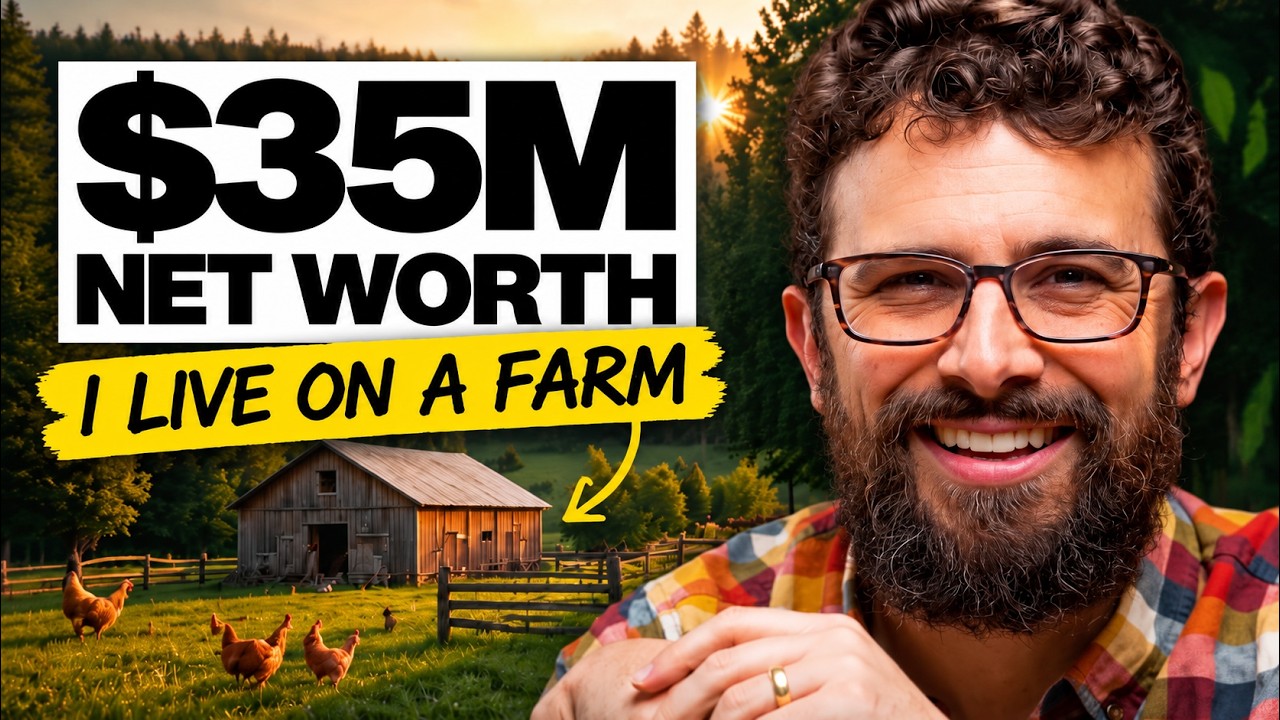
Ryan Levesque built a business that did over $100 million in revenue, then tried to sell it twice and watched both deals die — a $42.5 million private equity deal that got flipped to $17 million at the 11th hour, and a $70 million offer that evaporated the week Russia invaded Ukraine. He eventually sold the company to his closest competitor after sending a cold WhatsApp voice memo. Today he says $35 million is enough, and he spends his days on a 150-acre farm in Vermont where 80% of what his family eats comes off their own land.
Like all Moneywise episodes, Ryan breaks down his net worth, income, portfolio, and monthly expenses and then I, your humble host, pick it all apart.
We also went deep on: the two failed exits and what private equity does at the one-yard line, the life insurance rejection letter at 30 that turned out to be organ failure, why he put a $2 million mortgage on a farm he could have bought in cash, what a working 150-acre homestead actually costs to run, and how he decided that what he had was enough
Below you'll find my summary of the episode along with the entire transcript.
And by the way...this podcast, the concept of it came from Hampton. Hampton is a private, highly vetted community for high net worth founders started by Sam Parr. Members range from companies doing 3-5 million in revenue all the way up to hundreds of millions. The reason we started this podcast is because there are amazing conversations about money and growing companies that typically happen only behind closed doors, and we thought it would be awesome to share all of this information. If you're a CEO, founder, or business owner, check this out. New Moneywise episodes come out weekly.
Listen to this episode on:
Now, below are the notes and the full transcript.
The Numbers
- Net worth: approximately $35 million, all in liquid net worth — market securities plus venture capital and private equity positions held at basis, not a private-company valuation.
- Biggest exit attempts: a $42.5 million majority recap that was flipped to $17 million at the 11th hour, then a $70 million offer that died in February 2022 when the M&A market froze.
- Company scale: The Ask Method Company — seven-time Inc. 5000, over $100 million in cumulative revenue.
- Earlier exit: a nine-figure sale (over $100 million) of a golf business he was a minority partner in; his personal take was high six figures.
- The farm: 150 acres in Vermont, purchased for just under $5 million, with a $2 million mortgage at 6.5% (he had the cash, but kept the debt on purpose). Property taxes run about $50,000 a year at Vermont's reduced "current use" agricultural rate.
- Cost to run the farm: roughly $500,000 a year — cattle, pigs, meat chickens, turkeys, laying hens, 48 beehives and over 1,000 maple syrup taps. 100% of the family's protein and sweetener comes off the land.
- Second biggest line item: about $120,000 a year in private school tuition for two boys, going to roughly $170,000 once the younger one starts high school. The older son's boarding school alone is $80,000–$90,000 a year.
- Starting point: roughly $100,000–$200,000 in the bank when he quit AIG in 2008. His first business sold Scrabble tile jewelry tutorials; his second, orchid care, got to about $500,000 a year.
- First portfolio: a $5,000 gift at age 10 turned into well over $100,000 by 18, cashed out to pay Brown tuition — months before the dot-com crash.
Two Exits That Died At The One-Yard Line
In 2020 Ryan took the business to market and signed into exclusivity with a private equity firm on a $42.5 million majority recap. At the 11th hour the firm flipped the structure to a minority recap: the same deal, but he'd walk away with $17 million instead of $42 million. He compares it to a soccer coach subbing his furthest player to burn clock — technically within the rules, and effective.
He walked, hired a proper middle-market investment bank, and a year later had a $70 million offer for a majority of the company. Purchase agreement drafted, ready to sign, February 2022 — Russia invades Ukraine, capital markets panic, rates spike, and the leveraged-buyout model briefly stops working. The buyer pulled not just his deal but every deal on their desk. So did everyone else.
Sold On A WhatsApp Voice Memo
The eventual buyer wasn't a financial buyer at all. It was his closest competitor, Daniel Priestley in the UK — parallel company, parallel software, years of polite professional distance. Ryan got his number from a mutual friend and sent a WhatsApp voice memo: I have this crazy idea, would you be open to chatting? Three months later he was on a plane to London to sign.
The $35 Million "Enough" Decision
Ryan's framing is that the target is always about 2x wherever you happen to be. Make $200,000 and you want $400,000. Worth $10 million and $20 million sounds comfortable. He's been in rooms at $35 million, $70 million and $700 million, and the behavior doesn't change — he points at Ted Turner going back to work after dipping under a billion.
So he asked himself the question directly and answered it: not enough forever, but certainly enough for now. What he's optimizing for in this season isn't net worth or income, it's the handful of years his two boys are still at home. His test: if I doubled my net worth tomorrow, what would I do differently? Spend time with my kids, write, live in nature, travel — all of which he can already do if he never earns another dollar.
What A 150-Acre Farm Actually Costs
The land was the big number: just under $5 million for 150 acres in Vermont, more acreage than he wanted (he was looking for 50–100) because properties don't come in the exact size you want. He put a $2 million mortgage at 6.5% on it despite having the cash — partly because debt on a property makes it a less attractive target for creditors, partly because he thought he could earn more on the $2 million than the mortgage costs. Taxes are about $50,000 a year at Vermont's reduced agricultural rate.
Operating it runs about half a million dollars a year: cattle, pigs, meat chickens, turkeys, laying hens, 48 beehives, over 1,000 maple taps. Free food, as Daniel puts it in the outro, turns out to be expensive. Ryan's counter is that he's buying 6am chores with his sons, and it's the cheapest tuition he's ever paid.
The Rejection Letter At 30
At 30, newly a father, working 100-hour weeks across 23 businesses, Ryan applied for life insurance and got declined. The examiner told him to write his own lab numbers down and go see a doctor. Googling them returned kidney failure and pancreatic cancer. What it actually was: undiagnosed Type 1 diabetes and diabetic ketoacidosis — organs shutting down, ten days in the ICU, a six-month-old at home he couldn't have in the room. He came out insulin-dependent, wrote the book Ask about it, and started dismantling the life that got him there. He has told this story publicly in his own book.
Other Key Quotes
"My number's probably somewhere between $30 and $35 million in liquid net worth. That's not tied up in company, that's not tied up in valuation of a privately owned company."
"I don't know if this is enough forever, but it's certainly enough for now."
"If you look at your take-home income and your net worth, the number is about 2X. If you're at $10 million net worth, it's like, man, if I could be at 20 million, I would be comfortable. It does not change."
"It is like every month of every year you need to fight against the current of, I need more, I need more."
"If I doubled my net worth tomorrow, what would I do? I'd be spending more time with my kids. I'd be writing. I'd live in nature. I can do all of those things right now if I never earn another dollar for the rest of my life."
"Instead of $42 million, we're gonna walk away with $17 million. It's a move that private equity does."
"Emulate before you innovate."
"What I'm optimizing for is sucking the marrow out of this season of life, this so short season of life where I've got my two boys with me at home before they go off and become adults."
Links You Might Like
- Join Hampton Community: https://joinhampton.com
- Ryan Levesque's book Ask: https://askmethod.com
- MoneyWise Podcast: Full episode archive
Full Transcript
Daniel Berk: Welcome back to another episode of Money Wise. I'm your host, Daniel. This one's different. I usually jump in every couple of minutes to drag numbers out of my guests, but today I ask one question and effectively just shut up. Ryan Levesque is the best storyteller I've ever had on the show. So this is our longest episode, and I cut almost none of it. It's also the only episode I've ever recorded where I had to stop myself from crying mid-interview, so viewer discretion advised. I won't give you the full story, but here are a few pieces. Ryan quit his job in China the morning a WSJ headline said his company was going bankrupt. His first business was Scrabble tile jewelry, and he eventually got offers for forty-two million and seventy million dollars for a different business, which are two incredibly stressful stories he recounts. You'll hear why. At one point, when he was thirty years old, he received a rejection letter from a life insurance companies with news no thirty-year-old ever wants to hear. What makes Ryan's story particularly interesting is that he amassed a life-changing amount of money. But due to a health scare and a wake-up call, he decided to radically build his life around the things he valued most. And radical is an understatement. His story really does go into parts of philosophy and life and value that a lot of stories on this show don't even touch. He now runs a one hundred and fifty acre farm with his wife and two kids, and eighty percent of the food he and his family consume comes straight from his own land. He walks through the specific cost of running his farm and all the different intricacies that come with doing something as unique as what it is like to run a farm of this size. Listening to Ryan was like listening to my dad tell a bedtime story. It's really that engaging, and I hope you enjoy the conversation with Ryan as much as I did. One quick favor. If you're listening to this on audio, please hit subscribe or follow. Audio downloads are how I get paid, and your boy got mouths to feed. Please follow and subscribe. Lastly, a lot of the conversations I have on Money Wise are a direct result of the network I've built in Hampton. Hampton is a private network for high-growth founders and CEOs doing twenty-five million dollars on average. If you're looking for a group of people that will genuinely change how you view life, business, and money, look no further. Go to joinhampton.com. Now, without further ado, here's Ryan. Well, welcome back to another episode of Money Wise. I have a really special guest today, Ryan. And, uh, man, I've already learned so much about him, and I feel like I've just barely scratched the surface. And so I'm really excited to learn a bit more today, and hopefully my listeners will be as engaged as I was when I first met him. Thanks for joining us today, Ryan.
Ryan Levesque: Daniel, it's great to be here.
Daniel Berk: Thanks. Um, I, I would love to just start from the beginning. I feel like when we first met, you just kinda told me your story all at once, and I was like, it was like a kid listening to his dad read a storybook. And so I would just love for you to start from the beginning. Tell me how you grew up, what money was like in the household, and kinda walk me through some chapters of your life. And I'll maybe interrupt here and there to ask some follow-up questions, but you're a great storyteller, and so I'd love for you to tell your story.
Ryan Levesque: That sounds great. Um, well, I'll start, uh, not the very beginning, but, uh, at the beginning. I grew up in a pretty blue-collar, working-class, uh, households. Uh, my dad worked nights loading boxes on the back of a truck for the US Postal Service, and my mom cut hair for a living. Neither of my parents went to college. I was the first in my family to go to college. Um, and, uh, I, I studied neuroscience and East Asian studies at Brown University, and at one point thought I was gonna go to medical school.
Ryan Levesque: I was fascinated with the brain and thought I was gonna kind of pursue that path. Um, but I decided it really wasn't for me and tried to figure out what it is that I wanted to do. So, uh, after graduating, I worked on Wall Street. I first worked for the investment bank Goldman Sachs, and then later had an opportunity to work for AIG, the insurance company, um, which promised to send me to China to lead and expand the sales office expansion across the country. And they were looking for a young guy like me who, uh, was, uh, hungry, young, could speak Mandarin Chinese, uh, had a little bit of a background in finance and, uh, could kind of be this bridge between home office in the United States and Asia. And so I did that for a good part of my twenties. Uh, my wife and I moved from New York City to China. First we landed in Shanghai, then my wife decided to pursue a PhD at Hong Kong University. So for the first three years of our marriage, we had this crazy bi-country marriage, and it was very romantic. We'd fly to see each other on the weekend. She'd fly up from Hong Kong to Shanghai. I'd fly from Shanghai or whatever city I was in that week opening up a sales office across the country to Hong Kong.
Daniel Berk: And that's like not close. I mean, a lot of people who maybe aren't as familiar with the geography in China, they're like, "Oh, it's like, you know," that's like long-distance relationship.
Ryan Levesque: It was long distance. It was like, you know, the equi-equivalent of like living in the East Coast, some-- one of you living on the East Coast and then the other person living either in the middle of the country, like Chicago and New York or-
Daniel Berk: Yeah
Ryan Levesque: ... you know, depending on where he's flying from New York to LA. So, um, we did that for a few years. And then in two thousand eight, the world financial crisis, um, hit, and AIG was one of the companies that was, uh, really shaken up. And I remember walking into my office one day and, uh, The Wall Street Journal Asia edition headline read, "AIG to file for bankruptcy." And it was one of these moments that was a pivot point in my life. Because up until that point, I had kind of dreamed of starting my own business, but was really afraid to pull the trigger. And that was sort of like the, the, the kick in the pants that I needed to finally do the thing that I'd been dreaming about doing for so long. So literally that day, um, I, I called my wife. I said, "Go to wsj.com, take a look at what the headline reads." She says, "What does that mean for your job and your career?" And I said, "I don't know, but I'm gonna use this as the opportunity to do the thing that I've been talking about for so long." So I printed up a resignation letter in the printer of my office. I-- It was the paper was still hot. I signed it. Um, I walked into my boss's office, who was the president of China for, uh, AIG, and I said, uh, "I don't have great news for you here today, but I've made the decision that, um, I've, I'm turning in my notice." Um, and he thought-
Daniel Berk: Wow
Ryan Levesque: ... he's like, "Who recruited you and who did-- who stole, you know, you away?" And I said, "The, the reality is it's nobody. Um, but I just feel like now is the time and I wanna do my own thing." Um, so, uh, I gave my notice. I donated everything that I owned to charity except for two suitcases worth of stuff.
Daniel Berk: Wow.
Ryan Levesque: Moved into student housing with my wife, um, in-
Daniel Berk: In Hong Kong
Ryan Levesque: ... Hong Kong. Yeah.
Daniel Berk: Yeah.
Ryan Levesque: In Hong Kong. And we were, uh, decided to live on a tiny little island in Hong Kong called Ma Wan, which is, um, an island in Hong Kong SAR that you can only get to by ferry. So it was this tiny little island that we, that we were living on. Uh, she would commute, uh, to class when she needed to get to class, and it was on that island that I started my very first business. Um, and-
Daniel Berk: When you...
Daniel Berk: Uh, real quick, when you heard about the AIG news and you decided to resign, about how much money did you have to your name at that point?
Ryan Levesque: Oh, goodness. Um, y- it's a really good question. Um, and you know, I have not-- This is going back quite a few years now. This is 2008, so, um, we're, we're looking at almost 20 years ago at this time. I wanna say, I mean, I had a good chunk of my money tied up in a 401 .
Daniel Berk: Okay.
Ryan Levesque: So I had a little bit of money that was saved away, but I'd squirreled away as much as I could. You know, in terms of money in the bank, gosh, I have to say maybe it was, like, $100,000, like in that-
Daniel Berk: Okay. So you were successful at AIG, but you know, maybe still risk averse.
Ryan Levesque: Yeah.
Daniel Berk: Leaving was scary.
Ryan Levesque: Oh, yeah, for sure. And, and I could be... I- I'm not off by an order of magnitude, but I could be off by, like, $100,000. Like, it could be $200,000.
Daniel Berk: Okay.
Ryan Levesque: It was not half a million dollars, I'm pretty sure, if I, if I think back to that time.
Daniel Berk: Yeah.
Ryan Levesque: Um, it was enough money that I had a little bit of a safety net, but it wasn't an infinite safety net.
Daniel Berk: Sure.
Ryan Levesque: And, and I, and at that time, I kind of-- I remember having this, sort of running the calculus through my mind and it was, I could either invest a quarter million dollars and maybe go into debt to go to business school, or I could take a fraction of that and everything that I'd saved un- up until that point and invest it in starting a business, and basically paying tuition to the school of hard knocks. And, and that's what I decided to do. Um, and there was a time in my li- in my life where I laughed that I was the least educated person in my company when I went on to become CEO of our, of our business, and I'll ta- tell a little bit about that story. I mean, even my assistant had an MBA, and my wife, you know, a master's degree and, and pursued a PhD, and, and, uh, and here I was, you know, like a, a, a lowly bachelor's degree. Um, but, but it was on that island that I, that I started our, our, we started our first business. And it was a tiny, random, um, business. We, uh, uh, found this website, which was brand new at the time, it's old news now, but in 2007, 2008, it was a brand-new website called etsy.com. And the cool thing about Etsy-
Daniel Berk: Never heard of it.
Ryan Levesque: Never heard of it. But at the, at the time, I had never heard of it at that time either.
Daniel Berk: Sure.
Ryan Levesque: My wife had come across it-
Daniel Berk: Yeah
Ryan Levesque: ... just, you know, being in that world. And, and she said, "Hey, there's this really cool website. Um, it's called Etsy, and there's this jewelry that's selling really well, and it involves combining Scrabble tiles and origami paper, and when you put them together in a certain way, they create these pendants that people are buying like crazy." And living in Asia and having access to all of the origami paper that you could imagine, I thought, "Oh, we're really well positioned to potentially to, to, to do a business in, in this." But I said, "Look, I don't wanna build a business that's gonna tie us to any location. I don't wanna, you know, have, like, a, a factory in Southern China that's producing, manufacturing this jewelry and we're exporting it, and I, I just don't want that life." So we shut the door on that, that idea until a few weeks later she said, "Hey, I wanna bring back the Scrabble tile jewelry thing. Um, uh, and I, and I know you're done with the idea of selling the jewelry, but take a look at this woman here." And the woman's name, ironically, was named Ryan. So I'll always remember that 'cause there are not that many-
Daniel Berk: There you go
Ryan Levesque: ... women named Ryan.
Daniel Berk: Yeah, yeah.
Ryan Levesque: And she had this business that was teaching people how to make the jewelry.
Ryan Levesque: And, and she would sell this tutorial on how to make the jewelry step by step. And, and what, what was fascinating about Etsy, and even it's true to this day, is that you can reverse engineer someone's income because you can see what their daily sales are and you can extrapolate how much they're selling their product for. And she was selling this tutorial for something like $30 or $40 at the time, and she was selling, uh, typically between 20 and 30, uh, units per day. And when I ran the numbers-
Daniel Berk: That's great
Ryan Levesque: ... I'm thinking to myself, like, "She's making almost $1,000 a day-
Daniel Berk: Mm
Ryan Levesque: ... with w- And that's all margin. There's no cost of goods sold.
Daniel Berk: Mm.
Ryan Levesque: Selling a digital tutorial on how to make this jewelry. I said, "This could be something." So, so my wife, Tylene, learned how to make the jewelry, um, created a better mousetrap, a better tutorial, 'cause the one I was describing was actually not very good. I mean, it was a Microsoft Word document with spelling mistakes, and the images weren't even aligned. The lighting was terrible. I mean, it wasn't a very good product. So we thought we could build a better mousetrap. Um, and it was a lesson that I took from that that I've applied my entire life, which is to emulate before you innovate. To find something-
Daniel Berk: I like that
Ryan Levesque: ... that's working and, uh, reverse engineer. And before you try to go off and do something creative and completely different, figure out if you can at least achieve a baseline based on what's already working in the market.
Daniel Berk: Yeah, don't reinvent the wheel.
Ryan Levesque: So we did that very thing... I'm, I'm sorry?
Daniel Berk: I said don't reinvent the wheel. I mean, it's, it's perfect analogy there.
Ryan Levesque: Yeah. And, and, and so we, we s- we went down this path. You know, first month in business we make a few hundred dollars, then a few thousand dollars, and I think at our peak we're making something like $7,000 or $8,000 a month. And then, uh, I don't know if you heard about this, um, uh, in 2008, but there was another crash, which was the crash of the Scrabble tile jewelry market where it was a worldwide crash.
Daniel Berk: No, I am not aware of this one.
Ryan Levesque: No, joking aside-
Daniel Berk: In fact, I did-
Ryan Levesque: It was a-
Daniel Berk: I did play Scrabble with my family a lot growing up, so it's a funny little, uh, Venn diagram there. But tell me about the-
Ryan Levesque: It was a-
Daniel Berk: ... the crash of Scrabble origami
Ryan Levesque: ... it was a, it was a, it was a, it was a total fad, as you might expect.
Daniel Berk: Yeah.
Ryan Levesque: It was one of these things that just kind of took the world by fire for, like, a six-month period and then just fell off a cliff. And so I kind of learned the hard way that when you go into a business, when you choose a business, when you choose a market, how important it is to choose an evergreen market.
Daniel Berk: Mm-hmm.
Ryan Levesque: That if you go into a fad market, that it can take off really, really fast, but it can fall off a cliff So we kinda went back to square one. And at that time we said, "Well, what are we gonna do?" She was close to finishing her PhD. Um, I was not making any income at this point 'cause our business basically crashed. We decided to move back to the States. We decided to move back to Texas, which is where my wife is from. She got a job as a museum curator at the Brownsville Historical Association on the Mexico border, in a very significant, um, border, border town of, of Brownsville, Texas. And I started building our business. And I'd kinda learned the power of, of education and selling tutorials and selling how-to information. Um, I also learned the power of not being in a fad market, but getting into an evergreen market.
Ryan Levesque: So the next business that we started was in this, was in the, um, was in the gardening space, which is the l- the oldest hobby that's been around, um, forever in America. And-
Daniel Berk: And I wanna pause here so that the listeners keep note of this because this comes into play in your story later-
Ryan Levesque: It comes full circle
Daniel Berk: ... which is in a really cool place.
Ryan Levesque: Yeah, it very much comes full circle.
Daniel Berk: Yeah, yeah, yeah.
Ryan Levesque: Um, and, uh, and when we lived in Shanghai, I just had this memory when I, I, I bought my wife a whole bunch of orchids, the flower, in, in our apartment when she came to visit, uh, because I wanted to beautify the apartment. And in otherwise, like Shanghai is a, if you've never been, it's often like brown, yellow sky, it's overcast. It's like a, it's an industrial sort of concrete jungle. It's not a necessarily beautiful place. So I wanted to beautify the apartment. I bought a bunch of orchids and, um, by the time she came to visit, uh, all the orchids had died. And I thought to myself, "What did I do?" Like, like I, I can't be the only idiot out there who can't keep these things alive. And so, so I started doing research when I was trying to figure out different markets to go into, and it turns out that, um, orchids are one of these things that a lot of people have trouble. They're kind of finicky. They're finicky plants, and they're, you know, one of the widest grown flowers, um, in the entire world. And so I started going down this path of, well, maybe there's a business we could build in this space. Um, and so long story short, uh, I kind of applied everything I'd learned in the Scrabble market to the orchid market, and then we grew that business, uh, from nothing to about half a million dollars a year. And I realized, okay, this is a, a, a process I can replicate. So I started doing the same thing in market after market after market. And, uh, at one point, I'd gone into almost two dozen different markets in these tiny little niche businesses like this, in orchid care, in memory improvement, in Scrabble tile jewelry, in random markets that you wouldn't even think about. And my vision at that time was I said, "If I could get into 20 markets and I could build, uh, 20 half-million-dollar niche businesses, I'd have a $10 million a year sort of micro empire," if you will. But what I quickly learned is that there was no ability to cross-sell products and it was very schizophrenic and, you know, it was an effort to diversify and not be in any one market in case the same thing happened with Scrabble tile jewelry where it just kind of disappeared. I, I wouldn't be in this case where 100% of my income would disappear overnight. But along the way, I started teaching and talking about what it is that I was doing and how I was entering all these different markets and, and started to, um, uh, get some attention. And I had bigger and bigger businesses that were, uh, reaching out to me offering to pay me increasing sums of money, uh, to basically do what I was doing but apply it in their business. And eventually I settled on this model where I would get paid, uh, a revenue share or royalty of the income that we would generate together. And so I did this in, for example, the golf, uh, market, um, partnered with a company, and we grew a golf audience to about 10 million golfers. Um-
Daniel Berk: Wow
Ryan Levesque: ... did, uh, hundreds of millions of dollars in revenue and ultimately sold that business to NBC, uh, to, uh, the Golf Channel and NBC. Um-
Daniel Berk: How much did you sell for?
Ryan Levesque: It's called, it's now called Golf Pass is the, is the brand of the business.
Daniel Berk: I am very familiar with Golf Pass.
Ryan Levesque: Yeah, yeah. So, so Revolution Golf-
Daniel Berk: What was the sale price?
Ryan Levesque: Uh, it was, uh, over... This one I don't know that I'm allowed to share 'cause I don't know that-
Daniel Berk: Okay
Ryan Levesque: ... it's been shared publicly.
Ryan Levesque: I can say it's, it was over $100 million. It was a nine-figure, uh, sale. Um-
Daniel Berk: And you made what from that sale personally?
Ryan Levesque: I made a small-- I got a small piece of it because I wasn't a majority partner in this business. I got a small piece of it.
Daniel Berk: Like five million?
Ryan Levesque: No, no, no. Like less than, less than seven figures, like a high six figure.
Daniel Berk: Oh.
Ryan Levesque: Yeah.
Daniel Berk: Okay.
Ryan Levesque: Just a, a small thing. This wasn't the big moneymaker for me. It was the there's money to be made doing what it is that I'm doing. It was like the first-
Daniel Berk: Yep
Ryan Levesque: ... time that I saw like big money knowing the tiny little piece that I got. And then so I did it again in the business funding market. Uh, I partnered with, um, uh, an entrepreneur and, uh, uh, build, building a company called Swift Capital, um, uh, eventually sold to PayPal. This one I think is public. I think it was $168 million, um, and rebranded around, uh, LoanBuilder. And basically what I had developed was this methodology using assessments and diag- and diagnostics and quizzes and surveys to not only figure out what it is that people wanna buy in different markets, but build marketing funnels that sift and sort people into different buckets and, uh, customize the messaging and the, and the offers that you put in front of people. Um-
Daniel Berk: I've used a lot of tools like that. That's cool you built one.
Ryan Levesque: There are a lot of tools like that, but this is 20 years ago. You have to remember that.
Daniel Berk: Yeah.
Ryan Levesque: So, um-
Daniel Berk: Right. Before it's time for sure.
Ryan Levesque: Be-before it's time.
Daniel Berk: Did you make a-
Ryan Levesque: Yeah. And s-
Daniel Berk: From, from that, did you make a good, good stake from that or was that a minor stake or?
Ryan Levesque: Again, a-another small sort of exit.
Daniel Berk: Yeah.
Ryan Levesque: But what it kind of gave me was this confidence that I think I have something here. And so, um, uh, a few years later, um, I decided to write a book. Um, the book is called Ask, and, uh, it really revealed sort of the methodology that I had developed and that I was implementing in all these different markets. And surprisingly, the book went on to become the number one bestselling book in the country the, the week it launched. Not in a category, not in like a random subcategory, the bestselling book in the country. It just took off, and it was not something that I expected. And, um, I shared my story of what had happened in my life, um, and how I had sort of built this, and I shared the methodology. Um, and, and the book really served as the cornerstone for what became the company that generated most of my wealth, a company called the Ask Method Company, where we started teaching and training people how to implement this methodology. And I could name, you know- You know, if you look at the, the family tree, the lineage of companies that are using this sort of marketing methodology, um, in, uh, in their business, you could pretty much trace almost every single one of them to the work that, that, that I worked on and, and, and introduced into the marketplace. Companies like Noom, if you're familiar with Noom-
Daniel Berk: Yep
Ryan Levesque: ... um, you know, students, clients, um, Automatic, WordPress. Um, I mean, I could go on and on and on of the number of the companies that you would, you would recognize name brand companies who have, you know, gone through what it is that we, um, that we developed. So built a training and, and, um, a education company, and then very quickly the need in the marketplace was a technology to implement what it is that we're doing. 'Cause people were sort of hacking together Google Forms or they were using, um, SurveyGizmo or, um, you know, other, in other cases, Typeform and products like that to try to make the methodology work, but it didn't really quite fit.
Ryan Levesque: So we built a, uh, technology product, um, scaled that, and collectively built a seven-time Inc. 5000 company, generated well over $100 million in, in revenue. Um, and, uh, this takes us to about 2021. 2021, um, sort of had this feeling that, okay, I've been on this path now for more than a decade, and I'm getting kinda tired, and-
Daniel Berk: Mm-hmm
Ryan Levesque: ... I've got two boys, two kids that are growing up faster than I could ever imagine. And a few things happened in my life, which I'm happy to, to, to talk about in more detail, that kind of led me to say, "All right. I think I wanna sell this business. It's time to, it's time to get out." And so 2021 comes around, we take the business to market, we hire a business broker, and, uh, we get a bunch of offers, and, um, uh, get into an exclusive with a, a private equity firm, go down this path. Um, it was a, a majority recap for $42.5 million, and, um, we get-- we take that, that, that deal pretty far down the line, um, and sort of at the 11th hour, they decide that they're gonna flip the terms of the deal on us, and they're gonna do a minority recap, and instead of $42 million, uh, we're gonna walk away with $17 million.
Daniel Berk: Why did, why did that happen?
Ryan Levesque: It's a move that private equity does. Like, I've learned re- you know, sort of, um-
Daniel Berk: Ice the kicker a little bit?
Ryan Levesque: Yeah. It's a little bit like, yeah. I mean, they will, you know... Private equity, uh, not to say that everybody in private equity is, um, disingenuous and dishonest, but there are certain moves. Sort of like, um, I was watching my son's soccer game the other day, and we were at a tournament, and the opposing coach was doing this move. The, the opposing team was up one-nothing, and to sl- to burn out the clock in the second half of, of the game, he was subbing. Every time that there was a, um, uh, a stoppage of play, he would sub-
Daniel Berk: Mm-hmm
Ryan Levesque: ... his players. And he would sub whichever player was furthest away from the bench. So let's say the bench is over here. You've got a left back that's, like, in the far corner of the field to, to maximize the amount of time it takes to sub out a player. Now, is that against the rules? No. Is it kind of... Am I allowed to swear on this, or do I have to keep it PG?
Daniel Berk: Go for it.
Ryan Levesque: Is it kind of a dick move? It's a total dick move.
Daniel Berk: Yeah.
Ryan Levesque: Right? Um-
Daniel Berk: How old is your son?
Ryan Levesque: These are, like, at the time, he was 13.
Daniel Berk: Yeah.
Ryan Levesque: You know, it's like-
Daniel Berk: Especially for 13, man. It's like, come on.
Ryan Levesque: Well, that's where-
Daniel Berk: Come on
Ryan Levesque: ... that's why I t- I mean, I was, you know, doing a little heckling. I was like-
Daniel Berk: Yeah
Ryan Levesque: ... "Great job teaching your players what good sportsmanship is like."
Daniel Berk: Yeah.
Ryan Levesque: "Congratulations." Like, "Well done, Coach." And so is it against the rules? No. Is it kind of a dick move? Ex- Yes. And I think there are a lot of these dick moves in private equity that I've since learned, having gone through the process a few- full- a few times now, and this is one of them. You get a m- a majority recap at the 11th hour, "Hey, by the way, we're gonna do a minority recap. You're gon- only gonna walk away with this much money. It's gonna be great." At this ti- at this point, they've worn you down. You've been through diligence. You're exhausted. You've been distracted from running the business. You, at this point, you're like, "Whatever. I'm gonna take the amount of money." We did something unexpected. We basically gave them the middle finger and said, "We're not taking the deal. Go screw yourself." They couldn't believe it.
Daniel Berk: And, and did they ex- So they didn't expect that. So tell me about-
Ryan Levesque: They did not expect that.
Ryan Levesque: They did not expect that.
Daniel Berk: What was that conversation like when you said no? What words did you use? And then how did they react?
Ryan Levesque: Um, probably words that I would not wanna say out loud-
Daniel Berk: Okay. That's fair
Ryan Levesque: ... uh, on this interview. Um, probably a few not so nice words. Um, but we did all this through an intermediary. That's why you work-
Daniel Berk: Okay
Ryan Levesque: ... with an intermediary. It's like when you're selling real estate, you know. Emotions get high-
Daniel Berk: Yeah
Ryan Levesque: ... when there's a buyer and a seller. And in our case, we also had a deal sponsor. So, like, there are complicated deals that can show up, where we had a business broker. They, uh, we're, uh, uh, a deal sponsor came up and found our deal, brought it to multiple financial institutions, and put together basically a lead money investor. And so there's, there's multiple kind of parties involved, so it's not as complicated as, like... It's not as simple as, like, me and then, like, one guy who controls all the money on the other side, and we're negotiating, you know, uh, head-to-head. There are lawyers involved.
Daniel Berk: That makes sense.
Ryan Levesque: I mean, these deals get-
Daniel Berk: Yeah
Ryan Levesque: ... you know, at, at this level get pretty, um, involved. So we said, you know, "We're not doing it." The deal sponsor scrambled, tried to find another deal, but we basically were kind of fed up with our intermediary, our business broker as well, and we said, "We're done." Um, we thought that they didn't do a great job representing us in the process. Um, they didn't run a good auction. Like, when you're selling a company-
Daniel Berk: Hmm
Ryan Levesque: ... you wanna do a, uh, you know, you wanna get a deal frenzy, and you wanna get an auction type environment. And, you know, it was, I was a rookie. I was going through the process for the first time. All right. So fast-forward another year. We're out of a, um, there's a tail period typically when you work with an intermediary, where basically if you close a deal within a certain number of months after you end the relationship with that broker or investment bank, that they are entitled to whatever payout they would've gotten had they closed the deal. And you have to be mindful of this because, um, what it does is it, is it forces you, um, if you're gonna operate within integrity which is something that's really, really important to me, when you operate in integrity, you're not gonna, uh, reengage any party that they may have interfaced with during the terms of the deal. Okay. And the challenge is, like, that's a very broad definition because when you're, like, putting out a SIM, uh, uh, an offering memorandum about your business to a lot of different institutions, chances are your intermediary has touched a, a good chunk of the market, let's just say. So we decided to buy ourselves a year. In the meantime, we do a very detailed process where I learn my lesson not to just, uh, hire an intermediary based on a recommendation from a, um, a colleague and, and in some cases multiple colleagues. I did a full process. I, uh, interviewed 12 investment banks, ran them through a very rigorous, uh, process as if I were hiring any vendor or any, you know, employee in, in a company. Yeah. And ultimately landed on, uh, our favorite at the end. So we engage not a business broker in the second time around, but an inv- a true investment bank, a middle market investment bank, um, who thought that we could probably get more money for the business than what we were going to accept in the first, uh, go around. So a year, another year goes by. It's 2020, late 2021. That was 2020 into '21, so I know I said '21, but it was 2020 into 2021. Now we're 2021 going into 2022. We're working with this new investment bank, same thing.
Ryan Levesque: We bring the business to market, we do it properly, we get a bunch of interest and ultimately, uh, we get, uh, an offer, uh, to purchase a majority of the company for $70 million.
Daniel Berk: So from 40 to-
Ryan Levesque: Almost double the price ...
Daniel Berk: to $70 million.
Ryan Levesque: Yeah. In literally the course of a, about a year, give or take.
Daniel Berk: Wow.
Ryan Levesque: Same thing. We're going through the process, uh, a bunch of diligence, quality of earnings, like all the things that you normally have to go through, and it's super stressful if you haven't gone through this because you're having to hit your numbers every single month. You're, you know, you're trying to manage this process and also manage the business. And, uh, so we get a purchase agreement drafted up. We're ready to go, ready to sign, get down to literally the one yard line, and this is now in about February 2022. And if you remember what happened that, that month in the world, um, this is when unexpectedly out of nowhere Russia invades the Ukraine.
Ryan Levesque: Russia invades the Ukraine.
Daniel Berk: Mm.
Ryan Levesque: Uh, capital markets respond by basically panicking. The crypto market crashes. Interest rates spike considerably, and all of a sudden the entire private equity business model of put super low interest rate debt on these private companies, basically do a leveraged buyout, um, that model evaporates. And the private equity firm that, um, we had gotten the offer from basically withdrew not only our deal, but every deal that they were, uh, looking at, uh, at the time. We go back to market, and every other party that was interested in us, it's the same story. In 2022, for anybody who was doing M&A work at that time, with a few exceptions, the M&A market completely dried up. Like it just-
Daniel Berk: Mm ...
Ryan Levesque: basically evaporated. And I'm thinking to myself, "Crap."
Daniel Berk: Yeah.
Ryan Levesque: "We missed the window to sell our business."
Daniel Berk: Shoot.
Ryan Levesque: And it was one of those moments where, you know, for, if I had a Mulligan opportunity and if I had the DeLorean and I could go back in time, I would have just worked with the investment bank that we worked with the second time around, brought the business to market in 2020, 2021, would've sold and would've probably, you know, uh, you know, walked up to the-
Daniel Berk: Even for the 17 million? S- Or would you have tried with, with, for the 17?
Ryan Levesque: I don't think I would've sold for the 17-
Daniel Berk: Do you regret not selling for that? ... 'cause that's a gross number.
Ryan Levesque: Yeah.
Daniel Berk: Meaning, like, that's pre, uh, any taxes.
Ryan Levesque: Sure.
Daniel Berk: It's, it's gross of fees. So you're gonna make less than 10 after all is said and done. And I also had a minority partner, have a mi- minority partner in the business that would have gotten a piece of it. So when you look-
Daniel Berk: Yeah ...
Ryan Levesque: at it all said and done, you know, and that's the thing with, like, LinkedIn numbers and, you know, um, you know, a lot of numbers that you see thrown around online is, like, they're gross numbers. When you actually kinda chisel back what you walk away with as a founder, it's a significantly smaller number than that.
Daniel Berk: Oh, of course.
Ryan Levesque: And 17 was not really enough to change my, um, life in any way. Yeah. And I would have still had the business. I still would've been the majority owner of the business. I'd still be running and, running the business, and now I'd have this private equity partner probably breathing down my neck, forcing me to grow, cracking the whip, and I didn't wanna give up the autonomy and control. Like, we'll, we'll-
Daniel Berk: So have you sold it then or did this deal completely fall through?
Ryan Levesque: The 70 million deal falls through.
Daniel Berk: Dude.
Ryan Levesque: And I'm like-
Daniel Berk: Can't catch a break ...
Ryan Levesque: I've tried to sell this company twice, and I'm thinking, "I'm never selling this company. It's just, it's not gonna happen." So that summer I kind of, you know, I, I don't wanna say it was a depression, but I definitely had a moment of, like, this is not how this story was supposed to end. Like, this is not... Like, I just busted my ass. I did everything right.
Ryan Levesque: You know, seven time Inc 5000, like, th- tens of thousands of customers, all these positive reviews. Like, you know, great growth, recurring revenue, like all the things that you're told to do. And what I think a lot of people don't have a, um, accurate attribution toward, um, is the role that luck plays in life. Like, we tend to over attribute bad luck to things that don't go right. We kind of say, "Oh, that was, that was bad luck," and we don't take responsibility as much as we maybe should 'cause it's a way to preserve the ego. Yeah. And then when things go really well, we tend to take more credit than we really should take. Um, you know, so much of life is, is timing. Mm. And, and I think if we had been even three months earlier, the deal would have closed, and you and I would be having a very different conversation right now. Um, but I also believe, and this is just a, a choice to believe this story, um, is that everything in life plays out for a reason. Like, there is a reason that things unfold the way they unfold, and however things unfold is absolutely perfect. And so-
Daniel Berk: So tell me how-
Ryan Levesque: I had kind of-
Daniel Berk: How you justify the reasons some of this happened and where it led in your life, 'cause I know-
Ryan Levesque: Yeah, but not even just this, 'cause-
Daniel Berk: There's a lot that happened after this
Ryan Levesque: ... yeah, like every- everything. And so-
Daniel Berk: Mm-hmm
Ryan Levesque: ... you know, this is in many ways, like if we look at the number line, these are the negative integers that are gonna get us to zero on the story that we're gonna talk about in terms of what happens next.
Daniel Berk: Yeah.
Ryan Levesque: 'Cause none of what is about to happen next would've taken place had this story unfolded any other way.
Daniel Berk: And I wanna get into what your life looks like now, because I think it's shockingly different than the story that you just told. But before we do that, I wanted to ask you about the health scare.
Ryan Levesque: Yeah.
Daniel Berk: You didn't, you didn't get into this and it was a l- little earlier in your story, but I know it meant so much for what now your life looks like.
Ryan Levesque: Yeah.
Daniel Berk: And can you tell me what happened and when in that storyline that happened?
Ryan Levesque: So if we go back in reverse, um, to the point in the story where I had built the orchid business and the memory business, and I was o- in all these different markets, and I was partnering with these different companies in the golf business and the business funding market and, and all these others. Um, I was, uh, at one point, I think in 23 different businesses.
Daniel Berk: Jeez.
Ryan Levesque: And I was working as hard as you can imagine it would require to do that. Like, I was just burning the midnight oil. This is pre-kids, uh, working seven days a week, you know, like 100 hours a week, just, you know, working all the time. Um, got to the point where we would even go on vacation for a few days, and I use air quotes for that, and I would have, like, back-to-back calls. Like it w- I was literally just traveling to a new location and, like, on the phone all day. It was, like, no point in actually-
Daniel Berk: Yeah
Ryan Levesque: ... traveling.
Daniel Berk: Yeah.
Ryan Levesque: And so, um, my first son is born, um, and I'd just turned 30 years old. My first son is born, I'd just turned 30 years old, and my wife says, uh, "Ryan, you're a father now. You need to apply for life insurance." And at that time, burning the midnight oil, um, I had lost a bunch of weight. I wasn't quite sure why, but I kind of attributed it to the fact that I wasn't working out at the gym, I wasn't eating really healthy. I was, again-
Daniel Berk: Yeah
Ryan Levesque: ... working really hard.
Ryan Levesque: And now on top of that, I've got this newborn baby.
Daniel Berk: Mm.
Ryan Levesque: So neither my wife nor I are sleeping through the night.
Daniel Berk: Okay.
Ryan Levesque: And she says, "I want you to apply for life insurance." I apply for life insurance. I have a business trip. We're living in Austin, Texas at the time. Traveled to New York City for a business trip. I come back home. There's a letter from the life insurance company waiting for me on my desk. I open it up. One-page letter, and the letter says, uh, "Your application for life insurance has been denied." Now, I don't know if you know about, anything about life insurance, but generally speaking, the only way you're denied coverage is if you have something, like, significantly wrong with-
Daniel Berk: Yeah
Ryan Levesque: ... your file.
Daniel Berk: Usually it's just an increase in cost if it's not totally-
Ryan Levesque: Exactly
Daniel Berk: ... bizarre.
Ryan Levesque: They'll say-
Daniel Berk: Yeah
Ryan Levesque: ... you can be a smoker, you can be a drinker, you can be obese, and you can get life insurance coverage. Um, so I called the life insurance agent. And by the way, part of the process, they, they do a medical exam. Um-
Daniel Berk: Yeah
Ryan Levesque: ... you know, you have to draw blood. They do a medical exam and, and everything like that. So I called the life insurance agent. He says, "Yes, um, I have your file in front of me." Um, and he says, "Yes, um, uh, I have the results of your, uh, uh, your labs, and, um, uh, I think you should write down these numbers, number one. And number two, um, I'm not a doctor, but I think you need to go see one."
Daniel Berk: Whoa.
Ryan Levesque: And I write my lo- my numbers down, um, from my labs and, uh, of course, um, when I, you know, hung up the phone, did what everybody would do, immediately went to Google Dr. Google-
Daniel Berk: Yeah
Ryan Levesque: ... to see what these lab results mean. And, uh, basically what I s- when I googled what my lab results were, it was, um, uh, it was kidney failure, renal system shutdown, and pancreatic cancer. And if you know anything about cancer, pancreatic cancer is, uh, it's a death sentence.
Daniel Berk: Yeah. That's a, that's no good.
Ryan Levesque: And so I'm having this moment of, like, immediately thinking, well, two thoughts. One, what did I do to my body? Like, h- I pushed myself so hard that my body is just collapsing. That's number one. And number two was denial. I thought my lab results had to have gotten mixed up with somebody else's. Had to have been the case. So I tell my wife what happens. She starts breaking down. She says, "Well, I'm gonna call the Ask a Nurse hotline. We're gonna get an emergency doctor's appointment first thing tomorrow morning. We're gonna explain what happened, and we'll go from there." So that's what we did. Go to the doctor's next day, explain what happened. Doctor says, um, "Well, we'll have some lab results ordered. Uh, go to the lab. We'll order them stat. Stay in the waiting room. I'll be out as soon as the results are ready." Um, I do that. Little while later, he comes out into the lobby, um, and I remember it like it was yesterday. He walks up to me, um, he grabs me by the shoulders, he looks me in the eyes and he says, "Mr. Levesque, you should be in a coma right now. We have to rush you to the emergency room." So they rush me to the ER, um, and I'm thinking to myself, "What is happening?" Um, and what had, what had happened, um, Daniel, is that I had slipped into a state known as DKA, diabetic ketoacidosis. Um, and I was an undiagnosed Type 1 diabetic, and my organs were shutting down. My pancreas had completely stopped working, was not producing any insulin. My kidneys were failing. All of this was true. And they had to keep me in ICU for almost 10 days to basically, uh, uh, bring my b- body back into, uh, a ca- a recalibrated state. Um, and I emerged from the hospital, um, as a, as a Type 1 diabetic, an insulin-dependent diabetic. I have an artificial pancreas.
Ryan Levesque: I have an insulin pump and a continuous glucose monitor. Um, and to this day, the doctors tell me had I waited even just another day, I could have passed out, slipped into a coma, and died. And so it was one of these moments where, like, had my wife not applied for life insurance, I would've just kept pushing it. I would've just kept, you know, burning the midnight oil, working hard. And, and I had all of the symptoms, but none of it made sense. Like, for example, I'd lost all this weight, so my body lost the ability to metabolize the food that I was eating. It was just eating away at muscle tissue. Um, I had all the telltale symptoms where I was thirsty all the time, and I was, uh, having to get up in the middle of the night to pee, like, three, four, five times a night, i-in the middle of the night. But the story I told myself, as crazy as this sounds, is I'm living in Texas. I'm a, I'm, I'm a kid from New England. I married a Texan and moved to Texas. It's 110 degrees. I can't handle the heat, so I'm thirsty all the time. I'm drinking all this water because my body just can't handle the 110-degree heat. Because I'm drinking so much water, I'm having to pee a bunch of times in the middle of the night. Um, and because I'm having to pee so much, I'm exhausted because I'm getting up, like, all the time. So that was the cycle that I told myself was it was just-
Daniel Berk: Hmm ...
Ryan Levesque: that was the story that, that I convinced myself was true.
Daniel Berk: Yeah. I mean-
Ryan Levesque: In retrospect, my body was shutting down.
Daniel Berk: Wow.
Ryan Levesque: So, um, in my first book, Ask, I tell this story of what had happened and how it inspired me when I was in ICU. I had a six-month-old baby at home. And if you can imagine, like, you know, just-
Daniel Berk: I can ...
Ryan Levesque: cute kiddos, six months old. My kids couldn't, my kid couldn't see me because I had a, I had a, I had a dialysis patient next to me and a cancer patient next to me. You don't s- you don't take a six-month-old baby to the ICU. And I'm thinking to myself, uh, "My kid can't grow up without a dad." It was like one of those moments where you're just like, "Yeah, um, something's gotta change." So, um, in that schizophrenic business era when I was in all these different markets, I decided to shut it all down. And I decided to, uh, write a book sharing my story up until that point and everything that I'd learned. And the book, as I mentioned earlier, went on to become a number one national bestseller, and it served as the cornerstone for building a company and helping-
Daniel Berk: Yeah ...
Ryan Levesque: other businesses and entrepreneurs, um, build what it is that, that, that's, um, using that, that Ask methodology that I, that I developed. Um, so that was a big milestone in life, and it was something that came back again when, fast-forward over a decade later, I'm now staring down the barrel of a gun, uh, uh, metaphorically speaking. And I'm thinking to myself, um, "Am I gonna spend another decade going through the process of scaling a company to get to the next market cycle when we can sell this again?" And I'll tell you, man, there's a, a photo I have of my kids, and I, I... You and I maybe talked about this when we, when we touched base before this conversation. And it's my two boys, and they are walking down this path, and they're probably three and five. And, uh, they're in these, like, oversized rain boots that are just, like, too big for their feet. Um, and they're holding hands. And I just remember s- I remember snapping that photo being like, "I wanna remember this one." Then I have a photo that is seven years later, and they're now, uh, 10 and 13 years old. And I'll tell you, dude, it was like a heartbeat between taking those two photos. And I said to myself, "I have so little time left with these boys at home." And I had this moment where I said, "If I did sell the company, and I'd made $70 million," and it would've been much less than that after taxes and partner split and everything like that.
Ryan Levesque: But if I had walked away, even with half that much, if I'd walked away with $35 million on the back of the sale, what would I have done with the money? And I'll tell you, man, the answer was simple. It was, um, I'd move my family, uh, to live a life immersed in nature and start a farm together. And then I had one of these moments where it was like, "Dude, what's stopping you from doing that now?" And the answer was nothing. So while my boys were at summer camp one summer, the su- that, that summer after we didn't sell the company, I decided to travel to Vermont to earn my PDC, which is a Permaculture Design Certification, living in a tent, bathing in a pond for the summer, learning how to raise and grow food with my own two hands. And, uh, it was while I was there that I had this awakening where I just felt like this is what the next chapter of our life was meant to be. So I text my wife while I'm on this farm on one bar of service, and I said, "Honey, let's do it. Let's do the thing that we've been talking about doing. Let's put the house on the market in Austin, and let's just see what happens. Who knows?" We'd already lined up a real estate agent. We'd already taken photos of the house. We'd already done video. We'd already been talking about maybe doing something different, like making this big life change. We had all the pieces lined up. I said, "Just put the house on the market, and let's just, what, see what happens." And literally that night, I get a text message back, and this is in the middle of a very hot real estate market in Austin. Uh, first couple to see our house, they make an offer, all cash, full price, and they want a 14-day close. And I remember having this moment of like, "All right," like, "this is happening." Let's, let's do this. This is happening. Wow. And so I text my wife back. I was like, "S-Let's accept the offer." I'm DocuSigning with, like, one bar of service on my phone with my finger. And, um, I had to pack up my tent and get my butt back to Texas from Vermont. Um, we put everything we owned into storage, sent it up to Boston, from Austin to Boston, sold one of our cars. And with two kids, a dog, and a truck and one suitcase each, uh, we road tripped from Texas to Vermont. With nothing but a dream and a vision to find our own farm where we as a family can learn how to raise and grow our own food
Daniel Berk: Every year when summer ends, you tell yourself it's finally time to start taking health seriously. But work picks up, schedules fill, and your health slips down the priority list again. Does this sound familiar? This, my friends, is why a growing number of Hampton members have been loving Daily Body Coach. It's become an inside secret within the community for getting lean, strong, and healthy without the mental load of having to think about training and nutrition. Daily Body Coach is run by a Hampton member, Anthony Monica, who's also a software founder. And you feel that pedigree come through in this experience. As a customer, you get your own team of trainers, nutritionists, and psychologists who take the time to understand how you operate, what tends to throw you off, and what your daily life actually looks like. The result is a highly personalized operating system that's guaranteed to deliver results. If you want to avoid falling off, restarting, and repeating the same old cycle, you need a system that can work long-term, which means it needs to be designed around your existing habits. That's what Daily Body Coach builds for you. So if you wanna transform the way you look and feel and start taking your health seriously over the long term, you gotta try Daily Body Coach. Click the link in the description or go to dailybodycoach.com/moneywise, and I'll connect you directly with Anthony. Did you... Okay. Let, let, let, let's break this down because this...
Daniel Berk: First, I'm trying not to cry while you're telling your story about the kids 'cause it resonates with me so much, so I'm just silent over here while I get bottled up. I have two boys. Uh, your story resonates with me. I was in the hospital on, not my deathbed, but a very major back surgery that I had when my son was six y- six months old. Uh, and I remember barely, 'cause I had so much drugs in my system, him coming and asking, "Is Daddy okay?" And me just being very much not okay and having a similar midlife crisis where it's like, "Good God," like, "What am I doing here?" You know, my body's falling apart. Um, your story's y- y- a business builder to what you're doing now, that's drastically different. I'm curious with what you're doing now on the farm, and I'd love to hear how this story ended with your life on this massive, you know, I believe 150 acre farm. Like, what was your thinking while you were looking for this property? Did you have a budget in mind? Did you have a specific land size in mind? Did you want it to be, you know, fully built already, or did you wanna build on, on, you know, bare land? I mean, walk me through your thinking in this time period where like, "I'm gonna go do this thing," but it's so different than anything in your story prior to this point.
Ryan Levesque: I'll tell you, man. Um, I, you know, I... W- Back when I was applying to college, I wrote this college essay. It was super cheesy in retrospect, but it, it'll illustrate this point. When I was a kid, I had all these things I wanted to do in my life. And I wrote this college essay, again, kinda cheesy, and it was basically like, "If I was a cat and I had nine lives, this is what I would do in each of my nine lives." And when I wrote the essay, I wrote it in an interesting way. Like, one of the nine lives I wrote in a comic style 'cause at one point in my life I wanted to be an artist, so it was a sort of in the style of an editorial cartoon. I wrote another one in the style of sheet music, so it was actually sheet music with notes and it was actual... You could play the music. I wrote another one in French. I wrote another one as a poem. Like, every single one was like a different style, and it kind of exhibited the fact that I couldn't decide what I wanted to do when I grew up.
Daniel Berk: Yeah.
Ryan Levesque: I wanted to do all these things, but there was no sort of career path that enabled that. And I think for me, my career path and my life path has been this one that has been filled with seasons. Like, I lived in New York City and I worked on Wall Street and I worked in finance, then all over Southeast Asia for this season of life, then built a company in the, you know, entrepreneurial hotbed of Austin, Texas, and then spent the last half decade in the green mountains of Vermont learning how to raise and grow our own food. And I see different chapters that are ahead. And so, um, I don't think... Like, to me, and like in retrospect, it might feel like, oh, this is sort of, you know, sort of random, you know, moves along the way, but to me, it feels perfect. This is just one of these nine lives that I've been trying to pack in.
Daniel Berk: Like a musical composition almost.
Ryan Levesque: Exactly. It's, you know, I think about it as like this is an album. If you think about, like, the musicology of your life and you think about, like, your entire, you know, IMDb or, uh, every collaboration that you've done, for me, this is just an album. This season is an album. And it's not forever, but in this album, I've got collaborators and I'm learning to play different instruments that maybe I haven't played before on previous albums, and it's gonna, it's gonna support and serve whatever comes next. So-
Daniel Berk: Hmm
Ryan Levesque: ... so for me, I wanted to, to answer your direct question, um, I'd, I've, I've gone deep down the rabbit hole of pretty much everything we've done, from building a business to learning finance.
Ryan Levesque: I mean, I, what I didn't share was when I was, when I was 12 years old, 10 years old, excuse me, um, both of my grandparents on my mom's side passed away, and-
Daniel Berk: Hmm
Ryan Levesque: ... they didn't have much, um, to their name. But they left my mom a little bit of money, and she basically passed all of it to my sister and me. We each got $5,000. And she said, "You can do whatever you want with the $5,000. You can save it, you can spend it, you can invest it." And I wanted to learn how to invest. And I read every Peter Lynch book. This is in the 1990s.
Daniel Berk: At 10 years old?
Ryan Levesque: 10 years old. I read One Up-
Daniel Berk: Dude
Ryan Levesque: ... on Wall Street. I read Learn to Earn. I read all the-
Daniel Berk: That, that might be a record, Peter Lynch at 10 years old.
Ryan Levesque: I was reading Peter Lynch.
Daniel Berk: Nice.
Ryan Levesque: And then this is what gets even more interesting. I know you, you might be too young to remember this, but, um, the S&P used to put out these big phone book size books of these S&P tear sheets, which are basically one-pagers on all these companies. This is like pre-internet.
Daniel Berk: Yeah.
Ryan Levesque: And for whatever reason, I became obsessed with these S&P 500 phone books, where I'd be reading about and learning about all these different companies. And at the time, um, the technology was such that you could... There was no such thing as a, uh, the internet didn't yet exist for like looking up stocks and, you know, what the price of a stock was. Um-
Daniel Berk: Yeah
Ryan Levesque: TV, like CNBC or... I don't even know if it was CNBC at the time. You could watch TV and the ticker-
Daniel Berk: See all the tickers scrolling on the bottom of the page
Ryan Levesque: ... Yeah, ticker on the bottom of the page. Or you could call up a number, and you could punch in the ticker symbol on the phone, and it would give you what the current stock price was. And you could do that, like, 100 times a day. And long story short, um, I transformed the, uh, uh, $5,000 investment, um, into well over $100,000 investing in the stock market-
Daniel Berk: How old were you at that point?
Ryan Levesque: ... between age 10 and 18.
Daniel Berk: Awesome
Ryan Levesque: And the reason why I know these dates precisely is because when I turned 18, I had to cash out of everything to pay for my college tuition. And-
Daniel Berk: Good for you
Ryan Levesque: ... when I turned 18, um, was, uh, in 2000.
Daniel Berk: Wow.
Ryan Levesque: It was literally right from 1992 to 2000, like the greatest, one of the greatest bull runs in the m- in the market's history. Uh, had to sell because I needed the money to pay for my tuition, um, at Brown.
Daniel Berk: Right before Y2K, right?
Ryan Levesque: Right before the dot-com crash. Literally, like months before the dot-com crash. I could not-
Daniel Berk: Wow
Ryan Levesque: ... time the m- market any better. So a lot of it was dumb luck. Like, a lot of it was luck. That's an example of luck. Maybe, um, maybe most people wouldn't give luck credit. Like, it was very, very lucky. But I also didn't spend the $5,000 on a dirt bike. Like, you know, I, I put the money in the market.
Daniel Berk: Yeah.
Ryan Levesque: And so I, I sh- I share that story, um, uh, because I think anything that I've done in my life, I've had this deep desire to go really deep, like read 100 books on the topic. And you know, in the case of farming, we watched as a family dozens of documentaries. I've read probably 100 books. Um, I lived on the land. We've done, uh, dozens of in-person workshops on how to raise every animal you can imagine. So when we went to look for land, I had a very specific, very precise, uh, uh, set of, of guidelines I was looking for. I wanted top-
Daniel Berk: What were a couple of those guidelines?
Ryan Levesque: Top of watershed, meaning there's-
Daniel Berk: Got it
Ryan Levesque: ...
Ryan Levesque: nobody above you in the watershed, so there's nobody that can cut off your water supply or pollute the water supply by being further uphill or further up mountain. You also wanna have state ag land, meaning very high qual- quality farmable land on the property. In a perfect world, you've got top of watershed, and you're down to the floodplain of whatever body of water that, uh, flows in, uh, to the next tributary or the next river. Very difficult to find top of watershed and floodplain on the same piece of property. Um, there are certain things that I wanted in terms of aspect, so in terms of, like, how the land faces north, south, east, and west because you can grow different things based on how the land is actually facing, um, uh, things. Um, I wanted a piece of land that had never been conventionally agged. I didn't want any PFAS, forever chemicals, in the land. I didn't want any, uh, commercial agriculture. So I was looking for a piece of land that was, uh, very much agriculturally aligned and suitable, but at the same time, it wasn't commercially farmed in the last 100 years to potentially, uh, destroy the land. We also wanted to be in a good school district for our kids. We didn't wanna be in the m- You know, you can find some beautiful pieces of property that are in the middle of nowhere with no community-
Daniel Berk: Yeah
Ryan Levesque: ... and a really bad school district. So I was, like, trying to thread this needle. And so it took us over 12 months to find the property-
Daniel Berk: Were you just-
Ryan Levesque: ... that we landed on
Daniel Berk: ... couch hopping during 12 months, or what did you do?
Ryan Levesque: We were Airbnb to Airbnb, dude.
Daniel Berk: Wow.
Ryan Levesque: At one point, we were living in the shopkeeper's apartment above a general store in a tiny little town in Vermont with fewer than 100 people.
Daniel Berk: And were you still operating your company during all this? Or what, what happened to the-
Ryan Levesque: Still operating the company at the same time. Trying to do all this at once. Um, but I had gotten myself out of hyper-growth mode, and kind of detaching myself from what was happening and creating a little bit of distance gave me this perspective. And you know, we can talk numbers, and I, and I'm happy to, to, to talk, um, share some numbers. But, but I think what happens, and I've been, uh, in this world long enough that it does not matter what number you are at. If you're at a $10 million net worth, $100 million net worth, a billion dollar net worth, there is this, uh, uh, sense that a lot of people have, not everybody, but most of the people that I encounter, um, that, uh, whatever number it is that you're at is not enough.
Daniel Berk: I've heard it dozens, if not hundreds of times at this point. Everyone I've talked to, once they reach their number... I won't say everyone. There's exceptions. Most people always want more, is the, the, the goalpost moves. I, you know-
Ryan Levesque: The science is basically-
Daniel Berk: You shoot for 10 million. You, now you want 12, and so on and so forth
Ryan Levesque: ... wherever you're at, it's like it- you can... There, there have been a lot of studies that I've read on this that basically if you look at your salary, your b- your take-home income that you make in a year, uh, in a given year, and your net worth, the number is about 2X. It's like two and change. So if you're making, like, 200 grand a year, the number's, like, man, if I could make 400 grand a year, I'd be happy. If you're at $10 million net worth, it's like, man, if I just could be a little b- If I could be, like, 20 million net worth, I would be comfortable. And I'll tell you what, 'cause I've been in rooms, and I've been in groups, and I'm part of, uh, uh, organizations with people at all of these levels. Um, it does not change. There are guys...
Ryan Levesque: I mean, there's the, the, a very famous story, um, when Ted Turner, uh, decided to give away a huge chunk of his money, and you and I maybe, maybe talked a little bit about this, where when he dipped below a billion dollars in terms of his net worth, he was, like, at 900 million and change. Um, he went back to work.
Daniel Berk: Yeah, I mean-
Ryan Levesque: And, and he was asked in an interview, uh, "What hap- Why'd you go back to work?" He's like, "Ah, I just felt like things were getting a little tight. Like, I just needed to get above a billion-
Daniel Berk: Crazy, right?
Ryan Levesque: ... in order to feel-
Daniel Berk: Yeah
Ryan Levesque: ... you know, good." And so I've, I've, you know, spent a lot of time studying this empirically and from afar and recognizing that it's never gonna feel like enough. We're always gonna wanna squirrel away more acorns. That's just our, you know, biological imperative. It's our surviv- survival instincts wanna do that. So you have to kind of snap through that. You've gotta use every ounce of your prefrontal cortex to be able to say, "What I have now is enough to live the life that I want to live." And, and it's not like a one-time thing, and then, like, the spell is, is cast. It is like every month of every year you need to fight against the current of, "I need more. I need more."
Daniel Berk: Sometimes every day.
Ryan Levesque: "I need more." Absolutely.
Daniel Berk: Yeah.
Ryan Levesque: And so I had this moment where I asked myself, um, "Is what I have enough?" And, um, uh, what I came to the conclusion of is I said, "I don't know if this is enough forever, but it's certainly enough for now." And I made the decision that in this season of life, what I'm optimizing for is not maximizing net worth. It's not maximizing income. It's sucking the marrow out of this season of life, this so short season of life where I've got my two boys with me at home before they go off and become adults. And so every decision that I've made in business and life has been around maximizing that. And, um, that has been a massive driver in our, uh, what we call our family's grand adventure to start a farm on 100 and almost 150 acres where we raise cattle, we raise pigs, we raise, uh, meat chickens, turkeys. We've got laying hens for eggs. I've got 48 beehives on the property. Uh, we've got over 1,000 maple syrup taps. We produce 100% of our own protein, 100% of our own sweetener, 100% of our own fat on the property.
Daniel Berk: Wow.
Ryan Levesque: We raise trouts. I've planted 500 fruit trees, nut trees, berry bushes. I've got a multi-acre production garden where we grow everything from potatoes and carrots and onions and garlic to fresh greens and fresh herbs. Um, we eat fresh throughout the year. Um, we overwinter and overstore all of our root vegetables. Um, I've got s- uh, seven freezers in my basement, uh, filled with every form of protein you can imagine. Um, and we've done this all as a family, which is the most rewarding part of all of it.
Daniel Berk: That's so cool. You must have a staff, right? I mean, uh, uh, how does that operate, and what's the monthly cost to operate something of that scale?
Ryan Levesque: Yeah, I knew you were gonna ask, so, like, I kind of prepared the numbers. So, um, we are, uh, we are in four, season four of this journey.
Daniel Berk: Okay.
Ryan Levesque: Right? 2022 to 2026 at the time of this conversation. Um, and 50% of the time we have had staff. 50% of the time it's just been, uh, my immediate family. That's it. Um, so we have a second-
Daniel Berk: That's wild
Ryan Levesque: ... cottage on the property that we've had someone full-time, uh, on the ground with us, and then we've also done without. So I've done it both ways.
Daniel Berk: Okay.
Ryan Levesque: So I can speak from experience in terms of, you know, the pros and cons in, in doing, in doing both ways. Um, the challenge that we have is that we are a too large for a homestead to just be like DIY-ing it, but also not-
Daniel Berk: Mm-hmm
Ryan Levesque: ...
Ryan Levesque: quite big enough to have a commercially viable operation. Like having a-
Daniel Berk: Okay
Ryan Levesque: ... very diversified, uh, homestead like this is not... You're not gonna make profit selling meat and eggs at the farmers market doing what we are.
Daniel Berk: So is the goal with all this to profit or simply a sustainable lifestyle-
Ryan Levesque: So we wanna-
Daniel Berk: ... for you and your family?
Ryan Levesque: So it's d- it's definitely... I mean, it's both. Like, I think anything, um, any time you have a business, you've gotta think about the lifestyle considerations.
Daniel Berk: Yeah.
Ryan Levesque: Like, if your, if your business is you are a professional speaker, you better love being on the road 250 days a year.
Daniel Berk: Yeah.
Ryan Levesque: 'Cause you're gonna be doing a heck of a lot of travel. Um, if you wanna run a software company, there's a whole other set of lifestyle considerations. So I think it's, like, really important to focus on what kind of lifestyle do you wanna live-
Daniel Berk: Yeah
Ryan Levesque: ... and then reverse engineer what kind of business is gonna allow you to do that. So for us, the way that we, uh, operate this, um, uh, this farm as a business is we bring people here, and I run, uh, events for entrepreneurs, for business owners on the farm. And, um, they're business events first and foremost, but they're also experiential. We do-
Daniel Berk: Yep
Ryan Levesque: ... uh, full farm to table meals, like true farm to table meals where everything that you're eating has been grown from the land. Uh, we do-
Daniel Berk: Cool
Ryan Levesque: ... there are a lot of people who are very interested in how do you select a piece of land, um, just the ins and outs of, like, running a homestead operation like this. What are the costs associated? And some of the questions that you're asking. Um, so for us, by far, um, our biggest cost is, uh, uh, is the land itself. So we're on 150 acres.
Daniel Berk: What does that cost?
Ryan Levesque: So, um, we purchased the property for just under $5 million for the whole property. It's also, you know, our home is on the property.
Daniel Berk: I feel like that's not bad for 150 acres.
Ryan Levesque: It's-
Daniel Berk: Is it a good price, or is that pretty common?
Ryan Levesque: It's a, it's for... It is, um, more than we wanted to spend.
Daniel Berk: Okay. Okay.
Ryan Levesque: But in order to get... And I did not need, nor did I necessarily want 150 acres.
Daniel Berk: Okay.
Ryan Levesque: I was looking for something between 50 and 100 acres.
Daniel Berk: Okay, so this is the-
Ryan Levesque: What I wanted when I was looking. Problem is, what most people don't realize when you're looking for a piece of property is that you're not gonna find, like, the, the precise 50 acres that has everything that you want on it, like, you know, 50.0 acres.
Daniel Berk: Sure, yeah.
Ryan Levesque: You're gonna have extra stuff that, oh, I- that's more than what I needed and what I wanted and, you know-
Daniel Berk: Yeah
Ryan Levesque: ... but you're gonna have to make compromises somewhere. Um, so, um, when we bought the property, we decided to put a, uh, about a $2 million mortgage on the property.
Daniel Berk: Okay.
Ryan Levesque: And I had the cash-
Daniel Berk: So three million cash
Ryan Levesque: ... I had the cash-
Daniel Berk: Okay, you did everything
Ryan Levesque: ... to buy it all in cash, but for multiple reasons, and this is, like, a, um, this is not legal or tax planning or estate planning advice, but, um, having a mortgage on a piece of property puts less, a little bit less of a target from creditors, um-
Daniel Berk: Mm-hmm
Ryan Levesque: ... and, um, just people going after you because knowing that there's debt on the property, it's, um... and it's not free and clear, that can help you in, in, in, in, in certain, in certain ways. Um, it was also the mathematical equation of like, all right, what would I do with the $2 million? Can I earn more than what I'd earn-
Daniel Berk: Yep
Ryan Levesque: ...
Ryan Levesque: um, you know, uh, paying a mortgage? So we have a $2 million mortgage at 6.5% on the property. Um, and then we have, uh, about $50,000 in, uh, in taxes at a reduced rate because most of our land is in what's called current use in the state of Vermont. So we pay a lower tax rate because we're not developing the land.
Daniel Berk: Okay.
Ryan Levesque: We're using it for forestry, and we're using it for agricultural purposes.
Daniel Berk: Got it.
Ryan Levesque: So we pay a lot more than that if it was just, um-
Daniel Berk: Yeah
Ryan Levesque: ... market tax rate for the 100 and, like, if this was in town, for example, or-
Daniel Berk: Yeah, yeah
Ryan Levesque: ... in a, in a, in a developable area. Um, so just those two numbers alone, um, you know, put the, uh... And I have the numbers in front of me 'cause I know you were gonna, um, be curious to ask. Um, that puts things at about around, like, 200 and change, call it, like, $220,000 a year, um-
Daniel Berk: Mm-hmm
Ryan Levesque: ... just to, like-
Daniel Berk: Own the property and-
Ryan Levesque: ... you know, own the property. Not-
Daniel Berk: Yeah
Ryan Levesque: ... that's, that's no livestock, no livestock, no equipment, no maintenance, um, none of that.
Daniel Berk: So then quick me, quick- quickly walk me through all that because that's certainly a lot of numbers and, and even you've, you know, touting off some of the different numbers of how many things there are, or touting off some of the, you know, numbers of livestock and, and, you know, you have trees and you have plants and how do, how do you get all those? I mean, what is that like to acquire? And then what's the cost to upkeep it? And do you sell any of it? Or, I mean, what does that look like?
Ryan Levesque: Yeah, you know, so all said and done, if I look at my, uh, I pulled this up knowing that you were gonna ask. Um, so I'll give you the actual numbers. Um, I looked at, uh, our books for the last three years, uh, just as a, as a point of reference. Um, in year one, we spent about $260,000 on equipment-
Daniel Berk: Aside from land?
Ryan Levesque: Aside from land.
Daniel Berk: Okay.
Ryan Levesque: Equipments, livestock, um, maintenance, um, fence installation, equipments, um, you know, so on and so forth. Um, in the last two years we've spent about $175,000 to basically-
Daniel Berk: Each year or total?
Ryan Levesque: Each year. Uh-
Daniel Berk: Okay
Ryan Levesque: ... yeah. You know, so-
Daniel Berk: So you're like 4 to 550,000 a year, give or take, with property and then everything included. Is that pretty accurate?
Ryan Levesque: Yeah, that's... Yes, and that includes labor in those numbers as well.
Daniel Berk: Okay.
Ryan Levesque: You know, so we've had-
Daniel Berk: Okay
Ryan Levesque: ... um, seasonal labor, like part-time labor coming in to help. Um, I've brought in consultants in some cases to help with, like, getting certain, um, operations set up. And then, um, I've had full-time labor, um, on site-
Daniel Berk: Okay
Ryan Levesque: ... again, for about half the time that we've, that we've been here. So it would be more if we, you know, have, uh, had full-time labor on the whole time. Um, so it is not a way to eat more cheaply than, um-
Daniel Berk: Yeah, I was gonna say free food costs a lot of money.
Ryan Levesque: Exactly. You know, but for me, it goes back to, you know, um, the experience that we've had as a family and what I've been able to teach my kids and what our boys have learned in the process, to me, has been worth every dollar of tuition that we've paid.
Daniel Berk: Yeah.
Ryan Levesque: Like, they know how to-
Daniel Berk: I mean, they're gonna be entrepreneurs if they want to be. I mean, they, they, they know how to operate a business. They know how to grow their own food. They can sort of take whatever path they want on both ends of the spectrum and be okay.
Ryan Levesque: Absolutely. And, you know, along the way, um, you know, we've also, like, my boys, they also invest in the stock market. They have real estate investments that they've learned how to make.
Ryan Levesque: Um, they have their own business. They have a retail arbitrage business where they basically buy stuff locally at discount, and then they sell it online on, you know, eBay and Poshmark and Facebook Marketplace and, um, you know, different outlets at a profit. So they're learning how to actually-
Daniel Berk: Are they... Like, are they doing that because you are encouraging that or are they just like-minded and they're, you know, wanna be entrepreneurs even in their teens like you were?
Ryan Levesque: We... I, I think it starts at a very young age. You know, so when we were, um, when we were really young, when the boys were really young, we, uh, we've done a number of things. They've grown up around our business.
Daniel Berk: Mm-hmm.
Ryan Levesque: So they've been involved in the business. You know, there's one point in our business where we were running big live in-person events. We'd have 500 to 1,000 people coming into a room. Dad is teaching and presenting on stage. They would get to come on stage. They'd get to experience the whole thing. Like, this is going back to when they were, you know, one and three years old.
Daniel Berk: Yeah, okay.
Ryan Levesque: So they've been in it the whole time. But I'll tell you one thing that every time I, I share what it is that we're doing here, and I could... you know, I'll give you the brief version in this conversation. Typically, it inspires people wanting to know more.
Daniel Berk: Yeah.
Ryan Levesque: And for me, one of the things I'm really, really passionate about is what I describe as first gen, next gen. I'm a first-generation multimillionaire. I'm a first-generation college grad. And I believe that there are so many first-generation parents and adults who are the ones who make it in their-
Daniel Berk: Mm-hmm
Ryan Levesque: ... family lineage that are learning- A lot along the way, and don't necessarily have the guidance on how to keep that wealth, and how to pass on not only that wealth, but the lessons on to the next generation. That's the next gen piece.
Daniel Berk: Yeah.
Ryan Levesque: And because I did not grow up with affluence, I grew up with a lot of hardship, financial hardship, and learned how to work really, really hard, I've been trying to instill that same work ethic and resilience in our boys, even though they potentially could grow up in a, in a life of convenience and affluence that would remove a lot of that.
Daniel Berk: Yeah.
Ryan Levesque: So part of that has been chores at 6:00 AM every morning. You're learning how to do this stuff. Part of it is-
Daniel Berk: Are they, like, milking cows and, like, cleaning out stables and stuff like that?
Ryan Levesque: It's animal chores every mor-
Daniel Berk: Yeah?
Ryan Levesque: Yeah, every morning. We've got cows, we got pigs, we got chickens, we got turkeys every... and laying hens every morning. That's five forms of livestock.
Daniel Berk: You have horses? Do you ride the horses around the property?
Ryan Levesque: We, we don't have horses ourselves-
Daniel Berk: No
Ryan Levesque: ... but we have horse trails on the property, and all of-
Daniel Berk: That's cool
Ryan Levesque: ... our neighbors have horses, so we've got a lot of horse traffic where it is that we live.
Daniel Berk: That's cool.
Ryan Levesque: But what I was gonna say is, at a young age, my plan was this. I said, "I want these boys to learn the world of money. I want these boys to learn," just like I did when I was, you know, 10 and 12 years old reading the books of Peter Lynch. So the curriculum that I started with them is that we started by reading aloud all the Rich Dad Poor Dad books. We did it as a read-aloud. We'd pass the book around, and when the boys were old enough to read, they'd read a page, we'd pass it along. Then we started, started playing the Cashflow Quadrant game for kids. Then when they graduated from that, we started playing the Cashflow Quadrant game for adults.
Ryan Levesque: Then they each got their own Greenlight accounts, which allows them to trade, uh, stocks in the stock market, and then we would give them jobs, both in my company and on the farm more recently, um, that they earn money. They have to take a portion of that money, and they have to invest it in the stock market. When they grew their investments big enough, just like in the Cashflow Quadrant game, they amassed enough money to make their first private real estate syndication deal in a cash flowing piece of real estate that pays them each about three to $400 a month in passive income from the cash flowing real estate investment that they've earned.
Daniel Berk: Wow.
Ryan Levesque: Now they take a portion of that $400 a month, and they put that back into the stock market to lather, rinse, repeat, and do it again. And so-
Daniel Berk: I'm taking notes. I got two kids, four and, and two, and a third kid on the way, and I'm like, "All right, let me, let me get them involved early 'cause this is-"
Ryan Levesque: You do
Daniel Berk: ... some life-changing stuff here.
Ryan Levesque: Your timing is so perfect to do this. And so I wanted to get them to this place that whatever they do, 'cause I've got one kid who's super math oriented. He's taught himself how to code in Java. He's brilliant at sort of cerebral aspects of life.
Daniel Berk: Yeah.
Ryan Levesque: Maybe a little bit more absent-minded with stuff on the farm. And then I got another kid who's far more grounded, does really well with tangible work with his hands, is very gifted, also very relational, so he'll be great in business development or sales or politics or something like that. Um, but maybe is a little bit less sort of analytical and math oriented. And irrespective of whatever career paths they choose or businesses they choose, I wanted to arm them with the skills that they can earn a living, and if they wanna start a farm, if they wanna be an artist, or in my case, like, I'm, I'm a farmer philosopher. I, I write books. Like, that's what I do. Um, if they wanna write books, and that's how they want to live their one and precious life, one wild and precious life, um, I wanted to arm them with the skills to be able to do that.
Daniel Berk: Yeah.
Ryan Levesque: Um, and so that's been a huge mission for me in this season of life, is instead of maximizing earning, instead of maximizing net- net worth, it's been sucking the marrow out of this season of life and really instilling everything I can in these boys to be, um, able to live incredible, uh, unique, special lives.
Daniel Berk: What was your net worth when you decided this is enough?
Ryan Levesque: You know, when I kinda made that call, you know, and it's, it's tough to give a precise number, and anyone who gives a super precise number, it's always like, it's... There's gonna be a range because they're private assets-
Daniel Berk: Sure
Ryan Levesque: ... that are fluctuating. Market assets change considerably.
Daniel Berk: But if you had to give a number.
Ryan Levesque: Yeah. You know, my number's probably somewhere between $30 and $35 million in liquid net worth. So that's not in, tied up in company. That's not tied up in valuation of a privately owned company. It's, you know, uh, market securities. It's, um, venture capital and private equity investments, but, but, you know, and that's basically at basis is kinda how I like to value things. So-
Daniel Berk: Mm-hmm
Ryan Levesque: ... you know, if I put $2 million into a private equity fund, I'm valuing that at $2 million until we exit eight years later, you know?
Daniel Berk: Yeah.
Ryan Levesque: It could be worth one million. Highly unlikely. It could be worth six million. I'm keeping it at two for now.
Daniel Berk: Okay.
Ryan Levesque: Um, you know, so it's, um, you know, for me, it was like, well, what's the... I got into business, man, I'll tell you.
Ryan Levesque: When I was going back to the Scrabble tile days, my someday, maybe goal, like, my dream at that time was, um, if I could make $10,000 a month.
Daniel Berk: Yeah, that's like-
Ryan Levesque: If I could make $10,000-
Daniel Berk: ... a life-changing amount of money. That's, like, the, the milestone a lot of people talk about in, in starting a business is like, "Dude."
Ryan Levesque: If, if I could make-
Daniel Berk: Once you hit 10, you realize 100 is attainable, you know?
Ryan Levesque: Well, the, the goal posts move, man. I mean, like-
Daniel Berk: It does
Ryan Levesque: ... once I did 10, it's like, well, shit, we can do 20, and once you do 20, it's like-
Daniel Berk: Yeah
Ryan Levesque: ... we can do 100. And then once you do 100, you're like, well, I, you know, I did, like, $100,000 in a day. And I was like, well, if I can do $100,000 in a day, well, I just need 10 days. I can do, like, a million dollars in a month. You do a million dollars a month, and then before you know it, like, I did... I've done webinars where I've made a million dollars on the webinar itself, like, in a 90-minute period. And I know-
Daniel Berk: Yeah
Ryan Levesque: ... you know, people have done far more than that. It's not to, it's not a bragging thing. It's just more about, like, you, you hit these numbers that you think are just so unattainable. And then what happens is, like, I'm in, I'm in a few of these in- investment groups for, you know, high net worth individuals. Um, I've never been less money motivated in my life. And I know it's like, like super, like it, it can be like super cringe to hear that. Like, "Oh, of course, man. Like you've, you've, you've hit the number." But I can tell you that that's not always the case.
Daniel Berk: Mm-hmm.
Ryan Levesque: You get in groups like this, again, at any number, whether it's $35 million net worth or $70 million net worth or $700 million net worth, there are a lot of people whose entire life is just, "How do I increase that number?" And I always go back to the story of the Mexican fisherman. Like if I doubled my net worth tomorrow, what would I do? I'd be spending more time with my kids. I'd be writing. I'd live in nature. I'd be having interesting conversations with interesting people. I'd be traveling. I can do all of those things right now if I never earn another dollar for the rest of my life.
Daniel Berk: Hmm.
Ryan Levesque: So why would I be doing-
Daniel Berk: So why
Ryan Levesque: ... anything that doesn't, uh, you know, fuel the soul? So when you don't have it, money feels like it's the only thing that you need. When you do have it, you start realizing that money doesn't give you what it is that you want. You feel like you need more time. And then you go down this path where you say it's not just about the time, it's about meaning and fulfillment and giving back and spiritual awakening and all the things like this, and it's a, I mean, it's a predictable story. You know, by the time you figure it out-
Daniel Berk: Yeah
Ryan Levesque: ... you're old and gray, if you're lucky, um, and, uh, you've hopefully lived a long and full life. And, uh, I feel like I'm just on that journey right now and very grateful for every second of it.
Daniel Berk: Do you, uh, do you still operate your business now, or is your business your lifestyle business?
Ryan Levesque: So this is the punchline. Um, 2024, two years after I'd resigned to the fact that we're never gonna sell this company, I had this epiphany when I was, uh, on the farm. I am in the pastures, and I'm following, uh, honeybees, and I'm just kind of tracking, like, where they're going. And I come across this combination of flowers that I'd never seen in nature before that caused my heart to skip a beat. I came across yellow goldenrod and purple aster.
Ryan Levesque: And the reason why my heart skipped a beat is because, um, in a book called Braiding Sweetgrass by Robin Wall Kimmerer, she writes about this combination of flower, that these are two flowers that over centuries have co-evolved together because the combination of purple and yellow activates photoreceptors in honeybees' eyes that cause them to be attracted to that combination of flowers.
Daniel Berk: Interesting.
Ryan Levesque: So technically in nature, these are competitors. But in many ways, they've co-evolved to collaborate. And when I came across this, I had this epiphany and I thought, "What if I reach out to my competitor?" And I knew exactly who the person was. And I rushed home. I reached out to a friend who I knew was also connected to this competitor of mine and I said, "Get me his number. I'm gonna send him a message on, on WhatsApp." So I reached out to a man by the name of Daniel Priestley, and Daniel and I had been living these parallel lives. We built very similar companies, very similar businesses, very similar pieces of software. I'm based in the US. He's based in the UK. I send him this message on WhatsApp, voice memo, and I say, "Hey, Daniel, I think you know who I am, Ryan Levesque, and I know we've kept a little bit of professional distance, but I have this crazy idea. Would you be open to chatting?" Three months later, I'm on an airplane to London signing the sale of my company to his company and-
Daniel Berk: Wow
Ryan Levesque: ... um, sold the company in the most unexpected way. And I never-
Daniel Berk: And-
Ryan Levesque: ... would've expected that that would've materialized.
Daniel Berk: That's insane. Is it, are you at, uh, able to disclose what you personally made from that sale?
Ryan Levesque: So this is a sale that was, um, it was not a financial buyer.
Daniel Berk: Okay.
Ryan Levesque: It was a strategic.
Daniel Berk: Yep.
Ryan Levesque: So, um, uh, well, I, I can't, uh, uh, well, for two reasons I can't reveal exactly what the, um, value of the transaction is. Number one, because a significant portion of it, as in most strategic sales, is in stock in the newly combined company, which has not yet sold.
Daniel Berk: Yeah.
Ryan Levesque: So-
Daniel Berk: Yep
Ryan Levesque: ... um, I place $0 value on my balance sheet, just having the-
Daniel Berk: Yeah
Ryan Levesque: ... I lost two deals now. So that could be worth tens of millions of dollars. It could be worth $0 and 0 cents. Um-
Daniel Berk: Yeah
Ryan Levesque: ... and then, uh, uh, you know, a low seven figure, um, uh, cash payout over time, um, from the residual sales of the revenue that we brought to the, uh, you know, to the business. But for me-
Daniel Berk: And so you're no longer operating that at all, like no mental power.
Ryan Levesque: Most importantly is exactly what you just said. It gave me, number one, it gave, what was really important to me is number one, I wanted to give a great landing spot for our customers.
Daniel Berk: Mm-hmm.
Ryan Levesque: I wanted our customers to be really, really well taken care of, and Daniel and Steve and his partner and the team have done a great job of that. That's number one. I wanted a great landing spot for my team members, for our employees, and in any transaction like this, there's not gonna be space for everybody. But I'm, I-
Daniel Berk: Hmm
Ryan Levesque: ... I pride myself on the fact that everybody who did not have a role in the newly combined company, we helped land a really great opportunity in some way, shape, or form with my personal network, with my professional network, um, to take care of everyone involved, um, in the business. And that was super, super, super important to me, well beyond maximizing whatever I personally would've walked away from. Because I'll tell you, man, you know, they say life is short, but life is long.
Ryan Levesque: And, and when you've been in business, I've been in business almost 20 years now, and I find that there are, um, there are people that I've known for the alm- the almost 20 years that I've been in business that I'm still doing stuff with, I'm still working with. They come back. They're, I see their name, you know, buying a copy of my, my most recent book that I just literally just wrote, um, and it puts a smile on my face because it tells me that, you know, while my record hasn't been perfect, and I'm sure there's some people watching this saying, "Oh, Ryan's a total asshole," and, you know, "He can go to hell."
Daniel Berk: Hopefully not.
Ryan Levesque: But, but I think for the most part, I've tried to do the right thing and do right by people, um, and I think that's worth far more than, you know, an extra million dollars in the bank.
Daniel Berk: Yeah, I think your story is inspiring because I'm a family man, and so I, I resonate with anyone who, you know, chooses to, to, to be present, uh, particularly in the formative years. What do you think about your net worth and your money in, you know, m- once you're gone? I mean, how are you thinking about legacy and a trust maybe, or passing on that to your children? Or maybe not.
Ryan Levesque: Yeah. It's a great, it's a great question. So, um, I think money is a tool. Money is a tool. And I am in this interesting phase of life right now where my kids are still young. They're not, uh... the brownies are not fully baked. Like, the dough is still warm and soft and a little bit gooey in places. And so I don't know exactly who these kids are going to become, how they're going to turn out, what their values are going to be. My wife and I have worked really hard to instill our family values. We have family meetings. We spend a lot of time talking about things. I lit- literally just got back yesterday from a rites of passage trip with my younger son in the Idaho wilderness, where we spent a week living in the wild, building our own shelter, going through this rite of passage from boyhood to manhood as he just turns 12 years old. You know, so we've worked really hard to build this very intentional life, but I'm human, and I've, you know, said things that I regret, and I've said hurtful things to my children and to my wife and to my parents and to the people that I love, and I've done hurtful things. And so you just don't know. You try to do the best you can-
Daniel Berk: Yeah
Ryan Levesque: ... um, but I've made mistakes along the way. So when it comes to money, um, you know, I, um, I think about what it is that my wife and I wanna do through the rest of our lives. Um, and, you, know, I'm in a season of life now where, um, um, I am making decisions that are not based on how much money is this gonna make, but, um, what level of meaning and fulfillment and contribution is this going to provide.
Daniel Berk: Mm-hmm.
Ryan Levesque: And I think about, like, who I wanna be. Um, and I think about, um, what level of wealth I wanna pass on to our children. So, like, for example, my, my-- we spend... talk about w- where we spend our money, um, 'cause I think this is probably an interesting conversation. Um, we, uh, the second biggest line item, uh, beyond the farm, we spend about $120,000 a year in private school tuition for our two boys, and that will-
Daniel Berk: Interesting
Ryan Levesque: ... that will go up to about-
Daniel Berk: Each or is that total?
Ryan Levesque: That's total right now, and that will go up to about $170,000 when my, um-- a year, when my, uh, younger son, uh, uh, not adjusted for inflation, um, uh, enters high school. So my older son is at boarding school right now, which costs over $80,000 a year. Um, it's between $80,000 and $90,000 a year. I never thought-
Daniel Berk: Residential boarding school or they travel to and fro?
Ryan Levesque: Uh, board, like true boarding school, like-
Daniel Berk: Yeah
Ryan Levesque: ... sleeping, living, um, you know.
Ryan Levesque: And he just, he's just turned, um-- he just entered, they call it third form, but ninth, ninth grade. Um-
Daniel Berk: Cool
Ryan Levesque: ... so he just entered, um, the equivalent of ninth grade. And, um, like, that's a place where I'm taking money that I've earmarked for these boys that I could wait until they're much older in life and distribute to them. But I'll spend, you know, for, for my son who will go to four years of, of, uh, boarding school. He'll go to four years of undergrad. Um, just that alone, um, eight times almost $90,000 a year, um, you know, uh, uh, equivalent is, is almost $800,000, um, just, just that alone, times two kids. So I believe in, um, in p- using wealth in these ways. Probably will, uh, have a, an amount of money available to, uh, get a business started if they each-
Daniel Berk: Mm-hmm
Ryan Levesque: ... decide to start a business or go into business for themselves. Um, you know, and so, like, that is kind of my philosophy. Um, I wanna give them, uh, enough of a head start that they can, um, do certain things that I think will fast-track the process, but at the same time not remove the friction and adversity that I certainly faced as a, you know-
Daniel Berk: Yeah
Ryan Levesque: ... we all stand on the shoulders of giants, but I definitely didn't have-
Daniel Berk: Yeah
Ryan Levesque: ... $800,000, you know, handed to me. But my parents did make a lot of sacrifices to allow me to do the things that I was able to do. And, you know, had I grown up in a, um, you know, in a village in sub-Saharan Africa with, you know, uh, no electricity and no running water, you and I would not be having this conversation. So I think it's like a balance of, like, how much of a leg up do you wanna provide whilst at the same time instilling the values of perseverance and resilience and courage-
Daniel Berk: Yeah
Ryan Levesque: ... and grit and overcoming adversity. So that's kind of what I'm, what I'm thinking. Um, in terms of the exact dollar amounts, I haven't decided on what that is, and frankly, uh, anybody who knows that number now, and it's like a static number, I think is probably kidding themselves. Um, I think they're shit of all-
Daniel Berk: Unless they're like 85 years old.
Ryan Levesque: Yeah, unli-- exactly, you know, 'cause I think it's-
Daniel Berk: Yeah
Ryan Levesque: ... you know, the world changes, people change, circumstances change.
Daniel Berk: Yeah.
Ryan Levesque: And so that's philosophically how we're thinking about things.
Daniel Berk: I like that a lot, and it seems like even the boarding school investment is very much in line with why you're spending money on a farm and some of the different lifestyle decisions you've made that is really where you're investing in your wealth. Where, where else are you spending? Uh, you know, you have the, the house, and you have, uh, all the farm and everything that comes with that, boarding school. What are some other line items on your monthly nut?
Ryan Levesque: Well, you know, the biggest ones, I think the-- generally speaking, uh, travel is always the biggest line item. So literally, like ten minutes before you and I hopped on this conversation, my wife and I have been planning out, uh, a trip for this coming summer. We're gonna spend most of the summer-
Daniel Berk: Nice
Ryan Levesque: ... uh, in Europe. And I wanted to make that trip as long as possible, uh, because they're just not-- when, when your kids are at two different schools, like your kids are too young right now, but when they're a little bit older, if they start going into different schools, school breaks are no longer aligned. So there's only two times each year-
Daniel Berk: Painfully aware of that future reality
Ryan Levesque: ... yeah, like we've got a month at Christmas and summer. Every other, uh, short break, like one kid is off in March, another kid's off in April. Another kid's off in October-
Daniel Berk: I hate that
Ryan Levesque: ... another one's off in November. It's like they don't line up.
Ryan Levesque: So you either gotta take-
Daniel Berk: Yeah
Ryan Levesque: ... you know, one of the kids out of school, or you try to line things up. So I think we're gonna be somewhere between, I think, around seven weeks is what we're able to do this summer that we're gonna, uh, spend in Europe, and that's gonna be, you know, a very co-created experience where we've got the container-
Daniel Berk: Mm
Ryan Levesque: ... we've got the ends sort of mapped out. But what we do within that from a cultural perspective and educational perspective, business perspective, um, a contribution perspective, so probably incorporating some type of, um, charitable, uh, aspect to it and, and, and doing some work while we're abroad and perhaps, um, you know, helping some, you know, some underserved groups in the places that we travel to. Like, I wanna incorporate all of that into the experience. So it's a bit of giving back, a bit of learning, a bit of fun, of course, um-
Daniel Berk: And is that altruism or philanthropic or faith-based? I mean, why give back?
Ryan Levesque: I feel like, dude, I mean, we got... I, I feel like, this is me. You know, I'm not the moral arbiter of what's right and wrong. I'll just say that. This is my personal value system. Um, I feel like if you're listening to this podcast right now or this conversation or this show, um, never mind being on it, um, we got dealt a pretty good hand, and I just feel a responsibility to give back in whatever ways we can. Like, if you think about all the people in your life and in your lineage that made sacrifices to be where you are in this moment. Like, my grand-
Daniel Berk: It's too many
Ryan Levesque: ... my grandfather was a paratrooper who, we're just teaching our kids about this. He's a World War II veteran. He's long since passed. He jumped on D-Day in the Battle of the Bulge, and he fought for, uh, freedom, and he lived through that. Most of his friends did not live through D-Day.
Daniel Berk: Yeah.
Ryan Levesque: And I think about the sacrifices that he made. I think the sacrifices that his father made, my great-grandfather as an immigrant into this country, and we all stand on the shoulders of giants. Like, the idea that any of us is self-made is just, I feel like, very, um, shallow and narrow in view. And I think about, like, to honor those who came before us, the sacrifices that they made to help us get to this point in the life that we get to live. I feel, I feel a moral obligation to give back to the people and to the planet for helping to create-
Daniel Berk: Wow
Ryan Levesque: ... this life that we get to live.
Daniel Berk: Yeah. No, I think it's inspiring whether or not it's moral arbitration or if you're the moral arbiter. I don't know how to say that in the past tense, but no, I think that's inspiring. I think a lot of the listeners resonate with that, and I think particularly the ultra-high net worth individuals are all typically interested in trying to figure out where to spend their money that is morally aligned. Uh, so I like that a lot.
Ryan Levesque: And even if you just wanna feel good, if, if... Like all altruism ultimately, and this is hard for I think a lot of people to swallow, comes from a very selfish place. It does.
Daniel Berk: Interesting. Okay, philosopher. You said it earlier. That, that was the most philosophical thing you've said so far .
Ryan Levesque: At, at the, at the core, everything we do, every decision we make in our life is ultimately designed to make us feel good about ourselves.
Daniel Berk: Yeah.
Ryan Levesque: Full stop.
Daniel Berk: You're not wrong.
Ryan Levesque: That's the biology.
Daniel Berk: You're not wrong.
Ryan Levesque: If you look at the neurochemistry, again, my background's in neuroscience. If you look at the neurochemistry-
Daniel Berk: Yeah
Ryan Levesque: ... behind what is actually happening in our body and in our brain, it's designed to make us feel good, and altruism is something that makes us feel good about ourselves 'cause we feel like we're part of the greater good.
Ryan Levesque: We feel like we're part of a greater whole. We feel like we're big- we're part of something that's bigger than who we are. So it does come from a selfish place, but I believe you can do things that are selfish, that are also for the good of humanity and the good of those around us. So, you know, you can, uh, make yourself feel better about yourself by gambling and, you know, uh, giving into vices and addictions, um, or you can make yourself feel good about yourself by giving rather than receiving. And we all know it feels infinitely better to give a gift than it does to receive that gift. And so to the extent-
Daniel Berk: That is true
Ryan Levesque: ... that we can give our gifts, um, we're gonna just feel better and better.
Daniel Berk: I agree. Ryan, I mean, you are an incredible storyteller. I appreciate you really carrying the weight of this episode. I, I was just engaged the whole time, and I think a lot of our listeners are going to be as well. Uh, man, thank you for joining Moneywise. I mean, this is a fairly unique episode in that, of course, we touched on money and spending and wealth, but really it's, it's more about your life beyond that, uh, which is just interesting. You're a fascinating person. Your story is filled with challenge and triumph, and I'm grateful just to hear you lis- you know, speak, speak it off and for me to be able to listen to it today on Moneywise. So I really appreciate you joining.
Ryan Levesque: It's been an honor to be able to share, man. I'm, I'm really grateful for the opportunity, and it's been a lot of fun.
Daniel Berk: Thanks, Ryan. That was Ryan. The part that got me was the two photos he describes of his boys. His boys at three and five years old holding hands in rain boots that were way too big for them, then those same boys at 10 and 13. He said it felt like a heartbeat between those two pictures. I've got a four-year-old and a two-year-old, and a third boy on the way at the time of this recording. I went quiet on my end for a reason. I was getting bottled up. That story that Ryan told resonates so deeply with me, and I'm sure it resonates with a lot of you, too. The question he asked himself after the $70 million deal fell apart is the one that I'm keeping close to my head, close to my heart. If it had closed, what would he have even done with the money? Move the family to nature and start a farm. So his thought was, well, what's stopping him from doing that right now? And it was nothing. He already had it. A lot of people I talk to about their wealth have money, but are still chasing the life. They don't always know exactly what to do with the money that they have now, now that they've amassed this life-changing amount of money. The goalpost moves, and they always continue to want more and more. Ryan put it so beautifully. Whatever you're at, the number in your head is gonna just be more. In his case, he always said a lot of the people just want two times, double. The farm cost him about half a million a year, and free food is expensive, ironically. He'd tell you he's buying 6:00 AM chores with his sons before they leave the house, and it's the cheapest tuition he's ever paid. What's interesting about Ryan's story is he just completely reframed the way that he was living his life and chasing these opportunities and chasing what he determined was the life that he valued. I think one of the reasons Ryan is such an engaging storyteller is because he looks at life and picks apart the pieces that just don't matter to him, and he capitalizes on all the different things that are important to him, and he goes all in on those things.
Daniel Berk: If you're listening to this episode and you're wondering, "Well, now that I have money, what do I do with my life?" Or maybe you haven't made the amount of money that you've been chasing and you're still aiming for that final goal, my encouragement to you is this: Figure out what you're optimizing your life for and start living that life right now as much as you can. A lot of people get stuck in this cycle of, "I need two times more. I need ten times more," and they're just never happy. Ryan flipped the script on his life and said, "If I'm chasing the life of living on 150 acre farm, sourcing my own food, spending time with my family, if that's the life I want, then let me just start it right now." And I think for a lot of you listening, and certainly for me, that resonates a lot. Money tends to provide freedom, but in many cases, as we're chasing freedom from money, we actually find ourselves trapped by money. And ironically, in chasing freedom, we become imprisoned to the one thing that can provide freedom if we plan correctly and if we have the right outlook on life. So this is one of those episodes that's probably gonna stick with me for a really long time. And if it's an episode that's gonna stick with you as well, go ahead and drop a comment, subscribe if you haven't already, and make sure to tune in next week on Money Wise. Thank you so much for listening.

Personally, I find being the CEO of a startup to be downright exhilarating. But, as I'm sure you well know, it can also be a bit lonely and stressful at times, too.
Because, let's be honest, if you're the kind of person with the guts to actually launch and run a startup, then you can bet everyone will always be asking you a thousand questions, expecting you to have all the right answers -- all the time.
And that's okay! Navigating this kind of pressure is the job.
But what about all the difficult questions that you have as you reach each new level of growth and success? For tax questions, you have an accountant. For legal, your attorney. And for tech. your dev team.
This is where Hampton comes in.
Hampton's a private and highly vetted network for high-growth founders and CEOs.