He's 27 and Runs His Family's 7 Companies
Mohammad Moahid is 27 and runs the money for his family's seven companies. He breaks down a nine-figure net worth that's ~90% real estate, $10M of credit-line liquidity, $50K in personal cash, and a $50K/month burn covering five people.
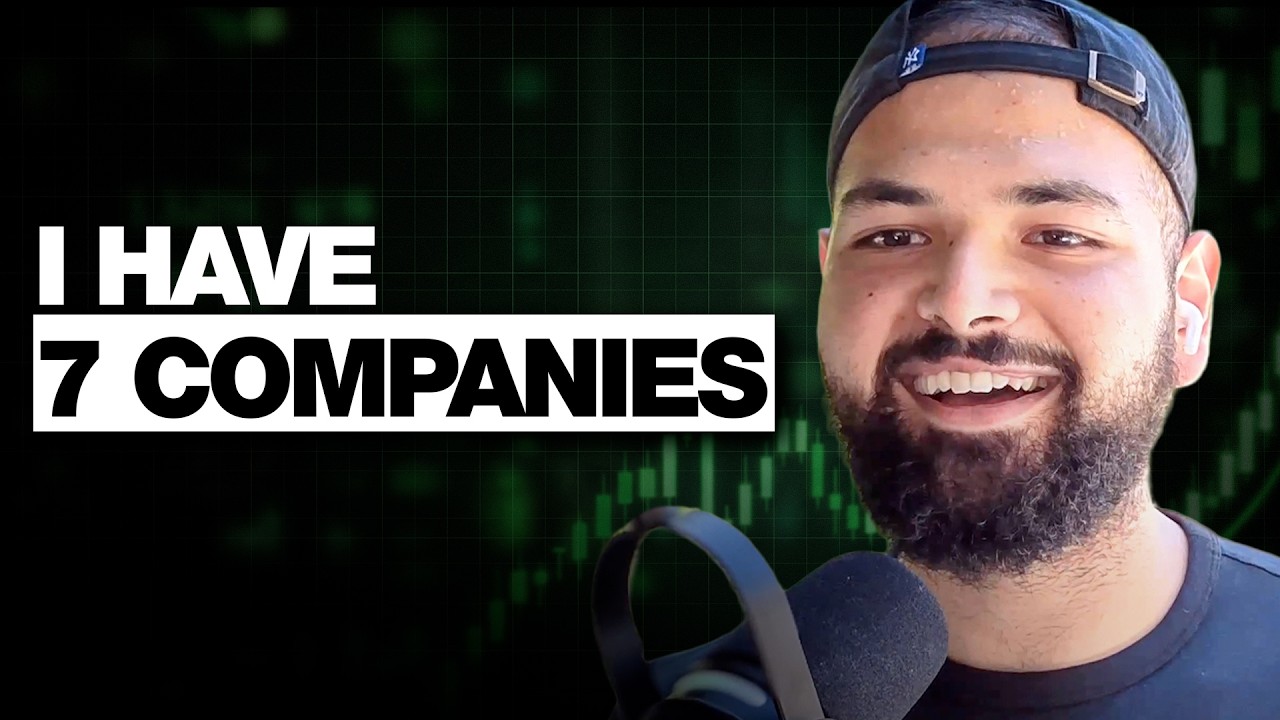
Mohammad Moahid is 27 years old and he runs the money for his entire family — his parents, his brother, his sister, and seven operating companies spread across Canada, Dubai, and Pakistan. He started his first company at 18 while he was still in university, scaled it to 200 employees and 100,000 event attendees in a single year, and sold it at 21 for low seven figures to his own co-founder. He did all of that while holding down the private equity job his dad made him take.
Like all Moneywise episodes, Mohammad breaks down his income, portfolio, and monthly expenses and then I, your humble host, pick it all apart.
We also went deep on: why he keeps almost nothing liquid, how a $50,000 monthly burn covers five people, buying a $3 million company off a line of credit, working under a father who's still chairman and alongside a brother who's his co-founder, why he's selling down the real estate that built the family name, and what he wants his own kids to inherit
Below you'll find my summary of the episode along with the entire transcript.
And by the way...this podcast, the concept of it came from Hampton. Hampton is a private, highly vetted community for high net worth founders started by Sam Parr. Members range from companies doing 3-5 million in revenue all the way up to hundreds of millions. The reason we started this podcast is because there are amazing conversations about money and growing companies that typically happen only behind closed doors, and we thought it would be awesome to share all of this information. If you're a CEO, founder, or business owner, check this out. New Moneywise episodes come out weekly.
Listen to this episode on:
Now, below are the notes and the full transcript.
The Numbers
- Family net worth: nine figures
- Share of it in real estate: ~90–95% — land and development across Canada
- Liquidity: about $10 million — and it's a business line of credit, not a cash account
- Personal cash on hand: around $50,000
- Monthly burn: ~$50,000 — covering himself, his parents, his brother, and his sister
- Food: roughly $10,000 a month of that burn
- First exit (age 21): low seven figures, "like around 2, 3 million," sold to his co-founder
- Second business: e-commerce gifting brand, shut down (not sold) when CAC rose
- Most recent acquisition: a $3 million supplements business, closed the week before recording
- Operating companies: 7 — line painting, real estate development, consumer electronics distribution (B2B), e-commerce/IoT, international distribution, eSIMs in 125 countries, plus reverse logistics in the works
- Team growth at Zero Agent (the AI company he started with his brother): quadrupled in four months
- Family: his dad is 55 and still chairman; his brother, six years younger, is his co-founder
All figures are as stated by Mohammad on the episode.
Three Generations: Built, Lost, Rebuilt
Mohammad grew up watching the full arc of family money happen inside one house. His great-grandfather built a fortune in Pakistan — his mother's side was one of the most successful families in the country. Then the next generation gave it back.
"Great-grandfather did very, very well from the business perspective. My mom grew up one of the most successful families in the country of Pakistan... And since then, you know, the family kind of went on the other side of the thing. Instead of it going up, it went down. My dad re-picked up that spark and really pushed it forward."
His dad moved the family to Canada when Mohammad was 11, started over in a sales job, watched his employer nearly get acquired out from under him, and started his own company out of that scare. That's the company group Mohammad now helps run.
"For me growing up, I always had both worlds that I saw."
He Started at 18, Exited at 21, and Kept the Corporate Job Anyway
Mohammad's first real company was in events and hospitality. He saw two other entrepreneurs doing it, decided he could do it better, and copied them.
"I was 18 at the time, and I said, 'Hey, listen, it would actually be very, very easy for me to copy them, and I know there are certain things that they're not doing that are as efficient.'... We ran them out of business, and then we expanded across Canada."
At its peak it had over 200 employees and put 100,000 people through events in a year. He sold it at 21 to his co-founder for low seven figures — not because it was failing, but because he'd already found the next thing (e-commerce, right as COVID reshaped digital advertising).
The strange part: he was running all of it at night, after work at a private equity shop his father insisted he take.
"My dad always wanted me to get some corporate experience, so he actually was the one that was the reason that I took that job... I'd be on my laptop after work, you know, at 8:00, 9:00 PM after leaving the office."
He deliberately picked PE as his entry point. "I started my career off in private equity to learn those skills because I knew at some point I was gonna be buying businesses." When he finally quit, his dad didn't want him to.
Nine Figures on Paper, $50K in the Bank
This is the part of the episode that will make cash-heavy founders uncomfortable. The family net worth is nine figures, and around 90% of it sits in real estate. Group liquidity is about $10 million — and it isn't cash, it's a business line of credit. Personally, Mohammad keeps about $50,000.
"On the personal side, I don't keep much liquid at all really. Oftentimes I'm having to draw down and bring back."
Asked whether that scares him:
"I actually prefer being in a position where money is parked up in investments that I believe will hold far more long-term value than having the cash on hand."
He pulls out roughly what the family spends and nothing more. "I don't wanna keep additional money on hand when I could have it allocated to something." If one company has a good year, the surplus gets injected into whichever of the seven he thinks has the highest ROI that year — right now that's Zero Agent, the AI transformation company he built with his 21-year-old brother, where the team has quadrupled in four months.
And the flip side of that: he's actively looking to liquidate part of the real estate portfolio his father built. "Land is great, but it's not a cash yielding kind of property a lot of times. So we're moving away from that and more into cash flowing assets."
What $50,000 a Month Actually Buys (For Five People)
When Mohammad says $50K a month, he doesn't mean his personal life. He means the household.
"When I say 50, I'm also including my family, right? I have my brother as well, and I've got my sister, and I've got my parents, which we all as a unit kinda stick together. So I manage the family's finances, so to speak."
The breakdown is unglamorous: roughly $10,000 a month on food ("I do like to eat at nice restaurants"), a meaningful chunk on travel — they fly often, business or first, never private.
"I kinda want to, but I've never found a reason to."
The frugality isn't performance. He had access to his dad's credit card growing up and mostly didn't use it, because he watched a man of real means wear the same shirt for seven years. "It's not really in his nature to be wasteful... so I kinda kept that value on myself as well."
How the Family Buys Companies
Deals don't come from brokers. They come from friends, family, and partners who are putting their own capital in.
"We don't entertain deals from brokers all the time... These are people that are also probably putting up capital themselves. They're bringing something over to us. They're also in."
Mohammad does the modeling and the initial screen. The most recent one closed the week before recording: a $3 million supplements business, bought to add a category next to their existing electronics and IoT e-commerce operation. Because of the risk profile, they structured a vesting period for the founder rather than a clean cash-out.
The money came off the $10M line. "We keep that for opportunities like this, where, okay, this looks like a good business. Let's pick it up."
Working For Your Dad, Managing Your Brother
His father is 55 and still chairman. Mohammad is quietly stepping into the seat rather than being handed it.
"He's not necessarily giving me the reins, but I'm kinda stepping up and taking those, and getting a better understanding of everything going on."
His brother, six years younger, skipped school entirely, started his own business at 16, and is the deeper technical half of Zero Agent. Mohammad says that relationship — not the companies — is what he's proudest of.
"At the end of the day, money's great to have, but if you don't have the people around you that you can enjoy those moments with, it doesn't really matter."
What He Wants His Kids to Inherit — and What He Doesn't
Mohammad doesn't plan to box his future kids into the family business. What he wants to transfer is discipline, not a job title.
He points at friends from billionaire families who got $50 a week as teenagers, and at friends with far less money who make financial decisions he can't understand. His conclusion is the same either way: the asset is decision-making.
"Having that strong decision-making comes from discipline and comes from knowing what makes sense and what doesn't."
When Daniel raises the families who require children to work elsewhere for a few years before joining, Mohammad agrees immediately — because it's what happened to him. "That's kinda what happened to me, right? My dad also, he's like, 'Hey, listen. Go work corporate.'"
What he would insist on is the obligation that comes with the money: "I would definitely want them to hold that responsibility of being wealthy... in order to give back."
The Number Isn't the Point
Asked what amount would finally make him happy, Mohammad reframes the question around throughput instead of balance.
"It's actually more tied to the amount of money that I can distribute... I just want to be able to have a lot more flowing through me and impact hundreds of millions of people."
His framework for giving is scaled to what you have, not what you give:
"If someone has $10 and they give $5, it's better than somebody who has $10,000 and they gave $100."
And the legacy he's actually protecting isn't his own. "I want my dad's legacy to be about [that] because I've seen him go through that entire journey."
Other Key Quotes
"You gotta choose your journey, and if you don't choose it, life will choose it for you."
"I don't wanna keep additional money on hand when I could have it allocated to something."
"My belief is you wanna have your money be working at all times."
"Land is great, but it's not a cash yielding kind of property a lot of times."
"I've actually never flown private. I kinda want to, but I've never found a reason to."
"Money's great to have, but if you don't have the people around you that you can enjoy those moments with, it doesn't really matter."
"Everybody has been gifted with stewarding a specific set of resources right now, whether that's wealth or health or time."
"No matter how much water you have in the tap, if you only need to use a little bit to wash your hands, why would you waste the rest of it?"
Links You Might Like
- Join Hampton Community: https://joinhampton.com
- Watch on YouTube: https://www.youtube.com/watch?v=TFQ5MpDI_lo
- Moneywise net worth reveal: https://joinhampton.com/mw-wr
- MoneyWise Podcast: Full episode archive
Full Transcript
Daniel Berk: Mohammad Moahid is 27 years old. He started his first company at 18 while he was still in school, scaled it to 200 employees and 100,000 people through his events in a single year, and sold it at 21 for low seven figures to his own co-founder because he'd already spotted his next business idea. He was doing all that while holding down a private equity job his dad made him take. Today, he sits over seven operating companies with his family business. They do line painting, real estate development across Canada, consumer electronics, eSIMs in 125 countries, and the week before we recorded this episode, they bought a supplement business for $3 million. He runs the family's money. He spends about 50,000 a month covering all of them, his parents, his brother, his sister, and he keeps almost nothing in cash. We start this episode with how the money was actually made. His great-grandfather built it in Pakistan, and his dad rebuilt the whole thing from a sales job after moving to Canada. Then we go line by line through how he runs it now, what he spends, what he keeps liquid, and why he's pulling money out of the business that made his family's name. I met Mohammad through the Hampton community we're both in, which is for founders and operators who are doing 25 million in revenue on average. I can't overstate how much serendipity comes from being in a community like Hampton. It's awesome, and I think you should check it out. If you're interested, just go to joinhampton.com to learn more. Now, let's get right into it. This is Money Wise. I'm Daniel Berk, your host. Here's Mohammad. Mohammad, thank you so much for joining Money Wise today. How are you doing?
Mohammad Moahid: Dude, it's a pleasure to be here, Daniel. Thank you so much for having me.
Daniel Berk: I'm really excited to learn a little bit about who you are, what brings you to Money Wise, some of your background. Uh, tell me how you grew up around money and what really led to building successful businesses and becoming wealthy.
Mohammad Moahid: I'm gonna cut right to the jump here. So long story short, great-grandfather did very, very well from the business perspective. My mom grew up one of the most successful families in the country of Pakistan. Uh, grandfather was part of the first delegation that went out to Japan, and this is kind of like early 90-- 90s. And since then, you know, the family kind of went on the other side of the thing. Instead of it going up, it went down. My dad re-picked up that spark and, and really pushed it forward. So, you know, for me growing up, I always had both worlds that I saw. And so, you know, my dad really put in a ton of hard work, and he was kind of the first entrepreneur that I had as a leader, a role model that I looked up to, and much of my success today I can credit to him.
Daniel Berk: I love that. And when you started building businesses, did you originally start building those in Pakistan, or where did you grow up, and when did you start becoming an entrepreneur yourself?
Mohammad Moahid: That's great. So I grew up in Pakistan until I was around 11. I went to grade school there and then moved to Canada because my dad saw more opportunity here, and he loved the environment here to grow. And so he moved over here, and he kind of had that immigrant dream that everyone kinda has. And he started off in a sales job, so he came here in a job capacity. And then, you know, within the first two, three years, he saw things take the other, the, like a nosedive where his company was about to get acquired. He didn't know whether he was gonna have employment or not, and so that is what pushed him to then start his own company. Um, and then the rest is history. Since then, he's scaled up quite a lot, uh, continued to add, uh, different verticals of the business, continued to expand, um, and I was fortunate enough to see that whole journey throughout. And then also on my own end, you know, I was kind of always separate from that piece of the action. Like, you know, my dad was obviously building on his side.
Mohammad Moahid: And again, when I was in high school, I, I saw him facing those challenges to scale all those things. And so I actually started my first business, um, around then. And then since then, you know, it's been multiple kind of ups and downs in that entrepreneurial journey. Um, you know, but today I am here and, uh, building something new, so super exciting times.
Daniel Berk: And, I mean, did you know you would be an entrepreneur your whole life? I mean, it sounds like you were around wealth and businesses and that entrepreneurial spirit. I mean, did you always know that you would build something of your own, or was that a surprise to you?
Mohammad Moahid: 100%. I always knew I was gonna be an entrepreneur. I started my career off in private equity to learn those skills because I knew at some point I was gonna be buying businesses, and so I actually wanted to get that experience, uh, in that environment. And I also did invest in banking, so I always wanted to be around that kind of energy. And again, like I said, growing up, I was always around, uh, people that were business owners, and I saw, uh, what they had built. And for me, it's always you gotta choose your journey, and if you don't choose it, life will choose it for you. So for me, it was always like a proactive approach where, "Hey, I'm trying to identify opportunity where I can see, uh, like a large moat that I can build in and then kinda scale that." So, uh, you know, my first business, I, I kinda saw that opportunity. I saw someone else doing it, actually. I was-- I saw another two entrepreneurs doing a business, and I said, "Hey, like this is actually a very, very easy business." And I was 18 at the time, and I said, "Hey, listen, it would actually be very, very easy for me to copy them, and I know there are certain things that they're not doing that are as efficient, and I could easily run..." So I actually started my first company, um, back in, you know, university. That was like, I would say like a proper company. And, uh, yeah, we ran that other company out of business. It was in the events hospitality space. We ran them out of business, and then we expanded across Canada, uh, and, and did quite well w-with that first venture. So I was very proud of myself. At, at some point, we had over 200 employees, and we did 100,000 people, uh, that came to our events a-across that year. So it was, uh, quite an accomplishment for me, uh, 'cause I was only 21 at the time. So, you know-
Daniel Berk: That's great ... to see that
Daniel Berk: To see that kind of like s- you know, early success-
Mohammad Moahid: Yeah ... uh, was very exciting, but also humbling, uh, at the same time.
Daniel Berk: So you started that at 18 while you were in school for business?
Mohammad Moahid: Yeah. I, I went to school-
Daniel Berk: Or you were-
Mohammad Moahid: ... for business. Yep.
Daniel Berk: And then you-
Mohammad Moahid: I went to, I went to sc- Sorry.
Daniel Berk: I was gonna say, is it, you w- was there an exit or liquidity event at 21? Or when you say you did really well with that, what, what was the outcome of that business?
Mohammad Moahid: Yeah, I sold that business to my partner who, uh, I was my co-founder. Um, I was done with that business, and I had already seen the next business that I wanted to build. So I exited to my co- I mean, that business is still alive today. Sure. So I exited to him, and, uh, I continued building in the e-commerce sector post that. So, uh, again, like I said, this was in the events hospitality space. And when I was 21, it was around kinda COVID time. And so at that point in time, I had seen in that COVID time what I could do on the d- digital advertising side of things, on the e-commerce side of things. And so for me, you know, post-COVID, we did really well. I mean, that was actually our best year that year after COVID. But at the same time, I was also seeing a new fire, which was in the e-commerce side, and so I was continuing to scale that piece, uh, while I was still, uh, you know, operating that, that, you know, company. It's called SickSocial.
Mohammad Moahid: So, uh, while I was still operating that, I continued scaling on the e-commerce side and, and we were selling a lot of, you know, gifts products, like different kind of funny products, even like a Do- uh, Donald Trump, like toilet paper roll, um, that kind of thing. Um- That's cool ... it, it was a, it was a good, like gifting kind of business, and we did well. Uh, and then, you know, since then I, I exited that one as well. Uh, that one-
Daniel Berk: What were the two exit co- or the acquisition prices for the first one, your co-founder, and that second one?
Mohammad Moahid: Uh, the first one is like in the seven-figure range, um, so like low seven figures.
Daniel Berk: Low seven figures? Okay.
Mohammad Moahid: Yeah. Low-
Daniel Berk: Like 1 million, 2 million?
Mohammad Moahid: Yeah, it was like around, I would say like 2, 3 million.
Daniel Berk: Okay.
Mohammad Moahid: Um, and so I exited that. We didn't have like s- uh, a vesting or anything like that. We're, it was a very cash-rich business, so it was kind of like a easy, um, way to exit that. And then the second one, uh, I, I scaled that one. Uh, and that one I actually just kind of shut down myself because-
Daniel Berk: Okay ...
Mohammad Moahid: uh, the customer acquisition costs ended up rising quite a lot, and I had made a ton of money on it. So, uh, it wasn't really necessarily an eg- exit or liquidity event, uh, but it was a very, very strong cash flowing business. So, you know, I did well with that.
Daniel Berk: So you said you started your career in private equity, but then you just told me about two businesses that don't sound like private equity to me at all. So help me understand, when did you start your career? And I'm putting that in quotes for those listening. When did private equity start? 'Cause it, that, those two businesses are a little bit different, right?
Mohammad Moahid: Yeah. It was good. So I was actually working at a PE shop while I was running these businesses. 'Cause for me, uh, it was always about delegation. Like, you know, even day one, I was like, "Okay, the only way I can really scale is I've gotta build a system that can be delegated, and I gotta find people that I can delegate to." So my co-founder, who was more on the ops side, um, I was a little bit more on the strategy finance side of things, um, and like v- vision/like growth. Uh, and so we actually found a initial team that was very strong. And so for me, you know, I would really just be... You know, in the event space, a lot of times people will say you have to be there physically in order to scale that business, and I proved that you don't. Uh, 'cause I would be on my laptop after work, you know, at 8:00, 9:00 PM after like leaving the office. Uh, and I would be like checking in with my teams and be like, "Hey guys, you know, how's this event? How's that event?" And then I'm seeing the video footage also come in, and it's like, okay, like this looks overall pretty good. Yeah. So, uh, that's kinda how that started. And then, then I quit 'cause I was like, you know what? Honestly, this is scaling way too quickly. Uh, and so then I, I quit that, you know, PE, and I was like, you know what? I guess the opportunity has been built up enough where I feel comfortable i- in jumping in. Sure. Because, uh, my dad always wanted me to get some corporate experience, so he actually was the one that was the reason that I took that job 'cause he was like, "You know, you have to work corporate." And so I was like, "Okay, fine. Let me do it." Put, put in my... I was only there for like a year.
Daniel Berk: Uh-
Mohammad Moahid: Okay ... put in like my, my year in and I was like, okay, you know what? Honestly, uh, it's way more lucrative for me to jump out of this now.
Daniel Berk: Yeah. And so your parents' parents had money and businesses. Your parents had a business. Sounds like you were involved in that. When you launched your own private equity and started building yourself, was there already some money to your name, or did you start, you know, from scratch? I mean, were your parents like, "No, no, no, you're on your own. You gotta build the way we built"? Or I mean, tell me how that worked.
Mohammad Moahid: Yeah.
Mohammad Moahid: My, my parents had always been very easy with me o- on money. Like I always had my dad's credit card. I could pretty much buy whatever I wanted, like growing up. Like, you know, I... Money was never really kind of like something that was restrained from me. So it wasn't really, you know, the lack of money that got me excited, but more so it was I wanted to earn it myself and then spend it. I think that's kinda what it was. And I would always save money, like whatever gifts I got and all this, so I always kinda had money in that sense. And then I also had like my dad's card if I, you know, wanted to use his money as well. So it was always like I have mine and then I have his to access. But you know, again, he doesn't come from a, a mindset either where he would be wasteful, uh, despite him doing quite well. So like, you know, he's the type of person that will even wear a shirt from like seven years ago. I saw him wearing a shirt the other day from like seven years ago. I was like, "Oh, I didn't even... I saw you in a picture with that shirt," you know? And that's like framed in our, in our house. I'm like, "I can't believe you still have that one." So, you know, it's not really, uh, in his nature to be, you know, wasteful or, or excessively spend, and so I kinda saw that value in him. And so I kind of kept that value on myself as well, where I would be very conservative with the way I would spend. Because for my dad, he kind of grew up, like I said, where he had to earn all of it himself-
Daniel Berk: Mm-hmm
Mohammad Moahid: ... uh, to a large degree. And so that value for money, uh, that's one thing he definitely taught me.
Daniel Berk: You had inherited quite a bit from your parents early on, and you started-
Mohammad Moahid: Yeah ...
Daniel Berk: ... with wealth. And now fast-forward, you, you mentioned that was 18, and you are how old now?
Mohammad Moahid: I'm 27.
Daniel Berk: Okay. So, uh, let's say nine years, let's make it 10 just to make that easier. What's happened in those 10 years?
Mohammad Moahid: Uh, one of the companies my dad started was a real estate development one, and so, you know, we own a ton of land, um, across Canada really, uh, specifically focused in, you know, two or three, uh, municipalities where, uh, we do a large amount of kind of construction and, and building.
Daniel Berk: And so you mentioned most of it's in real estate. What percent of that is in real estate?
Mohammad Moahid: I'd say like 95%. 90%.
Daniel Berk: Okay. 90... So let's call it 90% of it in real estate.
Mohammad Moahid: Yeah.
Daniel Berk: And then the companies you're invested in and you have shares in, how many companies is that?
Mohammad Moahid: Uh, we have seven companies.
Daniel Berk: Okay.
Mohammad Moahid: Um, and we were looking at an eighth one, but, uh, yeah, the companies that we own, uh, we're in line painting, so painting those, like, lines on the road. That's one of our companies, Real Estate Development I mentioned. Uh, we own a consumer electronics distribution company, uh, through which we sell B2B. Uh, we also own a company that does the same thing, but it's just more on the e-commerce side. So IoT, consumer electronic devices, we sell through Amazon, Best Buy, Walmart, um, across, uh, you know, the US, Canada. Uh, and then we have another company that is focused on the international distribution. Uh, so this one is more on the Latin America, uh, Dubai, Hong Kong side of things. Uh, and then we also have, uh, another company that is focused on, like, uh, telecommunication services. So eSIMs specifically, uh, where, you know, people are traveling and they're buying eSIM. So we own a company, We Roam, uh, through which people that even listen to this podcast can go out and, and buy eSIM wherever country they're in. Uh, so we're partnered with, I think, 125 countries-
Daniel Berk: Okay
Mohammad Moahid: ... uh, that we, that we provide coverage in. So, uh, that's kind of like our eSIM division. Uh, and then we also, uh, are looking at into the real- uh, the reverse logistics space. So that's kind of another space where, uh, it's more so on the repair side of consumer electronics, uh, specifically.
Mohammad Moahid: Uh, but that's kind of like, yeah, the, the businesses that we own, uh, as a group-
Daniel Berk: -Okay ... as a group.
Mohammad Moahid: And then me personally, um, I also own an e-commerce business that I created on my own end. Uh, and then also, um, my brother and I started the company that I'm, you know, even this logo here, Zero Agent, uh, we're a AI transformation company where we saw a lot of, uh, revenue and, and synergy we were able to create within our own companies, and so we, we decided to, you know, offer that and, and scale that, uh, as a, as additional company as well.
Daniel Berk: When do you feel like in your journey money started to matter to you? 'Cause it, starting where you started is, is awesome. I think, I think a lot of people would, would, would die to start at what a lot of people are even chasing from zero. You started at a fairly successful number, but now, you know, that's grown many times over. I mean, where, where did you start really getting back into the game of like, "Oh, I want this number to be bigger," or is it not about the money to you?
Mohammad Moahid: I don't think it's about the money specifically. Uh, I, I like the number. Like, I do definitely want to increase that quite a lot. Uh, for me though, it's about the impact that one has created in the lives of people, and I love entrepreneurship because I view it as a form of art, where it's really your impact on society, whatever you wanted to create, you created, and now it has manifested not only in your own life, but also in the lives of other people when people are impacted, uh, and touched. Uh, I love this Steve Jobs quote which says, "Everything that we call life around us has been created by humans that are no smarter or dumber than we are." So I, I feel like with entrepreneurship it's a pretty level playing field. Um, and that's why, you know, a country like Canada or America is so great because people can really chase their dreams and have the opportunity to mer- meritocratically, you know, work.
Daniel Berk: What liquid do you have? Is it about 10 million then is what's left over?
Mohammad Moahid: Yeah. Uh, so part of the liquidity is in, uh, the business side of things, like I said. You know, some of our businesses have, um, you know, because of the needs of the business, like operating cash flow. Uh, on the personal side, I don't keep much liquid at all really. Um, oftentimes I'm like having to, to draw down and, and bring back. So I'm actually, you know, not very, um, you know, heavy from a personal ca- cash side.
Daniel Berk: What do you have personally?
Mohammad Moahid: Maybe like $50,000.
Daniel Berk: Okay. And is that ever something that concerns you with having so much built into illiquid assets?
Mohammad Moahid: I actually prefer being in a position where, you know, money is parked up in investments that I believe will hold far more long-term value than, you know, having the cash on hand. Um, I don't necessarily, like I said, spend a ton of money. Um, so it's like for me it's never really a concern. And then, again, I, I obviously do draw dividends and things like that from companies, so, you know, I do have, um, kind of that piece to keep things kind of moving.
Daniel Berk: Yeah. And, and what does your personal burn look like monthly then with the dividends you're pulling and the cash flow that you do have?
Mohammad Moahid: I'd say around, around 50. Yeah. I'd say like around-
Daniel Berk: You're, so you're spending 50 per month?
Mohammad Moahid: Yeah, roughly.
Daniel Berk: Okay. So you're pulling out and spending exactly what you need to break even every month.
Mohammad Moahid: Yeah. Around, roundabout, yeah.
Daniel Berk: Okay. I don't wanna keep additional money on hand-
Mohammad Moahid: Yeah ... uh, when I could have it allocated to something.
Mohammad Moahid: And for me, like I'm even the type of person that I, if I do have extra or if, you know, if I get we could do a good deal and there's one company is doing better this year, for example, then I'll actually wanna inject that, uh, into what I believe is like the highest ROI opportunity for, um, our group of companies, where, uh, that, that's where like the beauty of it is as well, where we can see different opportunities in, in different areas i- in the markets where it's like, okay, like this actually, this business, like Zero Agent, the reason we're so, uh, heavily invested in this one specifically, uh, and over the last like four months we've quadrupled our team. So the, the reason for that is because we know that, hey, this business is right now something that people need, and we can create a ton of value, uh, for society and for different businesses. So this is a business that will be Better positioned at this time versus the real estate development one, which, you know, right now I'm actually looking to liquidate, um, some part of it because, you know, I don't personally believe that, you know, over this, let's just say, next five-year period, that's gonna be the highest ROI on that money. Like, if we just take that and reallocate it, uh, we may end up in a better, um, you know, position. Yeah. You know, uh, like multiple-wise, so that's kinda like how I view, uh, these things.
Daniel Berk: Mohammad keeps almost nothing in cash personally. Not because he can't, but because he thinks money sitting still is money doing nothing. Every dollar gets pushed back into whichever of the seven family companies he thinks has the best return that year. These types of capital allocation conversations constantly happen inside of Hampton, which is a community for founders and CEOs doing at least three million in revenue. If that's the type of conversation that excites you, check it out at joinhampton.com. All right, Moneywise listeners, quick reality check. It's that time of year when you catch yourself thinking, "Why didn't I start earlier?" We knew summer was coming. It always does. And if you keep doing what you usually do, you'll blink, and it'll be New Year's again. Same story, same body, same excuses. That's why today's sponsor is Daily Body Coach. Daily Body Coach is a premium online coaching service for ambitious entrepreneurs and executives who want their body to perform at the same level as their business. Training is built around your schedule. Nutrition is built around your specific needs. There are clear targets and clear metrics. And most importantly, there's no guesswork, just science and a multidisciplinary team covering training, nutrition, and the psychology behind behavior change. Daily Body Coach is run by Anthony Monica, who's a Hampton member himself. And in fact, a bunch of other Hampton members are using it and have been showing great results. Yes, you'll look better this summer, leaner, stronger, sharper. But the real win is that you'll stop carrying a body that's taxing your energy, confidence, and longevity. If you're serious about fat loss, muscle gain, and building a body that supports your standards, don't think about it, don't bookmark it, don't push it to Monday. Click the link in the description, and I'll hook you up with Anthony directly. Check out dailybodycoach.com/moneywise. That's dailybodycoach.com/moneywise.
Daniel Berk: Just hearing you talk, 50 a month just sounds so low. Uh, what is, what are you spending 50 a month on? I mean, how does that break out?
Mohammad Moahid: So I would say, a, a good chunk of it is on food, enter- like travel and, and those things. Like we... I do like to eat, you know-
Daniel Berk: Yeah
Mohammad Moahid: ... at nice restaurants and stuff, so it ends up kind of adding up quickly. Uh, so I'd say like a good portion of it is on food.
Daniel Berk: Like how much? Like 10,000 a month on food?
Mohammad Moahid: Yeah, we probably spend, I would, I would imagine it's around there-
Daniel Berk: Okay
Mohammad Moahid: ... um, on food.
Mohammad Moahid: 'Cause I also-- So for me, it's also like when I say 50, I'm also including like my family, right? So- Sure ... you know, for u- for us, like it's not really like my personal finances, so to speak, but it's like, you know, I have my brother as well, um, and I've got my sister, and I've got my parents, which like we all as a unit, um, kinda stick together. So you know, I manage like the family's finances, so to speak. So yeah, I'd say like we spend around there, and then, uh, the rest of it would be, uh, I would say a mix of, um, gosh, I gotta think. Travel, we spend a good amount of money on traveling. I'd say like that ends up probably-
Daniel Berk: Are you like flying like every month somewhere or what does travel mean?
Mohammad Moahid: Yeah, we fly pretty often.
Daniel Berk: Okay. Like a couple times a month probably. Um, even one- You fly coach or you fly in first class? Private?
Mohammad Moahid: Uh, no, no, probably like business, first class, like not, not private. Yeah. Um, I've actually never fo-flown private.
Daniel Berk: No?
Mohammad Moahid: Um, I, I kinda want to, but it's like, you know, I've never found a reason to. So walk me through like how, how some of these acquisitions work. So 90% of it in real estate, and it's a family business. So when you go to look at and do due diligence on a new property, what's that process like? How do you decide whether or not one's worth purchasing? Who actually puts the money front for the property, and how involved are you personally in that acquisition?
Mohammad Moahid: I've been more as an observer, but trying to get more involved recently on that side. The way we evaluate a property is we'll first look at where the property is, and then if we know that spe-specific, like geographical location, like I said, we mainly focus on like two, three, uh, kinda towns, mu-municipalities. And so after that, we get a better understanding of, "Hey, like how much money do we have to put in here in order to materially impact the cash flows that this property generates?" You know, what-whatever it generates currently, plus like what we think are realistic, um, you know, cash flows from that property over that period in time. So that's kinda like how I would say the initial kind of evaluation process looks like. And then obviously, we go deeper into DD and-
Daniel Berk: Mm-hmm ...
Mohammad Moahid: um, and then figure out financing and that, that sort of thing. In terms of like how we, you know, view financing, you know, we've got our pool of investors that are our friends or family, uh, that we kinda work within, uh, and then also like our own money. So we'll put up our own money sometimes, depending on the deals, as-specifically, um, on, on what we need.
Daniel Berk: Okay. So when you look at the family finances, you said you're the one that kind of manages that?
Mohammad Moahid: I'm actually very heavily involved in that process. You know, where should we buy? What, what, you know, this looks like. And again, like I said, we operate a lot of times with like trusted, you know, f-family, partners, friends. And so a lot of times we're doing business, uh, with these people. And so someone will bring a deal over to us and say, "Hey, listen, like this is a good company. It's worth buying." Uh, they'll have done kind of their own initial, uh, screening on that deal, and we, we don't entertain deals from brokers all the time. Like, it's not like these are brokers. These are people that are also probably putting up capital themselves. And so, you know, they're bringing something over to us. Uh, they're also in, and then they say, "Hey, like what do you think of this?" And then I'll, on my end, do the, you know, financial Uh, modeling and, again, the initial screening part and say, "Okay, like, you know, honestly, this could make sense for us given-"
Daniel Berk: Mm-hmm.
Mohammad Moahid: And you asked earlier about the liquidity thing as well. It's like, again, my belief is you wanna have your money be working-
Daniel Berk: Mm ...
Mohammad Moahid: at all times. Um, so that's where it's like, okay, do we have additional liquidity right now to put additional money towards this? And we are always reinvesting.
Mohammad Moahid: Uh, I also mentioned, you know, for us, like, like dividends that we get is a lot of time, like just reinvest it back. So, you know, we are actually looking at these deals on a pretty continual... Like we bought a company last week, for example, right? Um, it was someone that I'd met. Uh, they were running an e-commerce business. Uh, like I said, you know, one of our companies, we do e-commerce on electronics and IoT devices. Uh, they were running a supplements business, and we're looking at supplements as an additional category to add. And so we said, "Okay, you know what? This looks like..." We, we did some due diligence. Like, "Okay, well, this looks like a great business." And then we, we picked that up.
Daniel Berk: And how much did you spend on that company?
Mohammad Moahid: Uh, that one was like a 3 million, um, you know, transaction.
Daniel Berk: So when you acquire that company, is it like, uh, you know, acquisition based on tranches and milestones over time, or is it a cash purchase for 3 million that you fully own the company immediately? That--
Mohammad Moahid: This one specifically, because of the risk level, it was one where we had, like we have a vesting kind of period built out for the founder. The founder has done a complete handoff over to us. Uh, but at the same time, there is still that piece that we're looking at.
Daniel Berk: And so where does the cash come from for an acquisition like that?
Mohammad Moahid: We have like a, like I said, o- an operating cash flow, which is like that, like the 10 million-ish liquidity that we have-
Daniel Berk: -Okay
Mohammad Moahid: ...that we keep for opportunities like this, where, okay, like this looks like a good business. Let's pick it up. Uh, and then, yeah, like a lot of times it's that like flow. We're, we're very mindful of our, our cash flow. That's one thing that we, um, you know, we look at quite a lot in terms of like, okay, how much cash are we generating? How much cash are we reinvesting? Um, what are we buying? Um, all of those things are actually like, you know, questions. And like I said, you know, one of the reasons we are moving away from land is because a lot of times, like land is great, but it's not a cash yielding, uh, kind of property a lot of times. So it's, we're moving away from that and more into, uh, cash flowing assets.
Daniel Berk: So you have a, a, a... It's an interesting family business. Uh, you're- ... managing the personal spend for your whole family, your immediate family, and there's the 10 million, which is a cash operation, you know, cash flow, you know, property. Let's call it liquid cash. Is it li- literal cash, or is this tied to different business properties? Like how does that... How do you pull money out of that? Is it a cash account?
Mohammad Moahid: No, it's, it's a, it's like a business line of credit type.
Daniel Berk: Okay. So line of credit, 10 million, 50,000 a month. I mean, do you like working with your family t- in this capacity? I mean, this is a very unique situation.
Mohammad Moahid: It is interesting 'cause it has its pros and it has its cons.
Daniel Berk: Yeah.
Mohammad Moahid: Uh, y- you know, working with your brother, uh, 'cause I, I work close, like most closely with him.
Daniel Berk: You're six years older. It's not just, uh, your brother. You're six years older than your brother, so like, tell me about that relationship.
Mohammad Moahid: He, he's grown a ton, and that's actually, I would say, is the thing that I'm the most proud of, you know, despite the businesses and success. 'Cause, you know, at the end of the day, money's great to have, but it's like, if you don't have the people around you that, you know, you can enjoy those moments with, it doesn't really matter. Like, I'm still friends with a lot of my childhood friends, and I see them, you know, every few months. And so those relationships are actually what I hold most dear. Uh, and, you know, the relationships with- within my family, again, you know, may God protect every single one of them. Um, and the relationships that we, we have, I cherish those because with my brother especially, you know, being six years younger, um... And he didn't go to school, by the way.
Mohammad Moahid: He actually started his own... Like he, he has his own entrepreneurial journey. Like, he started his own business when he was 16. Uh, he's always been in like the tech, uh, engineering side of things more so, um, technical, uh, deep- deeper technical than, than I've been. So, uh, you know, it's a little bit, a lot of like mentorship and getting him to see certain things. Like, obviously certain views that we have don't always align. Uh, the good thing is because we're, we're close, like we do have a lot of the same beliefs, and we're aligned on a lot of things. We all, as the family grow older, um, you know, my, my parents, like my, my p- my dad is pretty young too. He's 55. So, you know, as... But now I'm trying to step more into those, like I said, seats because I wanna be the one that can take charge as my dad wants to spend less and less time, you know, working. Like, my dad will definitely, you know, be active, you know, till the day he, you know, again, may, may God give him a long life, is active. But at the same time, for me, he wants me to probably take that ownership seat where he's not necessarily giving me the, the reins, but I'm kinda taking, stepping up and taking those, um, and getting a better understanding of everything going on. Uh, so that's kinda what I spend a good amount of my time doing, is like understanding where he's at in different projects and different things that he's involved with and kinda coming into those. Because like I said, you know, I've had my own entrepreneurial journey, which is outside of, you know, you know, the family group of companies. So for me, a lot of times it is kinda going in and asking, "Oh, what's going on with that?" The good thing is my dad and I, we talk regularly, so, you know, I've always kind of heard what's happening in this company and that company through the grapevine, so to speak. And then over time, I've built up, uh, enough knowledge on that specific situation where, you know, he'll say, "Hey, take care of this," or, "Handle this," and I, you know, can, can figure it out for the most part. Yeah.
Daniel Berk: Earlier you said you're chasing, uh, is a lot more money. Uh, I don't know what that number is. What, what amount is gonna make you happy? What, what amount is, is, is attaining what you're finally searching for?
Mohammad Moahid: For, for me, it's actually more, again, not about the number of my, uh, like or amount of money I have, but it's actually more so tied to the amount of, like money that I can distribute. Because, you know, I, I do believe like money is a- Um, it's something that comes and goes. It's something that, like, you know, you have and, and, and you spend it and it moves. Yeah. And so I just want to be able to have a lot more flowing through me and impact, you know, hundreds of millions of people. Um, so that's kind of what my... B- even billions of people, like, that's kind of what my goal is, is, like, making sure that I can impact, um, and give to the people around me. That's why, you know, for me, like, these values are something that I hold very dear because, again, the, the reason, you know, I've never actually, uh, spent a lot of money or used this, my, my dad's card to, to do that is 'cause I understand that money isn't earned easily. Like, obviously when you get to a point where you can leverage and, and you have a lot more, uh, efficiency you can create even with small percentage points where, you know, even for example, the reason we're getting on the S, it's like, you know, even 5, 10, 20% is massive, right? But it's like, what do we do with that is what I care about more. And so, like, there isn't necessarily a dollar figure I have in mind, but it's more so about, like, how many people that I can impact through me, and that's what I want. Not my legacy, I mean, we'll see what happens with mine, but I want my dad's legacy to be about because, you know, like I said, I've seen him go through that entire journey.
Mohammad Moahid: And so I've always been grateful to have him as a role model because, you know, again, he's, he's been someone that's very humble and he's kept his head, head down and, and worked hard and, uh, he does what he can to help other people and I wanna continue that and carry that torch forward, uh, more so than, you know, having kind of other aspirations, uh, for, like, the purpose of my life really.
Daniel Berk: Yeah. I love how much you respect and admire your dad. I think that's awesome. Um, do, do you want kids someday of your own?
Mohammad Moahid: Yeah. You know, God willing, uh, maybe-
Daniel Berk: Do you-
Mohammad Moahid: ... maybe soon. Yeah.
Daniel Berk: Oh, well, that would be, that would be exciting. Do you think that your kids will be part of this family business as well, or will that be even, even an expectation you have for them?
Mohammad Moahid: I've actually thought about this quite a lot. I definitely want my kids to be very disciplined. Um, that's something that I had growing up where discipline is huge. I started, you know, horse riding when I was very young as well. I, you know, I'm part of Team Canada, um, and I play internationally for that. So, uh, I, I definitely want them to be connected to animals, nature, discipline. Now, on the business side, I actually... Again, for my dad, he never actually forced me to come into the entrepreneurship world. He-- Actually, he wanted me to, to go into, like, a-accounting. He, he said, "Hey, I'm actually financially not, like, my strong suit, so you should go into accounting." But, uh, for me, it, it's not gonna be about that for my kids. I want them to be very, uh, well-read and they should understand things deeply, but I don't necessarily see myself boxing them into a specific, like, job necessarily. Like, I'd rather have them have very strong worldviews that are very well informed.
Daniel Berk: I have a friend whose family owns a billion-dollar company and they would not let the children work in the family business for s- either two or four years after college. There's an expectation and even a requirement, "Hey, if you wanna work in the family business, you have to go do something else first." Not really to prove themselves necessarily, but like, "Hey, we don't want you just relying on this as, like, the only option, the, the, even the r- the given option. We want you to go experience the world." What do you think about that?
Mohammad Moahid: I agree with that fully. I mean, that's kinda what happened to me, right? So, uh, my dad also, he's like, "Hey, listen. Go work corporate." And when I say, like, he told me to do it, it's kind of like a requirement. Uh- Yeah ... he was very nice, so he's like, "Okay, just, just go do it. It'll be beneficial for you." But then I knew if I didn't that he would just be, like, a little, like, sad and disappointed, so I was like, "Okay, I'm gonna go ahead and do that." Yeah. Uh, even when I quit, like I-- he actually didn't want me to quit. He's like, "Your business is doing well, but you should still be working, you know, this corporate job." And I'm like, "Wait. Why, why do you want me to continue to do this? I can earn way more if I, you know, continue to scale my company. I love this company. I've grown it." Uh, but then he was like, "No, no, no. You still need to work." So I actually had to kinda, like, go back to back with him a little bit in order to even leave, uh, kinda that corporate side of things.
Daniel Berk: What, um, what would you say if your kids someday told you they just don't want to be part of the family business?
Mohammad Moahid: I, I would definitely encourage them to pursue whatever they're passionate about. And at the end of the day, if they can create value for society and, you know, be great citizens and uphold, you know, strong, subtle values, uh, I'd be happy. Uh, for me, that's what would matter more than them not coming into the family business.
Mohammad Moahid: But I would definitely, I would definitely want them to hold that responsibility, you know, of being wealthy, and I'd want them to use that position in society, that responsibility, that privilege, in order to give back and in order to make sure that, you know, we're doing the, the right thing. One of my mentors, you know, she comes from a, you know, a billionaire South African family. Uh, she told me, you know, she grew up in, uh... She's, like, you know, 70 plus now, so she, she grew up in South Africa at that time and, and she's, you know, white and she said, you know, her mother told her that y- there's a price for, you know... She would, like, grab her and she's like, "There's a price for, uh, the color of the skin and you gotta make sure you pay it, you know, forward." So that's kind of what I- Yeah ... definitely would want my kids to do. But yeah, for the family business, I, I wouldn't necessarily be super, super, uh, sad if they weren't part of that.
Daniel Berk: For anyone listening who maybe resonates with your story, maybe they're part of their family's business or they're wanting to start a family business of their own where their children someday maybe incorporate into that, what advice do you have for them? Of course, you've seen a lot. You've experienced a lot the last 27 years. Uh, what would you do differently, and what would you have them do, uh, if they could kind of hear your voice, uh, having seen that yourself?
Mohammad Moahid: I know tons of people that have family businesses. A lot of my friends that I grew up with that, like I said, are, like, my childhood friends, they all have family businesses, and one thing that I've seen across everybody is Discipline is key. In fact, one of my friends, he also belongs to a billionaire family, and his parents used to give him $50 a week, um, as an allowance. So, you know, I don't know, you know, who's listening to this, but, you know, $50 a week isn't really a lot, especially when you're, like, a teenager, and you're like, "Oh, I actually wanna do things." Yeah. And then you have $50 a week, so, uh, I think discipline is-
Daniel Berk: Particularly when you know there's billions.
Mohammad Moahid: Yeah, particularly when you know that, you know. Uh, obviously, like, things are always paid for in that sense, but, you know, they, they know that, you know, certain, like, experiences and certain things that, you know, they could be part of. But at the same time, like, for them, I would, I would say is, like, make sure that your kids or when you're dealing with these people, the decision-making element is incredibly strong. Uh, and having that strong decision-making comes from discipline and comes from knowing what makes sense and what doesn't. Um, I've had friends that are not super wealthy, and, you know, some of the financial decisions they make, I look at them and say, like, "To be honest, like, I don't know why you would do this, 'cause you're just wasting your money." But, you know, people obviously sometimes like that novelty and those things. Like, literally, you know, someone said to me, said, "Hey, like, what is $200 a month to you?" And I was like, "I'd rather not waste $200 a month when I don't need to." Sure. Like, why would I waste $200? So, you know, I think having that sense of humbleness is key because, you know, no matter how much, you know, water you have in the tap, if you only need to use a little bit to, you know, wash your hands, why would you waste the rest of it?
Daniel Berk: Something that became obvious in my conversation with Mohammad is that giving and altruism is what really matters most to him. The teaching he grew up with is that giving is measured against what you have. If you have $10 and you give five, that counts for more than $10,000 when you give 100. This type of approach to giving might resonate with you, especially if you grew up with some sort of faith or religion. I know it resonates with me.
Daniel Berk: Of all the conversations I have with ultra-high-net-worth people, the conversation around giving is one that people tend to feel very personal about. To Mohammad, accumulating more for the sake of having more goes against his core belief system. Uh, the way you talk a- it, it, it's very altruistic. You-- It sounds like it's very important to you to be a good steward of money and not to just lackadaisically spend it however you can. Even the water, you know, and, and washing your hands with the amount of water you need instead of wasting water, that's, that's interesting to me. How do you think about philanthropy and giving and being generous?
Mohammad Moahid: I believe that everybody has been gifted with stewarding a specific set of resources right now, whether that's wealth or whether that's health or whether that's time. Everyone has... And everyone has time, right? No matter if you're sick or healthy or old or young, you have time. And so it's really important to steward these resources in the way that benefits other people. So for me, that is a core belief that informs how I actually approach different situations as well, where I always ask to myself, "Is this the best way for me to steward even time?" And if I can, you know, give on my end, I always wanna be in the position of, of giving, uh, whether that's time, whether that's wealth, whether that's advice, uh, or skill. I always wanna be in that position. And, uh, for, again, for my kids as well, like I, I mentioned earlier in terms of values, that for me is, like, the biggest thing that anybody could really do because everybody lives for themselves, right? Like, it's like every single human being's desire is to go and fly private or to, to, to go Michelin star or to go, you know, really, really extravagant with the vacations. Uh, but, you know, all of those things really is, is for yourself. It's for your own kind of happiness or your family's happiness. But there's fewer people that will look towards other people because, you know, when you're giving without the expectation of anything in return or when you're giving purely for the other person, knowing that this person most likely won't be able to benefit you, that's what I'm always most interested in. So I do think philanthropy and being altruistic is massive, especially for everybody with the, you know, resources that they're told to steward, because nobody, when they pass away, will take anything with them. Uh, but it's more so having that dominion over those resources that, that we can, we can control.
Daniel Berk: Yeah. Giving without any expectation of return, I think that's... If everyone in the world decided to do that, the world would be a better place. I mean, I, I do-- I believe that in the core of my being. If everyone could be generous with what they have, whether a lot or a little, I think the world would be a better place.
Mohammad Moahid: 100%. This is super, super important, especially in today's day and age where we are in an era of bu-abundance, actually. There's tons of resources, and there are people without those resources. So especially us in North America, we're privileged versus the rest of the world, and I obviously get to see some of the, uh, in my travels, some of the poverty and, and some of the conditions people are going through. And, and, you know, us as educated people, and even if someone isn't entire- incredibly wealthy in North America, hey, at least they are educated. They speak English. They, they know generally a sense of the world, and, and they can definitely help people in other places that don't have that same sense. There's something psychological about giving when-- especially when it's a stretch. I don't know. For me, if I, if I'm giving a lot, that's like an uncomfortable amount, whether it's resources or money, it's like, "This, uh, this is uncomfortable, but, like, I know that's good for me to do." And one of the, the teachings in our religion is that you're always judged based on how much you have.
Mohammad Moahid: So if someone has $10 and they give $5, it's better than somebody who has $10,000 and they gave $100. So, you know, obviously that person that had $10, they gave away half of everything, so they definitely feel that impact a lot more. And so it's always also in accordance with or in balance with how much you have and how much you can give.
Daniel Berk: Well, Mohammad, I really appreciate you joining Moneywise today. Uh, your situation's really cool. I think a lot of people will learn a lot from you and just the way you think about business and family. Um, again, love how much you admire your family. That's very cool to me. Uh, it's something I resonate with a lot as a family man myself. Uh, but thanks a lot to, you know, just all the stuff you shared with us today. Really appreciate that.
Mohammad Moahid: Well, hey, I appreciate you having me here.
Daniel Berk: Of course. Take care.

Personally, I find being the CEO of a startup to be downright exhilarating. But, as I'm sure you well know, it can also be a bit lonely and stressful at times, too.
Because, let's be honest, if you're the kind of person with the guts to actually launch and run a startup, then you can bet everyone will always be asking you a thousand questions, expecting you to have all the right answers -- all the time.
And that's okay! Navigating this kind of pressure is the job.
But what about all the difficult questions that you have as you reach each new level of growth and success? For tax questions, you have an accountant. For legal, your attorney. And for tech. your dev team.
This is where Hampton comes in.
Hampton's a private and highly vetted network for high-growth founders and CEOs.