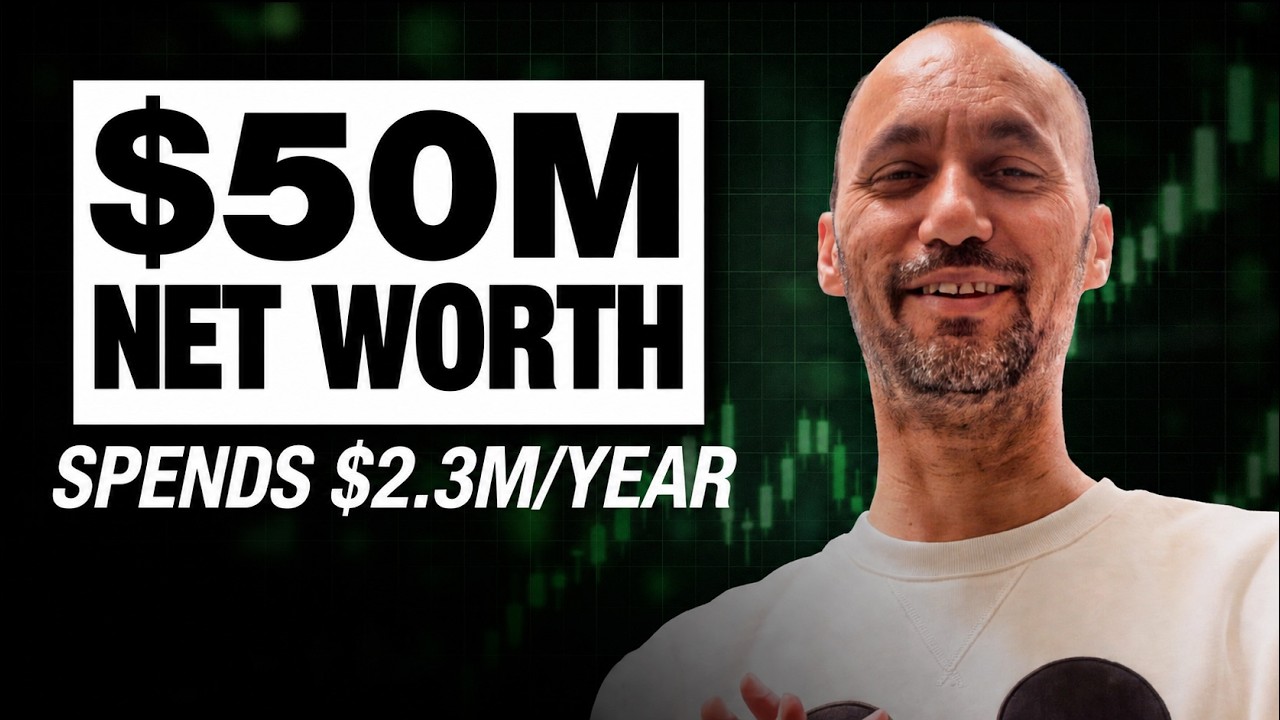
Matt Paulson Net Worth: $300 Million, $25M a Year From MarketBeat, and He'll Never Sell
Matt Paulson bootstrapped MarketBeat to $50M in revenue from a South Dakota college town. He takes home $25M a year, owns 2,000 apartment units and a private jet, and is worth about $300M. Here's where the money goes.
.webp)
Matt Paulson grew up in Mitchell, South Dakota, the son of a school librarian and a cop, collecting aluminum cans after baseball games for spending money. In college he worked at McDonald's because it was the only place that called him back. Today he runs MarketBeat, a bootstrapped financial media company doing $50 million in revenue. He takes home about $25 million a year, owns roughly 2,000 apartment units, a portfolio of Starbucks buildings, and a private jet with his logo on the tail. He has never raised a dollar of outside money, and he says he would sooner sell one of his kids than sell MarketBeat.
Like all Moneywise episodes, Matt breaks down his net worth, income, portfolio, and monthly expenses and then I, your humble host, pick it all apart.
We also went deep on: why he bootstrapped from a college town of 7,000 people, where $25 million of income actually goes, why he bought a jet he says barely saves him money, going all-in on apartments during COVID, the BuzzFeed story, why his minimum angel check is now $500,000, and how he keeps his kids grounded.
Below you'll find my summary of the episode along with the entire transcript.
And by the way...this podcast, the concept of it came from Hampton. Hampton is a private, highly vetted community for high net worth founders started by Sam Parr. Members range from companies doing 3-5 million in revenue all the way up to hundreds of millions. The reason we started this podcast is because there are amazing conversations about money and growing companies that typically happen only behind closed doors, and we thought it would be awesome to share all of this information. If you're a CEO, founder, or business owner, check this out. New Moneywise episodes come out weekly.
Listen to this episode on:
Now, below are the notes and the full transcript.
The Numbers
- Net worth: approximately $300 million. About $90M outside the business, plus MarketBeat, which he values at around $200M based on public media-company multiples.
- MarketBeat: just over $50M in revenue last year, about $20M in profit, plus roughly $5M in owner bonus.
- Personal income: about $25M a year. Roughly $7–8M goes to federal income tax and $1–2M to charity. Half of the profit flows to trusts for his kids and future generations, which leaves about $5M a year for him to live on and invest.
- Monthly spend: typically $100K–$125K, or about $1–1.5M a year.
- Assets outside MarketBeat (~$90M): about $40M real estate, $20M private equity, $15M stocks, and $15M cash.
- Real estate: about 35 properties, 2,000 apartment units, and nine Starbucks buildings (two of the stores have closed but are still paying rent).
- Private jet: about $4M all-in, bought in 2022 with 20-year financing at about 4.85%. Bonus depreciation gave him a ~$4M deduction, which roughly covered the down payment.
- Angel and venture: about 102 K-1s a year, two VC funds with $40M under management, and a $500K minimum check today.
- Biggest line items: a Minnesota Vikings suite at about $170K a year and a $5K/month downtown apartment the family keeps for weekends.
From Aluminum Cans to a $50M Media Company
Matt was online early. In middle school in the late '90s he built a fan site about SimCity 2000 and made $25 to $50 a month from ads for free web hosting. In college, after a short stint at McDonald's that he did not enjoy, he decided he needed to make money "not from a job in Madison and not from the university." He was writing for the college paper for $200 a semester and figured that if the university would pay him to write, someone else would too.
That turned into freelance writing, then a personal finance blog earning "tens of dollars from Google AdSense every month." That blog grew into MarketBeat. He made about $17,000 in 2007, his first full year, crossed six figures by 2010, and made about $280,000 in 2012 while still working a $60K-a-year web design job.
Raising money never came up. "I was in a college town of 7,000 people in rural South Dakota. There were no VCs walking around offering money to people." He says investors in Sioux Falls, Minneapolis or Omaha "probably would've laughed me out of the room."
He went full-time in 2012. He was finishing a graduate degree, his first child had just been born, and something had to give. The business paid the most, so the day job was what he dropped.
Where $25 Million a Year Actually Goes
MarketBeat did just over $50M in revenue last year with about $20M in profit, plus another $5M Matt paid himself as a bonus to max out his qualified business income deduction. That's about $25M to him. "That sounds like a big number, but it goes away pretty quickly."
His breakdown: $7–8M goes "out the door just to taxes." South Dakota has no state income tax, so that's almost all federal. Another $1–2M goes to charity. "Twenty-five just turns into 15." Half of MarketBeat is owned by trusts for his kids and future generations, so half the profit goes there, and he doesn't touch it because pulling money out would put it back in his taxable estate. That leaves about $5M a year.
The family spends $1–1.5M of it. A typical month is $100K–$125K, and he doesn't track it by category "'cause it's just such a small piece of our universe." The biggest items are a Vikings suite (about $170K a year), a $5K-a-month downtown apartment they use for weekends like the St. Patrick's Day parade, a country club membership he rarely uses, and college hockey seats. "We just do the stuff that we think is fun, and whatever it costs is what it costs."
Living in Sioux Falls also caps things. "There is an upper limit of what you can spend on lifestyle here." He stays because he grew up there and his business, his friends and his real estate are all there.
The Jet That Barely Saves Him Money
Matt bought a private jet in 2022. At the time he was worth about $36M outside MarketBeat, or $100–120M including the business. He had been chartering since 2017, and the reason was mostly geography: Sioux Falls has few direct flights, and the big charter operators would have to fly an empty plane in from Minneapolis or Lincoln to pick him up.
The plane cost about $3.5M, plus about $500K of work. He financed it over 20 years at roughly 4.85%. He bought it in the last year of 100% bonus depreciation, and the roughly $4M deduction "basically paid for the down payment." A local operator charters it out, so it runs at about break-even.
He's open that it isn't really a savings play. "Honestly, it doesn't save me a lot of money compared to chartering, but it's got my logo on it. Like, that's pretty cool." He hasn't flown commercial in about four years, and the last time was only because the jet was broken.
2,000 Apartments, Bought During COVID
Real estate is the biggest piece of Matt's money outside MarketBeat, about $40M, and he says that wasn't really planned. "Everybody was panicking, and interest rates were 3%." He and his real estate partner "bought and bought and bought," and they kept going until rates went up.
They now own about 35 properties, about 2,000 apartment units, and some commercial buildings, and they're building more. "It wasn't really a strategic asset allocation but more a generational opportunity to buy real estate."
The rest of the non-MarketBeat portfolio is about $20M in private equity, $15M in stocks and $15M in cash. He owns two individual stocks, Berkshire Hathaway and Tesla. An advisor manages almost everything else for 35 basis points a year. "I will make the most money if I stay focused on MarketBeat."
Never Selling (Unless Someone Offers 20x)
Asked why he hasn't sold, Matt said: "Never gonna sell MarketBeat. Why would I do that?" He describes his family as two kids "and MarketBeat."
When Daniel pushed for a number, he said a 20x EBITDA offer would be hard to turn down. A normal private equity deal doesn't interest him. In 10 years he expects to be "sitting at this very desk" doing the same work. "My calling is to get people to click on ads on the internet and buy stuff."
If MarketBeat disappeared tomorrow, he'd spend more time on the VC funds and real estate. Then he'd build "a very degenerate version of MarketBeat" with no subscription tools that are hard to maintain, just content, ads, paid traffic and an email list. That's the most profitable part of the business.
102 K-1s and a $500K Minimum Check
Matt says he was "kinda dumb" when he started angel investing, writing $5–10K checks on AngelList. Some worked out. Dollar Shave Club returned 3–4x. An early seed check into Density, one of Jason Calacanis' deals, is about 30x on paper. He holds about $5M of equity in Prismatic, which he expects to sell in the next couple of years.
The cost is paperwork: 102 K-1 forms every year. "That is just more complicated than life needs to be." His minimum check is now $500,000. "If I'm not willing to write a $500,000 check to something, I just won't do it." His goal for the next decade is to have fewer K-1s than he does today.
The BuzzFeed Story
In February 2020, BuzzFeed reported on MarketBeat's network of generically named news sites. Some of them carried local-sounding names that MarketBeat had bought on Flippa because new domains are hard to get into Google News. Matt says the company's address, email and phone number were always on the sites. He also says an affiliate doing lead generation for MarketBeat was "a little bit more shady about it" and took more of the heat.
The fallout was small. One ad network dropped them, and they replaced it with Google AdSense. Two or three years later the same network asked whether MarketBeat wanted to run its ads again. "And like, 'No.'"
Giving Back in a Small City
Matt gives $1–2M a year. Part of it goes to religious causes: missionaries the family knows, local ministries, and his church. He has a master's in Christian leadership from seminary and used to be his church's treasurer. "If we tithed, it would be two or three times the church budget, and that doesn't seem like a great idea either."
The rest goes to Sioux Falls. That includes the MarketBeat Open USTA tennis tournament, 50 free summer concerts, a renovated children's science museum, and a music festival that brought in Pitbull and TLC. A MarketBeat committee also gives local nonprofits grants of up to $25K, about $250K a year in total.
He says taxes aren't the reason. "I could give you a dollar to get thirty-seven cents back, and like, why would you do that? I'd just keep the dollar." Older business leaders in Sioux Falls set the example, some of them have died, and "it's my turn to do that."
Being well-off in a city of 250,000 also means a steady stream of requests. One was from the South Dakota Miniature Horse Association. "I can't reply to every message that comes in 'cause I'm gonna drive myself crazy."
Raising Kids Who Aren't Rich Kids
Matt turns down the two or three evening invites he gets each week, galas included. "I'm gonna be home with my kids." His kids are nine and thirteen, "so the clock's ticking."
The family bought their house for about $400,000, and the kids go to public school. "They largely have the same lives of their friends. That's my strategy to not screw them up." When his son was little, he was disappointed that the family always flew on the small plane: "Daddy, when do we get to fly on the big plane?"
The trusts are growing anyway, but Matt says a big inheritance isn't the goal. "I also don't want him to be a trust fund kid that never works and never provides any value to the universe."
His Advice: Do More Reps Than Everyone Else
"Much of my career success is really just throwing a lot of stuff at the wall and seeing what sticks, and then just doing it much more frequently than other people do." While his classmates were playing video games, he was writing blog posts. "If you do that long enough, it compounds over two decades and then you're me."
His one regret is losing focus. He mined Bitcoin in 2013 and sold it, but he doesn't care much about that. What he would change is starting side businesses like a golf media company. "If I had just stayed focused on the main thing... I probably would be further along than I am today." He has already passed his "enough" number. The only thing more money would buy is a bigger jet, which "would be cool, but probably wouldn't meaningfully change my life."
Other Key Quotes
"I have three kids. I have Micah, Addie, and MarketBeat."
"Twenty-five just turns into 15."
"Honestly, it doesn't save me a lot of money compared to chartering, but it's got my logo on it."
"When your logo's on a building, then people know you have money, and it's really hard to hide it."
"If I'm not willing to write a $500,000 check to something, I just won't do it."
"My calling is to get people to click on ads on the internet and buy stuff."
"When normal people are doing normal people stuff, that's when you need to go do your business stuff."
"I could give you a dollar to get thirty-seven cents back, and like, why would you do that? I'd just keep the dollar."
Links You Might Like
- Join Hampton Community: https://joinhampton.com
- The Hampton Wealth Report (50+ founders worth $10M–$4B reveal their personal finances): https://joinhampton.com/mw-wr
- MarketBeat: https://www.marketbeat.com
- MoneyWise Podcast: Full episode archive
Full Transcript
Daniel Berk: He grew up in Mitchell, South Dakota, collecting aluminum cans from baseball games to make extra money. His mom was a school librarian, and his dad was a cop. He worked at McDonald's in college because it was the only place that called him back. But today, Matt Paulson runs MarketBeat, a company doing $50 million in top-line revenue at insane margins. He takes home $25 million a year, owns 2,000 apartment units, nine Starbucks locations, a private jet with his logo on it, and has invested in over 100 startups, and he's never raised a dollar of outside money. He's never sold, and he has no plans to. This is Matt Paulson on Moneywise. Welcome to Moneywise, Matt. Thanks so much for joining us today. How you doing?
Matt Paulson: Doing good. Happy to be here. Uh, love the Moneywise podcast. I was honored to be, be a guest on it.
Daniel Berk: Awesome. Thank you. Well, we're excited to learn a bit about what kind of qualifies you to be on Moneywise, and-
Matt Paulson: Mm-hmm
Daniel Berk: ... you know, I think where we'll start is, is the way you grew up, what you did when you were, when you were, you know, a, a kid, and then kinda how you thought about money, what your parents, you know, did in the household to really create the philosophy around money and how you adopted that into your later life.
Matt Paulson: Yeah, I grew up in a small town, Mitchell, South Dakota, about 15,000 people. Didn't have a whole lot of money growing up. My mom was a school librarian. My dad was a police officer, so solidly lower middle class. Got an allowance. It wasn't very much, so when I wanted money, I'd have to kind of, like, wait for birthday money or figure out how to go get it. One of the things that I did was there was a big park next to our house. I'd go, like, after the baseball games, I'd go collect all of the aluminum cans and recycle them. Um-
Daniel Berk: Nice
Matt Paulson: ... that was, that was my schtick when I was probably fourth, fifth grade. That worked pretty well for a while. So, like, there's that. Like, you know, I never had a lot of money, uh, but we were also, like, not starving either.
Daniel Berk: Yep.
Matt Paulson: In middle school, you know, we got a computer at home when people didn't really have computers, and we had fast internet when people didn't really have fast internet. So, like, I made a, a website about, like, SimCity 2000 and other games that Maxis, the publisher, was making at the time and had, like, ads for free website hosting on my website, and I'd make, like, $25 or $50 a month, and this was in middle school, late '90s. So I was making money on the internet before a l- you know, a lot of people listening to this were born, so I guess I'm the old guy in the room now, but just kinda had some entrepreneurial inklings. Like, I was, you know, one of many people that sold candy to the other kids at school. You know, if there was a hustle, I'd say I did all of them, but, like, I was always-
Daniel Berk: Sure
Matt Paulson: ... looking for something to do. That would be a good, good way to make money.
Daniel Berk: What was it about making money that drove you to keep doing stuff like that?
Matt Paulson: I mean, I just wanted more of it and wanted to spend it and, like, didn't have it, so I had, you know, you had to figure out how to get it. You know, and a lot of what I spent money on was just dumb crap. Like, I would go to the gas station and buy pop and candy all the time, and, like, that's where most of my money went.
Daniel Berk: And walk me through kind of the experience from all the random, you know, lunch money type of sales that you were doing through the McDonald's experience.
Daniel Berk: I know you worked at McDonald's through college, right?
Matt Paulson: Yeah.
Daniel Berk: When did your mindset shift from, you know, onesie, twosie to, you know, "I wanna make millions of dollars"?
Matt Paulson: Yeah, so I worked at Burger King in high school, and I worked at a gas station, and, like, those were fine, like, high school jobs 'cause that's what high school jobs are. Got to college and thought, "Well, I'll just get another one of these jobs," and, you know, applied at the grocery store and the gas station and McDonald's in case, uh, like, nobody else offered me a job, and McDonald's was the only place that called me back, so I, I took the job to pay tuition. And frankly, that job was not a lot of fun, and it's not like working fast food is terrible, but, like, just the people were not awesome, and the managers were not awesome. And thought, "Okay, I don't wanna do this anymore. I've gotta figure something else out." Couldn't get a job at the college 'cause I didn't qualify for work study. My parents made just too much money. So I thought, "Okay, I need to make money, but not from a job in Madison and not from the university." Then I thought, "Okay, um, I'm gonna figure out how to make money on the internet."
Daniel Berk: Okay. And you were early. I mean, making money on the internet was not a novel concept at that time. So tell me kinda what went through your mind of how to actually start making money on the internet.
Matt Paulson: Y- yeah, so this was like 2006. Web 1.0 era had come and gone, and we were now solidly in, like, the Web 2.0 blogging era, and I thought, "Okay." I was writing for the college newspaper. They pay you, like, $200 a semester to do that, and I thought, "Well, if the university will pay me w- to write, maybe somebody else will." And then that led me down kind of a freelance writing kind of career, and then from there, like, I thought, like, "Okay, if people are paying me to write for other websites, maybe I should, like, also make my own." So I made, like, a personal finance blog and started writing about personal finance and, you know, collecting tens of dollars from Google AdSense every month, but it was a, it was a start.
Daniel Berk: Yeah. And, you know, we'll, we'll get more to the real numbers on MarketBeat here in a minute, but y- you didn't raise money, right? Why did you bootstrap? What was your thinking behind bootstrapping and, and, and what started as, like, an internet blog turned into something of a behemoth. I mean, w- why, why accept no outside money? What was your thinking behind that?
Matt Paulson: Well, I think you have to understand the time and location that the business was started in. I was in a college town of 7,000 people in, like, rural South Dakota. There were no VCs walking around offering money to people. Like, that wasn't a thing. That wasn't one of my choices. Like, nobody was offering m- me money to invest in, in MarketBeat at the time. Like, that just wasn't a choice available. Like, I didn't even know the SBA, like, existed. Like, you just don't know anything when you're, you're starting off, and, like, I think if I had went to any of the VCs in, like, Sioux Falls or Minneapolis or Omaha, they probably would've laughed me out of the room, but it just really-
Daniel Berk: Yeah
Matt Paulson: ... wasn't an option.
Daniel Berk: And you went full-time in 2012, right?
Matt Paulson: Yeah.
Daniel Berk: What did your, what did your finances look like when you decided to, to go all in?
Matt Paulson: Yeah, so in 2012, I made about, I think, 280,000 or something like that from MarketBeat. So 2007 was the first full year. I made, like, seven, 17,000 bucks. By 2010, it was six figures. In 2012, it was, like, 280. So at the time, I had my day job doing web design that paid, like, 60 grand a year, and it was not that hard, so I just kinda kept doing it. Had my business that was making good money.
Matt Paulson: I was finishing up my graduate degree, and then I had a kid who was born, and the kid who was born was a 10-week early NICU baby who weighed three pounds, one ounce. So, "Hey, you're gonna live in the hospital for the next 10 to 12 weeks." And then still had all that other stuff going on. I was like, "This does, does not add up anymore. Need to make a change," and it's like, "Well, I'm gonna keep the business 'cause that's what pays the most. I wanna finish my graduate seminary degree." So I guess the thing that's gonna go is my day job, and, like, we had insurance through my wife's work, so I didn't really need it for insurance, and it was really just like, "Okay, it's time." Like, I need, need to s- set this thing off and, you know, be focused on being dad and focused on, on the business and, you know, we'll just make a go of it.
Daniel Berk: When did it become hard to hide that you were starting to make more money, that you were wealthy? I mean, did your friends know? Did your family think anything of it, or was it just kind of another day in the life?
Matt Paulson: Mm.
Daniel Berk: And then when did that change? When did that shift happen?
Matt Paulson: It was quite a while 'cause, like, if you're making, like, one or two million a year, like, lots of people make that. I mean, it was probably, like, five years before anybody noticed that I, like, you know, had money. And then, you know, around COVID, people kind of started to figure things out, and then it was when we got our new office that I'm in right now in downtown Sioux Falls, like, when your logo's on a building, then people know you have money, and it's really hard to, to hide it.
Daniel Berk: Yeah. Yeah. Yeah. We, we were talking offline before this, and you mentioned, you're like, "Yeah, it's, it's sort of interesting and surreal. Like, I can just call the mayor whenever I want," and politicians ask you for money. I mean, tell me how that feels in a, in a smaller town.
Matt Paulson: Mm.
Daniel Berk: I mean, it's not New York City. In a small town, everyone knows you. Is that nice?
Matt Paulson: Mm-hmm.
Daniel Berk: Is that, is that terrible? I mean, walk me through that experience.
Matt Paulson: It's very manageable. Um, I get a lot of, you know, people see, like, when you're have success in a smaller community, Sioux Falls is quarter million people, a lot of people, like, Sioux Falls is a very accessible town, so, like, like, yeah, I could call the mayor, but, like, really anybody could get a meeting with the mayor if they really tried hard enough. They think you're accessible and, like, you should be available to, to meet with them or help them, and, like, that's kinda where it can get annoying of, like, people message you and be like, "Hey, I run the South Dakota Miniature Horse Association, and I'd love to have you get involved." And I'm like, "What even is this?"
Daniel Berk: Yeah.
Matt Paulson: So, like, I'll get Facebook-
Daniel Berk: That's interesting
Matt Paulson: ... messages and, you know, emails and texts, and, like, what, what is going on here? So it's, like, that kind of noise that gets annoying. Like, not annoying, but there's just a lot of it, and it's kinda hard-
Daniel Berk: Yeah
Matt Paulson: ... to manage, and what I just learned is, like, okay, I can't reply to every message that comes in 'cause-
Daniel Berk: Right
Matt Paulson: ... I'm gonna drive myself crazy if I do that.
Daniel Berk: Yeah. Let's get into the actual numbers of MarketBeat.
Daniel Berk: So MarketBeat obviously is k- kind of a, an umbrella company of several brands, but what did MarketBeat do in revenue this year? Walk me through, like, the actual profit margin and EBITDA of what you're actually taking home personally.
Matt Paulson: So last year, we did just over $50 million in top-line revenue, about $20 million in profit, and another $5 million in, like, bonus, like, owner payroll 'cause, like you, often it makes sense to pay yourself, like, a bonus to max out your QBI deduction, qualified business income deduction.
Daniel Berk: Yeah.
Matt Paulson: So really I took home about $25 million of that, and, like, that sounds like a big number, but, like, it, it, it goes away pretty quickly.
Daniel Berk: So where does the actual money go? The $25 million, what does that actual distribution look like?
Matt Paulson: So, like, seven to eight million of that just goes to federal income tax right away. Like, the income tax system is designed for people like me to pay the most, so, like, eight million bucks out the door just to taxes, and we don't really have that many state taxes. We pay, like, property and sales tax, but it doesn't add up to a whole lot. One to two million in charitable giving a year. We support a lot of things in s- the Sioux Falls area, different nonprofits and community events. Twenty-five just turns into 15.
Daniel Berk: Mm-hmm.
Matt Paulson: And on top of that, half of MarketBeat is also owned by, like, my trusts that are, like, for kids and for f- future generations. So, like, half of the profit just goes to those right away, and you really don't wanna take money out of those 'cause then the, like, if you do, like, you can, but then it becomes part of your, like, estate tax, and then you get, like, if you die, you pay tax on it, like, 55%. So, like, you don't really wanna take money out of there if you don't want to. So that leaves, like, five million bucks a year to live on and, you know, do whatever with.
Daniel Berk: And is that all cash, or do you have that in any equities or any investments, or do you just pay yourself the five million in cash?
Matt Paulson: Yeah. Well, I ta- pay myself the five million, and then, like, we'll live on, you know, maybe, like, one million, maybe a million and a half a year.
Daniel Berk: What does that spending look like then? Monthly, that comes out to 250-
Matt Paulson: Yeah
Daniel Berk: ... $200 a month. I mean-
Matt Paulson: Yeah, that'd be, that'd be on a high side. You know, re- realistically, a typical month is between, like, 100 and 125,000.
Daniel Berk: Okay. And then w- where's that going?
Matt Paulson: We have a downtown apartment that's, like, rent is five grand a month, and we just like it, so we have it.
Daniel Berk: You're not renting that out? You're just going for vacations, little staycations?
Matt Paulson: Yeah, like, we went last weekend for, like, the St. Patrick's Day parade, so you can, like-
Daniel Berk: Yep
Matt Paulson: ... see the parade out your window.
Daniel Berk: Nice.
Matt Paulson: We have a country club membership. Don't use it very often. Honestly, like, I don't track categories of expenses 'cause it's just such a small piece of our universe that, like, it doesn't matter.
Daniel Berk: Yeah.
Matt Paulson: Um, we have, we have a Vikings, NFL Vikings suite that's, like, 170 grand a year that we pay for, so that's a big expense. Buy, like, whatever the f- club membership for college hockey is. I don't know. We just do the stuff that we think is fun, and whatever it costs is what it costs.
Daniel Berk: Yeah.
Matt Paulson: But also, we live in, like, Sioux Falls, South Dakota. There's... So it's not like the, like, there is an upper limit of, like, what you can spend on lifestyle here.
Daniel Berk: Sure. Is that why you live there?
Matt Paulson: I live here 'cause I grew up here, and, like-
Daniel Berk: Yeah
Matt Paulson: ... you know, my business is here. My friends are here.
Daniel Berk: Yeah.
Matt Paulson: A bunch of our, like, investment properties are here.
Matt Paulson: Like, I don't wanna start over somewhere else.
Daniel Berk: Yeah. No, it makes sense. To those listening, you have a private jet-
Matt Paulson: Mm-hmm
Daniel Berk: ... and you purchased that in 2022.
Matt Paulson: Yep.
Daniel Berk: Why did you purchase the private jet? And then how are you actually using that as part of your business, but then also revenue play?
Matt Paulson: The thing to understand, like, about Sioux Falls is, like, small market, so, like, limited direct flights, and, like, NetJets isn't really here, um, any of, like, the charter services. Like, there are a couple local ones, but, like, any of the big ones, like, if I wanted a jet to come pick me up, they'd probably have to relocate from Minneapolis or Lincoln, so you have to pay, like, for an empty jet to fly to come pick you up. And, like, if I were in, like, Las Vegas where JSX is, I probably wouldn't mess with it. But, like, to be in a small market where there aren't that many options and there frankly weren't that many great charter options either, like, you could charter a 30-year-old plane and fly it somewhere, but, like, that's not really what I wanted to do.
Daniel Berk: Yeah.
Matt Paulson: Um, so I found local guy to manage it. I think I paid around three and a half million for the plane, probably put another Half million into it or something like that, so maybe four million total cost. You get with a good bank financing on those with, like, a 20-year amortization. I think the rate was 4.85, something like that. So, like, the, the... Then you get a, you know... When I did it in '22, it was just at the tail end of 100% bonus depreciation, so I was able to take a $4 million deduction off taxes, and that basically paid for the down payment on the plane, which was pretty cool. We charter it out, so, like, it operates kind of at break even or close to it-
Daniel Berk: Yeah
Matt Paulson: ... between, like, chartering it and, like, obviously I still have to pay to fly it. Like, chartering it would never cover, like, your personal flight. So honestly, like, it doesn't save me a lot of money compared to chartering, but, like, it's got my logo on it. Like, that's pretty cool. Like, uh, hard, hard to say, like, that's a chartered jet when the MarketBeat logo's on it.
Daniel Berk: What was your net worth before you thought, "Oh, I should buy a private jet"? I mean, a lot of people don't have that thought, and so how rich were you before that thought crossed your mind?
Matt Paulson: Good question. Um, in '22, let me pull up the number. Okay, so I was worth, like, 36 million outside of, like, what MarketBeat was, and at that time, MarketBeat was arguably worth around 70, so maybe, like, 100 to 120 million total at that time.
Daniel Berk: Okay. And how long had you been thinking about getting a private jet? Was it kind of a, a impulse buy or?
Matt Paulson: I had been chartering for five years at that point.
Daniel Berk: Okay.
Matt Paulson: So, like, like, I had enough, like, I just hate, like, airports. So many, like, just crappy experiences or, like, people screaming in the row behind you and, like, what is this?
Daniel Berk: Sure.
Matt Paulson: And just, like, at some point you're like, "Okay, I need to figure out how to fly private, 'cause I can-
Daniel Berk: Yeah
Matt Paulson: ... afford it now, and, like, I just can't, can't do it anymore."
Daniel Berk: Yeah.
Matt Paulson: So I started chartering '17. Like, the last time I flew commercial was probably four years ago now, and that's just 'cause, like, my plane was broken and I needed to get to Phoenix to go to a meeting.
Daniel Berk: There you go. Yeah. A, a num- a number of your investments are also in real estate, right? You have 40-plus real estate properties. Nine Starbucks. Is that accurate?
Matt Paulson: Well, there was until two of the Starbucks closed on us, but they're still paying rent.
Daniel Berk: Sure.
Daniel Berk: I, I, I saw something about that.
Matt Paulson: Yeah.
Daniel Berk: Uh, you know, I think it had to do with the, the Chipotle CEO, uh, going to Starbucks. I don't know. I don't know what all that was about.
Matt Paulson: Yeah.
Daniel Berk: But then you're also an angel investor.
Matt Paulson: Yep.
Daniel Berk: So walk me through kinda how you, you know, what the spread looks like and, and why the spread is that way.
Matt Paulson: Yeah. So I'm probably worth, like, 90 million outside of what MarketBeat's worth, and that's probably worth another 200 million based off, like, what public multiples of media companies are. So maybe 300 all in, but of, like, the non-MarketBeat money, of the 90 million, like, 40 million's in real estate, 20 million's in private equity, 15 million in stocks, 15 million in cash.
Daniel Berk: Okay. And, uh-
Daniel Berk: Why is it spread that way?
Matt Paulson: There was kind of a unique opportunity during COVID. Like, everybody was panicking, and, like, interest rates were 3%, so me and my real estate business partner, Kevin Toupey, we just bought and bought and bought and bought and bought, like, until rates started going up, but we just bought w-... Like, it just... Like, everything was so cheap, and, like, the rates were so low, like, it was like, "How can we not make money in this?" And now we've got, like, 2,000 apartment units and some random commercial buildings in town. Like, it's been a great investment so far. So it was, wasn't really a strategic asset allocation but more, like, a generational opportunity to buy real estate, like, we should go, go nuts on this, and we did.
Daniel Berk: Yeah. Yeah.
Matt Paulson: Like, we're probably 35 properties now, 2,000 apartment units all the way in, and, and we're building more, so.
Daniel Berk: Is there a reason you haven't sold MarketBeat yet?
Matt Paulson: Never gonna sell MarketBeat. Why would I do that?
Daniel Berk: I guess w- with the amount of money you have right now, why wouldn't you do that?
Matt Paulson: 'Cause I love it.
Daniel Berk: Yeah.
Matt Paulson: I'm like, I would no, I would no more sell MarketBeat than one of my own children, like-
Daniel Berk: Oh, wow. Okay
Matt Paulson: ... I have, I have three kids. I have Micah, Addie, and MarketBeat. Like, that's how-
Daniel Berk: Yeah
Matt Paulson: ...
Matt Paulson: I feel about the business, like.
Daniel Berk: So you just love operating the business.
Matt Paulson: Yeah.
Daniel Berk: Is there a number that would change your mind, or is it just the, the love of the game?
Matt Paulson: If somebody walks up and says, "Here's $500 billion," it'd be hard to say that, like, "No" to that.
Daniel Berk: 500-
Matt Paulson: But the number's pretty darn high, and, like-
Daniel Berk: It can't be 500 billion, though. There's more in that.
Matt Paulson: No, million. 500 million.
Daniel Berk: Oh, I thought you said 500 billion. Okay. So 500 million you would sell.
Matt Paulson: I mean, if, if, if somebody offers you, like, 20 times EBITDA, it's like, "Oh, well," I guess it'd be more than that. Yeah, it would be 20 times.
Daniel Berk: Yeah. Yeah.
Matt Paulson: Like, it'd be har- hard to say no to that, but-
Daniel Berk: Sure. Sure
Matt Paulson: ... like, any normal, like, PE transaction, like, don't care.
Daniel Berk: Yeah.
Matt Paulson: Just not interested.
Daniel Berk: And you've invested, uh, you know, back to the, the investment side of the portfolio, you've invested in, like, 80-plus different startups, right? Have any of those startups actually provided any, you know, meaningful return to you, or is that mostly just for the sake of angel investing?
Matt Paulson: Honestly, I was kinda dumb when I started. Like, I was investing in, like, 5 to 10 grand at a time on AngelList, and, like, not a great idea.
Daniel Berk: That's more, like, play b- play money, uh, at that level.
Matt Paulson: Yeah, I mean, I had a few good exits. Like, Dollar Shave Club was a solid exit. I've got probably 5 million in equity in, in AI, not an AI, but a technology company called Prismatic that will sell in the next couple years. Like, that'll be a good exit for me. One of Jason Calacanis' deals, uh, Density. I was in the seed round of that in 2014, and Like, my initial investment in that, uh, that is like a 30X on paper. So I'm not gonna lose money, but also, like, I get 102 K-1 forms every year, and I have to collect all of them and send them to my tax person, and like, that is just more complicated than life needs to be. So-
Daniel Berk: Yeah
Matt Paulson: ... I'm doing much less of that type of stuff now. Like, my minimum check size that I write is $500,000. Like, if I'm not willing to write a $500,000 check to something, I just won't do it.
Daniel Berk: Just not worth it. What was the return on Dollar Shave? You said that was pretty meaningful.
Matt Paulson: Oh, that was like a 3 or 4X. But I didn't hold onto it very long, so it was just kinda good timing on that one.
Daniel Berk: How big was the check you wrote for that?
Matt Paulson: Um, I don't even know. Probably 5 to 10. It wasn't huge.
Daniel Berk: Eh, small early win, but yeah, that's, that's cool. Tell me about, about the BuzzFeed story. In 2020 there was a, a kind of a BuzzFeed story, which I'm assuming you are, uh, you know, privy to, where-
Matt Paulson: Mm-hmm
Daniel Berk: ... there was almost a bit of backlash on the way that you were structuring your, your, your, your affiliate marketing and your email sending for MarketBeat.
Matt Paulson: Mm-hmm.
Daniel Berk: You walked it back publicly, but you also kind of made a good amount of money from the, what you were doing with the BuzzFeed story. And so I'm kind of-
Matt Paulson: Mm
Daniel Berk: ... leaving the, the story up to you to divulge however much you are comfortable divulging. But walk me through, uh, that and then kind of why you walked it back and, and what you're doing now in hindsight.
Matt Paulson: So our strategy, like, back in the day was, like, we would have different websites that were in Google News, and if your site's in Google News it'll show up in Google Finance. So we had a bunch of very generically named news websites. Like, one of them is American Banking News, and like, that site is still up today. And like, it's really hard to get new domains, uh, like, into Google News, so we would just buy them that were for sale on Flippa.
Matt Paulson: And some of them had, like, the names of towns. So, like, Sioux Falls Tribune might be one of them and, or like Omaha Herald or I don't know, I guess that's a real publication. But just, like, name of city and then publication. And like, so we would just take those and, like, we wouldn't really claim, like, "Oh yeah, we're based in Brainerd, Minnesota," or wherever. We're like, never actually say that, but like, that was the name of the site. And BuzzFeed's saying, it's like, "You're fake news. These are fake news websites. You don't have anything, like, associated with... Like, you're not from Brainerd, Minnesota. How dare you have a site called Brainerd News?" And, like, that was the whole thing. And like, we honestly weren't, like, like we had our company information, like, it had our mailing address and email on our website and phone number. Like, people could find us and, like, we weren't hiding who owned the, the websites. One of our affiliates, like, people that was, like, doing lead gen for MarketBeat was, like, doing what we were doing, but honestly a little bit more shady about it. So, like, that guy, like, uh, he got it harder from the BuzzFeed journalist.
Daniel Berk: Yeah.
Matt Paulson: Um, I don't know. It just, like, it seemed like a big thing at the time, but honestly it just really wasn't.
Daniel Berk: Yeah. That's fair.
Matt Paulson: We lost one of our, like, one of the ad networks we were running. A company called Dianomi, we were running, like, those ads on our site. And they were like, "Yeah, we saw the article. We're not gonna, you know, do ads with you anymore." And like, okay, fine, whatever. And just, like, replaced them with Google AdSense.
Daniel Berk: Sure.
Matt Paulson: And then two or three year, like, two or three years later they came back. They're like, "Hey, do you wanna run Dianomi ads?" And like, "No."
Daniel Berk: Yeah. That's interesting. So you didn't really feel that, them leaving?
Matt Paulson: No, it wasn't that big of a deal. Like, I mean, it was annoying, but 'cause, like, I was at a, this is like February 2020, like, right before COVID, and like, I was at the last conference I was for, like, a couple years. And like, I was dealing with this when I was at a conference, and it was not fun.
Daniel Berk: Yeah. Yeah, that's interesting. Earlier you mentioned something to the effect of, of going to seminary. You, uh, uh-
Matt Paulson: Mm-hmm
Daniel Berk: ... doctorate or a master of divinity, you know, so, uh, you're a churchgoer. I believe you're the treasurer of your church. Is that correct?
Matt Paulson: I was. Not, not currently.
Daniel Berk: You were?
Matt Paulson: Yeah.
Daniel Berk: Okay.
Matt Paulson: So I got a master's of arts in Christian leadership, which is, like, two-thirds of an MDiv. Like, it's a legit, like, 64 credit hour master's degree. So, like, I actually have two. So, like, I got one from my regular university, like, computer de- degree, master of science in information system. That's like a 37 credit hour degree. And then I decided to go to seminary after I moved to Sioux Falls, 'cause I thought it would be fun and interesting and cool to learn about church history. And I thought, like, oh, I'll just be-
Daniel Berk: Sure
Matt Paulson: ... like, a better leader and, um, I'll be more informed about church and, like, church history.
Daniel Berk: Yeah.
Matt Paulson: And like, this will be great. And I had a great time at seminary. Like, I would totally do it again.
Daniel Berk: Okay.
Matt Paulson: So, like, loved it.
Daniel Berk: Does your church know what you make, and does that kind of affect your relationship with people there, or is it too divided?
Matt Paulson: I don't know. Um, some of them do. Uh, you know, we give... You know, you're not supposed to really talk about what you give to your church, but we give plenty of money to the church.
Daniel Berk: Sure.
Matt Paulson: And, like, whenever they say, like, "Oh, we need money for whatever," like, we always give.
Matt Paulson: But, like, also, like, you know, if you're Christian, you know the idea of tithing. Like, if we tithed, it would be two or three times the church budget, and, like, that doesn't seem like a great idea either.
Daniel Berk: So you mentioned you give philanthropically.
Matt Paulson: Mm-hmm.
Daniel Berk: What else are you giving to, uh, outside of church?
Matt Paulson: So, like, there's a few different buckets. Like, there's the religious bucket of, like, we have friends who are missionaries and we support them, or people doing Christian ministry in town, and there are a few organizations that we've supported for a long time, continue to do so. Um, there's also a community bucket of, like, different community events. Like, we have the MarketBeat Open USTA tennis tournament. That's kind of a fun thing that somebody said, "Hey, we're gonna bring a national tennis tournament to town. Do you wanna be the title sponsor?" And I was like, "Well, that sounds fun. Let's do that."
Daniel Berk: Yeah.
Matt Paulson: We sponsor 50 free concerts every summer. Uh, we renovated children's science museum that my daughter likes to go to. We had a big music festival last summer called Valley Cooler where we had Pitbull come and TLC and some other artists. Like, that was a lot of, Uncle Kracker, like, that was just a ton of fun. Gonna do that again next summer. And we just do a little bit of everything. Like, we have a committee at MarketBeat that, like, they take applications from people who want money for whatever nonprofit, like, thing.
Daniel Berk: Sure.
Matt Paulson: And, and there's criteria around it. Like, we don't just give anybody money. But, like, if you're a legit nonprofit, like, doing good work in Sioux Falls, like, you can apply for a grant. It's up to, like, 25 grand, and you know, that committee gives away about a quarter million a year in revenue. So we, we do a lot of stuff.
Daniel Berk: Yeah. Earlier you mentioned, like, one and a half or two a year f- goes to philanthropy. When you think of philanthropy, is it Part tax break, part meaning, or is it actually just meaningful for you and the tax break is kind of the cherry on top?
Matt Paulson: Yeah. It's definitely, like, not about the tax break 'cause, like, I could give you a dollar to get thirty se- uh, thirty-seven cents back, and like, why would you do that? I'd just keep the dollar, right?
Daniel Berk: Mm-hmm.
Matt Paulson: So it's not, not like a money thing. It's really, uh... You know, there are some really cool business leaders in my community that have, like, created the example for people like me-
Daniel Berk: Yeah
Matt Paulson: ... that are younger and, like, they're starting to age out, and a couple of them have passed away and it's like, okay, it's, it's my turn to do that and I'm gonna go do that and I'm gonna do it really well.
Daniel Berk: That's cool.
Matt Paulson: Mm-hmm.
Daniel Berk: That's cool. And money wise, we have a term called, like, the, the threshold number, and-
Matt Paulson: Mm-hmm
Daniel Berk: ... it's, you know, when you have enough money, you feel like, you know, any more money won't make any meaningful difference. Do you know what that number is for you?
Matt Paulson: No, but I'm definitely there today.
Daniel Berk: Okay.
Matt Paulson: Um-
Daniel Berk: Uh, when did you hit that number, if you had to guess? How much was the number prior to now?
Matt Paulson: I don't know. I've never really thought about that.
Daniel Berk: Yeah.
Matt Paulson: I mean, it's been a couple years since like, okay, I just don't need more money.
Daniel Berk: Okay.
Matt Paulson: But yeah, I've never really thought about that.
Daniel Berk: Yeah, it's interesting. So, but you have hit it. Y- No, no more money from this point forward would make any difference in your life.
Matt Paulson: I mean, the only thing I would do is buy a bigger private jet, which-
Daniel Berk: Okay
Matt Paulson: ...
Matt Paulson: would be cool, but, like, probably wouldn't meaningfully change my life.
Daniel Berk: So if someone gave you, like, thirty million post-tax to buy a jet, that would be a meaningful difference?
Matt Paulson: I think it'd be a lot of fun, but I don't think it would be a meaningful difference.
Daniel Berk: Okay. No, that's fair. Earlier you mentioned your, your children were born, and uh, one of them was premature around twenty twelve-
Matt Paulson: Mm-hmm
Daniel Berk: ... which is when you decided to kind de go all in. How has being a father and even that moment in your life shaped the way that you think about money and business and family?
Matt Paulson: Mm-hmm. Yeah, so my situation is a little bit unique in that, like, my twenty twelve kid, Micah, who is now thirteen, he's like, he's just fine. Our twenty sixteen baby, Addie, she is like a total daddy's girl. And like, you know, honestly, she's my priority, so, like, evenings, weekends, like I don't do a whole lot of stuff. Like, I hang out with my kid who wants to hang out with Daddy, and you name the, the fundraising gala, I get invites and I, I just don't go to any of them. Like, it's like, "Oh, you have this thing from five to seven?" I'm like, "Yeah, I'm not gonna be there. I'm gonna be home with my kids." So I kinda have to be like, not a militant, but, like, I probably get two or three evening event invites a week and I'm just like, "Yeah, I don't go to those things, sorry."
Daniel Berk: So it's all about family.
Matt Paulson: It really is. Um, 'cause like some of the other stuff that you get invited to, like, yeah, it'd probably be fun to go, but I think I just... Like, my kids are nine and thirteen now, so like, like the clock's ticking. Like, they're not gonna be kids forever and like when I'm fifty, I guess I'll go to some of those events, but un- until then, like not a priority for me.
Daniel Berk: Is part of the, the trust you have and some of the generational wealth that you're building because of y- just wanting to leave your kids without having to worry about money? Uh, uh, are you building them a future wealth right now?
Matt Paulson: I mean, we are by just like that's what's happening. Like, I don't know that that's the goal. You know, my son will be just fine and I, you know, I'm sure we'll pay for college and maybe a car or whatever, but, like, I also don't want him to be a trust fund kid that never works and never provides any value to the universe, so. I mean, obviously they will get a bunch of money when, when we pass away, but, like, that's also, like, not the goal to leave them a certain amount of money.
Daniel Berk: Yeah. What about MarketBeat? Let's say MarketBeat passed away tomorrow. You just, you know, poof, it's gone. What would you do with your life if it wasn't MarketBeat?
Matt Paulson: So one of my side projects is a VC fund. You know, we have forty million under management between two funds, and I'd probably spend some more time doing that. Probably spend a little bit more time on real estate stuff, and then I would just go make a very degenerate version of MarketBeat. Um-
Daniel Berk: Walk, walk me through what, what about it would be degenerate? How would you, uh, how would you approach building that?
Matt Paulson: There's like two aspects of MarketBeat. Like there's the subscription business and website tools business.
Matt Paulson: Like that stuff's very hard to maintain, and then there's just like the create content, and stick ads in it, and run Facebook ads, and run Google ads, and buy coverage, and build an email list side of things and, like, that's much more profitable. So I would just skip the MarketBeat stuff that's really hard-
Daniel Berk: Yeah
Matt Paulson: ... to do and like do all the easy stuff.
Daniel Berk: Yeah. Um, in a quarterly update that you wrote last quarter, I think, you mentioned that people get really weird about the private jet. How do you teach your kids about the life you have? I mean, what do they think about their dad having a private jet and all this money, or do they even know yet? I mean, their age, like how much are they really aware of?
Matt Paulson: They definitely know. What keeps them from like being spoiled rich kids, I think is like our house was like four hundred thousand dollars when we bought it, so it's nice, but not like crazy nice. Like they go to public school. They largely have the same lives of like their friends. So like that's my strategy to not screw them up. And like, well, I remember when my kid was little, uh, Micah was little, like he was sad that we had to fly on a small plane and didn't get to fly on the big plane like everybody else. He's like, "Well, Daddy, when do we get to fly on the big plane?"
Daniel Berk: That's very funny.
Matt Paulson: Yes.
Daniel Berk: Yeah. It's totally, totally backwards from, from typical. Well, that's great. So what... If you had to, if you had to give the listeners one piece of advice on building business wealth, being a family man for those listening who are, you know, part of families, what would you say?
Matt Paulson: Ooh, one piece of advice. That's always such a loaded question.
Daniel Berk: I know. You can give two pieces if you need to.
Matt Paulson: Yeah. I think much of my, like, career success is really like just throwing a lot of stuff at the wall and seeing what sticks, and then just doing it much more frequently and much more often than other people do. 'Cause like when my, my, my college classmates were like playing Fortnite in their dorm rooms, I was like writing blog posts and just trying stuff out. So like when normal people are doing normal people stuff, like that's when you need to go, like, do your business stuff. And like if you do that long enough, it compounds over two decades and then you're me.
Daniel Berk: And what would you do differently if you had to go back?
Matt Paulson: Well, oh, I, I don't... I mean, other than buy Bitcoin in two thousand nine, um- Actually, I did mine Bitcoin in 2013, so I, like, I was pretty early-
Daniel Berk: Okay
Matt Paulson: ... with that trend.
Daniel Berk: Were you buying pizza with it back then, or do you still have some of that today?
Matt Paulson: I didn't hold onto it. Like, I did, like, I wasn't smart enough to see the price appreciation, so I mined it and I sold it and turned it into cash.
Daniel Berk: Yeah. Do you regret that?
Matt Paulson: N- I mean, no, but, like, uh, like I'm already r- like, I'm still rich. Like, it just doesn't matter. Sorry, what was the question?
Daniel Berk: I mean, if you had to go back and do something differently, I mean, is there something you'd do differently given a second time?
Matt Paulson: You know, I started a lot of other stuff and, like, got involved with different businesses, and what I didn't realize is, like, the opportunity cost of, like, doing other stuff in addition to the main, main thing. And if I had just stayed focused on, like, the main thing and didn't go get into, like, a golf media company and some of the other dumb stuff I did, like, I probably would be further along than I am today. Like, focus is a real thing-
Daniel Berk: Do you wish you were further along?
Matt Paulson: I mean, no. Like, life's good. Things are fine.
Matt Paulson: Like, I, I don't look back and be like, "Man, I wish I hadn't done that." I just, like, I know a lot more today, so I'd probably make different decisions if I found myself in 2010 again.
Daniel Berk: Yeah. Where do you see yourself in 10 years? Are you gonna still be working for MarketBeat, or are you gonna retire?
Matt Paulson: I will still be running MarketBeat as long as I'm alive. Love the business. You know, some people, like, know what their calling is, and my calling is to get people to click on ads on the internet and buy stuff. I just, just love it, lo- love the data. I love, love, like, just the immediate feedback of trying stuff. Like-
Daniel Berk: Yeah
Matt Paulson: ... I will do this as long as it's a viable business. I love it. So yeah, like, I could be sitting at this very desk 10 years from now and be very happy doing that.
Daniel Berk: Okay. That's fair. W- and with the ch- like, and the narrowing of the focus, you're only doing, you know, 500K minimum checks. I mean, how many businesses outside of MarketBeat do you envision being invested in or even operating as, you know, part advisor moving forward?
Matt Paulson: My hope that is 10 years from now, I have fewer K-1 forms than I do today. So-
Daniel Berk: Okay
Matt Paulson: ... um, would love to see that number slowly shrink over time as, as stuff kind of sells and ages out.
Daniel Berk: Yeah. Like, how much? You're at 102 K-1s. You, you think 50 or 20 or 5?
Matt Paulson: Yeah, 50 would be fi- well, I mean, it's, it's so hard 'cause, like, you know-
Daniel Berk: Yeah
Matt Paulson: ... some of these are just things I get a K-1 form for every year and never have to think about. Some of them are like-
Daniel Berk: Yeah
Matt Paulson: ... I'm an operating partner in a venture capital fund, so that's-
Daniel Berk: Yeah
Matt Paulson: ... work.
Daniel Berk: With some of your equities investments, are, are you, are you just having managed investments? Do you do index funds, or are you picking stocks?
Matt Paulson: I own two individual stocks. I own some Berkshire Hathaway and some Tesla, so.
Daniel Berk: Okay.
Matt Paulson: I don't wanna be, like, totally... For me, it just doesn't make sense to, like, manage that stuff.
Daniel Berk: Sure.
Matt Paulson: Um, like, I have an advisor that manages, like, almost all of it and charges me, like, 35 basis points a year. So, like, a pretty-
Daniel Berk: It's not bad
Matt Paulson: ... pretty cheap for what I get and-
Daniel Berk: Yeah
Matt Paulson: ... um, yeah. Like, I will make the most money if I stay focused on MarketBeat and getting more people to click on ads on the internet.
Daniel Berk: Yeah, that's wise. That's wise. Well, cool. Matt, I don't have any other questions for you. Do you have any questions for me?
Matt Paulson: Are you the new host of the Moneywise podcast?
Daniel Berk: This is a great episode. We'll see. Uh, I appreciate you coming on the Moneywise podcast, Matt. This has been really helpful. Um, looking forward-
Matt Paulson: Mm-hmm
Daniel Berk: ... to kind of seeing how MarketBeat continues to grow, seeing how your focus continues to narrow over time, and maybe, you know, one of those 102 K-1s taking off someday.
Matt Paulson: Absolutely.
Daniel Berk: Thanks again for joining us today, Matt.
Matt Paulson: Yeah. Just wanted to shout out to our buddy Sam Parr for, for doing this podcast. I think it's a great thing for, for founders, and just glad that it exists.
Daniel Berk: Thanks, Matt.

Personally, I find being the CEO of a startup to be downright exhilarating. But, as I'm sure you well know, it can also be a bit lonely and stressful at times, too.
Because, let's be honest, if you're the kind of person with the guts to actually launch and run a startup, then you can bet everyone will always be asking you a thousand questions, expecting you to have all the right answers -- all the time.
And that's okay! Navigating this kind of pressure is the job.
But what about all the difficult questions that you have as you reach each new level of growth and success? For tax questions, you have an accountant. For legal, your attorney. And for tech. your dev team.
This is where Hampton comes in.
Hampton's a private and highly vetted network for high-growth founders and CEOs.