Dan Fleyshman: Public at 23, a $65M Company Gone in a Day, and $110K a Month on a Zoo That Makes $0
Dan Fleyshman took a company public at 23, lost a $65M poker business in one day, raised $56M for 18 companies through his syndicate, and now spends $110K+ a month on a ranch and rescue zoo. He's worth over $50M.
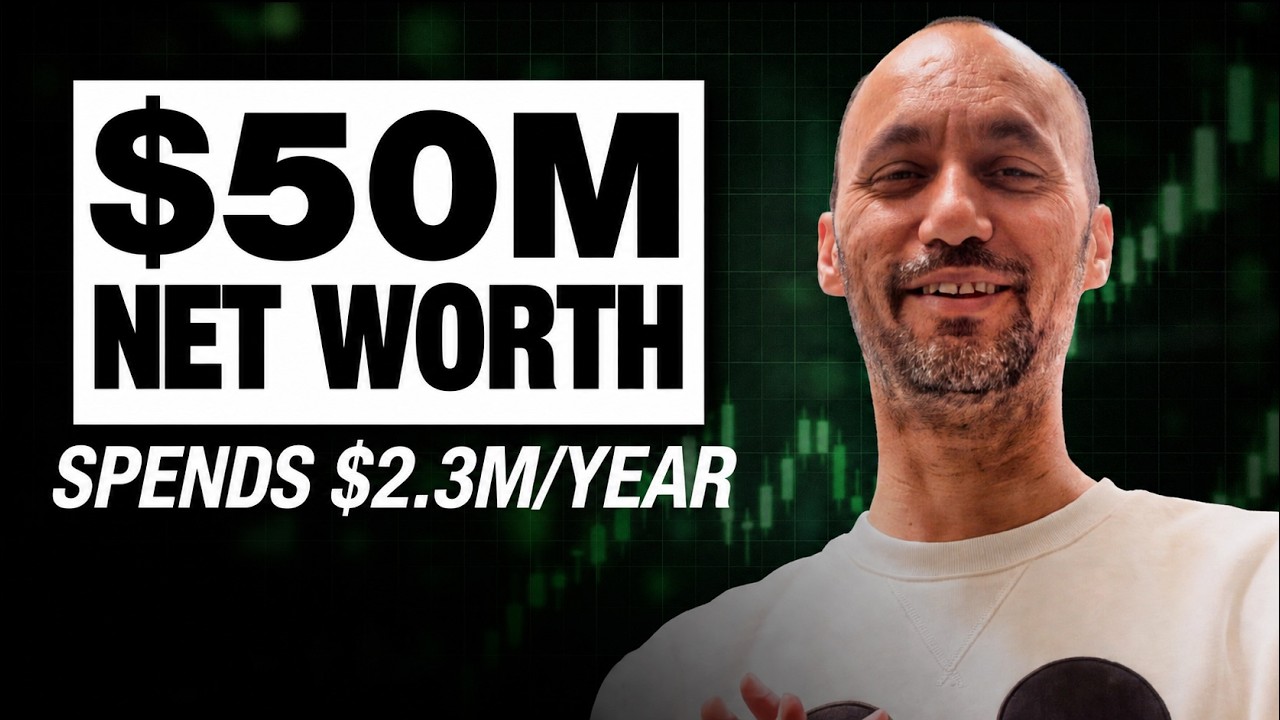
At 17, Dan Fleyshman got into a Las Vegas clothing convention he was too young to attend using $5 business cards from a vending machine, and left with $1 million in orders. At 23 he took his energy drink company public. In 2011 he lost a $65 million online poker company in a single day. Today he has 43 angel investments, has raised $56 million for 18 companies through his syndicate (only three have failed), and says he's worth over $50 million. He also spends more than $110,000 a month on a ranch with a lake and a 208-animal rescue zoo that makes almost nothing.
Like all Moneywise episodes, Dan breaks down his net worth, income, portfolio, and monthly expenses and then I, your humble host, pick it all apart.
We also went deep on: how a 20% carry with no management fee works, trading agency services for equity, why only 3 of his 18 syndicate deals have failed, why he can't give an exact net worth, the $6.6M ranch and the wedding venue that has never hosted a wedding, why he rents both his homes and flies Southwest while spending over $1M a year on travel, and the list of 39 names in his phone.
Below you'll find my summary of the episode along with the entire transcript.
And by the way...this podcast, the concept of it came from Hampton. Hampton is a private, highly vetted community for high net worth founders started by Sam Parr. Members range from companies doing 3-5 million in revenue all the way up to hundreds of millions. The reason we started this podcast is because there are amazing conversations about money and growing companies that typically happen only behind closed doors, and we thought it would be awesome to share all of this information. If you're a CEO, founder, or business owner, check this out. New Moneywise episodes come out weekly.
Listen to this episode on:
Now, below are the notes and the full transcript.
The Numbers
- Net worth: over $50 million — "if under oath, my net worth is for sure over 50 million." Most of it is stock in private companies, so the real number depends on exits.
- Syndicate: $56M raised for 18 companies, usually $3–6M per raise. Only 3 have failed. 2,214 investors in the Elevator Syndicate, which is free to join.
- How he gets paid: a 20% carry on profits and no 2% management fee. On $56M raised, skipping that fee leaves more than $1M a year on the table.
- Best carry so far: Joyride Candy — $4M at an $18M valuation; the last round was $30M at $135M.
- Angel portfolio: 43 investments, personal checks of $25K–$250K (usually $50K–$100K), some paid for with agency services instead of cash. Roughly $4.3M deployed at a ~$100K average.
- Everbowl: a $500K check in 2018 when it had 13 locations. It has 104 now and opens a new one every six days.
- The ranch: bought for $6.6M cash, plus ~$5M of construction (~$3M from him personally): a $1.5M, 240,000-gallon lake, a wedding venue, and a rescue zoo with 208 animals. Call it ~$9M all in.
- Ranch overhead: $110K–$140K a month (~$1.5M a year) with almost no income. The county won't allow weddings. "I've never done a wedding."
- Homes: rents both, in LA and Vegas. The ranch is the only real estate he has bought.
- Travel: over $1M a year, about 250 days on the road. He flies private 20–30% of the time (never his own jet) and Southwest the rest.
- Public stocks: a couple hundred grand a year for 14 years, spread over about 10 names, and he never sells.
- Ownership: owns 90% of Elevator Studio and its events business; his CEO owns the other 10%. No outside investors.
Baseball Cards, Candy Bars, and $43,000 Spent on T-Shirts
Dan's parents sold Levi's out of the back of a van at an LA swap meet, bringing home about $2,000 a month for a family of four. At four, he had his own table a few feet away flipping baseball cards. By nine he was buying candy bars at Costco for 32–34 cents each with $13 from his mom and selling them at school for $1, because he didn't want to deal with change.
At 15 he worked three jobs at once: stadium vendor, Ruby's Diner, and a stockbroker who paid him $20 cash a session. In three years he saved $43,000 for San Diego State. He never went. At 17½ he spent all of it starting a clothing brand called Who's Your Daddy.
Sneaking Into MAGIC With $5 Business Cards
You had to be 18 to register for the MAGIC clothing convention in Las Vegas. Dan was 17 and three-quarters. A cab driver took him to a vending machine that printed generic business cards for $5, and that got him in. His booth sat between Sean John's launch and FUBU, and the buyers waiting for their appointments with those brands ended up writing orders at his. He left with $1M in orders and no manufacturer that could fill them. The next year he did $9.5M.
The brand turned into a zero-sugar energy drink that won BevNET's Flavor of the Year over 900 competitors. On April 1, 2005, at age 23, he took the company public. It took two years and about $2M of accounting, legal and audit work. "You literally hire an auditor to audit your auditor."
Black Friday: A $65M Company Gone in One Day
In April 2011 the US government shut down online poker overnight. Dan's poker site was worth $65 million that morning and was effectively gone the next day. Every investing rule he follows came out of that day.
"You've gotta diversify with investments, not with attention." He won't back a founder with a side hustle, because his co-investors need that founder all in. He does want that founder's money spread around. For his first ten years Dan ran one company and wore the logo everywhere, "even at a wedding or a funeral." Now he backs founders who are like the old version of himself.
How the Money Machine Works: Elevator Studio and the Syndicate
Elevator Studio is the business that has paid for his life for 15 years. Brands pay it to run campaigns with its 3,500 influencers and celebrities. It also acts as his venture studio: sometimes he takes equity instead of cash for services, and sometimes he pairs a $250K check with another $250K in stock for promoting the brand. He gets 300–400 pitches a year, reads 80–120 of them, and makes 6–10 investments.
He prefers companies already doing $5–20M in revenue because it lowers the risk for the investors he brings in. Around that sit 42 events a year, Elevator Speakers, Elevator Mortgage, Elevator Funding ($28M in small-business loans), a brand-new Elevator AI, and Cards and Coffee, a sports-card chain with Gary Vaynerchuk and Steve Aoki.
Why He Can't Give You an Exact Net Worth
Dan wasn't dodging the question. Most of his wealth is illiquid stock plus 20% of the upside on money that's still invested. If $45M of the syndicate's money is still at work and someday turns into $500M, his carry is worth a fortune. If Joyride's $4M becomes $100M, "I literally get 20% of 96 million in one day." Until something exits, the number is an estimate. "It would take me two days to write all of it out." He'll commit to over $50 million, and says it's higher than that.
The Zoo, the Lake, and the Wedding That Never Happened
Every guest has one expense they never ran the numbers on, and the ranch is Dan's. He bought it for $6.6M, put another ~$5M into construction, and built a $1.5M lake for a wedding venue the county won't let him use. It also houses a private rescue zoo with zebras, emus, ostriches and 18-foot pythons (no lions or tigers, since California doesn't allow them). It costs $110K–$140K a month and makes close to nothing. He calls it "a labor of love" and says that cost is finally starting to phase out.
$1M a Year on Travel, Still Flying Southwest
Dan is on the road 250 days a year. Flying private every time would cost "$5, $10 million a year." Instead he flies private 20–30% of the time and takes Southwest or JetBlue the rest. He won't pay $3,000 for a JetBlue Mint seat unless it's a red-eye: "3K times 200 is $600,000." When a speaking gig offers $25K plus a jet, he often takes the travel buyout and flies commercial, so the trip ends up profitable.
The spending he doesn't trim is flying his two-year-old daughter to anything that runs three days or longer.
39 Names in His Phone
Dan isn't going to pretend he'll slow down now that he's a dad. His plan is to bring his daughter along now and step back from operating by the time she's old enough to remember. "When she's 11, I don't want her having daddy issues. I will be there."
He keeps a list in his phone of 39 people from his life who have died: family, friends, athletes, people in his industry. "I don't know if I'm gonna die in six hours, six years, or 60 years. But even if it was 60 years, that's still really short." He says that's why he takes on so much at once.
Other Key Quotes
"You've gotta diversify with investments, not with attention."
"You literally hire an auditor to audit your auditor."
"If under oath, my net worth is for sure over 50 million."
"I spent 1.5 million building a lake, a 240,000 gallon lake for a wedding venue. I've never done a wedding."
"If a JetBlue Mint seat is three grand, I'm not there. I'm gonna fly the $400 seat perfectly fine."
"When she's 11, I don't want her having daddy issues. I will be there."
"I don't know if I'm gonna die in six hours, six years, or 60 years. But even if it was 60 years, that's still really short in the grand scheme of things."
Links You Might Like
- Join Hampton Community: https://joinhampton.com
- The Hampton Wealth Report (50+ founders worth $10M–$4B reveal their personal finances): https://joinhampton.com/mw-wr
- MoneyWise Podcast: Full episode archive
Full Transcript
Daniel Berk: At 17, Dan Fleyshman snuck into a Las Vegas clothing convention he was too young to register for using $5 business cards from a vending machine. He walked out with a million dollars in orders, and the next year he did nine and a half million. At 23 years old, he took his energy drink company public. And today Dan has 43 angel investments. He's raised $56 million across 18 different companies through his syndicate, and only three of them have failed. One acai chain he backed with a $500,000 check has gone from 13 locations to 104. Under oath, he says his net worth is for sure over 50 million, but he can't give me the exact number, and by the end of this episode, you'll understand exactly why. This conversation fits Hampton so well. Hampton is a private network of high-growth founders doing on average 25 million in revenue, and a lot of them have started and sold companies just like this. Dan's whole philosophy fits into one sentence: Go all in on one company with your time, then spread your money everywhere else. Founders inside of Hampton argue about that exact trade-off all the time. I get to bring those conversations out into the open on this show, Moneywise. If that sounds like your world, check it out at joinhampton.com. In this episode, we're gonna go over a lot. First, how a kid whose family lived on two grand a month flipped candy bars, saved $43,000, and then spent it all on a clothing brand instead of college. Then we'll get into the full money breakdown, the syndicate, the carry, a $9 million ranch with a lake and a zoo, and over a million dollars a year in travel. Dan's awesome. I can't wait for you to listen to this episode. This is Moneywise. I'm your host Daniel Berk. Here's your guest, Dan. Welcome back to another episode of Moneywise. I have an awesome guest today, Dan Fleyshman. Uh, really excited to hear your story. Uh, wanted to start from the beginning. I was, uh, doing a little bit of digging on you, and it looks like early on you were selling baseball cards and you were only four years old. Walk me through that story and really even what went through your mind at four years old that led to, "Hey, I'm gonna start being an entrepreneur," is really what that was.
Dan Fleyshman: So my parents, we just didn't have much money, and so they were selling Levi's jeans out of the back of a van every Saturday and Sunday at the swap meet in LA. And so while they were selling their jeans out of the back of a van, I had a little table a few feet away, and I had my baseball cards. First I had, like, 20 cards, then I had 100 cards, then I had 400 cards. You know, I'd make, like, $4 and $21 and $18, and one time, like, $100, $200. And I would just, like, buy and flip and sell my way. And because I was so little, a lot of fu- fun deals would happen because people would overpay. You know, they'd pay me 10 bucks for a $6 card. Doesn't sound like a big difference. When you do that, you know, multiple times a day, every day, you know, every weekend, rain or shine, it adds up. And so I had people who'd give me, like, trades of cards, like, "Hey, take this card that's, like, 50 bucks for your card that's 30 bucks," and blah, blah, blah, blah. And so this just kept happening, and I'd be five years old, six years old, seven years old, and now I had experience. And so anyways, I hustled my way up to getting a pretty big collection through those first few years, and then I started buying Magic: The Gathering cards and Pogs and all these other things too.
Daniel Berk: So you've been an entrepreneur your entire life.
Dan Fleyshman: Oh, yeah.
Daniel Berk: Walk me through your money story. You've had, you know, a very successful career. You've done a lot of different things. I think almost 50 different angel investments. Is that correct?
Dan Fleyshman: Yeah, 43. Yep.
Daniel Berk: So you're, you're leveraged in, like, kind of every direction of the universe.
Daniel Berk: Walk me through your thinking there, why, and lead me up to today and we'll have a good conversation.
Dan Fleyshman: Yep. So I just... We didn't have much money growing up, and, you know, 20, $24,000 to support a family of four in Los Angeles back then. Um, you know, my mom was, my mom and dad were making two grand a month between working at Century 21 Real Estate and my dad driving a taxi. There just wasn't much capital. And then my mom and I lived in this 92-year-old lady's one bedroom and, uh, just slept on, you know, slept on the couch. And so money to me was like, "I need to make money to help my mom and to not be a burden to her." So, like, eight, nine, 10 years old, I was selling candy out of my backpack at school. My mom would give me $13 to buy candy at Costco. I'd then flip it for $30, give her her 13 bucks back, have seven-
Daniel Berk: And was she teaching you how to do this, like the economics behind flipping, or were you just taking her 13 bucks and choosing, "Oh, wait, I can turn this into $26 if I try this way and that?"
Dan Fleyshman: We bought it for 32 cents to 34 cents, depending on the candy size, per bar, and I would sell it for $1. So I was flipping it at, you know, 200% to 300%.
Daniel Berk: And that was just your, your own nine-year-old brain came up with that?
Dan Fleyshman: I just wanted to sell it for a dollar-
Daniel Berk: Nice
Dan Fleyshman: ... 'cause I didn't want change. I didn't want quarters.
Daniel Berk: Yeah. Okay.
Dan Fleyshman: And so, uh, I would sell my candy bars for... And I did the same with cereal boxes, like mini cereal boxes. Um, I sold those really well. Same thing, they would range from, like, 24 cents to 42 cents.
Daniel Berk: Yeah.
Dan Fleyshman: Sell them for a dollar each. And so my backpack was just full of, like, candy and cereal, and I had to avoid the sun, avoid rainy days. Like, I had to... You know. And, um, and that was just a natural progression, and everyone knew to come to me for candy bars and cereal because I had it in my backpack at all times. And I would just-
Daniel Berk: It was a walk-in grocery store.
Dan Fleyshman: Yes, literally. If I could carry apple juice boxes, I would. You know, like, anything I could in my backpack, and I would just roam around the school all the time. There was no sign, but everyone knew, right? Word spreads.
Daniel Berk: Yep.
Dan Fleyshman: And so that's how my initial hustle was. And then 15 years old, I started working my first job, then three jobs at the same time. I was working the stadium in San Diego. "Peanuts, Cracker Jacks here. Cotton candy here." Like, I was-
Daniel Berk: That was you. I was there. I was that guy. No.
Dan Fleyshman: Exactly. Uh, and then I was working at Ruby's Diner with the sailor's cap on, and I was working for a stockbroker for 20 bucks per session for four hours at a time, 20 bucks under the table in cash. And so I worked these three jobs simultaneously. Over the next three years, I saved up $43,000 during those three years. So, like-
Daniel Berk: Wow
Dan Fleyshman: ... 12 to 15 grand a year for a kid not making-
Daniel Berk: Yeah
Dan Fleyshman: ... you know, it was a lot of money.
Daniel Berk: It's not bad at all.
Dan Fleyshman: Saved up 43,000 to pay for San Diego State University, but I never went to San Diego State. I ended up spending the 43,000 when I was 17 and a half to start a clothing brand called Who's Your Daddy. I trademarked the catchphrase, "Who's your daddy?" Like, the slogan. I was selling Who's Your Daddy T-shirts at lunch at school for 15 bucks each. I was buying them for $4 to $5 each, and then selling them at school. Well, I sold over 150 shirts. I now have over two grand. I'm basically a millionaire, right? I'm 15 years old with-
Daniel Berk: Yep
Dan Fleyshman: ... you know, 15 years old, 17 years old s- slanging T-shirts. And, um, I went to a clothing convention in Las Vegas called MAGIC. I wasn't even allowed to go inside, 'cause you have to be 18 to register. I was 17 and three quarters at the time.
Dan Fleyshman: And so I got lucky that a taxi cab driver knew to take me to this vending machine where you can make business cards for five bucks. You just type in your name, and it literally give you, like, generic business cards for five bucks. Go back to the convention center, like, "Oh, shoot, I don't have my driver's license, but I have my business card." And so I snuck into this convention. I got a booth there. We do $1 million in sales. This is the same time, the same day that Sean John, Puff Daddy's company, Sean John, launched in 1999. His booth was, like, a million dollars next to me. On my left was a brand called FUBU. Damon John's walking by with LL Cool J, Mary J. Blige, Evander Holyfield, and I'm just a little kid, like, "Anyone want to buy my clothes?" I write a million dollars in orders because the buyers for FUBU and Sean John are standing in front of my booth waiting for their appointments. And so I just-
Daniel Berk: Wow
Dan Fleyshman: ... you know. Anyways, do a million dollars in orders, don't even have the manufacturer to make that much clothing, and then build up from there. And to give you the fast-forward version, the next year we do $9.5 million in sales and just scale up the company.
Daniel Berk: This is 2000? What year is this?
Dan Fleyshman: Year 2000, yep.
Daniel Berk: 2000.
Dan Fleyshman: And then over the next couple years, just focus on clothing and preparing to launch an energy drink, energy drinks under the same brand name, Who's Your Daddy. Make a zero sugar, zero carb, zero calorie energy drink. Make a 8.4 ounce and a 16 ounce, and a shot version. Win Flavor of the Year on BevNET magazine, which is the number one magazine in the beverage industry. 900 competitors, we win number one. Take that, go pitch a bunch of chain stores, go public on the stock market on April 1st, 2005. I'm 23 years old at the time. I'm a child.
Daniel Berk: How, how does a 23-year-old go public? I want you to explain this to me like I have no idea what the stock market is. I've never listened to any business podcasts. Like, what does that process look like in a nutshell?
Dan Fleyshman: So to go public takes about two years and $2 million of accounting, legal, and auditors. It is a very strenuous process, and very few companies have ever gone public because of how hard it is and how much scrutiny there is about every detail. You literally hire an auditor to audit your auditor, that the SEC auditor audits the auditor auditor.
Daniel Berk: Just a bunch of auditors just auditing. That sounds... That is the most miserable thing I could-
Dan Fleyshman: Torture
Daniel Berk: ... possibly imagine doing-
Dan Fleyshman: Actual torture
Daniel Berk: ... with my brain.
Dan Fleyshman: Actual torture. It is so frustrating. And again, this is 2005. It's really 2003 and 2004 leading up to it, and so it's not like you've got social media or fancy emails or mobile apps or AI. It's like, "I'm gonna mail you in the mail and send a carrier pigeon to bring it to you." Like, it was-
Daniel Berk: Yeah
Dan Fleyshman: ... so slow back then.
Daniel Berk: No one's texting each other updates. It's like 100% offline.
Dan Fleyshman: There was no smartphones. And so, uh, that process, I had investment bankers and lawyers and accountants and auditors help me with the process, and it was very, very, very expensive, $2 million on average to go public. And it's two years, so you gotta be, you know, willing to fight the good fight. While you're spending this money with no return, you're willing to go fight and do that. So I did. We went public, and that allowed for us to do a lot of strategic deals and made us stand out to our competitors, made us stand out to the retailers who now they trusted in us. A lot of distributors, Budweiser, Coors, Miller, Pepsi, started buying from us because there's 900 drinks. How can you get more trusted than being public, right? You know that the SEC goes through so much to approve you.
Dan Fleyshman: And because we were already in Ralph's, Vons, 7-Eleven, car washes, chain stores, et cetera, we had a NASCAR at the time, so we had a Who's Your Daddy NASCAR racing. We won the Baja, the Baja 1000, the, the buggy thing. We won that. So I would use those things as leverage, right? We're on the cover of a video game because we won first place. We have a NASCAR. Did not win, but we had a NASCAR in the, in the races. And we had all these different sponsorship deals, endorsement deals with, like, Randy Couture versus Chuck Liddell, the UFC fight, you know, big championship. Randy Couture-
Daniel Berk: Yeah
Dan Fleyshman: ... put on his shorts. Like, we were doing creative things to fight Red Bull, Monster, and Rockstar. These guys are bazillion-dollar, 800-pound gorillas.
Daniel Berk: Yep.
Dan Fleyshman: And so that's how the story came to be, uh, to get you to when we went public.
Daniel Berk: And tell me about that day. You're finally public. The ticker's right there. People can buy.
Dan Fleyshman: Yep.
Daniel Berk: How does that feel? What went through your mind? What'd you do first?
Dan Fleyshman: So it's very interesting because, again, it's not a social media era, so, like, you're reading about it on CNN.com. You're waiting for-
Daniel Berk: I literally... I don't wanna date myself, but I literally can't imagine that.
Dan Fleyshman: Yeah. Uh, and so it was just, like, waiting to watch on Fox News, waiting to watch on The Wall Street Journal to come out the next day, The New York Times to come out the next day.
Daniel Berk: Wow.
Dan Fleyshman: Like, it was, you know... It was a moment of, like, calling people or them calling me, but it's literally o- like, calling wasn't much, or texting, obviously. And so this was, like, a, a big day for us, but it felt like, "All right, well, now we really gotta get to work because now the world is watching."
Daniel Berk: Yeah.
Dan Fleyshman: And there's a lot of-
Daniel Berk: Yeah
Dan Fleyshman: ... scrutiny. When you're publicly traded, you gotta file a, a 10-Q and an 8-K filing every single quarter. So it feels like every single month. And so because of that, we're-
Daniel Berk: So you're just doing taxes, like, constantly.
Dan Fleyshman: Nonstop. Our CFO would make us sit in the office every Wednesday for hours and hours and hours, and I would, "Ugh." It, it was a very frustrating process.
Daniel Berk: God.
Dan Fleyshman: But-
Daniel Berk: Yeah
Dan Fleyshman: ... you know, it's worth it. The juice is worth the squeeze.
Daniel Berk: So let's do this properly. I wanna know now where does your money come from? And g- let's go stream by stream, 'cause I know there's Elevator Studio. Um, there's what you do with the mastermind. Like, let's kinda break down, one, I would love to know your overall net worth now, 15, 20 years removed from that story, and then also, like, where you're leveraged because you mentioned almost 50 different companies that you have investments in and you're operating some still to this day.
Dan Fleyshman: So my net worth we can figure out together, 'cause I don't know the exact number. We can wa- talk through it because there's a lot of investments-
Daniel Berk: Cool
Dan Fleyshman: ... that my net worth is based on stock in private companies. And so-
Daniel Berk: Sure
Dan Fleyshman: ... most of my investments are not into public, uh, public stocks. I do invest-
Daniel Berk: Okay
Dan Fleyshman: ... into public stocks. There's 10 main stocks. But my investments are into physical brands and products that I raise capital for and cut checks into.
Daniel Berk: Okay.
Dan Fleyshman: And then I have what's called a carry. I get a 20% carry on what I raise. So I raise $56 million for 18 companies, averaging $3 million to $6 million per raise. Out of those companies, only three have failed. Normally it's the other way around. It's three wins, 15 failures. We've had three losses on, and we have these other 15 companies that are still doing well.
Dan Fleyshman: I-
Daniel Berk: And the 56 million raised across how many companies?
Dan Fleyshman: 18 companies.
Daniel Berk: 18 companies.
Dan Fleyshman: 18 companies. And so the average check size is between 3 to 6 million. Some of them are only 1 to 2 million, but most of them are 3 to 6 million bucks. And then we did follow-on rounds for some of the brands, like Skinny Pasta, we did 3 million twice, uh, for them. Um, now it's called, uh, It's Skinny. Um, we did 4 million for Joyride Candy, which is a great, 'cause we, we did 4 million on an 18 million valuation. Their last round was 30 at a 135, so that's a big win for my investors and also for me since I get a 20% carry on that deal. And the company's-
Daniel Berk: And this fund, this is like a syndicate that you have investors paying you to then go invest in companies?
Dan Fleyshman: Yeah, so Elevator Studio-
Daniel Berk: Yeah
Dan Fleyshman: ... is my main agency. That's the business that fuels my life for the last f- 15 years. Elevator St-
Daniel Berk: And what does that company do?
Dan Fleyshman: Elevator Studio has 3,500 influencers and celebrities that we pay brands, products, and mobile apps. That the brands give us-
Daniel Berk: Okay
Dan Fleyshman: ... the money, we then pay the influencers to do those social media posts.
Daniel Berk: Cool.
Dan Fleyshman: Elevator Studio, I use like a venture studio. That's where I do my investments into those 43 companies. That's where the investments came from, either a check from me personally or a check from Elevator Studio, or a trade from Elevator Studio for services. So instead of the me doing 100K in services, they might give us 100K in equity instead of me-
Daniel Berk: Mm-hmm
Dan Fleyshman: ... paying in lieu of cash. Other times I might do a combination, "I'll give you a quarter of a million dollars in cash, but I also want a bonus quarter million, so I get $500,000 in stock for doing this, 'cause I'm gonna help you get more famous-
Daniel Berk: Yeah
Dan Fleyshman: ... with the brand." So we did that four-
Daniel Berk: Do you like that type of barter, or is that typically where you land after trying to just sell the service outright?
Dan Fleyshman: So typically I'm trying t- to invest into companies that are my clients if I see a success or I see that they're good. Or-
Daniel Berk: That makes sense
Dan Fleyshman: ... I'm pitching brands to invest, um, or I'm pitching them to present to my, uh, at my events. Or-
Daniel Berk: Yeah
Dan Fleyshman: ... I just get 300 to 400 pitches throughout the year. I probably read 80 to 120 of them, and then that actually, like, fit my w- you know, my ethos. And then from there I do about six to 10 investments per year that I either raise company money for or invest in personally.
Daniel Berk: And when you invest in personally, how much liquid cash-
Dan Fleyshman: Sure
Daniel Berk: ... do you have access to for investments like that?
Dan Fleyshman: Yep. So my personal investments range from 25,000 to, to 250,000. 50K and 100K being the normal check from a personal check. When we do it through the syndicate it's 3 million to 6 million, and then I get a 20% carry from doing that, that all the investors know about obviously. I've, I've 2,214 investors in the Elevator Syndicate, which is free for people to join, and then they pay a carry only on profits that they make. So if they invest 100K, get back 300K, they would pay 20% carry on the 200K profit part, not the 100K that they deployed initially. If they make no money-
Daniel Berk: Okay
Dan Fleyshman: ... and just get an average return or just get their money back, we make nothing. Um, and I don't take a 2% carry even though I t- totally can and no one would complain. I don't take the 2% carry. I pay for all legal, accounting, marketing services, blah, blah, blah, blah, blah. So-
Daniel Berk: Okay
Dan Fleyshman: ... that is gonna be even more often soon. Like, I'm doing one tomorrow, um, and then I'm doing another one-
Daniel Berk: Congrats
Dan Fleyshman: ... 10 days later. And so I'm-
Daniel Berk: Okay
Dan Fleyshman: ...
Dan Fleyshman: raising money for a s- like a sprouts, a seed company. Um, they did 10.4 million revenue. They'll do 18 million this year. I'm raising for them tomorrow morning. 10 days later I'm doing it for, like, a healthy shot beverage for hangovers and things like that, um, that did five and a half million. And so I want companies doing 5 million to 20 million revenue 'cause it reduces my risk rate, especially bringing other investors in. I don't want, you know, egg on my face from failures. It still, it still can happen obviously. Um-
Daniel Berk: Yeah
Dan Fleyshman: ... but my, my success rate is much higher when a company's already doing 12 million rather than just getting started.
Daniel Berk: Dan talks a lot about carry, so I'm gonna break down exactly what carry is for the few of us who don't know. Most investment funds charge two and 20. That's a 2% management fee every year on the money they manage, plus 20% of the profits, which is called the carry. Dan only takes the carry. On $56 million raised, the 2% he's skipping comes to more than a million dollars a year. His syndicate put in 4 million at an $18 million valuation, and the next round came in at 135 million. Dan gets 20% of that gain, and he only gets paid when his investors get paid. So I, I started taking notes to try to help you come to a net worth number here. Uh, I'm lost as much as you probably are, but it sounds like you have access to a, a lot of collateral through Elevator Studio. And, like, is there a cap of what you're at liberty to go invest in through Elevator Studio Syndicate? Like, you can't go invest more than X amount per check?
Dan Fleyshman: Yeah, so we do three million to six million per deal, and then we'll do-
Daniel Berk: Can you do more than that?
Dan Fleyshman: No. I mean, we could, but we never, that's-
Daniel Berk: Never would.
Dan Fleyshman: I, I always say the same thing. We find companies doing 5 million, 20 million revenue. We deploy-
Daniel Berk: Yeah
Dan Fleyshman: ... th- three million to six million to that company. We'll do the follow-on round for the same amount as well. Even if they're re- like they're 10 or 20 million, we'll only put in three to six million. I just like that sweet spot. I have no reason to change it. Even when there's, like, a superstar company, I still wanna do the same thing. I just like the repetitiveness of-
Daniel Berk: So let's ... Yeah, let's put that to the side then, and then liquid net worth, all the syndicate investments and private equity aside, what is your cash, public s- stock equity? What does that look like if you were to break it down for me?
Dan Fleyshman: Public stock equity, I don't really invest that much. I put in, like, a couple hundred grand a year for the last-
Daniel Berk: Okay
Dan Fleyshman: ... 14 years. Uh, I don't really... And I never sell. On the real estate side, I did the big transaction with the ranch. I bought a 6 point, $6.6 million ranch. Spent $5 million-
Daniel Berk: All cash?
Dan Fleyshman: Yeah. Uh, spent 3 million, well, 5 million total construction, 3 million personally on building a lake, building the wedding venue, building a zoo with 200, 208 animals there at the zoo. Uh, building the, the property.
Daniel Berk: Wow.
Dan Fleyshman: I spent a lot of money and energy on it, but that comes a lot of carrying costs. I cover 110,000 to 140,000 a month in overhead, and there's not really much income on the property. So that's a big financial burden.
Daniel Berk: So that's like 9 million there-
Dan Fleyshman: Yeah
Daniel Berk: ... asset.
Dan Fleyshman: Yeah. Uh, that was more a labor of love. I was hoping there'd be income from weddings and from the zoo, but the county wouldn't let me host weddings. And so I spent, you know, 1 point, $1.5 million building a lake, a 240,000 gallon lake for a wedding venue. I've never done a wedding. And so-
Daniel Berk: I've never met someone who's built a lake, so that is a first for that. Uh, what you...
Daniel Berk: 220 animals, is that, is that, like, a typical zoo? I have no idea how many animals zoos have.
Dan Fleyshman: Um, so we're not a public-facing zoo because of the fact that the county won't let us be, and so it's a-
Daniel Berk: Okay
Dan Fleyshman: ... it's a private zoo. But we're much more of a re-
Daniel Berk: You're like Tiger King?
Dan Fleyshman: Uh, we're much more of a rescue. Uh, we, we rescue the animals. Um-
Daniel Berk: Okay. That's cool
Dan Fleyshman: ... they, they live an amazing life there, and we've done it for the la-
Daniel Berk: Are they exotic animals like, like lions and tigers and stuff? Or is it more like domestic-
Dan Fleyshman: Well, in California-
Daniel Berk: Like n-
Dan Fleyshman: ... we can't have lions and tigers. Uh, but we do have-
Daniel Berk: Okay
Dan Fleyshman: ... uh, zebras. We have, uh, what's it called? Uh, emus and ostriches and shee-
Daniel Berk: Oh, cool
Dan Fleyshman: ... like 14-foot snakes and 16-foot snakes and 18-foot snakes and 14-foot pythons and-
Daniel Berk: Awesome
Dan Fleyshman: ... those type of things, but no lions and tigers and bears.
Daniel Berk: Just look at the numbers of that ranch. He bought it for $6.6 million and put another 5 million into construction with 3 million coming from him personally. Then it cost him somewhere between 110 and $140,000 a month to run, which works out to about a million and a half dollars a year, and almost none of it comes back in. He calls it a labor of love. But this same guy is gonna spend the next 20 minutes explaining why he won't pay $3,000 for a nicer plane seat. I feel like everyone that comes on the show has that one thing they spend a bunch of money on without doing all the calculations. It's just something that's important to them. His is 208 rescued animals and a lake, a big lake. So you spent, let's say, 9 million on, on all that.
Dan Fleyshman: Yeah.
Daniel Berk: Lake, ranch, zoo.
Dan Fleyshman: And then-
Daniel Berk: Then what else?
Dan Fleyshman: And then real estate outside of that I don't do because I'm always investing into companies. Uh-
Daniel Berk: Well, you have two houses, primary houses, correct? In LA and in Vegas.
Dan Fleyshman: Both, both are rentals. I don't, I don't have-
Daniel Berk: Oh, okay
Dan Fleyshman: ... I don't buy real estate outside of the, when I bought the ranch. Uh-
Daniel Berk: Okay
Dan Fleyshman: ... I'm always... My capital is designed for private equity investments. I like buying pieces of companies, and because I'm good at it, and I can help the success because of my network, it's better for me than buying a $2 million building or a $10 million building or $8 million building, um, and waiting over time. I am not against real estate investing whatsoever. It's just not for me because I'm so connected to angel investments, which is what I enjoy doing. Um, I have 500,000 I put in one check, 2018, into Everbowl, an acai bowl chain.
Daniel Berk: Okay.
Dan Fleyshman: That chain had 13 locations at the time. Now we have 104, and we open one new location every six days. That company, I put in-
Daniel Berk: Wow
Dan Fleyshman: ... 500K, 2018. I raised 5 million, 2019. I bought all the stores, 23 locations, in 2020 during the shutdown, during COVID. And then my friends and I did, like, a trade. We had other restaurants and we traded the equity, traded for equity into the company later for those locations so that the company could manage them. And so that will be a big one for me because that company is poised to exit. You know, we're 104 locations running a debt-free-
Daniel Berk: And you have majority ownership in that?
Dan Fleyshman: Uh, not the majority. There's still a founder and, uh-
Daniel Berk: Okay
Dan Fleyshman: ... the guys from GoFundMe, they put in $15 million in one check. So they do have more than I do. Um, but we are one of the largest shareholders, yes. Myself and my syndicate, uh, both. And so that business to me is one of my passion projects. I help them a lot scale. It's a great founder running that business. Uh, but that one will be a big one.
Dan Fleyshman: Uh, the Joyride Candy will be a really big one because, you know, we're, we're number one in Target for over a year now, uh, in the $100 million sales range. Like, this is a big business, and we came in early on that one. Um, I invested and got the, the carry on that one, which should be a big deal. Uh, and then there's other highlight companies that we own. I have a sports card store chain with Gary Vaynerchuk and Steve Aoki, uh, called Cards and Coffee. Uh, we have multiple loc-
Daniel Berk: Cool
Dan Fleyshman: ... multiple locations selling sports cards and Pokémon. Um, I have Elevator Mortgage, which is, we do mortgages. We have Elevator Funding, which we do, we've done $28 million in loans.
Daniel Berk: So you're kind of in, involved in real estate, to your point earlier, just through Elevator Mortgage.
Dan Fleyshman: Yeah, but just as a service provider, not as a-
Daniel Berk: Okay
Dan Fleyshman: ... not buying real estate. Uh, Elevator Funding, we do loans, uh, typically like 5,000 to $250,000 type loans. Uh, we've done $28 million in loans through Elevator Funding, uh, to small businesses, but it's very high interest, um, for that, for like short-term loans. Uh, that's in partnership with a large loan company. They do, they've done, uh, $8 billion in loans through their company. Uh, we have the Elevator AI company literally launched yesterday, so I haven't even announced that publicly on... Uh, we just finished it after many, many months of doing that.
Daniel Berk: There you go.
Dan Fleyshman: Uh, and then Elevator Studio itself is the main business, right? We throw 42 events a year.
Daniel Berk: Yep.
Dan Fleyshman: Elevator events. The 42 events a year is my, I'd say, my most active business that I'm most actively involved in. So I'm throwing one in f- 34 hours from now. Um, throwing live events is my main core business from like a collecting people perspective, where the investors come from-
Daniel Berk: Yeah
Dan Fleyshman: ... the donations to charity come from Uh, booking me as a speaker to, at their events. I also have Elevator Speakers, my, as a sub-agency of Elevator Studio. Elevator Speaker-
Daniel Berk: So you're just, I mean, leveraged all over the place. Is it, um... I, I'm curious, 'cause I, I resonate with some of that. I, I don't know if generalist is the right word, but why not, you know, if you were to tell a founder or even an upcoming founder, someone wants to go all in on something, you as someone who has kind of gone all in all over the place, what would you tell that person about, hey, double down on this business and 100 exit, or maybe leverage yourself across 10 to 100 businesses and five X all of those.
Dan Fleyshman: Yeah.
Daniel Berk: What's your opinion on this?
Dan Fleyshman: So the first 13 years of my life was only one company and one company. So for 10 years, from 1999 to 2009, I only did one company. I was completely all in. You wouldn't see me even at a wedding or a funeral not wearing the clothes or having the drink in my pocket. Never.
Daniel Berk: Wow.
Dan Fleyshman: I always had the brand on. When I did the online poker site, I only had the poker patch on. I put the poker patch on my suits, I put it on my sweat suits, I put it on my sleeping pajamas. My logo was everywhere all the time. So I only invest into founders that are like the old version of Dan. Once I had my-
Daniel Berk: Yep
Dan Fleyshman: ... liquidity events and had built up a, enough capital, I then started becoming an angel investor of a bunch of companies. The turning point was in 2011 when online poker was shut down. My company was worth $65 million on that day, and so I never wanted to have all my eggs in one basket again. Once the government shut down-
Daniel Berk: Mm-hmm
Dan Fleyshman: ... poker and I lost z- zillions of dollars in one, one day, I just felt like I'm gonna become an angel investor from that moment and never have that situation-
Daniel Berk: Hmm
Dan Fleyshman: ... ever again. So my sentiment is you should focus all in on your core business.
Dan Fleyshman: Your core business, the capital you receive from it, after you're done investing into and loaning money to your main core company, you've gotta diversify with investments, not with attention. So I would not invest into a founder that has two or three other b- businesses or any side hustles. I won't. Because I need them to be all in on that thing because I'm bringing other investors too. I don't want my other investors to be like, "Why is that guy also a DJ? Why does he also have a clothing brand when he's selling healthy kombucha brand, you know, beverages?"
Daniel Berk: Mm-hmm.
Dan Fleyshman: It doesn't make any sense. And, and they don't want the, the attention going away. However, the same guy investing into a clothing brand or investing into a music studio, investing capital, perfectly fine. And I would suggest-
Daniel Berk: Yeah
Dan Fleyshman: ... they invest into the stock market, invest into real estate. I would want them to invest in other things, but not invest their time-
Daniel Berk: Yeah
Dan Fleyshman: ... and energy, because their time and energy is so much more useful and so much bigger return all in on that one company.
Daniel Berk: If you're old enough to remember 2011, in April of that year, the US government shut down the major online poker sites overnight. People in the poker world still call it Black Friday. Dan said his company was worth $65 million the morning it happened. The next day, it was effectively gone. His main investment rule came out from that day. Diversify with your investments, not your attention. He won't back a founder who has a side hustle, but he wants that founder's money spread across a lot of things. His whole philosophy is that one company should get your time, but your money should go everywhere else. So add it all up for me. If you had to put one number on what Dan Fleyshman is worth today, not what the internet says, and, you know, I, not what you are, w- w- list here. I mean, I, I'm, I'm trying to come up with it. I mean, is it, is it 10 million? Is it, is it 50 million? Do you have a number that you would communicate if, if under oath- ... on, on a, on the stand?
Dan Fleyshman: I, if under oath, my net worth is for sure over 50 million, for sure from
Daniel Berk: And that, that's from the syndicate and from what's liquid.
Dan Fleyshman: Yeah.
Daniel Berk: And do you have a, an approximate breakdown, let's say 60 million non-liquid and 10 million liquid? Would that be fair?
Dan Fleyshman: I don't know the numbers. I s- it's higher than 50 to 60 million because the stock in some of the companies has grown dramatically, especially some of the, the ones that we highlight.
Daniel Berk: Give a range.
Dan Fleyshman: Um, but the carry is what it's hard for me to m- figure out because I have to figure out from the 56 million, let's say the 45 million is still at work. What is all-
Daniel Berk: Yeah
Dan Fleyshman: ... of that worth? If that 45 million is worth, let's call it 500 million, well, I get 20% of that, right? Some of it I split because some of it was with a partner. The majority of it wasn't.
Daniel Berk: Mm-hmm.
Dan Fleyshman: That's why there's a... It would take me, like, two, not two hours, but, like, two days to, like, write all of it out 'cause there's so many different investments that have different percentages and carries. And so-
Daniel Berk: Yeah
Dan Fleyshman: ... some of those investments, like for example, the candy one, going from 18 million to then a 135 to now who knows, it's worth hundreds of millions, my carry in that is substantial because, you know, it's a very big difference. $4 million, if that $4 million turns into 100, I literally get, you know, 20% of 96 million in one-
Daniel Berk: Right
Dan Fleyshman: ... one day, right?
Daniel Berk: So the low end, let's conservatively look at what you've put into those and then what you have available to you liquid. What would that number be?
Dan Fleyshman: So the low end is 56 million is what was deployed into the syndicate.
Dan Fleyshman: The 43 investments, let's call it 100K average. Some of them were 250s and 500s, but some of them were free. So let's say 100K average across those. That's 4.3 million. Out of the 43 investments, pretty much every single company is still here. So but I don't... It'd take me a while to figure out valuations. Some of them are-
Daniel Berk: Yeah, I'm not concerned about valuation as much as the, where the-
Dan Fleyshman: Well-
Daniel Berk: ... where the-
Dan Fleyshman: Well, the valuation-
Daniel Berk: ... initial-
Dan Fleyshman: ... matters because I, I have my percentage base. My stock is worth that.
Daniel Berk: Right.
Dan Fleyshman: Right?
Daniel Berk: Yeah. Exactly.
Dan Fleyshman: However, it's not liquid. So if I invested into Daniel's Clothing Brand and Daniel's Clothing Brand is worth 20 million and I have 10%, theoretically I have two million, but it's not liquid. I couldn't go on the-
Daniel Berk: Yeah
Dan Fleyshman: ... street and sell my stock in Daniel's Clothing Brand for two million bucks, right? And so-
Daniel Berk: Yep
Dan Fleyshman: ... I have to wait and hope for liquidity event for Daniel to exit the company.
Daniel Berk: I get it. I have private equity and I'm crossing my fingers-
Dan Fleyshman: I know
Daniel Berk: ... every day.
Dan Fleyshman: Uh.
Daniel Berk: Yeah.
Dan Fleyshman: So that's why-
Daniel Berk: Okay
Dan Fleyshman: ... I'm not dancing around it.
Daniel Berk: That's fair.
Dan Fleyshman: Mathematically it's, it's 43 angel investments for sure. It's 18-
Daniel Berk: Yep
Dan Fleyshman: ... from the syndicate. And in between there, there's a lot of just deals. I also sit on the board of companies- We have a company called-
Daniel Berk: Yeah
Dan Fleyshman: ... we have a company called Commas, which I invested into. Our next round is 80 million at a 700 million valuation. I invest a lot-
Daniel Berk: Mm-hmm
Dan Fleyshman: ... a lot ago, so a lot less than 700 million.
Daniel Berk: In every episode of Moneywise, I get the guests to share their exact net worth with me, and in this case Dan wasn't dodging. When most of your wealth is stock in private companies plus 20% of the upside on $56 million you raised for other people, your net worth is a guess until somebody exits. A ton of people inside Hampton have balance sheets like this. Hampton's a private community of founders and CEOs doing on average 25 million a year, and members compare notes on all this stuff. How to value illiquid equity, how much to keep in cash, when to stop writing checks. This show is me bringing some of those conversations public. If you're living on a balance sheet just like this and trying to figure out the math of your actual net worth, you gotta check out joinhampton.com. Hampton's the community just for you. So it's not, it's not a calculation that's just, you know, do a couple math tricks and then come up with a number.
Dan Fleyshman: Yeah.
Daniel Berk: Well, well, well, we'll be c- that's okay. That's fine. I- I'm curious, the poker angle. You mentioned the poker online. You live in Vegas, I'm sure you're walking through casinos. Tell me more about poker. Do you still play? Are you still, are you still doing, uh, doing any large, large buy-ins or anything crazy, or are you mostly is that behind you?
Dan Fleyshman: So I played, even after the online poker site was shut down in America, um, after Black Friday, I still played in house games and I still played in casinos and still played in tournaments. I like playing the high stakes cash games in spurts, so sometimes I'll play them one or twice, once or twice in a week. Sometimes I won't play them for two or three, four months, and either way is fine. I don't have an addiction or a game where like I gotta play.
Daniel Berk: Yeah.
Dan Fleyshman: But when there's-
Daniel Berk: Yeah
Dan Fleyshman: ... scenarios that I can go play with celebrities or athletes or business people, I wanna play 'cause I have an advantage in the game and I wanna network with them. I go to-
Daniel Berk: Yep
Dan Fleyshman: ... a lot of charity poker tournaments.
Dan Fleyshman: When I go to those charity poker tournaments, I then wanna play in a cash game before or after. Uh, October 1st I'll be there in New York, 400 hedge fund guys, charity poker tournament for over a decade. I never miss it because there's also a game before and after that cash game-wise, and we raise over $2 million for charity. Um, it's the one from the show Billions, the, that poker game. That's the-
Daniel Berk: Mm-hmm
Dan Fleyshman: ... the charity poker tournament. I go, I never miss it, for many, many years. And so I still actively play in poker, especially charity tournaments, and then also in cash games.
Daniel Berk: That's cool. Um, I've, I've played some cash games and some tournaments and, uh, I, I wouldn't wanna be in the same room as you, uh, 'cause I would lose all my money, but it would be fun. It would be fun.
Dan Fleyshman: Hopefully.
Daniel Berk: Next time I'm in Vegas maybe. Um, I'd love to know more about the, uh, the cards and coffee. I read the Form C revenue, um, where you guys went from, you know, 8.8 to 5.7 and lost some money, had some, some burns. Yeah, it wa- it wasn't a great story, I mean, from my vantage point, but I'm not as close to it as you are. I'd love for you to tell me more about that story.
Dan Fleyshman: Yep.
Daniel Berk: Speak that, speak that story a little bit.
Dan Fleyshman: So we opened multiple stores, and some of the stores were partnership stores. Uh, we did it with Marshawn Lynch at the Mandalay Bay. We did some with sneakers, like a sneaker combination, um, where it's half sneakers, half cards, and those stores just didn't work. And so our business that had like a 12 million, $15 million a year dramatically dropped down to like 6 or 7 million bucks, um, simply because we had to shu- we had to shutter stores. And that overhead actually made us profitable, meaning like closing the store that we were losing 500k, a million bucks a year on because of covering the sneakers, covering extra employees, covering extra insurance, paying for 24-hour security at 30 bucks an hour, 720 bucks a day, times that by 30, it's $22,000 a month, times that by 12, 200, a quarter of a million dollars a year for one guy to stand outside because we've got sneakers and cards. We probably were-
Daniel Berk: Mm-hmm
Dan Fleyshman: ... never gonna lose a quarter of a million dollars in sneakers, right? So like tho- those type of things going away actually made us more profitable because we shuttered those stores. But the reality is the online breaking was the best part of the business. The retail stores were not. So now we just have our LA store, our Hollywood store, our Calabasas store, and then we're looking at doing it in certain c- we wanna reopen in certain cities, but much more strategic as far as the location and no partnerships. So we're not doing any more sneaker stores collabs 'cause those are what really hurt us.
Daniel Berk: Yeah. Okay. What's your monthly spend look like now as you're launching, you know, almost 50 different masterminds a year, doing events, you're on a plane full time. Are you traveling private, are you doing coach? Walking through what a typical month looks like.
Dan Fleyshman: Yep. Um, so my overhead is ranges. The, the ranch is obviously the big headache part of it, but that's phasing out now finally. Um, but the, on a personal level, I fly private 20 to 30% of the time, but I'm perfectly fine on-
Daniel Berk: Do you have your own jet or are you-
Dan Fleyshman: No, no. Absolutely not
Daniel Berk: ... just chartering everything?
Dan Fleyshman: Nope.
Daniel Berk: Oh.
Dan Fleyshman: Cha- charter or with friends or with a, with a, or business associated. Uh, I am perfectly fine on Southwest Airlines. I fly Southwest all the time and fly JetBlue, and the same night I jump on a big fancy jet with my friend. But I'm perfectly fine-
Daniel Berk: Nice
Dan Fleyshman: ... uh, as long as I got a window seat and a Wi-Fi, I'm perfectly fine. I don't c- uh-
Daniel Berk: There you go
Dan Fleyshman: ...
Dan Fleyshman: sometime I'm fly first class, sometime I fly business class, sometimes I'm in the exit row on Southwest. No qualms about it and I have no, no ego about it whatsoever, and I do it all the time 'cause remember, I'm traveling 250 days a year. So if I were to fly pri-
Daniel Berk: You're just, you're just doing whatever gets you there at some point
Dan Fleyshman: ... if I were to fly private, you're talking about 20K to 60K a flight times 250, that would be... You know, I don't care how rich you are.
Daniel Berk: Yeah, that's a lot.
Dan Fleyshman: You know, that's $5, $10 million a year in, in, in travel.
Daniel Berk: Yeah.
Dan Fleyshman: So I spend a lot because of hotels. Um, you know, I'm sp- and I also have other people, right? If I have other people, family members or staff members, et cetera, now you're getting two, three, four, five rooms and you're staying somewhere for two, three, four, five days, so math gets very excessive. Um, and traveling is my biggest expense because it's nonstop. And-
Daniel Berk: Do you know what you spend annually on travel alone?
Dan Fleyshman: I mean, over a million dollars, but I don't know the exact number.
Daniel Berk: Yeah.
Dan Fleyshman: Uh, because it fluctuates based on live events, uh, based on sp-
Daniel Berk: Sure
Dan Fleyshman: But I also make money from travel too, because there are a lot of my speaking gigs, they pay for travel or-
Daniel Berk: Mm-hmm
Dan Fleyshman: ... they'll give me an allotment, like five grand or three grand, what's called a travel buyout, but my travel's less than that, so it's extra revenue for me. And so, um, my speaking engagements help cover a lot of that number because they'll re- reimburse me, and my... Sometimes I'll actually have a net profit from it. And on the far events where I charge more, so let's say I charge 25,000 to speak, I'll charge 50,000 for some of the farther events, or 25K plus a jet, but then not take the jet. So I get the travel buyout and then fly there on JetBlue perfectly fine, and they understand.
Daniel Berk: Nice.
Dan Fleyshman: They know that I just, I always ... I'm getting that allotment to add to my net revenue, and then I fly it, uh, normal. And so, um, it's just an extra way, especially because of the sheer quantity-
Daniel Berk: Yeah
Dan Fleyshman: ... of flights that I take throughout the year. Uh-
Daniel Berk: Yeah
Dan Fleyshman: ... and also, again, I want my daughter to be places, so I fly her and her and the squad to be wherever I am as often as I can.
Daniel Berk: Yeah.
Dan Fleyshman: That adds up when you times it by 100. She doesn't go to everywhere I go, obviously. Um, but if I'm flying somewhere for three or four days or longer, I like to bring my daughter to be there, um, to hang out, 'cause I wanna be a part of her. She's only two years old, so I wanna be part of her upbringing. And-
Daniel Berk: I love that
Dan Fleyshman: ... um, so that added expense to me is something that I'm perfectly happy doing, obviously, and I, I try to incorporate it. My rule is basically three days or more I want them to be fly in. So yeah, travel's one of my biggest expenses. Uh, food is quite a big expense 'cause I'm entertaining in every city I go to. I host breakfast, lunch, and dinner all the time with people that live in the city, people that are part of the events, or I'm throwing the event, et cetera. Um, also keep in mind when I throw events, there's a lot of the business expense that comes from it to pay for some of the things that I'm talking about. Um, so that lowers-
Daniel Berk: Yeah
Dan Fleyshman: ... Dan's personal expense in those regard. But I own 90% of the events business. I own 90% of the studio. I own... I don't have any investors in these things, so I'm not hurting anyone when I pay for it from the business perspective. And the other 10%-
Daniel Berk: Yeah
Dan Fleyshman: ... is owned by one person, my CEO. And so there's no investors in these things, so it's, I can do as I please if you want. Um-
Daniel Berk: Yeah
Dan Fleyshman: ...
Dan Fleyshman: but the overhead's still the overhead. Because I own all of it, I can still say that I'm paying for it 'cause it's me, right? But whether it's a company expense or a Dan expense, it's still Dan ultimately, 'cause it's my business.
Daniel Berk: Yeah.
Dan Fleyshman: Uh-
Daniel Berk: Yep.
Dan Fleyshman: And so I am efficient in that. Like, I'm not going and renting the biggest suites places. I... Listen, if a, a JetBlue Mint seat is three grand, I'm not there. I'm gonna fly the $400 seat perfectly fine. If it's an overnight flight, I will go for it, but I'm not paying 3K for it.
Daniel Berk: Yeah.
Dan Fleyshman: Because again, 3K times 200 is $600,000. That's a lot better-
Daniel Berk: Yeah.
Dan Fleyshman: You know.
Daniel Berk: That's a price.
Dan Fleyshman: So if I do red-eyes, I want first class, but if I'm doing like a Monday 9:00 AM landing at 12, I'm perfectly fine on Southwest.
Daniel Berk: Yeah, who cares?
Dan Fleyshman: Who cares?
Daniel Berk: You mentioned your daughter. I, uh, I have two kids of my own. I have a third on the way, and I think a lot about how to grow professionally and, you know, stay in the game while still being a present dad.
Dan Fleyshman: Yes.
Daniel Berk: What, how do you, how do you think about that? Uh, it sounds amazing you're bringing her along the way. I think that's-
Dan Fleyshman: Yeah
Daniel Berk: ... that's, like, awesome that you're doing that, but how else? How do you think about legacy and also really just staying present while you're in, you know, 30,000 feet-
Dan Fleyshman: Yeah
Daniel Berk: ... you know, vehicles almost constantly?
Dan Fleyshman: So I'm trying to incorporate her into my life, right? So I want her... I've, I ha- When I first had her, on her first day on the planet, she was on a Zoom call teaching my mastermind. She sat on my lap, and she was not even one day old.
Daniel Berk: That's awesome.
Dan Fleyshman: She's, like, hours old. And to me, it was like the perfect storm because once a week for s- the last five years at that time, now it's been seven years. The last five years or so I host that call. So guess what? I'm still gonna host that call in the hospital room with her in my arm, right? I had her on a podcast with, on, for Jen Gottlieb when she was, like, a month old or two months old. Same thing. Sitting in my arms, doesn't cry. Sat through a one-hour long podcast, right? Like, I had her on stage. Our baby shower, our, our baby reveal, the gender reveal was on stage at an arena event in Utah.
Daniel Berk: No way.
Dan Fleyshman: Yep.
Daniel Berk: That's cool.
Dan Fleyshman: The whole, whole, the whole stadium turned pink. Like, I just want-
Daniel Berk: That's awesome
Dan Fleyshman: ... her to feel part of it so that later in life I can show her, "Look at your baby reveal," right? "Your gender reveal."
Daniel Berk: Yeah.
Dan Fleyshman: "Look, you were on a podcast when you were two months old. Look, you were on stage when you were one. Look, that's you running at three years old," right? I want her a part of the journey. And I'd also-
Daniel Berk: That's cool
Dan Fleyshman: ... don't wanna pretend, to be blunt, like I'm gonna slow down. I'm not.
Daniel Berk: Mm-hmm.
Dan Fleyshman: And so-
Daniel Berk: Yeah
Dan Fleyshman: ... I don't wanna fake it to people like, "Oh, that's it. I had a baby. I'm just gonna stop everything and sit at home." I'm not. And so because of that, I'm just trying to incorporate her into it because I, what I don't wanna do is regret it later that I didn't see her-
Daniel Berk: Yeah
Dan Fleyshman: ... XYZ. And so I'm coming to a point, though, where when she's bigger, right, when she's seven, eight, nine, 10, 11, I'm gonna be in my 50s, and I will have some of these exits that are part of this whole companies that I've been mentioning to you, and I won't be operating my agency anymore. I won't be operating the restaurants. I won't be operating the car stores. I currently don't really operate many of them anyways. I have a CEO for every company.
Dan Fleyshman: But I won't even be, like, the op- They won't need me in X amount of years because I do wanna be her, for her then. When she's-
Daniel Berk: Mm-hmm
Dan Fleyshman: ... nine, 10, 11, 12, 13, 14, I do wanna be at cheerleading or soccer or the championships. You know, like, I wanna be at those things. When she's two, l- let's just be blunt, like I, she's not gonna remember those things. I will remember those things, but she-
Daniel Berk: Yeah
Dan Fleyshman: ... won't. And so, but when-
Daniel Berk: Yeah
Dan Fleyshman: ... she's 11, I don't want her having daddy issues.
Daniel Berk: Oh, she'll remember that.
Dan Fleyshman: I'll be-
Daniel Berk: Yeah, yeah, yeah.
Dan Fleyshman: I will be there.
Daniel Berk: That's cool. What is one thing, we can bring it in here for a landing, what is one thing you wish people knew about Dan Fleyshman that you don't tell people often?
Dan Fleyshman: Um, the reason I'm so passionate about charity and the reason I'm so active with everything is I've had 39 people pass away in my life, and I have a-
Daniel Berk: Oof
Dan Fleyshman: ... a list in my phone of family, friends, athletes, entertainers, people in my industry who are go- not strangers, not acquaintances, but 39 people that are actually part of my life have passed away. And so I think about time as a very, very visceral thing to me. Like, time is critical. And so the reason that I, I look like I'm the crazy guy doing so many different things is I don't know if I'm gonna die in six hours, six years, or 60 years. But even if it was 60 years, that's still really short in the grand scheme of things. So I wanna do as much as humanly possible, but it all stems from the pain. It all stems from the loss. And so I say that sometimes, but I don't think people really realize why is Dan doing so many different things, is I don't know if I'm gonna come back as a plant, if I'm gonna be reincarnated as a dog. I don't know. I don't know what's gonna happen-
Daniel Berk: Yeah
Dan Fleyshman: ... the future once I pass away, so I wanna do as much as I can while I'm here.
Daniel Berk: That's awesome. A lot of the people I ask similar questions to on this show typically s- say something about time, is I don't know how much time I have left, or in some cases with even the older guests, they realize as they get older that their most valuable asset is not money.
Dan Fleyshman: Yeah.
Daniel Berk: It actually is time.
Dan Fleyshman: Yeah.
Daniel Berk: And I think that's something we can probably all resonate with.
Dan Fleyshman: For sure.
Daniel Berk: Well, Dan, this has been a... Man, this has been a great episode. You have so much going on. You're literally going and speaking at an event in, like, a couple hours, so I appreciate you jumping on this episode with me today. But, uh, thanks so much for joining Moneywise, man.
Dan Fleyshman: Of course.
Daniel Berk: This was great. That was Dan Fleyshman. He started with baseball cards at a swap meet when he was just four years old. By nine, he was selling candy bars out of his backpack. By 17, he'd saved $43,000 and spent every bit of it on a T-shirt brand instead of college. His company went public when he was only 23 years old. In 2011, he lost a $65 million business in one day, and today, he owns pieces of 43 companies, runs a syndicate with more than 2,000 investors, and says he's worth well past $50 million. He just can't tell you the exact number because a lot of it's in private equity across these companies in his syndicate. I'm taking three things from this episode. First, his rule. Give your time to one company and spread your money everywhere else. He paid $65 million to learn this lesson, and so I'm gonna take it for free. Second thing is everyone has an expense they never run all the different numbers on. For Dan, it's a ranch that costs him $140,000 a month. That's fine. Just know which expense is yours and pick it on purpose. A lot of people don't know where their money is going.
Daniel Berk: If you know where your money's going and you want it to keep going there, that's great. Third, how much time you have left. He has 39 names on his phone of people he's lost. He doesn't know how much time he has, and so he's using the time he has right now and saving the slower years for when his daughter's old enough to remember them. At the end of the day, none of us actually know how much time we have left, and so this is a real point that resonates with me. I'm a dad of two with a third on the way, and I'm nowhere near Dan's number. That last part doesn't cost anything. Anyone can decide who gets their time, so you need to decide who gets yours. If conversations like this are your world, Hampton is where they happen first. Hampton's a private community of founders and CEOs. They do at least 3 million in revenue, but most of them do 25 million or even hundreds of millions. Members of Hampton have built companies and sold them, and now they're working through the same questions that Dan answered for us today: how to value stock you can't sell, where to keep your cash, and how much of your time the business should actually get. I'm lucky because I get to have those conversations a lot of people don't have in public on Moneywise with these awesome guests like Dan. And if you wanna be in the room where these conversations happen, go check out joinhampton.com. This is Moneywise. I'm Daniel Berk. See you next week.

Personally, I find being the CEO of a startup to be downright exhilarating. But, as I'm sure you well know, it can also be a bit lonely and stressful at times, too.
Because, let's be honest, if you're the kind of person with the guts to actually launch and run a startup, then you can bet everyone will always be asking you a thousand questions, expecting you to have all the right answers -- all the time.
And that's okay! Navigating this kind of pressure is the job.
But what about all the difficult questions that you have as you reach each new level of growth and success? For tax questions, you have an accountant. For legal, your attorney. And for tech. your dev team.
This is where Hampton comes in.
Hampton's a private and highly vetted network for high-growth founders and CEOs.