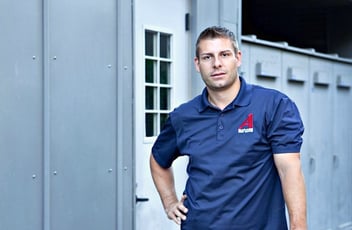
I Have $12M But I'm Broke Every Month
Brandon Harris sold Playmaker for a headline $54 million — the real number was $12 million. He keeps every dollar invested, borrows against it at 5.25%, pays himself $75K at his new startup, and hasn't taken a day off since the deal closed.

Brandon Harris sold his sports media company, Playmaker, for a headline $54 million — but the number that actually hit his account was $12 million. He built the company starting with $15 shoutout posts on Facebook pages and grew it into a business with 20+ million followers and shows featuring Shaquille O'Neal and Jalen Brunson. Today every dollar of that $12 million stays invested, he borrows against it instead of selling, pays himself just $75,000 a year at his new startup, and hasn't taken a single day off since the deal closed.
Like all Moneywise episodes, Brandon breaks down his net worth, income, portfolio, and monthly expenses and then I, your humble host, pick it all apart.
We also went deep on: the anatomy of his $54 million Better Collective deal — the earn-out structure, the ugly first six months that nearly tanked the whole thing, and the negotiation that got him out early. Plus where his $12 million actually sits today: a 60/40 portfolio with Parametric direct indexing, a $600,000 Robinhood account for concentrated AI and robotics bets, and a $3 million credit line he taps instead of ever selling a share. Brandon also opens up about the 2008 crash that cost his family everything, the tattoo on his shoulder that explains why he can't stop building, and the one regret from the whole Playmaker run that still bothers him.
Below you'll find my summary of the episode along with the entire transcript.
And by the way...this podcast, the concept of it came from Hampton. Hampton is a private, highly vetted community for high net worth founders started by Sam Parr. Members range from companies doing 3-5 million in revenue all the way up to hundreds of millions. The reason we started this podcast is because there are amazing conversations about money and growing companies that typically happen only behind closed doors, and we thought it would be awesome to share all of this information. If you're a CEO, founder, or business owner, check this out. New Moneywise episodes come out weekly.
Listen to this episode on:
Now, below are the notes and the full transcript.
The Numbers
- Company: Playmaker — a sports media company with 20M+ followers and shows featuring athletes like Shaquille O'Neal and Jalen Brunson
- How it started: Buying $15 shoutout posts on Facebook pages to sell T-shirts, then pivoting to the media side
- Acquisition: Better Collective (Danish company) acquired Playmaker for a headline $54 million
- Deal structure: ~$15M upfront + 3-year earn-out ($10M/year + $10M stretch goal tied to $75M revenue or $25M net income)
- What he actually got: Negotiated an early earn-out buyout — walked away with ~$12 million total
- Net worth: $12 million
- Portfolio: ~60/40 equities/bonds — majority in Parametric direct indexing (tax-loss harvesting fund)
- Concentrated bets: $600,000 in a Robinhood account for AI and robotics plays
- Credit line: $3 million tapped — borrows against portfolio to avoid triggering capital gains
- Mortgage: $1 million ($12,000/month)
- Total debt: ~$4 million
- Salary at new startup: $75,000/year — less than most of his employees
- Dividends from portfolio: $20,000/month
- Total income: ~$280,000/year
- Spending: Roughly break even with income — $80–100K/year on travel and experiences
- New company: Invested Inc. — put in $1M of his own money, raised ~$1.5M
- Target number: $20–25 million
- Days off after exit: 0
From $15 Facebook Posts to 20 Million Followers
Brandon grew up "very privileged" — private schools, a father making half a million a year in real estate. Then the 2008 crash hit, his dad's ten properties were foreclosed on, the family home included, and suddenly the eighteen-year-old was paying his parents' rent with college grants and part-time jobs.
"My dad was in real estate during the crash of '08, and basically, he owned ten properties. They all were foreclosed on. Our house was foreclosed on. He went from making half a mil a year and living it up to driving limos."
That pressure pushed Brandon into a string of early hustles: basketball training businesses, WordPress web design, a gym, a marketing agency. The breakthrough came when he started running Facebook ads for his T-shirt company, Hoop Culture, and realized the media pages selling those ads were the better business — 100% margin versus grinding e-commerce margins.
"I was literally buying fifteen dollar posts on big Facebook pages like Basketball Above All, saying, 'Buy a shirt for this discount.' And we were doing crazy numbers. But what I found more attractive was the page side of the business because it's one hundred percent margin."
He started acquiring and building sports media pages, grew to about 20–25 million followers, and then built a real media company around those assets — events, e-commerce, shows, and eventually talent-driven content with athletes.
The $54 Million Better Collective Deal
Brandon was parallel-pathing investment and acquisition when Better Collective, a Danish sports media conglomerate, came in with an offer that matched his fundraising valuation upfront — about $15 million — with the ability to earn up to $54 million over three years.
"It's one of the most complicated structures, by the way. Doing business with the Danish — they are very detail-oriented, and they structure things in a way that is a little bit convoluted and can be almost tough to track."
The earn-out had three revenue-tied components: roughly 30% tied to Better Collective's North American net income, 30% to Playmaker's revenue, and 30% to Playmaker's net income. Each year unlocked an additional $10 million, with a stretch goal of $10 million more if the company hit $75 million in total revenue or $25 million in total net income over the three-year period.
After the first year, misaligned incentives surfaced. Better Collective started pulling key employees — Brandon's COO, his head of YouTube — to work on their other properties. But Brandon's earn-out was tied almost entirely to Playmaker's standalone performance.
"There was conflicts of interest because our earn-out was tied entirely to our Playmaker's performance almost entirely. And so they wanted to take this and use the parts, use the people, and stretch us out."
So Brandon negotiated an early buyout. The final number landed around $25–30 million for the company, with about $12 million hitting his personal account after key-employee bonuses and a $1 million pool for the broader team.
The Ugly First Six Months
Before the early buyout negotiation, there was a period Brandon calls the worst six months of his life. The big talent deals — Shaq, Jalen Brunson, the OGs — take time to develop. Meanwhile, the revenue clock was already ticking.
"Against probably a seventeen million dollar target, I think we probably did three or four million in that first six months, and people were starting to be pretty stressed."
The Danish acquirer didn't fully understand the media business model, and conversations turned ugly — accusations of inflated forecasts, talk of layoffs, cutting budgets, removing people.
"It got really ugly. There were a lot of conversations about removing people, cutting budgets, layoffs, all kinds of different things. People almost like accusatory — 'Hey, you inflated your forecasts.'"
"That was probably the least healthy I've been personally in my life. I couldn't get myself to work out. I couldn't really sleep. Wasn't managing stress well at all."
Then everything flipped. The Shaq deal closed. Jalen Brunson came on. Several other shows launched in a span of one or two months, and suddenly Playmaker was buzzing and doing "crazy numbers." The back half of that year became what Brandon calls "the thrill of my career."
"I was in Shaq's house at the studio, and we were talking through things. It was creatively fulfilling. It was a huge success."
Where Every Dollar Sits Today
Brandon's entire $12 million net worth remains invested. The majority sits in a Parametric direct indexing fund — essentially S&P-level returns with the added benefit of tax-loss harvesting, which he estimates squeezes out an extra couple of percentage points annually.
"Most of it is in a tax-loss harvesting fund, direct indexing called Parametric. You're getting the ten or twelve percent top line, but there's another couple percent you're squeezing out based on tax benefits."
On the side, he keeps $600,000 in a Robinhood account for concentrated bets — mostly AI and robotics infrastructure plays. His wealth manager occasionally brings him individual stock ideas (they recently got into Nokia and had a nice run with SanDisk), but the bulk stays indexed.
He also has some smaller positions in crypto, private equity, private credit, and a few venture and angel investments. But the overall blend stays close to 60/40 equities and bonds.
The Credit Line Strategy
Rather than selling shares and triggering capital gains, Brandon funds his personal expenses through a credit line secured against his portfolio. He currently has about $3 million tapped, plus a $1 million mortgage — roughly $4 million in total debt.
"I wanna keep all my money in there growing. I don't like to sell it. I wanna keep as much of it in play as possible. The interest expense on that credit line is another thing that goes against my taxable income."
The interest rate runs around 5.25%, but Brandon views it as a net positive: he keeps his money compounding in the market while the interest payments offset his taxable income. It's a strategy that's increasingly popular among high-net-worth founders who want to maintain exposure without triggering tax events.
$75K Salary, $280K Income
At his new company, Invested Inc., Brandon pays himself $75,000 a year — a significant discount from the $250,000 corporate salary he earned during the Playmaker earn-out. He's put $1 million of his own money into the company and raised another $1.5 million.
"I'm not a believer in paying myself until I earn it. This is basically what I deem to be a starter salary. It's less than most of my employees."
Combined with $20,000 a month in portfolio dividends, his total annual income sits around $280,000 — and his spending runs roughly even with it. About $80–100K goes toward travel and experiences: family trips to the Bahamas, Vegas, and the Boca Raton resort. His mortgage is $12,000 a month. Daycare is $1,200. A weekly house cleaner is $400 a month. Everything else is "pretty minimal."
When asked about his threshold number — the point where he could stop — Brandon puts it at $20 million, though he acknowledges he'd likely never actually stop.
"I think if, for me, I'd like to get to twenty million. As long as you're over fifteen, in theory, work is an option in my opinion. But I think I'm another exit away probably."
Zero Days Off: The Chip on His Shoulder
After the Playmaker deal closed, Brandon took exactly zero days off. No vacation. No breather. He went straight into building Invested Inc. and incubating a second venture — an AI and robotics media company — with two longtime friends who are also post-exit media founders.
"No time. No time."
When pressed on whether fear motivates his relentless pace, Brandon doesn't flinch. He has a literal chip tattoo on his shoulder — a physical reminder of the underdog mentality that drives him. He describes himself as someone who was "a failure in high school," who didn't get the grades, didn't make the basketball teams, and was written off as unlikely to succeed.
"I have a huge chip on my shoulder. I literally have a tattoo of a chip on my shoulder."
"In order to be a founder, I think you have to have some screws loose. You probably have some trauma motivating that. Failure is a huge fear for me. I'm always in survivor mode."
He's aware of the tradeoff. Looking back at the Playmaker years, he admits he should have enjoyed the ride more — but he was too fixated on the exit to let any wins land.
"The easiest way to be unhappy is to always have your eyes on a future target and not be present. I built this really cool company, and I should have had a lot of fun doing it, but I was always, 'Hey, I need to have this exit.' And so, as a result, no wins mattered, no excitement."
Legacy, Kids, and What Comes Next
Brandon has two kids — four and two — and he's clear about where he stands on inheritance: they're getting everything. No rerouting to charity, no "struggle builds character" philosophy. He wants to give them a head start and will try to keep them grounded along the way.
"I'm thrilled that I'm able to give them a head start. I am going to try to make them as not spoiled as possible, but it'll be their money to do with whatever they want."
On legacy more broadly, Brandon has arrived at an unusually grounded perspective for a founder still in his prime earning years: he doesn't believe in it. Not the statues, not the textbooks, not the named buildings.
"I'm just not a buyer of legacy. I think you should do what you wanna do and help as many people as you can in the short term, but not with the motive being that one day you're gonna be appreciated or exalted. I don't believe in that at all."
What does he want to be remembered for? "Just being a good person. Having good morals. Helping people. Making cool things and fun content."
Other Key Quotes
"I was literally buying fifteen dollar posts on big Facebook pages like Basketball Above All, saying, 'Buy a shirt for this discount.' And we were doing crazy numbers. — Brandon Harris"
"Against probably a seventeen million dollar target, I think we probably did three or four million in that first six months, and people were starting to be pretty stressed. — Brandon Harris"
"That was probably the least healthy I've been personally in my life. I couldn't get myself to work out. I couldn't really sleep. — Brandon Harris"
"I wanna keep all my money in there growing. I don't like to sell it. I wanna keep as much of it in play as possible. — Brandon Harris"
"I'm not a believer in paying myself until I earn it. This is basically what I deem to be a starter salary. It's less than most of my employees. — Brandon Harris"
"In order to be a founder, I think you have to have some screws loose. You probably have some trauma motivating that. Failure is a huge fear for me. — Brandon Harris"
"The easiest way to be unhappy is to always have your eyes on a future target and not be present. — Brandon Harris"
"I'm just not a buyer of legacy. I think you should do what you wanna do and help as many people as you can in the short term. — Brandon Harris"
Links You Might Like
- Join Hampton Community: https://joinhampton.com
- Playmaker — Brandon's sports media company
- Follow Daniel Berk on X
- MoneyWise Podcast: Full episode archive
Full Transcript
Daniel Berk: The easiest way to be unhappy is to always have your eyes on a future target and not be present. I built this really cool company, and I had a, I should have had a lot of fun doing it, but I was always, "Hey, I need to have this exit. I need to have this thing." And so, as a result, no wins mattered, no excitement. I went years of, like, just being stressed and, like, chasing this thing, and then you have the thing, and then you're left with those same imposter syndrome questions. You're left with identity questions. Yes, you had your win. Now what? My guest today built his fortune buying fifteen dollar posts on Facebook pages. Fifteen bucks in, millions out. Subscribing to this show is an even better trade. It costs you nothing, and you get an episode like this every single week. Okay, so Brandon Harris. The headline says he sold his sports media company, Playmaker, for fifty-four million dollars. In this episode, he tells me the real number that hit his account. He also tells me about being eighteen when his dad went from half a million a year to driving limos and suddenly becoming the college kid that was the one paying the family's rent. And he explained how he pays for his entire life today without selling a single share of stock. He also has a literal chip on his shoulder. I get to talk to founders just like Brandon inside of Hampton every day. It's a private network for high-growth founders who are doing twenty-five million a year on average. If that's you, you need to check it out at joinhampton.com. Now, let's get into the show. I'm Daniel Berk. Here's Brandon Harris on Money Wise.
Daniel Berk: Brandon, thanks for joining us today on Money Wise. How you doing today, man?
Brandon Harris: I'm doing great, man. How are you?
Daniel Berk: I am doing well. I'm excited to learn a bit about you today. Tell me what brings you to the show and who you are.
Brandon Harris: I am Brandon. I was the founder of Playmaker, which had a, uh, the headline says fifty-four million dollar exit. Um, I'm happy to be radically transparent about the specifics of that. And then generally, I, you know, I'm in the investing world, love numbers, learning a lot from you and the pod and just excited to, to share my story, talk the numbers, and, and, and learn a little bit from you.
Daniel Berk: Awesome. And before we get into the fifty-four million dollar acquisition story, how was money like in your life and in your family when you grew up? Tell me about how that was a-as a child.
Brandon Harris: Yeah. I, uh, I grew up very privileged, to be honest with you. I, I was in private schools most of my life until I turned around seventeen, eighteen. My dad was in real estate, uh, during the crash of '08, and basically, he owned ten properties. They all were foreclosed on. Our house was foreclosed on. He went from making half a mil a year and, like, living it up to driving limos and just trying to kind of, uh, to make it work. And so it definitely, like, my relationship with money changed dramatically, and my appreciation for it changed dramatically, and I had to, at like eighteen years old, start taking care of kinda my entire family a little bit. And so, uh, basically a roller coaster.
Daniel Berk: That must have been hard, taking care of your family at eighteen.
Brandon Harris: Yeah, yeah. We-- The loans, grants, everything I was getting in college went directly to them. I had, you know, part-time jobs. I was doing, uh, some online stuff to try to scrape together money. I was paying their rent, my college rent, and all that stuff at the same time. But I think in a good way, um, it forced me to go and find ways to make money and, and be more responsible than probably most eighteen-year-olds have to be.
Daniel Berk: And so you were really already an entrepreneur early on, it sounds like.
Brandon Harris: Yeah, I, I was doing basketball training businesses. I was doing web design businesses for people. Uh, it was used to be WordPress was the cool thing, uh, when I was eighteen.
Brandon Harris: And, um, so, you know, five K here, sixteen an hour there, teaching kids how to play basketball, and eventually, we built a gym off of that. We built a marketing agency off of that and, um, kind of got, got started in the whole digital media and, and online marketing space from a very early age.
Daniel Berk: And so walk me through the transition from eighteen, taking care of your family with grants, to eventually launching this business that, for all intents and purposes, was wildly successful.
Brandon Harris: Yeah. So the first thing was that training business. So I went and learned WordPress to build and improve our SEO and get new clients in that and then got a gym, uh, started to run Facebook ads and do Facebook posts on Miami Heat, uh, related posts saying, "Hey, um, if your son or daughter wants to get better at basketball, come try Next Level Basketball." And so kind of, uh, to do everything, I learned a new skill and, and, um, kind of went and did before I really knew how to do. Uh, and then, uh, over time, that led me to e-commerce. We were selling millions of T-shirts online for a company called Hoop Culture. And then I was buying influencer ads and posts. Uh, they weren't really called that then. I was literally buying fifteen dollar posts on big Facebook pages like Basketball Above All or whatever, uh, saying, "Buy a shirt for this discount." And we were doing crazy numbers. We were selling millions of dollars. But what I found more attractive was the page side of the business because it's one hundred percent margin. They were selling these all day. Um, and, you know, e-com margins are pretty competitive and tough. And so that led me into media. I started acquiring, building, growing those assets, grew to about twenty, twenty-five million followers across those and then from there, built a real media business with events, e-com, um, shows, all kinds of things. The questions just became, "What's the next best thing I can do with these assets that I've built?"
Daniel Berk: Cool. And the Better Collective deal, that was a fifty-four million dollar acquisition. Walk me through the structure of that, the mechanics, the earn-out, you know, all the details.
Brandon Harris: Yeah. So I was parallel pathing investment, uh, or, or getting acquired, and so Better Collective came in with a, an offer that had kinda basically what I was gonna be able to raise at valuation-wise upfront, which was just about fifteen million, and then on the back end, the ability to earn up to fifty-four. And that was structured basically every year had-- It's one of the most complicated structures, by the way, the doing business with the Danish, uh, over there, that they are very detail-oriented, and they structure things, uh, I think in, in a way that Is a little bit convoluted and can be almost tough to track. And so, uh, it was like basically thirty percent was tied to their North American total net income, about thirty percent of it was tied to Playmakers revenue each year, and then about thirty percent was tied to Playmakers net income. And then there was like some other incentive targets. So basically, every year there was ten million additional you could unlock, and then there was a stretch goal on top of that. So it was a three-year earn-out period. So ten mil, ten mil, ten mil, and then the stretch goal of an additional ten was based on hitting a total revenue of about seventy-five mil, or a total net income of twenty-five mil over that three-year period.
Daniel Berk: Okay, and so what did you personally see from that initial pay structure and then the earn-out period over time?
Brandon Harris: Yeah. So where we actually ended up is somewhere between twenty-five and thirty million. And basically, after year one, um, they were starting to try to pull kind of employees. They were trying to say, "Hey, we want your COO to go and launch this for this one of our other companies.
Brandon Harris: We want your head of YouTube to go and build our YouTube strategy for these other things." And so there was conflicts of interest because our earn-out was tied entirely to our Playmakers performance almost entirely. And so they wanted to go and take this and, and use the parts, use the people, and stretch us out. And so then there was a negotiation after year one, and I was like, "Hey, listen, like clearly we're trending towards hitting a lot of this, but there's like misaligned incentives, um, and I think we should just negotiate, and we should just buy out some of this earn-out." And so, uh, we landed about twenty-five. Uh, the key employees, there was four or five key employees, they were given basically, if you stay for the full term of the earn-out, you get this additional bonus on top of that. Um, the employees all, uh, who were not key employees split up a one million dollar bonus pool that we negotiated. Um, where I netted out was about twelve million total.
Daniel Berk: All right, so the press release said fifty-four million dollars, but Brandon walked away with twelve. Here's what happened. Most of that deal was an earn-out. An earn-out means you don't get the money at closing. You get it over the next few years only if the businesses hit targets the buyer helped set. Brandon's targets were tied to revenue and profit numbers three years out, while the buyer was pulling his best people to work on their other companies. Sometimes in earn-outs like this, there are misaligned incentives. So what Brandon did was he negotiated an early buyout of the earn-out and took the certain number over the maybe number. That, in my opinion, is smart. Acquisition horror stories and earn-out periods and all the different mechanics that go into a company sale are conversations I hear inside of Hampton constantly. If you are currently going through this or you've gone through this before and you just want someone to talk to about it, go to joinhampton.com. It's a great community for high-growth founders doing three million a year or who have already exited for ten million a year or more. Okay, and so looking back, fifty-four million down to twenty-five million and some of the different milestones that come with a typical earn-out period, would you do that again?
Brandon Harris: I think I would do it again. I think I would negotiate simpler earn-out targets, and I think, uh, we would be really kind of, uh, deliberate about aligning incentives. And I think that that was really the biggest issue was that they, they bought us not just to build this, but to go and build and help the other parts of the business, which is totally a fair and valid reason to do so. But then you, you should be considering that as far as protecting employees and assets and making sure that they're being used to hit targets or those targets should be kinda blended total group g-targets, in my opinion.
Daniel Berk: So about thirty-eight million dollar earn-out, and i-if I read correctly, tied to a seventy-five million dollar target. So when you look back on those milestones, tell me how that felt during those periods, knowing there's this effectively one hundred percent earn-out over the life of three years that was tied to such stringent milestones.
Brandon Harris: Yeah. I, I think the first six months especially were extremely stressful, and you're just, uh, especially because a lot of the plans take time to develop. Like, we came into this with, "Hey, we wanna do these big events. We wanna do these big shows with talent." And obviously, like, you're not doing a deal with Shaq, um, over a period of a week, you know? There's like conversations and multiple drafts of offers and legal and, "Shaq's on vacation," and, "Let's come back to this," uh, "let's circle back next quarter." And so the first six months, we had basically no product.
Daniel Berk: We had these kinda lofty goals and, and we were under-delivering, right? And a lot of the belief-
Brandon Harris: What was your revenue in the first six months? What did that look like?
Daniel Berk: Revenue, uh, against probably a seventeen million dollar target, I think we probably did three or four million in that first six months, and I think people were starting to be pretty stressed. And I think the-
Brandon Harris: Yeah ... the feeling was that this is trending towards not being a successful acquisition. And then, then all those deals started to happen. And then we got Shaq, and then we got Jalen Brunson, and then we got a lot of these other shows, the OGs. Um, and they all kinda came within a period of one or two months. And, uh, from a totally kinda stressful failure to now this is really, really exciting, we're buzzy, we're doing crazy numbers, like we're, we may actually hit that stretch goal. Uh, but like those first six months, I think a lot of faith was lost. Um, a lot of kind of tense things were said and, um, but yeah, we were, we were definitely trending towards, um, you know, not getting any earn-out at all.
Daniel Berk: What are the conversations like in the room where it happens when you're sitting down with the company who acquired you, some of your peers and colleagues on the C-suite, and then you're stressed because you're at three or, or four million of the seventeen million dollar milestone? I mean, how does the-- how does that feel?
Brandon Harris: Yeah, I, I think the other important thing to note is just like their business model was kind of a sports betting affiliate business model at the time. So the media model is very different. And so-
Daniel Berk: Mm-hmm ...
Brandon Harris: they didn't really understand the space too much either. So you compound that with the, "Hey, we're under-delivering," and then, "Hey, we don't really understand that this stuff takes time. We haven't seen it be built." Um, it got really ugly. There was, you know, a lot of conversations about removing people, about, you know, um, all kinds of different things, cutting budgets, uh, layoffs, all kinds of different things. People, um, almost like accusatory, almost like, "Hey," like, "you inflated your forecasts," and all of that stuff. And, uh, so it was, it was an ugly six months. It was very stressful. Um, and I definitely, like, that was probably the least healthy I've been personally in my life was that six months.
Daniel Berk: Like healthy physically, mentally, both?
Brandon Harris: Yeah, I couldn't, I couldn't get myself to work out. I couldn't really sleep. Um, you know, wasn't managing stress well at all, uh, kind of was emotional and, and I, I look back at that period and kind of just regret how I personally, um, handled that, navigated the stress, handled balance, all of that.
Daniel Berk: So it's interesting you said you would do it again. Why would you do that again? That sounds terrible.
Brandon Harris: Well, then the back half of that year was amazing. It was, like, the thrill of my life, you know. I got to work with some of my favorite athletes in the world, making some of the most creative and, and special content and, and you know, literally I was in Shaq's house at the studio, and we were, we were talking through things and, um, you know, it was a total thrill of my career. It was like-
Daniel Berk: Yeah ...
Brandon Harris: it was, it was creatively fulfilling. It was a huge success. Um, and so it made the rest of it worth it. And, uh, I think the other piece to this is, like, handling the weight of, you know, whatever seventy team members that we had, um, and just giving them all a home that was stable, that had good benefits, that had, you know, all kinds of, like, they're able to go and work their sports dreams and all of that. And so for me, that was a big weight off of my shoulder, and that made me feel really good. They, they won, investors won, I got a win. Even if it wasn't, like, the most I could have squeezed out of the business, like, everybody won, so-
Daniel Berk: Yeah ...
Brandon Harris: uh, I had no overall regrets looking back.
Daniel Berk: So you mentioned the, the acquirer was not necessarily familiar with this media space. When you look back, were you going after them in the acquisition, or did they come inbound and you kind of entertained their offer? And would you recommend to other founders to go have someone that maybe doesn't necessarily understand their business model or their industry be the one that acquires them?
Brandon Harris: Yeah, there's, there's certainly pros and cons. Like, um, they wanted to go further into the media space and away from what they were doing, and we were a step in that direction, so it was kind of like a sexy, fun, you know, business that was a little bit outside of their, uh, core model, but complementary potentially, and they thought they could also bring us into their world a little bit and, and help the other businesses. And so I think, uh, you know, now Playmaker is the flagship of their entire umbrella of brands. So I think they would look back at this as a huge success, and I would say they were an M&A-based business. They were basically private equity. Um, and but their goal publicly, uh, was to be the world's largest sports media group. And so basically, like, I think if they were honest with themselves, I think they probably had really big, you know, vision and eyes, uh, at that time. And I think they, they've now been much like three rounds of layoffs and reorgs, and I think they're probably now focused on a, a less ambitious but more profitable business. And I think, um, overall, like, I would s- I would recommend, uh, going with, like, a, a business in your country if you can, as an acquirer. I think there was a lot of kind of communication and cultural differences there. And then there was a US C-suite and then a global C-suite, and then they, like, got rid of the US C-suite, so everyone I was dealing with was gone. And so there's no relationship globally. And so there was a lot of complicated things to navigate with just dealing with a company that's headquartered in Copenhagen.
Daniel Berk: Yeah. Yeah, sounds like it. It sounds like a, a really stressful front end for an incredibly rewarding back end, so that's great. So back to the personal earn-out. You got twelve million, and where does that bring your net worth today?
Brandon Harris: Twelve million.
Daniel Berk: Okay, great. So walk me through where that money is. Is that liquid cash? Do you have it in public equities? Tell me more about where that is.
Brandon Harris: Yeah. So I have basically every dollar of that still in, in the market. It's, uh, about sixty/forty equities/bonds. Um, it's not totally sixty/forty. I have a few small bets in crypto. I have a few other, uh, like, private equity stuff, uh, private credit. Um, I have a little bit of venture and angel stuff, but the overall blend is, like, close to sixty/forty. I'm a big, uh, believer in stocks. Uh, and-
Brandon Harris: So all of that's in the market, and I fund any kind of personal expenses and investments with, uh, my credit line that's secured on that to avoid, you know, the triggering capital gains taxes and things like that.
Daniel Berk: Okay, and so when you say into the market, is this like S&P five hundred or index? Like what, what is-- Are you stock picking?
Brandon Harris: So I have a wealth manager that does the majority of, of the placements there. There's some, um-- Most of it is in a, I think, a tax loss harvesting fund, uh, direct indexing called Parametric. And, you know, basically, like, we view that as it's basically S&P returns, but also the benefit of selling, uh, when they're down, and so you're kind of showing a paper loss. Uh, so to me, there's, uh, an advantage in the spread of like, yes, you're getting the ten or twelve percent top line, but you're also, there's another couple percent you're squeezing out based on tax benefits. And so that's where the majority of it is. I have some kind of concentrated bets. I have six hundred thousand in a Robinhood account where I'm making bets, uh, usually mostly AI and robotics and, and infrastructure around that.
Brandon Harris: And then, uh, my wealth manager will come to me with like, for example, we just got into Nokia, um, and, and there's a few other Sandisk we had a nice run with. And so he'll come to me with a few of those, but it's largely in the indexing.
Daniel Berk: Okay, cool. And you mentioned the credit line. Tell me more about your thinking behind the credit line.
Brandon Harris: Yeah. I wanna keep all my money in there growing. I'm a big bull on, on kind of the, the stock market and, and where I think it's headed. And, uh, so I don't like to sell it. I wanna keep as much of it in play as possible. I don't mind having kind of some leverage there. And then also, the, the interest expense on that credit line that I'm using is another thing that goes against my taxable income. So there's, uh, a lot of kind of benefits on the credit line. Yes, I'm paying, like, let's call it five and a quarter in interest on that, but, um, that's all going against my, my cap gains and everything.
Daniel Berk: All right, Moneywise listeners, quick reality check. It's that time of year when you catch yourself thinking, "Why didn't I start earlier?" We knew summer was coming. It always does. And if you keep doing what you usually do, you'll blink, and it'll be New Year's again. Same story, same body, same excuses. That's why today's sponsor is Daily Body Coach. Daily Body Coach is a premium online coaching service for ambitious entrepreneurs and executives who want their body to perform at the same level as their business. Training is built around your schedule. Nutrition is built around your specific needs. There are clear targets and clear metrics. And most importantly, there's no guesswork, just science and a multidisciplinary team covering training, nutrition, and the psychology behind behavior change. Daily Body Coach is run by Anthony Monica, who's a Hampton member himself. And in fact, a bunch of other Hampton members are using it and have been showing great results. Yes, you'll look better this summer, leaner, stronger, sharper, but the real win is that you'll stop carrying a body that's taxing your energy, confidence, and longevity. If you're serious about fat loss, muscle gain, and building a body that supports your standards, don't think about it, don't bookmark it, don't push it to Monday. Click the link in the description, and I'll hook you up with Anthony directly. Check out moneywise.dailybodycoach.com. That's moneywise.dailybodycoach.com.
Daniel Berk: Yeah, and what's the actual total tapped credit there in the margin debt?
Brandon Harris: I, I have about three million tapped, uh, on that, and then I have a mortgage on my house is another million. So I have about four million in, in debt.
Daniel Berk: Okay. And let's move to, like, the personal spending then. If you have most of that, it sounds like liquid and public securities and, you know, and index funds. What are you spending, and is that coming from a different cash account not included in that twelve million, or do you use all of that on your credit line?
Brandon Harris: Uh, yeah. I, uh... Right now, I take dividends. I take twenty thousand a month. Uh, I've gone into-- I've started a new company. I pay myself about seventy-five, eighty. Um, just big discount from the corporate two fifty that I was making previously.
Daniel Berk: Sure. But, um-
Daniel Berk: So eighty a year then?
Brandon Harris: Yeah. So-
Brandon Harris: So making about two eighty in income, uh, and then, uh, so that's where most of my, my spending comes from. I am very cheap, uh, naturally, and, and I try not to buy a ton of like material things, but I do spend on experiences, travel, stuff like that, uh, pretty aggressively.
Daniel Berk: So two eighty a year, and what are you spending per month?
Brandon Harris: Close to that. Um-
Daniel Berk: Okay. So pretty much break even.
Brandon Harris: Yeah. Yeah, I keep it about break even. I keep as much money as I can in the market, and that grows.
Daniel Berk: What types of experiences are you spending money on?
Brandon Harris: Yeah, we travel. With me and my family, I got two young kids. We go, we travel. Uh, you know, we go to the Bahamas every year. I go to Vegas pretty often.
Brandon Harris: I go to, um, the Boca Raton is a beautiful place down here and staycations. But we spend, uh, we spend probably, uh, at least thirty, forty percent of, uh, my total expenses on just travel and, you know, restaurants and things like that. So like eighty, let's call it eighty to a hundred thousand a year toward experiences, travel, you know, family stuff, restaurants.
Daniel Berk: So then what's the mortgage cost? You, you mentioned a million and down a mortgage. Is that something you're paying monthly?
Brandon Harris: Yeah. Yeah, my mortgage is, uh, about twelve thousand a month right now.
Daniel Berk: Twelve thousand a month. Okay. Uh, and then the rest of the miscellaneous spending then, where does that go?
Brandon Harris: Not very many places. I, I don't spend a ton outside of those things. It's, uh, you know, got kids' school, we got a couple cars. Um, but, you know, everything else is pretty minimal.
Daniel Berk: Yeah. So kids are in public school then. Do you have house cleaners?
Brandon Harris: Yeah, yeah, yeah. We got-- We have a weekly house cleaner. Uh, I think we pay four hundred a month for our, our house cleaning. Nothing excessive. And then one kid is in daycare, uh, which is, I think is about twelve hundred a month, and then the other kid's in public school.
Daniel Berk: I've heard daycare. I have two kids of my own. I have a third on the way. Uh, y- you hear so many different... I talk to people all the time. "How much does daycare cost?" You hear twelve hundred a month. You hear twelve thousand a month. You hear it's daycare. Daycare is one of those things that could totally break the bank if you're not careful. Um, well, that's cool then. So seventy-five thousand a year then from your current company. How'd you arrive at that number?
Brandon Harris: I basically, I'm a believer that until I turn a corner and I'm, uh, this company is profitable and growing at the same time, then, um, I think seventy-five is an appropriate amount to take. Uh, I've raised, you know, about one point five. I've put in another million of my own, so company's well-funded. But I, I'm not a believer in paying myself, um, you know, until I earn it. So this is... I'm taking basically what I, I deem to be a starter salary. It's less than most of my employees.
Daniel Berk: Yeah, I would say so. When you think of your, your threshold number. On Moneywise, we ask what's the number you're, you're going for before you can kinda chill and stop working. Obviously, I would say you haven't arrived there yet, given you're still paying yourself a salary and you have, you know, a new company. What is that number for you?
Brandon Harris: Yeah, I think first of all, um, I think I'm always gonna work. I think I have just kind of an obsessive, like, desire to keep building and not stagnating. I think that was-- I didn't even give a second thought to stopping after this acquisition. I think I would've been bored and, like, unhappy with myself, honestly. But I think if, for me, I'd like to get to twenty million. I think, um, as long as you're over fifteen, in theory, it's, work is an option in my opinion. Um, you know, no matter how aggressively you spend. Uh, but I think, uh, yeah, for me, twenty-five would get me kind of my ambitious, like, I could have a crazy... I, I, I wanna build this, this big, uh, compound farm thing with robots and-
Daniel Berk: Okay
Brandon Harris: --and drones and stuff, but, um, I think I'm, I'm another exit away probably.
Daniel Berk: Yeah, 'cause I mean, with the four percent rule, and given your fairly low spending respective to how much you could spend, you've sort of already gotten to the point where you could stop. So a lot of people would say, "Well, you have twelve million invested and you're still working. Why?" Uh, is it- Well, what, what would you do? Just 'cause you like it?
Brandon Harris: Yeah. What, what, what would you do with your time? You're gonna sit and vacation and, and my kids are in school all day. What am I teaching them all day?
Daniel Berk: The question is, is like-
Brandon Harris: Yeah ...
Brandon Harris: what's, what is my purpose in life if I'm just sitting around, um, not contributing, not building?
Daniel Berk: So then what is your purpose in life?
Brandon Harris: I, I think it's, I think it's building. I think it's making an impact. I think it's, um, you know, creating and, and finding ways to help others and, and help my family. Like, I think, uh, always evolving is really kinda like... I think if you're not evolving and you're stagnating, um, you know, what is, what is the point? Like, what are you, what are you doing?
Daniel Berk: Yeah. When you think back on the Playmaker deal and not taking time off or actually first I'll ask, how much time did you take off? I assume you at least took a, a week or two.
Brandon Harris: No. Zero days.
Daniel Berk: No.
Brandon Harris: No time. No time.
Daniel Berk: Do you think there's some fear motivating the f- like the, the constant go, go, go?
Brandon Harris: Yes. There's a, there's a- Yeah ... I think the, I think where I've landed on a lot of this is that in order to be a founder, uh, period, I think you have to have some screws loose. Like, I think there's a s- much safer ways to make a stable income. I think it's like you take so much risk, you eat so much rejection all the time. You probably have some trauma motivating that. You probably have some major fears. Failure is a huge fear for me. Um, you know, just like I'm always in survivor mode, I think is really the reality, and I think I told myself I'd do it differently. I told myself, you know, uh, all these things and, uh, it comes time to it, like, and I just don't do it. I just, I just kind of am thinking about what can I do next. How can I, how can this not be my final act or, you know, how can I keep growing?
Daniel Berk: So you mentioned trauma. That's an interesting word. Why did you choose that word in respect to some of the fear that's motivating you now?
Brandon Harris: I, I think that's a lot of, uh, to go through all of this stuff, I think you're, you're probably fighting demons or, you know, you're, "Hey," like, for me, it's really like a second act kinda thing. It's like, hey, I felt like I was kind of a failure in high school. I didn't get the grades, I didn't get the, the girls, I didn't get into the colleges I wanted. Um, I think most people looked at me as, uh, somebody who was unsuccessful and not likely to be, you know, great at anything and, and so, um, I think there was a huge part of me that was like, "Hey, like let's get serious now. Let's prove 'em wrong." I have a huge chip on my shoulder. I literally have a tattoo of a chip on my shoulder. Um, and so-
Daniel Berk: That's cool.
Brandon Harris: Yeah. I think, uh, uh, that's, that's the reality of things is I pr- I got a lot of stuff tied up, uh, but I think, like, it's made me, uh, not be the lazy person that I think I maybe naturally was programmed to be. And because I-
Daniel Berk: Hmm ...
Brandon Harris: because, uh, it's, uh, even just being still is just, it, it can, it can be very challenging for me.
Daniel Berk: Why do you think you were naturally programmed to be lazy?
Brandon Harris: I just, I just have to assume that way 'cause I was in high school, and I was like, I was convinced I'd be in the NBA. I'd convinced I was gonna do all these things. I got probably a two point something GPA. I didn't make any of the basketball teams I wanted, and it was purely an effort-based thing, I think. Uh, and I just, I, I think I, I had sent to some boarding schools. I had all kinds of stuff where, like, we, we went on these hiking expeditions and, um, we had this, this three-day thing with no food. You had to go find your own food, build your own shelter, all of that stuff. And I, I think that was probably around the time where I kinda woke up and I said, like, "What you're doing is not enough."
Daniel Berk: Yeah. I wanna call back to something on the, on the Invested front. You said you put a million dollars in to Invested Inc. Mm-hmm. That's a lot of leverage, uh, of your personal money-
Brandon Harris: Yeah ...
Daniel Berk: into this startup. Why'd you do that?
Brandon Harris: Well, it's like if I don't believe, who will? Um, and you know, I wanted to go faster this time. I'm committed to building something great.
And so I'm gonna do as much as that as I can, and I hope I don't go to zero doing it. But I hope I'm good at, as, as good as I believe I am as an operator, and I won't go to zero.
Brandon Harris: Yeah.
Daniel Berk: Um, I think a lot of people hear you say that and can resonate with that. I know a lot of founders personally that will resonate with that. Uh, tell me what happens after Invested Inc. What is success if you were to paint a picture of two to five years from now, and, and then what do you do? Do you just keep going? Or if you hit that twenty-five million that you've been talking about, do you stop and maybe just travel with your family and, and enjoy life for a while?
Brandon Harris: Yeah. I don't, I don't think I'm ever gonna be f- cool with just traveling. Like, I, I would lo- I love traveling. It's my favorite thing to do, but I think, like, I need to come back to some purpose, and- Uh, maybe when my kids grow up and it feels like I can teach them more and maybe influence more, but right now they're four and two, and it's kinda like how much can I actually shape and teach them? So I think, uh, I'm gonna keep building. I have, um, a second side business that I'm, I'm incubating also with, uh, two of my longtime friends that are also post eggs and media founders. So we have like At Robotics, we have At Artificial, we have a lot of these kinda AI and robotics usernames that we're incubating and growing, and maybe it'll be an AI and robotics media company that we spin out. Um, but I'm always kinda looking, I'm always like, uh, you know, I'm, I'm inspired and I wanna keep evolving. So I'll probably be building things until I die.
Daniel Berk: I also have two kids, four and two, uh, same ages. Wow. And I love asking guests on this show about how they think about their money and what they're leaving behind as it pertains to their kids. Have you thought much about that? I know four and two, obviously they're not super old yet, but what are your thoughts on leaving money to your kids?
Brandon Harris: Good question. Um, I have all the estate planning stuff set up. They're going to inherit a lot of money, hopefully, if I don't ruin things over the next, you know, however many years I'm alive. But the, um, the gist is, is like I'm not a-- I, I have some money in, uh, in accounts for them that's invested through Acorns and some of those other, uh, tools and, and places. But the-- my attitude is I think they're gonna inherit a good bit of money. Um, I don't wanna disadvantage them. I don't want to, uh, reroute it to some charity that's gonna, you know, eat ninety-five percent of it with their expenses and whatever else. And so, um, I, I'm thrilled that I'm able to give them a head start, and I am going to try to make them, uh, as not spoiled as possible and, and ingrain positive messages. But it'll be their money to do with whatever they want.
Daniel Berk: Yeah. Do you, do you imagine they'll take after their dad in the sense that they have to just work and they can't, they can't not? Or will you ideally set them up to where they maybe are work optional?
Brandon Harris: Yeah, hopefully they have balance, but I know my four-year-old is-- got my competitiveness. Like, she's, uh, she's totally intense, so we'll see about the two-year-old, but I, I think they're probably wired like me a little bit.
Daniel Berk: Yeah. Um, earlier you said Jalen Brunson, and, um, are you a Knicks fan?
Brandon Harris: You know, no. I'm a huge Heat fan, but I've like-
Daniel Berk: Okay ... through the show-
Brandon Harris: Oh, that's right. I barely saw it in the background. Through the show, I like, out of all the athletes I worked with, those two are the nicest, like the most genuine, authentic, nice, like it's not an act. They're just like great people, and so I've learned to love-
Daniel Berk: Yeah ... the Knicks, uh, despite hating them most of my life.
Daniel Berk: Well, I, I think when it comes to leaving a legacy, I've, I've talked to a lot of people who have very dif- different opinions on this.
Daniel Berk: I mean, some people will say, "I don't wanna leave my kids anything because I don't want them to have the advantage that..." Uh, I personally would love to leave my kids an advantage, but a lot of people just, "No, I, I want them to start and, and make, you know, struggle and, and, and experience what I had to experience to get here." You don't seem to think that way, and from your story, you grew up, sounds like affluently with, with wealth. Is there a part of you that is scared that your kids won't have to experience struggle?
Brandon Harris: I'm not scared of that. Uh, I think you can win with or without struggle. I think, like, you can go and be affluent and just have the right kind of like point of views on things and go get a solid job. And I think most people should not be entrepreneurs. And I think, like, frankly, like it is not the right path for most people. I know it's glamorized and all of that, but I think most people are gonna lose money. They're gonna be less happy. They're gonna work harder than they need to. And, um, you know, I'm a big believer in balance. I wish that I could appreciate balance more. Uh, but, uh, I view that as actually, you know, as a weakness of mine. But the, um, to your legacy point, I've gone back and forth on this, and I think what I have now realized having seen, you know, great men and women die, uh, you know, I, I think it's like, especially with how attention spans are and everything, I'm just not a buyer of legacy. I'm not a buyer of like long-term thinking anymore. I'm not a buyer of like, I think you should do, you know, what you wanna do and help as many people as you can in the short term, but like not with the motive being that one day you're gonna be appreciated or exalted or gotta get a statue. I don't believe in that at all. I think you do-- you live for today, uh, you maximize your time here on this earth, and don't give two seconds thought to what they're gonna say after if you're gonna have a textbook or you're gonna have any of those things that cover you because I just don't think the world is like moving like that anymore.
Daniel Berk: Yeah, I mean, it's incredibly rare for anyone to remember your existence two generations after you're alive. I mean, I mean, I, I don't know the name of my great-great-grandmother off the top of my head. I could go figure it out, but, you know, it's like that's an important family member, right? So it's like maybe three greats. I think the second great I do know. But, you know, it's, uh, it, legacy is an interesting thing. I think we feel like we have to leave a legacy. I think some of that comes down to what we're taught and how important it is in history books to read about people who left a mark on the world. But ultimately, you know, I think that's a good mindset to have. Like live in the moment, live with what you have, live with what you're given. I mean, tomorrow, you might not see tomorrow, you know, in some cases. So-
Brandon Harris: Yeah ... that's awesome. Yeah, and I think the, the easiest way to be unhappy is to always have your eyes on a future target and not be present, and I think that that was like i-if back to regrets on the acquisition or whatever, it was just like, I built this really cool company, and I had a, I should have had a lot of fun doing it, but I was always, "Hey, I need to have this exit. I need to have this thing." And so as a result, no wins mattered, no excitement. Um, you know, I went years of like just being stressed and like chasing this thing, and then you have the thing And then you're left with like what? And then you're left with those same imposter syndrome questions. You're left with identity questions. Yes, you had your win. Now what? Could you do it again? Was it you? Were you lucky? All those things that you mentioned. Uh, but I think the key is, is like maximize today and that's all you can really control.
Daniel Berk: Yeah. Awesome, Brandon. Well, this has been an incredible episode of MoneyWise.
Daniel Berk: I wanna ask one final question I ask every guest. If you don't see tomorrow, you get hit by a bus today, and it is the end of your life, what do you want to be remembered for?
Brandon Harris: Just being a good person, um, you know, having good morals, helping people, um, making cool things and fun content. But I think, uh, I, I, I feel really good about how I'll be remembered. Uh, I'm okay if I'm not celebrated or exalted, like I said. Like, I, I know that most of the people who I've worked with and who I've built with will remember that I helped them advance in their careers or I helped them, um, you know, do something challenging. I know my family will remember that I was always there for them, and so for me, that's, that's enough.
Daniel Berk: Brandon has a pretty wild story. Twelve million dollars from the exit, and every dollar of it is still in the market. He borrows against the portfolio at around five percent instead of selling, and he has three million tapped on a credit line. He pays himself seventy-five K a year at his new company, which is less than most of his employees, and he put a million of his own money into it. His number is still about twenty million. He's taken zero days off after his first exit, and he's still chasing that bigger number before he really calls it quits. But in his defense, he doesn't really ever wanna call it quits. He's gonna work until the day he dies. There's something Brandon said that I've been thinking about since we talked. While he was building Playmaker, no wins really seemed to matter. He was so locked on the exit that he never really enjoyed the thing that he'd remember as the thrill of his career. He got the money and was left with the same questions. That's really the whole episode and really Brandon's story. Conversations like this one with Brandon on MoneyWise are like conversations we have every day inside of the Hampton community. It's a private network for founders and CEOs doing on average twenty-five million a year in revenue. If you're doing three million a year or have exited for ten million or more, check out joinhampton.com. I think you're gonna love it. And that's MoneyWise. I'm Daniel Berk. I'll see you next week

Personally, I find being the CEO of a startup to be downright exhilarating. But, as I'm sure you well know, it can also be a bit lonely and stressful at times, too.
Because, let's be honest, if you're the kind of person with the guts to actually launch and run a startup, then you can bet everyone will always be asking you a thousand questions, expecting you to have all the right answers -- all the time.
And that's okay! Navigating this kind of pressure is the job.
But what about all the difficult questions that you have as you reach each new level of growth and success? For tax questions, you have an accountant. For legal, your attorney. And for tech. your dev team.
This is where Hampton comes in.
Hampton's a private and highly vetted network for high-growth founders and CEOs.

.png?width=352&name=Blog%20Featured%20Image%20(8).png)