He Ran PayPal With Elon. Now He Has $100M and Spends Nothing
Bill Harris — founding CEO of PayPal, former CEO of Intuit, founder of Personal Capital — breaks down his approximately $100 million net worth, his barbell portfolio, and why he spends less than $100K a year.
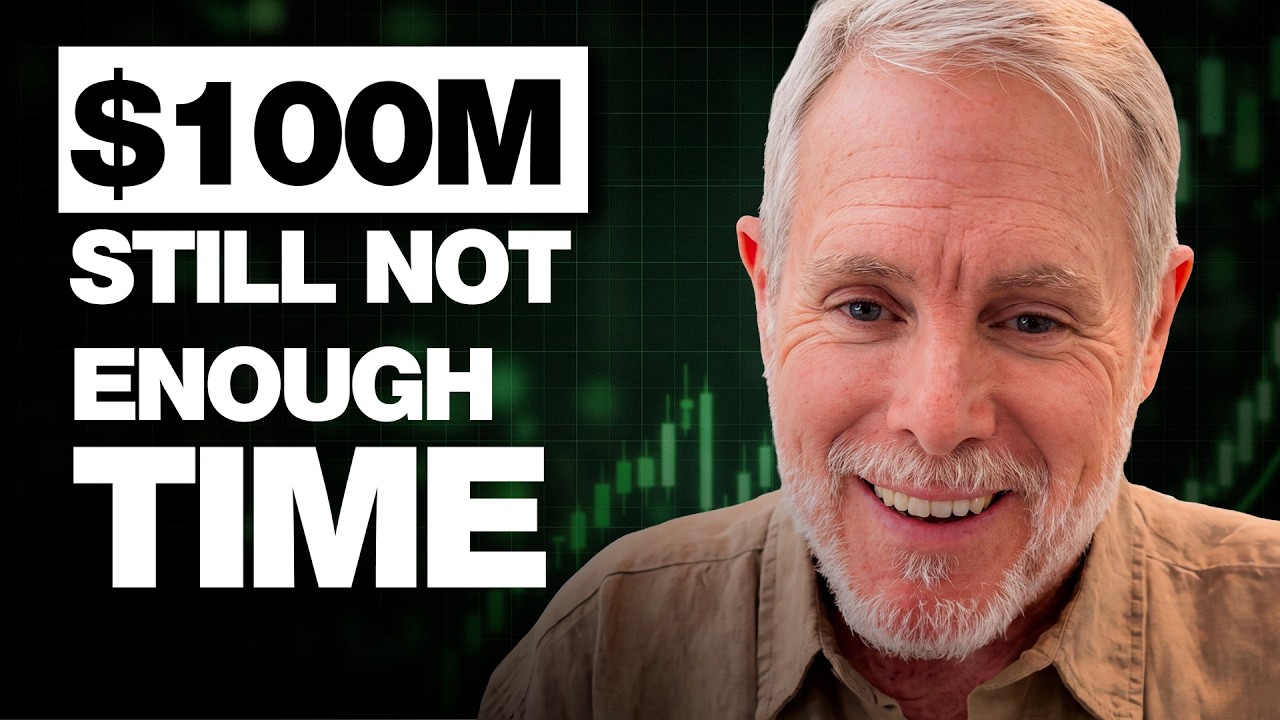
Bill Harris has a résumé that barely fits on one page. He was CEO of Intuit, the founding CEO of PayPal — in a room above a bakery near Stanford with Elon Musk, Peter Thiel, Max Levchin, David Sacks and Reid Hoffman — and then founded Personal Capital, which he grew to $23 billion in assets under management before selling it to Empower for close to $1 billion. He's started something like 11 companies across fintech and cybersecurity. Today he's 70, worth approximately $100 million, and spends less than $100,000 a year. He sold the houses, the cars, the airplane and the 31 pets, and now lives in a small cottage near Miami Beach and bikes to work.
Like all Moneywise episodes, Bill breaks down his net worth, income, portfolio, and monthly expenses and then I, your humble host, pick it all apart.
We also went deep on: the PayPal origin story (“we were close to fisticuffs most days”), exactly what he personally cleared from PayPal and Personal Capital, his barbell portfolio, why he sold everything he owned, and what he calls “freedom money”
Below you'll find my summary of the episode along with the entire transcript.
And by the way...this podcast, the concept of it came from Hampton. Hampton is a private, highly vetted community for high net worth founders started by Sam Parr. Members range from companies doing 3-5 million in revenue all the way up to hundreds of millions. The reason we started this podcast is because there are amazing conversations about money and growing companies that typically happen only behind closed doors, and we thought it would be awesome to share all of this information. If you're a CEO, founder, or business owner, check this out. New Moneywise episodes come out weekly.
Listen to this episode on:
Now, below are the notes and the full transcript.
The Numbers
- Net worth today: approximately $100 million.
- Roughly half of that sits in private operating companies he's building (some in stealth, some “parked, ready to go”).
- The other ~$50 million is deliberately boring: about half in diversified public securities, about half in bonds.
- Annual spend: less than $100,000 — “probably more like 70 or 80,000”, all in, property taxes included. No mortgage, no car.
- PayPal payout (2000, eBay acquisition): “more than $20 million, less than $50 million.”
- Personal Capital: north of $100 million to him, post-tax — long-term capital gains, some of it inside Roths. The company sold for ~$825 million after raising ~$290 million in venture money.
- $10 million of his own money is funding his current RIA, Evergreen Wealth. No outside investors.
- He's 70 years old and has no plans to stop working.
- The top 10 companies in the S&P 500 now make up roughly 37% of the entire index — the reason he thinks “park it in an index and forget it” is riskier than it sounds.
A $100M net worth that spends $70K a year
Bill's headline is that he simply doesn't have expenses. He lives alone in a paid-off cottage near Miami Beach, has no mortgage and no car, and bikes to work every day. What's left is property tax, food, travel — and Amazon.
“I think I've bought every $38 thing on Amazon,” he said. “On an annual basis it's well less than 100,000 bucks and probably more like 70 or 80,000. And that's all in, property taxes all included. Everything.”
That's roughly 0.07% of his net worth per year, in a life he describes as the freest he's had.
The barbell: half operating companies, half boring
About half of the $100 million is in private operating companies Bill is building. Because that side is so risky, the liquid side is deliberately conservative — roughly half diversified public equities, roughly half bonds.
“So much of my net worth, or at least future net worth, is tied up in highly risky stuff. Most startups don't work. I've been a little lucky — so on the liquid or investment assets, I tend to go pretty conservative.”
Notably, there's almost nothing in between. No fancy alternatives: “Almost all of it comes with absurd fees, and if you get past survivorship bias, there's not a lot of evidence that alternatives over the long haul do terribly well.”
He's blunt that it isn't the allocation he'd hand a client with his profile: “If somebody just came in that had my profile, I would say, oh, you know, 80, 90% equity.”
What PayPal and Personal Capital actually paid him
Exit headlines and founder bank accounts are two different things, which is why the specifics matter.
PayPal, 25 years ago: “It might have been more than 20 million, less than 50.”
Personal Capital — the company he grew to $23 billion in AUM and sold to Empower — cleared north of $100 million for him, post-tax, all long-term capital gains, “and some of it in Roths and things like that.” For context: the deal was around $825 million and the company had raised roughly $290 million in venture capital first. Dilution, option pools and taxes are the difference between a headline and a wire.
His current company, Evergreen Wealth, he's funding himself with about $10 million. Why? “Freedom. I have no boss. I can do whatever I want.”
“Things are time” — why he sold all of it
Bill describes four phases of his financial life: on his family's dole through graduate school; broke and single in a New York City studio for a decade; 25 years of accumulation; and now, shedding.
Peak accumulation was two large houses — a 1906 gentleman's farm on five acres in Woodside, California, plus a place in Newport Beach — four or five cars, a small single-engine airplane, and 31 pets at once. The pet census, per Bill: three dogs, three to five cats, a rooster, six or seven chickens, a pony, two mountain goats (“a real mistake”), two finches, two cockatiels and an iguana.
All of it is gone now, and the reason isn't money.
“Things are time. When you get into bed, just think about: how much time did I spend today managing my things? Paying bills, getting things fixed, pushing them around, cleaning things out. I've got enough money. I don't have enough time. And it's not only the time, it's the brain space. I feel liberated.”
“The houses are gone, the cars are gone — I can breathe, and I can spend my days doing whatever the heck I want.”
The PayPal room: “close to fisticuffs most days”
On what it was actually like to build PayPal alongside Elon Musk, Peter Thiel and Max Levchin:
“It was a zoo. Between Elon, Peter, Max Levchin, myself, David Sacks, Reid Hoffman, there wasn't a single one of us whose ego would fit in a large gymnasium. We were close to fisticuffs most days. For a good point, I was theoretically the CEO — but it was really not.”
“It was unstable. It was incredibly creative. Elon's the boldest person I've ever met — bold in terms of just thinking, well, I'll do that, I can do that, here we go, which anybody else would've said, hey, laws of physics.”
It also didn't last long: “It was about a year, and then the minute eBay bought it, everyone — pshw — gone.”
“80 to 90% luck”
Bill's read on his own track record is not what you'd expect from someone with 11 companies behind him.
“In business, I gotta say it's 80, 90% luck. And not so much luck in ‘oh, I flipped a coin,’ but luck in that I happened to be in Silicon Valley, happened to meet some people who were doing this or that. It helps if you work hard.”
What has driven him instead of money is mastery: “When I feel like, I know how to do this, boy, what I just did there — damn good — I get a sense of mastery, and it really powers me.”
He also says the harder self-knowledge came at 40, running Intuit with 5,000 employees: “It's easy to know what you're good at. It's really hard to know what you're not good at — and it's more important to figure that out.” His conclusion: he's a starter, not a manager. Start it, hire a COO, move to chairman.
His advice for 30-somethings — and the S&P 500 warning
Asked what he wishes he'd known about money at 30, Bill's answer was almost boringly simple:
“Put something away in a way that it'll grow, and then forget it. We are obsessed with the here and now. Don't forget to hive off a piece and just put it someplace where you won't think about it, and let it marinate.”
But he won't fully endorse the index-and-forget version of that: “It's a little dangerous right now because the S&P is so skewed towards tech and AI-based tech that it's really not diversified anymore.” As of 2025, the top 10 companies are roughly 37% of the index — you're buying a handful of mega-caps plus 490 companies that barely move the needle.
What he's after is what he calls freedom money: enough, parked somewhere untouched, that you can say yes to your own life.
Why he still works at 70
“The first reason I work is I don't play golf and wouldn't want to learn. I can't think of a bigger waste of time.”
“I live on Miami Beach, and on Miami Beach there are young people with bodies and old people with boats, and I have neither. So what the hell do I want here?”
What he does want: skiing (Aspen, Jackson Hole, Utah, Europe, New Zealand), his bicycle, unplanned travel — he once got burned out, told his team “guys, I gotta go,” and spent two weeks bouncing around Latin America with no plan — and, someday, being a student at Cambridge.
“Money is a means to an end. It's not an end. It's about how do you bring your life and your resources together — because that's about all we've got: money, life, and time.”
Other Key Quotes
"There wasn't a single one of us whose ego would fit in a large gymnasium."
"I was theoretically the CEO — but it was really not."
"Money is not the thing. It is a rocket fuel. It is the precious resource you need in order to build the life that you want for you and your family."
"I've got enough money. I don't have enough time."
"It's easy to know what you're good at. It's really hard to know what you're not good at — and it's more important to figure that out than the other."
"In business, I gotta say it's 80, 90% luck."
"Don't forget to hive off a piece and just put it someplace where you won't think about it, and let it marinate."
"I can't think of a bigger waste of time than golf."
Links You Might Like
- Join Hampton Community: https://joinhampton.com
- Evergreen Wealth: evergreen.com
- Follow Daniel on X: @danielcberk
- Moneywise Podcast: Full episode archive
Full Transcript
Daniel Berk: You gotta tell me what it was like to work with Peter Thiel and Elon Musk.
Bill Harris: Oh, it was, uh... Is it? Between Elon, Peter, Max Levchin, myself, David Sacks, Reid Hoffman, there wasn't a single one of us whose ego would fit in a large gymnasium.
Daniel Berk: What is the net worth that you're at now?
Bill Harris: It's probably about 100 million at this point. Money is a means to an end. It's not an end. Yes, it's about money, but it's not about money as a scorecard or something like that. It's about how do you bring your life and your resources together? 'Cause that's about all we've got, money, life, and time.
Daniel Berk: My guest today is Bill Harris, who has a crazy resume. He was CEO of Intuit. He was the founding CEO of PayPal, where he was in the room with people like Elon Musk, Peter Thiel, Max Levchin, and they were building PayPal at the time above a bakery near Stanford. He then founded Personal Capital in 2009, grew it to 23 billion in assets under management, and sold it to Empower for close to a billion dollars. He's done something like that 11 different times across fintech and cybersecurity. Today, his net worth is around $100 million. Half is liquid and half is in operating companies that he's still building. He's 70 years old. He's self-funding his newest venture with about $10 million in his own money, and he spends less than $100,000 a year. That's right, less than $100,000 a year. He sold houses, cars, airplanes, tons of pets, including mountain goats and an iguana, and moved to a small cottage near Miami Beach, where he bikes to work every day. His name is Bill Harris, and he is one of the most interesting conversations I've had on this show. I met Bill from a mutual connection that I have within the Hampton community. Hampton is a private network for high-growth founders and CEOs doing $25 million on average. What I love about this show is that Hampton is where conversations like this happen naturally, at dinner, in a group chat. I just get to put a mic on it and share these conversations with you publicly. If you're a founder doing real revenue and you're not in Hampton yet, you have to go check it out at joinhampton.com. Here's what we cover in today's episode. First, we go deep on the numbers. What $100 million actually looks like when it's spread across public equities, private operating companies, and about 100K in annual burn. Then we get into his shedding, why someone worth $100 million sold everything they own, and what it actually feels like on the other side. And we close on something that Bill said that I've been thinking about ever since, the difference between money as a scorecard versus money as rocket fuel for the life that you actually want to live. This is Moneywise. I'm Daniel Berk. Strap in. Let's get started. Here is Bill Harris.
Daniel Berk: Bill, thanks so much for joining us on Moneywise today. How are you doing?
Bill Harris: Really good. How are you, man?
Daniel Berk: I'm great. I'm in Charleston. You're in Miami, so we're both dealing with some tremendous heat right now, which hopefully passes soon.
Bill Harris: Yeah, but I tell you what, I love it. I get up early, drive, take my little bike to work, and come home late, so it's always, um, you know, relatively cool. I'm, I'm not doing anything in the middle of the day except, uh, sitting in air conditioning.
Daniel Berk: Yeah. Same as me, for another three months probably. I was digging into your profile, and you were the CEO of Intuit. You were the CEO and co-founder of PayPal, of course, peers at the time with Elon Musk and Peter Thiel. You've started your own business. You sold that to Empower. You now have your own firm. Walk me through the experience of what it's like in your life, Bill, and bring me up to speed today.
Bill Harris: First of all, life is luck. It's, you know, you do a little bit of, um, you know, hard work and it's being smart, but it's mostly luck. And so I was lucky enough to be, you know, born in a academic and affluent place.
Bill Harris: What my deal growing up was, uh, to be the golden boy, you know, to always be good at academics, at sports, at, you know, everything. And then, you know, good schools, good companies, and I sort of transferred the notion of doing what I thought my parents expected of me to what I thought society was expected of me. And so then all of a sudden, I ended up, uh, you know, 40 years old, running a public company with 5,000 employees. And based on what I had done in my life, including business school and all the rest, that was supposed to be it. And what I realized... The, the company was Intuit. What I realized, and by the way, I wasn't the only guy who realized it. A lot of people around me realized it. Um, I wasn't very good at that. Hmm. You know, I'm, I, I hope I'm a good leader. I'm not a good manager, and I'm certainly not, you know, good at the broad administrative things, and that was just about the time of the internet, you know, sort of late '90s. And I had been gung ho on this stuff and was having real trouble, even as CEO, bringing Intuit to the internet. And, um, you know, there was so much going on around us that had this opportunity to go, you know, tr- try and start PayPal, uh, along with all the other gang, and took it. That has been the beginning. So since that time, I've started eight different, uh, financial technology and cybersecurity companies. And why? Because I think that's, first of all, that's what I love. I think it's what I'm good at, and that takes me today. But before I go to today, I'll just say one thing, and that is that, you know, it's easy to n- to know or think you know what you're good at. It's really n- hard to know what you're not good at. Hmm. And it's more important to figure that out than the other. And so I s- Or even to admit what you're not good at. Well, that's it. You gotta admit it. I'm happy to admit it to other people. You know, "Oh, sorry- Right ... screwed up," you know. Sure. But to admit it to yourself, something that is part of your identity. And for 40 years, my identity was around being very good at a very conventional path. And, um, you know, and then when I realized shit, I'm just not... This is not for me, that was hard. And even today, you know, the notion is I love starting things, but I'm really not good at a certain point. I'm not really good when you need, you know, to start to, you know, every month do it 3% better. You know, the, the notion is then, okay, start it myself, get a COO, ultimately, you know, become chairman or something, and the COO run the place.
Daniel Berk: That's so interesting. And when you think of the path, right? You've been so deep in the weeds of financial services. Think of Intuit and PayPal and Empower and your own RIA firm now and all the different startups in between. It's always money. You've dealt with money your entire career. It's what you're good at, in your own words. Mm-hmm. I'm curious behind that, like what is money to you in your normal personal life? In, in my experience, personal finance, it's much more personal than it is finance, and I think a lot of people try to delineate between the two. I would love to know for Bill, what does your financial life look like behind the curtain? ... in the personal life that you have.
Bill Harris: Yeah, happy to talk about that, but let me just go back and make one point. You said, you know, what I'm, what I'm good at is money or finances. No, that happens to be the field, but what I'm good at, I think and I hope, is ideas. I love ideas. Okay. And so I just happen to be in the financial space. Okay. And there's a reason why I ended up there, which I could tell you at some point if you're interested. But then going to, um, my own personal finances, and by the way, what you said is exactly right, and it's also what we preach in our financial planning, advising, all the rest of that firms. It's all about personal.
Bill Harris: Every person's f- money is completely, completely unique, and the more important thing is not to optimize the money but to optimize your life because money is not the thing. The thing i- it is a rocket fuel. It is the precious resource, the scarce resource, uh, you need in order to build the life that you want for you and your family.
Daniel Berk: So what does a typical month look like for you?
Bill Harris: T- typical month?
Daniel Berk: Yeah.
Bill Harris: Oh, you mean in my money?
Daniel Berk: Yeah, you told me you do your homework before we chatted. Remember you said you'd try to figure out where your money's going month over month. I'm putting you on the spot now.
Bill Harris: Yeah, so, yeah, so I'll give you the, the headline. The headline is I just don't have much expenses. I live alone, divorced, kids are gone. Um, or not gone. They're doing a great job, but- ... uh, they're not in my-
Daniel Berk: You can't find them. They don't want you to find them.
Bill Harris: That's right. That's right. I tried put- sticking an Air Tag on them.
Daniel Berk: That's right.
Bill Harris: And so it's pretty simple. And, and I've got a little cottage, and it's all paid off, and so there's no mortgage. I pay property tax and I pay, you know, I eat and all that. I don't have a car. Uh, and so, you know, I would spend money on travel. I love to travel, places I've never been before. Uh, haven't had the opportunity a whole lot recently, but I would spend a chunk of money there. But otherwise, you know what my, my addiction is?
Daniel Berk: Uh- What's that?
Bill Harris: Amazon. The problem is-
Daniel Berk: Okay, walk me through what that looks like
Bill Harris: ... oh, I should, I should have that. And then, you know, 30 seconds later you've got it. So I think I've bu- I've bought every $38 thing on Amazon. And, um, however, you, back to, you know, what do I spend a month, it's probably, um... You know, so on an annual basis it's well less than 100,000 bucks and probably more like, um, 70 or 80,000. And that's all in, property taxes all included. Everything.
Daniel Berk: And that's a shift from earlier in life, right? I, I, I- Oh, yeah ... I've seen some different things that you, you sort of gave up things. Is that correct? So what, what's the shift? Walk me through what you were like and why you changed. I mean, kind of forsaken some of these items.
Bill Harris: Four phases. I was on my family's dole for a long time, all the way through graduate school. And-
Daniel Berk: Okay ...
Bill Harris: you know, I worked, but, um, you know, thank you-
Daniel Berk: And so you came from money, even in your, your parents-
Bill Harris: Yeah, um, um, you know, uh, well off. Yeah. I mean, is a professor and a doctor, and you don't make a whole lot as a professor. But at any rate, well off for sure. Then, you know, single in New York City and not really any money and living in a studio and all that. Luckily I, I had my own studio. I didn't have to share with somebody. Um, and that was a decade or, or more. And then it's, uh, family, and get married and two kids and all that. And I'm now in a period when I shedding things. That's a period when you accumulate things. And so over time, over the, you know, 25 years, you know, by, by the end we ended, um, we had two huge houses. You know, one Woodside in Northern California, one Newport Beach in Southern California. We had I don't know how many cars. We had, um, 31 pets.
Daniel Berk: Um- Oh, my goodness. Hold on. Pause there. Yeah. Are we talking dogs or you have like cows and horses and pigs and... What's a pet?
Bill Harris: It, it, it always varied, right? Because there was a lot of birthing and dying. And so actually that's the way my kids learned arithmetic, you know, 'cause they would do addition-
Daniel Berk: ... and subtraction every day. But, um-
Bill Harris: Oh, man ... approximately three dogs, three to five cats, a rooster, uh, maybe, uh, s- six or seven chickens, a, um, a pony, two old mags, two mountain goats, which was a real mistake because-
Daniel Berk: Yeah ...
Bill Harris: because if they were regular goats you could keep them in the pasture. Mountain goats, they just go whoop, whoop like this, and they were forever, you know, running all over town. And, uh, let's see. Two finches, two cockatiels, uh, and an iguana.
Daniel Berk: So you must have had dozens of acres of land in these two places.
Bill Harris: Uh, we had about five acres. This was, uh, north in, in Woodside. Okay. Okay. And it had, it had been a farm, not a real farm, but a gentleman's farm. Yeah. And so we had a barn, we had a pasture, we had, um, you know, outbuildings and things like that. But the problem was... or not the problem, the opportunity, the fun part, this thing was incredible. Uh, it was built in 1906 outside of San Francisco, and, you know, th- nothing in California is that old. And in 1906, 1906 is when they had the earthquake, and so the only thing that I can figure is that it had already been done or mostly done by the time the earthquake came along, 'cause otherwise everything would have, you know, gone to San Francisco. Anyway- Hm ... big old place, really beautiful, great bones, but when we moved in nothing had been done for 90 years. And so we redid it, and the guys came in, they'd looked at it, they said, "Listen, uh, we can s- scrape it, rebuild it, w- and make it ex- look exactly the same and, you know, save half the cost." And of course like idiots we didn't wanna do that, so we spent three and a half years fixing that place up.
Daniel Berk: Wow. Wow. Oh, it's a beautiful place. And was that cost or was that sweat equity?
Bill Harris: Beautiful place. Loved it. Um-
Daniel Berk: Yeah ... but then you talk about, you know, sort of what life was like. Um-
Bill Harris: Yeah ... I don't know how many cars we had. Uh, I don't know how many-
Daniel Berk: I mean, you're talking, uh, 20 cars? Five cars?
Bill Harris: No. No, no, no. Uh, but you know, four or five. Expensive, you know, sports cars or-
Daniel Berk: Um- ... daily drivers?
Bill Harris: No. Uh, well, m- my wife liked, uh, like a Range Rover or something. Um-
Daniel Berk: Okay ...
Bill Harris: I actually for a while I drove a Smart car just 'cause-
Daniel Berk: No way.
Bill Harris: Yeah, 'cause it- I've always wanted to drive one. I'm, I'm a big guy. You might not be able to tell. I'm about 6'5". Uh, I've always wanted to get in a Smart car and never had the opportunity to, but it looks smaller than a golf cart even.
Daniel Berk: ... do I have the car for you because my, uh, smart car, it was a convertible. So it wouldn't matter. So your head could stick out of the top?
Bill Harris: Yeah.
Daniel Berk: Oh, that's fun. We'll get you some goggles, and you can just-
Bill Harris: That's right.
Daniel Berk: Oh, that'd be fun. But you mentioned it, it is, um, bigger than golf cart. However-
Bill Harris: Yeah ...
Daniel Berk: uh, when I was in, uh, Mumbai at one point, no, Bengaluru, where they have, you know, all the, uh, little taxis, uh, that they've got? In Bengaluru, uh, it's, um, it's black with a yellow top, and they look so cool, and they're all buzzing around. Looks like a bunch of little bees buzzing around.
Bill Harris: Yeah.
Daniel Berk: And so I decided I'd buy one and, you know, sort of bought it and tried to figure out through, how to get it through customs and all that. Could never get through the, the, uh, paperwork, so we never actually did it, but I was figuring for this place in Newport Beach, they have a rule that you can drive golf carts on the street, not on the highway, but on the street. So I was gonna bring it back, shove a couple of golf clubs in the back, and claim it's a golf cart, and just drive it around.
Bill Harris: I mean, you probably could've gotten away with it for a while.
Daniel Berk: Oh, yeah. I mean, for what it's worth.
Bill Harris: Yes.
Daniel Berk: I mean, what do, what do they care?
Bill Harris: That's funny. Oh, man.
Daniel Berk: Okay, so you had, you had a number of cars. You had two houses. You had some land. You had a bunch of pets. You seemed to-
Bill Harris: And the big s-
Daniel Berk: You were in the life of accumulation ... s- You were accumulating things ... the swimming pool and the pool house and, you know, all this stuff. I mean, listen, it was a glorious, uh, from a, you know, from a thing point of view, it was a glorious life.
Bill Harris: Yeah, as it sounds like.
Daniel Berk: And then today you're shedding, as you said, but you're, I take it, probably more wealthy in terms of net worth than you've ever been. Is that correct?
Bill Harris: Yeah.
Daniel Berk: What is the, uh, the net worth that you're at now?
Bill Harris: Uh, well, I've probably been higher, um, because, um, there was the divorce, of course.
Bill Harris: Um, but, uh, it's probably about 100, uh, 100 million at this point.
Daniel Berk: And what's the liquid versus illiquid on that breakdown?
Bill Harris: Um, well, first of all, my general approach, and this is not the approach that I would, you know, advise my, uh, clients, but my general approach is a barbell because so much of my, uh, net worth, or at least future net worth, is tied up in highly risky stuff. I mean, you know, most startups don't work. I've been a little lucky, so that I've got so much risk there that on, you know, the sort of liquid or investment assets, I tend to go pretty conservative. And so I would say, first of all, about half of that is, um, in businesses or businesses that are in stealth or just, you know, parked, ready to go. The rest of it is probably, so half of the 50 million is probably about, uh, half in, um, uh, diversified securities, and just like I would advise my clients, about half is in bonds of various natures.
Daniel Berk: So then your, uh, 50 of the 100 is in, like, private equity then? Is that what you're saying?
Bill Harris: No, no. 50, the other 50 is... I don't, I do no fancy investing. Um, don't really believe in it. Uh, almost all of it comes with absurd fees and, um, you know, ju- on that basis alone, but also if you look at the track records. Uh, everybody's always talking about the rocket ships, but o- on a, on a full basis, if you look l- uh, and, you know, get past survivorship, uh, bias, there's not a whole ev- a lot of evidence that the, um, alternatives, uh, you know, over the long haul do terribly well.
Daniel Berk: Yeah.
Bill Harris: Um, but, uh, no, what I'm talking about is having money actually in operating companies.
Daniel Berk: Okay. Yeah, that makes sense. And w- you, you mentioned sort of do as I say, not as I do with your firm. Are you doing all this yourself through Evergreen's platform, your current RIA?
Bill Harris: Yeah.
Daniel Berk: Bill's investment philosophy is something super interesting. He's conservative on the liquid side, high risk on the operating side, and almost nothing in between. That barbell approach is something I hear from a lot of founders inside of Hampton. Hampton is a private network for high growth founders doing 25 million on average. These are the people who've already built something real, and they tend to think about money a lot less like investors and more like operators. If you've built a company doing at least three million in revenue and you wanna be in a room where conversations like this one happen every day, check out joinhampton.com.
Bill Harris: Mm-hmm.
Daniel Berk: Okay. So how do you justify that if someone asks, you know, your client, "Hey, I just wanna copy what you're doing," do you just say, "No, no, no. You don't wanna copy what I'm doing"?
Bill Harris: Well, no, no, listen. No, I, I do. I do. I am doing what we advise.
Daniel Berk: You are, okay.
Bill Harris: I'm just, I'm just dialing it to a much more conservative, uh, dial than one would expect for someone whose, uh, resources are that much ahead of their needs. I mean, if, if I came in, the only difference I would, I would make, I mean, we're... I'm managing the business, uh, my money the same way with the same people, all that kind of stuff. The only difference if somebody just came in that had my profile, I would say, "Oh, you know, 80, 90% equity."
Daniel Berk: Yeah, and when you think of public equities, you're, you're just, like, S&P 500, you know, index funds.
Bill Harris: I usually... So, so I am a huge believer in, uh, diversification. When we started Personal Capital, which was, um, you know, one of the very first, uh, online RIAs, we started at about the same time as Wealthfront and Betterment. We were quite different. We were much more upscale and much more, you know, sort of sophisticated from a portfolio point of view. But, uh, same time, um, often lumped together. And I really respect Wealthfront and Betterment. Um, I do not have respect for Robinhood because I think they're teaching an entire generation of investors exactly the wrong way to invest. And so-
Daniel Berk: See, I need to talk to you offline then because I use Robinhood as my main brokerage.
Bill Harris: There you go. Well, you know, it depends what you're in for. Are you in for, you know, sort of, uh, long-term stability? Uh, are you investing? And it's not about the game. It's about, you know- I just dollar cost average, like, S&P 500, a little bit of Nvidia. That makes sense. I'm not doing anything wild. That makes sense. Absolutely makes sense. And, uh, a lot of people, increasing numbers of people, particularly young people, are in it for the crapshoot, and, uh, you know, that's fine. If that's what you enjoy, gets you thrills, and it's a lot of fun, fine. But it's not really You know, smart, smart investing for the long term.
Daniel Berk: It's interesting. Okay. When you think of valuing some of these different companies that you yourself have started that you're also invested in, how do you actually put a number to that? I mean, it could be worth five, it could be worth 500. Where do you calculate that? How do you justify what that net worth comes out to when it's, uh, you know, a private equity of that type?
Bill Harris: Yeah. Well, it doesn't make a whole lot of difference if I'm just owning it, right? Because sort of who cares how much it's worth? You would use comparables, and you would use things that, you know, recent transactions and, and things like that. And, I mean, there's a world of investment bankers that will do that for you. The only time it really matters is, um, when you're either getting funding or selling or going public, and then, okay, now the, the valuation matters. At that point, comparables, all that kind of stuff, but I'll tell you what, what dominates it, two things: markets and story. So the markets, you know, there's some times when, particularly in tech, which is such a roller coaster, there's some times where, holy Jesus, v- um, these, uh, the valuations are crazy. We're getting... We've got that today going as well. But, you know, back in... I was right in the middle of, um, of the internet bubble. Uh, I'll tell you a story of that on a second. But, uh, the point is, markets can be going wild, and then everybody will pay for growth and nothing for... They don't care about profits. Then all of a sudden, there's a, you know, we're bipolar, and now all of a sudden we care everything about profits and nothing about growth. So, and, and, uh, multiples go up and down. All you can really do is say, "Okay, what's the current landscape? What do multiples look like?" Et cetera. That's half of it. The other half is story. Can you excite people? Should they be excited about your business?
Daniel Berk: Yeah. Interesting.
Bill Harris: And in my business, tech, it's really all about growth.
Daniel Berk: Yeah. And what's the end game for you with Evergreen and, you know, let's say the next 25 years, where do you want ev- all this to land?
Bill Harris: Yeah. So I've typically, I guess almost always, I, I think about these things as, um, what's my goal? My goal is an independent, durable company. Uh, sustainable. And, you know, it hasn't always happened. It has, it has never happened so far because I've always... But somebody comes along and is... And it makes more sense for them, or they're willing to pay something where you, you know, you owe something to your investors. But I'm not looking for an exit. I'm not planning for an exit. I'm, you know, I'm looking to build something. And in order to do that, you have to find something that's broad enough. You know, some companies are features, some companies are products, some companies are companies. And in order to be a company, you need to have your product and your market be sufficiently broad that it has long legs. I've been lucky because in the financial services world, it is so bloody huge that even small percentage of big markets is, uh, a lot to shoot at.
Daniel Berk: When you started getting rid of real estate, cars, uh, things, what was the thinking behind that? Why did you start to, you know, shed some of the layers?
Bill Harris: Things are time. It's, it's remarkable. Just, you know, at some point, close the...
Bill Harris: You know, when you get into bed, just think about, "Okay, how much time did I spend today managing my things?" Paying bills, getting things fixed, figuring, pushing them around, cleaning things out, you know. I mean, it's just time, and I've got enough money. I don't have enough time. Hmm. And it's not only the time, it's the brain space. I feel liberated.
Daniel Berk: There's real research behind what Bill just described. In a 2023 study out of UCLA, they found that a number of objects in the home is directly correlated with cortisol levels, the stress hormone. The more stuff you have, the more amount of chronic low-grade stress you'll also have, even if the stuff is nice. And separately, the researchers behind the book The Time Bind found that the average American spends about eight hours per week managing their physical possessions. Cleaning, repairing, organizing, finding things, returning things. It turns into a full work day every week just maintaining stuff. Bill didn't get rid of his houses and cars and airplane because he couldn't afford them. He got rid of them because he did the math on what they were actually costing him, and what it turns out they were costing him was time, and for Bill, time was the most valuable thing he had.
Bill Harris: Um, you know, this is the third phase or fourth phase of my life, and I have very consciously, you know, sold everything I've got, properties. Um, I used to have a little, little airplane, not like a jet or anything like that, just a little plastic toy, but it was a lot of fun. And, um, uh, in fact, it was really incredible.
Daniel Berk: Were you the pilot-
Bill Harris: Yeah.
Daniel Berk: Mm-hmm ... or did you have a guy?
Bill Harris: Yeah. Yeah, that's fun. No, it's just a little two-seater. Um-
Daniel Berk: A single engine jet, or a plane rather.
Bill Harris: Yeah. A single engine, push, push prop. A tiny, I say plastic, carbon fiber, uh- brand new, and it was so cool because it was, um, you could, you could take off and land in the ocean or the lake-
Daniel Berk: Oh, that's very cool ...
Bill Harris: as well as, as well as the land, and it just went anywhere. Um, wasn't fast, but very maneuverable, and it, built not for transportation, just for fun. Yeah. But that's gone. The houses are gone. The, um, cars are gone, and it's just... It- I can breathe, and I can, and I can spend my days doing whatever the heck I want.
Daniel Berk: What is it y- that you, that you want? What is it that you do?
Bill Harris: You know, more than anything else, I just have a hankering for new things. New people, new places, new architecture, new whatever. And so the place I really spend most of my time is, um, building new businesses. And again, what do I think I'm good at, or at least what do I like? It's the ideation phase.
Daniel Berk: Yeah.
Daniel Berk: I, I wanna ask a question that I know my listeners are probably gonna ask me, "Why didn't you ask him this?" You gotta tell me what it was like to work with Peter Thiel and Elon Musk.
Bill Harris: It was a zoo. I mean, it was, it was really unkempt. First of all, between Elon, Peter, Max Levchin, myself, David Sacks, uh, Reid Hoffman, there wasn't a single one of us whose ego would fit in a large gymnasium. And so-
Daniel Berk: I like that. That's a good analogy.
Bill Harris: And, and, uh, you know, we were close to fisticuffs most days. It was never clear.
Daniel Berk: Wow.
Bill Harris: I mean, for a good point, uh, I was theoretically the CEO, um, but it was really not.
Daniel Berk: Theoretically.
Bill Harris: Yeah.
Daniel Berk: What do you, what do you mean by that? You were literally the CEO, but was it... Was there a power struggle? Was there hungry ego at play, or...?
Bill Harris: Oh, we... Yeah, there were power struggles, but I wouldn't quite think of them as power struggles. It's just a whole bunch of head- very headstrong, motivated people. We were all working like hell, and so, you know, "I've got this idea."
Daniel Berk: Goddammit, I'm gonna do it, and get out of my way." And how did that work then? Because you guys did succeed, but I know there was some complexity, and I mean, I don't know if ousted is the right word, but I know there were some, you know, some walkouts that maybe you can divulge a little bit of the details there if you'd like. But like how did it all come together in the end?
Bill Harris: Well, I don't, I don't, no, I don't wanna go into anything that would be, uh, personal for them or anything like that. Um, but-
Daniel Berk: It's fine ... sure, um, there were...
Bill Harris: We went through all sorts of stuff, uh, people being ousted, people coming back. It was, it was, let me put it this way, it was unstable. It was incredibly creative. I mean, these were a bunch of, um, you know, I think I'm smart, but a lot of these guys are off the charts and, um, very, uh, aggressive and action-oriented. I mean, Elon's the boldest person I've ever, ever met, and bold in terms of just thinking, "Well, I'll do that. I can do that. Here we go," which anybody else would've said, you know, just, "Hey, laws of physics." But yeah, it was unstable amongst everyone, essentially, but it only lasted a small amount of time. I mean, it was, um, it was about a year, and then, and then the minute eBay bought it, everyone, pshw, gone.
Daniel Berk: It's interesting. You said earlier there was a lot of luck at play in your story. What part of that story was luck versus strong will or, or even you putting yourself into the right place at the right time?
Bill Harris: Well, it is right place, right time, and depending upon when you're gonna start. You know, I mean, hell, I was a White man born in 1956 in the United States in a academically charged community. I mean, I'm already, you know, .0001% of the human race just by being born. And, um, so it, it depends on your starting point, but, but let's just say in business, I gotta say it's, uh, 80, 90% luck, and not so much luck in, oh, I flipped a coin, but luck in that, oh, I, I happened to be in Silicon Valley, happened to meet some people who were doing this or that. You gotta say 80, 90% luck, and then it doesn't help if, uh... Uh, it helps if you work hard.
Daniel Berk: Yeah. And of course, in Silicon Valley, the, the, the definition of work hard is a little different than in most of the world.
Daniel Berk: Walk me through what your a- approximate net worth was through some of these different seasons, because each of your stories is what I would call the peak of many people's ambition. "Oh, I got to lead Intuit as a CEO. I got to co-found PayPal with a bunch of awesome entrepreneurs. I sold a company for shy of a billion dollars. I..." And you kept doing it. How was your net worth growing throughout those different seasons and, and chapters?
Bill Harris: You know, sort of, um, gradually and piece by piece, um, and then, uh, cut in half with the, with my divorce, and I'm not bitter about that at all. Um, but so, but in, in the early days, I really... And even today, I mean, I'm lucky because I've got more than enough money to do whatever I want. But even in the early days, I really haven't been terribly motivated by money, and I think most people who are terribly successful, or many people who are terribly successful, are not. You know, you're in it for the fulfillment or satisfaction or proving you can. Three words are important for me. Uh, the one in this case is mastery. When I feel like I'm, you know, uh, "I know how to do this. I'm here, and you know, boy, what I just did there, damn good," I get a sense of mastery, and I get a s- uh, you know, it really powers me. I love that. And so that's probably what I, what I run for more than anything else. So the money, when I started out, you know, I was late to Silicon Valley. I spent the first 10 years of my life in New York City in the media business, and so the whole stock option thing was, was brand new for me.
Bill Harris: And for instance, uh, in the early days at Chipsoft and Intuit, the board would just give me options, and I would look at the number of options that I was getting and the number of options that most normal people in the company were getting, and I was, like, shocked and- ... you know, "Oh, no. You know, that's not right."
Daniel Berk: Yeah, that's...
Bill Harris: You, you- "They're working as hard as I am" ... there's an extra comma here. And so I, I, you know, pushed options, uh, down. Now-
Daniel Berk: Okay ...
Bill Harris: uh, uh, part of it, I'm not saying I'm a, I'm an angel. I just didn't quite understand how the, how the game worked.
Daniel Berk: Mm-hmm.
Bill Harris: But, um, so did well with options at, uh, at Intuit. You know, in the media business, I had a nice life, and I had-
Daniel Berk: Sure ...
Bill Harris: a nice apartment, but that's, that's it.
Daniel Berk: Yeah.
Bill Harris: And, uh, and then so options at Intuit, they were pretty good. Nothing, like, flamboyant. Um, PayPal was, uh, was pretty flamboyant, but, um-
Daniel Berk: Do you remember what you made personally from that acquisition?
Bill Harris: Oh, I think it might have been, um, more than 20 million, less than 50.
Daniel Berk: Yeah.
Bill Harris: But you gotta remember-
Daniel Berk: This was 25 years ago.
Bill Harris: Right.
Daniel Berk: Back when a million was, uh, actually a million.
Bill Harris: Here we go.
Daniel Berk: Yeah, yeah.
Bill Harris: Um, and so a series of the companies that I've started have been good, but not-
Daniel Berk: Yeah ...
Bill Harris: you know, knockouts. Um, Personal Capital was pretty much a knockout. I mean, it was only a unicorn. Today, you know, we're talking about billioncorns, but-
Daniel Berk: Yeah ... I'm sorry. We're talking about trillioncorns.
Bill Harris: You must have made 100-plus from that, I-
Daniel Berk: Yeah ...
Bill Harris: would assume.
Daniel Berk: Mm-hmm.
Bill Harris: Yeah.
Daniel Berk: Something that doesn't get talked about enough is when a company sells for some exorbitant amount of money, like 825 million in this case, the founder does not get 825 million. Personal Capital raised 290 million in VC money before it sold, which means investors owned a significant chunk of the company before the deal closed. By the time you account for VC dilution, co-founders, option pools, taxes, even at long-term capital gains rates, $825 million exit can produce very different personal outcomes depending on how early you were, how much you raised, and how your cap table was structured. Bill said he made more than 20 million but less than 50 from PayPal 25 years ago. For Personal Capital, he confirmed it was north of 100 million post-tax, long-term capital gains, some of it in Roths. The point isn't the exact number that you make, it's that the exit headlines that founders typically share are fairly different than what the outcomes actually look like in their bank account.
Daniel Berk: Yeah. And that's post-tax?
Bill Harris: Uh, yeah.
Daniel Berk: Mm-hmm.
Bill Harris: Yeah.
Daniel Berk: Yeah, good for you. And of course-
Bill Harris: That's a great outcome ... you know, all, all, all long-term capital gain and some of it-
Daniel Berk: Yeah ...
Bill Harris: um, in, you know, Roths and things like that.
Daniel Berk: So then why go bootstrap your own RIA?
Bill Harris: Well, first of all, so why bootstrap? Um, because I can. And, and the, you know, the, the issue that I had early day, and many people have with, um, you know, s- starting something, is if you've got investors, even great investors, this was in the day, typically in the day when the VCs were actually doing venture capital, they weren't doing later stage stuff. Now you've got a couple of VCs on your board, and even if they're great, um, the early stages of a company like this, you're swirling, and you really have no idea, and things change. And, and, you know, so then you say, "Oh, that's not gonna work, and, and we're gonna go this way." And then even if you own the majority and even if you get great investors, you still have to call everybody up, say, "Hey, remember what I told you last week? That was stupid. Well, now we're gonna go try this." And that whole process-
Daniel Berk: Yeah ...
Bill Harris: it was-
Daniel Berk: I've been in conversations like that.
Bill Harris: Yes.
Daniel Berk: Yeah. "Oh, no, that CEO, we got rid of him."
Bill Harris: Yeah.
Daniel Berk: "But here's the new plan."
Bill Harris: Yeah, yeah. But and then also just the, the time you spend raising money, and raising relatively small amounts of money.
Bill Harris: I mean, it's, it's counterintuitive because later on when you're talking big numbers, it actually gets easier, you know, particularly if you have a good story. Uh, early days you're scraping. And so being able to fund it myself gives me flexibility, gives me more time to focus on the, on the job, things like that. So that's why I've, I self-fund at this point to the extent we get to where, you0 know, we've got good traction, we really need to invest in, in the business, then I will, you know, look for external investors. But at the moment, it, it gives me, um, great freedom. It's actually just like the rest of my life. What do I love about my life right now? Freedom. I can do... I have no boss. I can do whatever I want. I, I not have any, I don't have a boss at work. I also, my things are not my boss. And the-
Daniel Berk: You're not controlled by anything.
Bill Harris: That's right. Yeah.
Daniel Berk: I mean, that's nice. And so you own the RIA firm outright, 100%. Outside of, uh, options for-
Bill Harris: Yeah, sure. Right. Right.
Daniel Berk: I mean, that sounds like the ideal situation.
Bill Harris: Well, it's your ideal situation if you're like me. Right.
Daniel Berk: That's a good point. You know, when I think of your story, I, so I have two young kids. I have a third kid on the way, uh, three boys. Uh, God help us.
Bill Harris: How old, how old are they?
Daniel Berk: Four, almost five, two, and a newborn coming in, uh, October or November. So, uh, it's gonna be, it's gonna be a, a crazy zoo at the house. Um-
Bill Harris: And, and where do you live?
Daniel Berk: Charleston.
Bill Harris: Oh, you live in Charleston. I see.
Daniel Berk: Yep. Just- Yeah ... uh, just outside of Charleston, but yeah, 20 minutes from Charleston. Yeah. And, uh, we love it.
Bill Harris: Well, you are, you are in, uh, what is now and will become even more so the most intense period of your life.
Daniel Berk: Yes. Because you are in the middle of, "Holy shit, I've got this business, I've got my skills, I've got my, I'm trying to build myself, build the business, think about, you know, build my wealth." I mean, all of those things happening simultaneously with, "I've got a marriage, I got a house-" Make sure the kids survive ... I got the kids. And your marriage is happy, yeah.
Bill Harris: Yeah. And, um, and, you know, the newborn's up in the middle of the night, and the young ones are, um, falling over on the coffee table, and you're making race, you know, racing to the hospital. And, uh, I mean, I went, I had that kind of a life for a while, and it was brilliant, gorgeous, but my wife and I never, never did anything. You know, we would just, at the end of the day, we go, "Oh, Jesus Christ."
Daniel Berk: Yeah. Barely keep your eyes open.
Bill Harris: Yeah. So, you know, you've got, you've got a 10-year sprint ahead of you.
Daniel Berk: Yeah. Yeah. Uh, and I feel it. I'm, I feel like I'm already a few years into that sprint, and it's interesting because I, I don't, I don't at all feel like I've made it yet, and so I'm still ambitious. I'm still chasing, you know, a number or a lifestyle that I don't have quite well defined yet. It, it, it changes quite a bit. But- When I hear, you know, at one point you had the houses, you had the cars, you had things, and then you started getting rid of those. I'm wondering at, at what point in that journey did it start to feel like a burden? 'Cause it didn't always. I mean, even as you're talking about the plane, it sounds like you even have maybe a, a healthy miss of the plane. Like, you, you loved the plane. I can tell as you're talking about it, like that was a fun thing for you to have.
Bill Harris: And you asked about, um, sports cars. Um, I used to have a bunch of sports cars. I mean, not multiple at once, but, you know, a series of them. Now, they weren't, you know, fancy or, uh, expensive sports cars. I tend to like, um, little roadsters, European roadsters from the late '50s and '60s. But between, you know, Austin Healeys and little, little Mercedes and things like that, had great fun. Loved that, loved my little airplane, loved all these things. And so yeah, at, uh, you know, if I was really...
Bill Harris: It's not a bad idea to go have the little airplane and just having it... No, it's, it... I'll tell you why it's a bad idea. I was about to say it's not a bad i- what the heck, you can just pay the people at the airport to keep it fixed, keep it flying, be at the... But here's why that's a bad idea, and actually, here's why I, I sold it. If you fly, practice, because it is a, it's muscle memory and you gotta be flying this bloody thing, feeling the airplane. At the same time, the most, the di- most difficult thing is flipping the frequencies and talking, because it's a different language up there. And you, and the pre-flight and the post-flight and everything else, all of this stuff you have to do frequently enough that it is not, you're not thinking about it, you know it. And so if you can't fly regularly, don't fly.
Daniel Berk: Yeah, I mean, it's, it sounds like a lot more risk than a, an average person should take on.
Bill Harris: Well, it's not. I mean, it's not terribly risky if you're, you know, doing it regularly and you're well-trained.
Daniel Berk: Yeah. When you think of, uh, I mean, y- you mentioned not being motivated by money, but you're still building, you're still, you know, chasing a, a new milestone with your current venture. What, I guess, what reason do you have for growing that wealth now if you aren't motivated by money?
Bill Harris: Well, I didn't say I was completely unmotivated. Okay. Okay. It's just not the primary drive, but I- Yeah ... do like having money, I do like building my wealth. If nothing else, it's self-affirming. But why do I, what's the driving reason that, for instance, I work? Um, well, the first is I don't play golf and wouldn't wanna learn. Um, and, uh-
Daniel Berk: Like, you just don't like golf at all?
Bill Harris: Oh, I can't think of a bigger waste of time.
Daniel Berk: I don't know that many people with a net worth of your size who live in Miami who aren't golfing at least once a week.
Bill Harris: Well, I'll tell you what. Uh, I live on Miami Beach, and on Miami Beach, there are young people with bodies and old people with boats, and I have neither. So what the hell do I want here?
Daniel Berk: Okay. There you go. Uh, I am on the opposite side of the spectrum. I'm terrible at golf, but I love to play. So, you know, somewhere in the middle of you and I combined, it would be a really good golfer that goes once or twice a month.
Bill Harris: Well, no, no. I'm awful at golf. I don't think that'd be quite-
Daniel Berk: Okay ... yeah. No.
Bill Harris: But, but if I were to... I mean, really my exercise is, more than anything else, um, my bicycle. I do some strength training, but... And, uh, but if I were, uh, to do something like golf, it would be tennis.
Daniel Berk: All right, Money Wise listeners, quick reality check. It's that time of year when you catch yourself thinking, "Why didn't I start earlier?" We knew summer was coming. It always does. And if you keep doing what you usually do, you'll blink and it'll be New Year's again. Same story, same body, same excuses. That's why today's sponsor is Daily Body Coach. Daily Body Coach is a premium online coaching service for ambitious entrepreneurs and executives who want their body to perform at the same level as their business. Training is built around your schedule. Nutrition is built around your specific needs. There are clear targets and clear metrics. And most importantly, there's no guesswork, just science and a multidisciplinary team covering training, nutrition, and the psychology behind behavior change. Daily Body Coach is run by Anthony Monica, who's a Hampton member himself. And in fact, a bunch of other Hampton members are using it and have been showing great results. Yes, you'll look better this summer, leaner, stronger, sharper, but the real win is that you'll stop carrying a body that's taxing your energy, confidence, and longevity. If you're serious about fat loss, muscle gain, and building a body that supports your standards, don't think about it, don't bookmark it, don't push it to Monday. Click the link in the description and I'll hook you up with Anthony directly.
Bill Harris: Check out dailybodycoach.com/moneywise. That's dailybodycoach.com/moneywise. It's much more active. It doesn't take as much time. And, uh, you know, I think it's, I think it's more fun. The thing I really do, and I still do and absolutely love, is skiing.
Daniel Berk: Yes. And where do you go? Do you have a, a common place or do you go kind of wherever?
Bill Harris: Uh, well, the guy, uh, there's, there's a guy, there's a bunch of us, and it was, uh, we go every year. And the guy who, um, put the whole thing together and, and is the, our leader, he used to run Kimpton Hotels.
Daniel Berk: Okay.
Bill Harris: And they had a hotel right at the base of Ajax Mountain in Aspen.
Daniel Berk: Nice.
Bill Harris: And so, uh, we used to all congregate there and, um, and it was just such a great time. Beyond that, it could be, um, uh, Jackson Hole or Utah or Europe. I love, love skiing in Europe.
Daniel Berk: Uh- Yeah ...
Bill Harris: I've skied in, um, uh, New Zealand, which is wild, um, and, um, all over.
Daniel Berk: That's cool. I'm, I've been snowboarding my whole life. I, I go out to Colorado typically. Uh, I've been to Whistler a number of times. Uh, I was, I lived in Europe for a little bit and I wanted to go up to Austria-
Bill Harris: Where did you live?
Daniel Berk: ... Switzerland. Madrid. Uh, unfortunately during the winter I lived there, I loved Madrid. We've been back several times. Uh, one of our favorite cities in the world. I had to get back surgery the one winter that I would've gone to Austria or Switzerland. Oof. And so haven't been back since then. Um, back is fine. Everything's good now, but would love to go to Europe to snowboard someday. I think it's-
Bill Harris: Well, here's what you do. Sometime before your oldest is, like, really engaged in school, which doesn't give you a whole lot of time, go spend the summer in Europe. I mean-
Daniel Berk: We did last year. Uh, not the full summer. We did- We did it three, three and a half weeks. We went to Madrid, uh, North Italy. Went through the-
Bill Harris: Mm ...
Daniel Berk: Dolomites. It was amazing. I mean, in fact, we came back and we said, "I guess we have to do that every year now because life is gonna feel really boring if we don't." And, you0 know, we had to get over that fast because our normal life is actually really fun. But something about those summers in Europe, uh, it's hard to beat.
Bill Harris: Oh, God, yes. Um, and particularly, you know, somewhere along the Med, it's just, it, it just so lovely. If I, if I ever st- But Europe has got such terrific... Uh, if I ever s- um, stop, you know, starting or running companies, I think I would go Be a student, Cambridge. And, um, you know, 'cause it's a, a... Um, you know, everything. Um, anthropology, histories, computer science, uh, you know. Just the notion of exposing yourself to new things all the time, uh, would be terrific. But just in travel, so I, uh, about a year and a half ago, I was, you know, a little bit burned out and just said, "Guys, I gotta go." And I took two weeks, and I was thinking it was, you know, where to go. I just headed south, uh, for la- because it was, uh, Christmastime, it was, and it was cold. So I headed south all over Latin America, had no plan, just for two weeks spun around, and it was brilliant.
Daniel Berk: Do you wish you had more weeks like that?
Bill Harris: Yeah. Well, but I do if I want to, and so really I have to, you know, have a stern word with myself.
Daniel Berk: Yeah. I have a, a last question here. You started the mutual fund very early. You're, you know, 60 years removed from that. You've been thinking about money at the highest level your entire career. What is something you wish you knew about money and investing when you were 30 that you know now?
Bill Harris: It's really simple. Put something away in a way that it'll grow, and then forget it. And, you know, come back to it every now and then. But I think we are obsessed with the, the here and now. "Okay, how can I take my thing, and, and what can I invest in to do a little bit better?" And that's fine, and that's what drives so many of us. But don't forget to hive off a piece and just put it someplace where you won't think about it, and let it marinate.
Daniel Berk: That's, uh, a lot of people just say park your money in a, in an index fund and just forget about it. Is that what you're suggesting? Just go into an index and just let it be gone-
Bill Harris: Yeah, that's, that's-
Daniel Berk: ... at least for 10, 15 years?
Bill Harris: I think that's, that has been a good way to do it. I think it's a little dangerous right now because the S&P is so skewed towards, um, tech and AI-based tech and everything else that unfortunately, it's, it's really not diversified anymore. So-
Daniel Berk: Ironically, you're right, yeah.
Bill Harris: Yeah. But, um, but yes. Um, uh, things where you're not trying to shoot the lights out, where you're just trying to make sure that 10 years later, ah, you know, I've got something that I wouldn't quite call it fuck you money-
Daniel Berk: Bill's opinion about the S&P 500 is a bit contrarian according to some of the other conversations that I've had. He thinks that it's gotten a little bit dangerous to just park and forget it because it's no longer super diversified, at least not as much as it used to be, and he's right. As of 2025, the top 10 companies in the S&P 500 make up roughly 37% of the entire index, companies like Apple, Nvidia, Microsoft, Amazon, Meta, Alphabet. You're not buying 500 companies when you're buying the S&P anymore. You're buying a handful of mega cap tech stocks and then 490 other companies that barely move the needle. That's not necessarily a reason to panic, and I personally still think the S&P 500 is a really good thing to invest in. But those companies are genuinely dominant, and it's a reason to understand what you're buying into when you do invest in the S&P 500 is it's the market of 500 companies, but really it's not as diversified now as it used to be. Bill calls this type of money freedom money. It's the thing that gives you the ability to make the decisions that are right for you when they're right for you. In the Hampton community, we have channels where people discuss what types of money-making decisions they do and where they spend their money and what they spend their money on, just because they have it. I think that's awesome. I think we should encourage people who have the money to spend it to spend the money, and that's exactly what Bill Harris' philosophy is on life and what a lot of the founders inside of the Hampton community can resonate with. If you want to resonate with and discuss that type of financial freedom with founders just like yourself, check out joinhampton.com.
Bill Harris: 'Cause it's not money that you, you know, s- because I wanna be able to say screw you to my, uh, whatever, my job or whatever. But it is, um, I ca- Let's call it freedom money. It l- allows you to be free to make the decisions that are right for you at the time.
Daniel Berk: All right. And we'll end it on this note. I have to ask, top three things you've bought on Amazon for under $100 in the last three months.
Bill Harris: Uh, well, uh, goodness. Um, a wireless router, uh, 'cause I was, I was having, uh, you know, satellite-based, not Starlink, because I was having such difficulty. And little things like that. I mean, first of all, it takes time, God damn it, but little things like that. Having, just having great connectivity.
Daniel Berk: Yeah. How, uh, how important is that?
Bill Harris: Oh, man. What a pain in the ass it is. I just leased a co-working space, and that was the first thing I asked is, "Hey, is the up and down speed of the internet here capable of, you know, 20 people showing up and working in tech?" It's like, it's, you can't use the space anymore if the internet's not fast.
Daniel Berk: Okay, so router, that's one. Number two.
Bill Harris: Number two. And again, this, the, what's important to me? One is computing and connectivity. Another is my little bicycle. And so I've got, the helmet is the most important thing. In fact, I took another dive about four weeks ago.
Daniel Berk: Oh, geez. Concussion and busted up my shoulder and all that.
Bill Harris: Uh-oh. But-
Daniel Berk: Glad to see you're okay ...
Bill Harris: ... the most, I am. The most important thing is, uh, after the helmet, is my little rear view mirror.
Daniel Berk: Hmm.
Bill Harris: Uh, because if you're doing city traffic, which I do, you gotta know what's, who's behind you. Yes. So- Yep ... uh, all that's good, but I just bought something, I've not used it yet, that's another rear view mirror that clips to my helmet. And so it's-
Daniel Berk: I've seen those.
Bill Harris: Yeah. So I have no idea whether it's gonna work or not. My parents both have one. They have the, the e-bikes, and so they're going, like, 40 miles an hour without pedaling, which I'm like, "Well, why, why are you on a bike at this point?" But they love it. I've, I, I have fun with them sometimes. But they have that on their helmet. Um, uh, they seem to love it, so I think it, it should work, should do you well.
Daniel Berk: Well, if your parents are on e-bikes, uh, more power to 'em. That's great.
Bill Harris: Yes. I'm, uh-
Daniel Berk: The only thing, the only thing- ...
Bill Harris: I'm, I'm more traditional like you. I have a road bike, and I, you know, fly down the trail with my road bike, so that's fun.
Daniel Berk: Yeah.
Bill Harris: The only thing that I thi- I would advise against, um, I see out in the boulevards, I see these guys on, uh, scooters, electric scooters in traffic
Daniel Berk: Yeah
Bill Harris: And you know what you call them?
Daniel Berk: No.
Bill Harris: Pre-dead.
Daniel Berk: Yeah, yeah.
Bill Harris: I knew a specialized heart surgeon, and he said, uh, the number one person that he would transplant, as a heart transplant specialized surgeon, was motorcyclists. And he said, "Every time I see someone on a motorcycle, I just say it's a matter of time before they show up in my office." And I, I mean, that was 25 years ago. He was a next-door neighbor I was growing up. I'm like, I've thought of it ever since. Nothing against people on motorcycles. I know people love them. I don't have one personally, but I'm like, that has stuck with me, that statistic. So there's some danger out there, for sure.
Daniel Berk: Well, Bill, this has been phenomenal. You're a great guest for the Moneywise show. I appreciate you just divulging even some of the way you think about money. Uh, is there anything you wanted to share with the Moneywise audience that you don't feel like we covered?
Bill Harris: Yeah, so I think we covered it, but I'll just say it anyway. Money is a means to an end. It's not an end. And so remember that. And in fact, I'm, I'm starting a, a little podcast myself. I don't know how to do it, but I'm gonna give it a try, and maybe, maybe you'll, you'll come on at some point. But-
Daniel Berk: Love to ...
Bill Harris: um, but it's called Money and Life.
Daniel Berk: That's great.
Bill Harris: Because that's the important thing, is being able to put those two things together, and that's one of the things I love about this thing, uh, that you're doing because that's what you're doing. Yes, it's about money, but it's not about money as a scorecard or something like that. It's about how do you bring your life and your resources together? 'Cause that's about all we've got, money, life, and time.
Daniel Berk: I agree, and time becomes more and more valuable the less of it you have.
Bill Harris: That's right. And I'm 70 years old, but that's only 21 Celsius.
Daniel Berk: I'm gonna use that someday. That's really good. All right. You don't look a day over... I mean, you, you could pass as 54.
Bill Harris: Well, thank you. I'll tell you that right now. Thank you.
Daniel Berk: Yeah, you look great. Keep on the bike.
Bill Harris: Yes.
Daniel Berk: It's doing you wonders.
Bill Harris: Okay, man.
Daniel Berk: But, uh, Bill, thanks so much. Uh, look forward to hearing from you soon.
Bill Harris: You bet. Talk soon. Bye-bye.
Daniel Berk: All right. I love this point that Bill just made, and I think it's the whole point of Moneywise. He said money, life, and time is about all that we've got, and the only goal worth having is figuring out how to put those three things together. Those are the types of conversations I get to have with incredible guests like Bill on Moneywise, and it's very similar to the types of conversations I have all the time inside of the Hampton community. How do I make more, but also what am I actually building towards? Hampton is a private network for high-growth founders doing at least three million in revenue or who have exited for 10 million or more.
Daniel Berk: If you're building something real and you wanna be around people who are asking these types of questions, go to joinhampton.com. These are your people. I've been the host of Moneywise for a while now, and the guests who make the most money aren't always the ones who seem the freest. Bill Harris might be the first person I've talked to who genuinely seemed like a free guy with a ton of money, not because he just has 100 million, but he decided what that money was gonna be used for. Thank you so much for listening to Moneywise. If you've gotten something out of this episode, please go share it with someone somewhere in the accumulation phase who maybe hasn't asked themselves yet what they're actually accumulating toward. I know I'm in that phase, and I know that this episode resonated a lot with me. I'm gonna be asking a few hard questions to myself like, "What am I building toward? And when am I gonna stop building? When am I gonna really be satisfied?" Again, I am Daniel Berk. I'm the host of Moneywise. Thanks again for listening. Smash that subscribe button if you haven't already, and we'll see you next week.

Personally, I find being the CEO of a startup to be downright exhilarating. But, as I'm sure you well know, it can also be a bit lonely and stressful at times, too.
Because, let's be honest, if you're the kind of person with the guts to actually launch and run a startup, then you can bet everyone will always be asking you a thousand questions, expecting you to have all the right answers -- all the time.
And that's okay! Navigating this kind of pressure is the job.
But what about all the difficult questions that you have as you reach each new level of growth and success? For tax questions, you have an accountant. For legal, your attorney. And for tech. your dev team.
This is where Hampton comes in.
Hampton's a private and highly vetted network for high-growth founders and CEOs.