Patrick & Kathy Terry Net Worth: $200 Million — and Why They Said No to a $100M Offer
P. Terry's founders Patrick and Kathy Terry turned down a $70–$100M offer, kept $10M liquid, and are giving a $150–200M business to 1,800 employees. Full numbers and transcript.
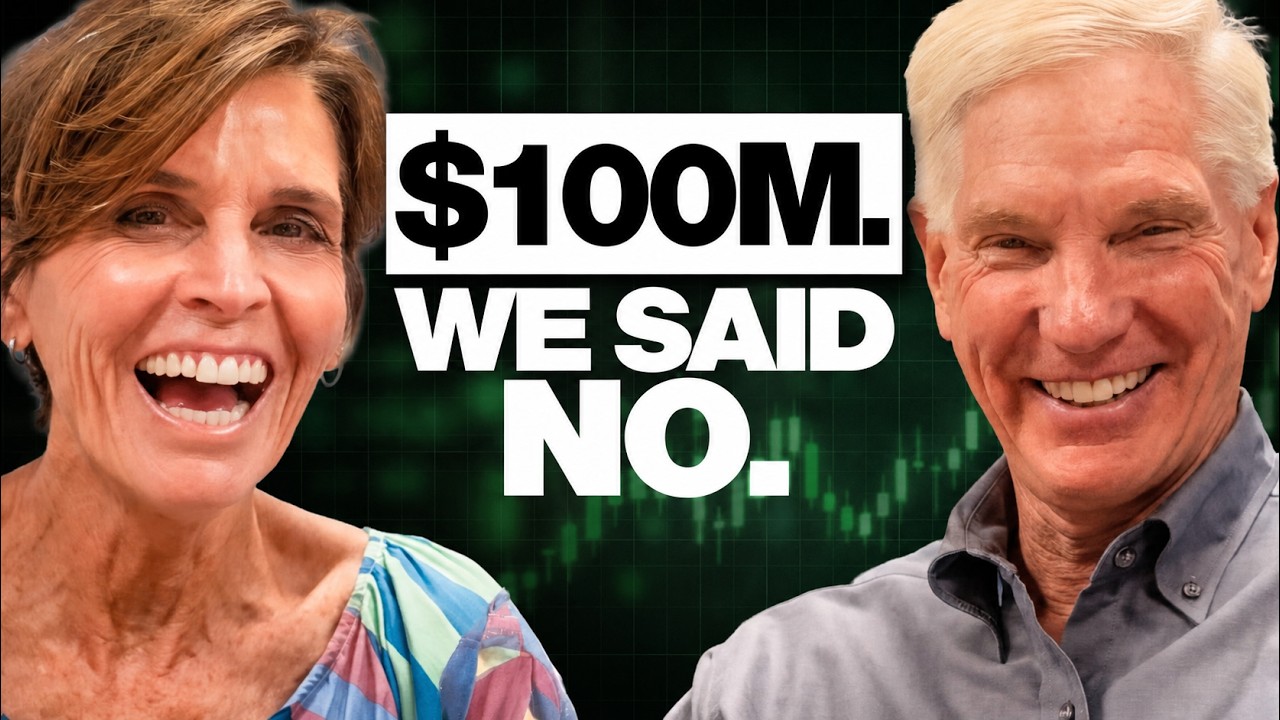
In 2016, ten locations into a burger stand they'd started three months after their wedding, Patrick and Kathy Terry got an offer for their company: somewhere between $70 and $100 million. They said no. Today P. Terry's does between $150 and $200 million a year across 37 locations, and instead of selling it to private equity, they are handing it to their 1,800 employees through an Employee Ownership Trust — something fewer than 100 American companies have ever done.
Like all Moneywise episodes, Patrick and Kathy breaks down their net worth, income, portfolio, and monthly expenses and then I, your humble host, pick it all apart.
We also went deep on: why a nine-figure offer felt like nothing, how an Employee Ownership Trust differs from an ESOP, tenure-based profit sharing, $900K in interest-free loans to hourly employees, and what “enough” actually means
Below you'll find my summary of the episode along with the entire transcript.
And by the way...this podcast, the concept of it came from Hampton. Hampton is a private, highly vetted community for high net worth founders started by Sam Parr. Members range from companies doing 3-5 million in revenue all the way up to hundreds of millions. The reason we started this podcast is because there are amazing conversations about money and growing companies that typically happen only behind closed doors, and we thought it would be awesome to share all of this information. If you're a CEO, founder, or business owner, check this out. New Moneywise episodes come out weekly.
Listen to this episode on:
Now, below are the notes and the full transcript.
The Numbers
- Net worth: approximately $200 million, almost all of it the business itself.
- Liquid: about $10 million — taken out once, around 2016, and the only money they have ever pulled from P. Terry's in 21 years.
- The offer they turned down (2016, 10 locations): $70–$100 million.
- Revenue today: between $150 and $200 million a year, growing 20–25% year over year across 37 company-owned locations and 1,800 employees.
- Year one (2005): about $600,000 in sales from a 500-square-foot stand — in the red after depreciation. Year two: over $1 million.
- Per-store range: $3 million to $6 million in annual sales; a new restaurant costs over $3 million to build, and they build two a year.
- Kathy took almost no salary for the first 10–12 years.
- Overhead: corporate runs about 16%; G&A below 6%.
- Employee loans: over $900,000 lent interest-free, with about $5,000 ever written off.
- EOT transfer so far: roughly 11% of the company gifted and sold to the trust via a seller's note.
- Profit sharing: starts at 5% of EBITDA in early 2027 for anyone with 2+ years of tenure, targeting 20% within five years.
A $1.60 Hamburger and a 500-Square-Foot Building
Patrick had wanted to open a hamburger stand for years — burgers, fries, milkshakes, nothing to argue about. He sprung it on Kathy three months into their marriage while she was a paralegal working patent litigation (she'd earlier quit a firm and rehired herself as a contractor at what she calls a 500% raise). Her reaction: “Oh, cute. Go for it.” She didn't think he'd ever do it.
The first store opened in South Austin in 2005: 500 square feet, a drive-through and a walk-up window, about $600,000 in six months of business, and a loss once depreciation was counted. Kathy kept the books and eventually gave the business three years of her life. The rule from the start was quality food at a low price — and Patrick deliberately didn't manage to the numbers.
Turning Down $70–$100 Million
By 2016 they had ten locations and a buyer. The offer was between $70 and $100 million. They said no — not because of the number, but because the number didn't feel like anything. What it did do was make Patrick and Kathy realize they were sitting on an asset that needed a succession plan.
They took just under $10 million out of the business around that time, mostly at a friend's insistence that a man with a wife and two kids can't have nothing in his account. That $10 million is still the number. The business they kept now generates the entire value of that 2016 offer roughly every six months.
The EOT: Selling the Company to 1,800 Employees
In June they began transferring P. Terry's into an Employee Ownership Trust — gifting and selling shares (about 11% so far) to a trust on a seller's note, so the business pays them out over time. Kathy, a former paralegal, figured the structure out herself; by her count roughly 100 U.S. companies have done it.
Her distinction between an EOT and an ESOP is the whole point. Once an ESOP trust holds 51%, its trustee is obligated to maximize share value — so a big enough private-equity offer has to be taken. An EOT holds the shares permanently and protects a written purpose instead: stay independent, keep creating opportunities for employees, keep serving high-quality affordable food.
Because employees don't personally hold shares, the financial upside comes from a separate profit-sharing program launching in early 2027: 5% of EBITDA to start for everyone past two years of tenure, with a goal of 20% within five years.
$900,000 in Interest-Free Loans, $5,000 in Defaults
P. Terry's lends money to hourly employees at 0% interest. Over the years that's added up to more than $900,000 lent, with roughly $5,000 never repaid — about half of one percent. Credit card companies charging 25% would kill for that loss rate. The most reckless-looking line on their books may be the most profitable thing they do.
What $10 Million Bought That $100 Million Wouldn't
Patrick is in the office every day and doesn't see retirement coming; they have a sophomore in high school. The private island came up more than once in the conversation, and the honest answer was that he got handed the chance and didn't want it. For founders at $3–$5 million wondering what they don't know yet, the Terrys' answer is that there's no dollar figure on relevancy — the business is what makes them feel significant, relevant, and loved.
Other Key Quotes
"I'll tell you it was between $70 and $100 million. — Patrick"
"We took a little less than 10 million out. That's the only money we've ever taken out in all these years at P. Terry's, in 21 years. — Patrick"
"There's no dollar amount, no dollar figure on relevancy. What this business has allowed us to do is feel significant, feel relevant. — Kathy"
"37. We don't really get into the revenue. I'll say it's between 150 and 200 million. — Patrick"
"We have loaned out over $900,000, almost a million dollars. And our default, get this, is I think only 5,000 has been unpaid. — Patrick"
"For me, I was trying to protect that culture. So what an EOT is, is we're selling shares to a trust, but the employees don't get any shares. It sits in the trust. But what the trust does is it protects the purpose. — Kathy"
"Our G&A is below six, and we build two restaurants a year. And to build a restaurant these days costs over $3 million. — Patrick"
"Right now it's 5% EBITDA... the goal is to get up to 20% in the next five years. — Kathy"
Links You Might Like
- Join Hampton Community: https://joinhampton.com
- P. Terry's: https://ptquality.com
- Watch this episode on YouTube: https://www.youtube.com/watch?v=DX79AGx6vHw
- MoneyWise Podcast: Full episode archive
Full Transcript
Patrick Terry: I'll tell you it was between $70 and $100 million.
Daniel Berk: And you turned it down?
Patrick Terry: I did turn it down.
Daniel Berk: That is Patrick and Kathy Terry. 21 years ago, they opened a 500 square foot burger stand in Austin selling $1.60 hamburgers. When the offer came, they were rich on paper, but it felt like nothing.
Patrick Terry: We took a little less than 10 million out. That's the only money we've ever taken out in all these years at P. Terry's, in 21 years.
Daniel Berk: Today, the business does between $150 and $200 million a year, and instead of selling it, they're giving it slowly and deliberately to their 1,800 employees.
Kathy Terry: There's no dollar amount, no dollar figure on relevancy. What this business has allowed us to do is feel significant, feel relevant.
Daniel Berk: And loved. Why would anyone walk away from $100 million twice? I asked them everything. This is the whole conversation. In 2005, Patrick and Kathy Terry, who were married for three months at the time, opened a 500 square foot burger stand in South Austin. In the first year, they did about $600,000 in sales, which was actually in the red after depreciation. Kathy didn't take a real salary for over a decade. Then in 2016, with 10 locations, a buyer offered them between $70 and $100 million. They turned it down, pulled out just under $10 million, the only money they've ever taken, and went back to work. Today, P. Terry's runs 37 company-owned locations, employs 1,800 people, and does between $150 and $200 million in revenue, growing over 20% a year. And now they're doing something fewer than 100 American companies have ever done, selling the whole thing to their employees. The conversations I get to have on this show are because of the Hampton community. It's a private network of founders and CEOs doing on average $25 million a year, where conversations about what your business is worth and what enough actually means happen all the time. I just get to bring them out into the open. If that is your world, check it out at joinhampton.com. In today's episode, first we're gonna walk through the numbers, from a $1.60 hamburger to the nine-figure offer that they turned down. Then we get into the machine they built, an employee ownership trust, tenure-based profit sharing, and $900,000 in interest-free loans with almost zero defaults. And finally, the question underneath it all, how two people sitting next to $200 million in assets decided that $10 million and mattering to 1,800 people was more important. This is Moneywise. I'm Daniel Berk. Here's Patrick and Kathy Terry. Welcome back to another episode of Moneywise. Today, I have not one guest, but two guests, which is unorthodox and very exciting. I have Patrick and Kathy Terry, who I'm excited to learn from and to hear about, uh, some of their e- exciting business ventures, but also some unique, uh, perspectives of what they bring to the table and how they've built their business together. Kathy and Patrick, thank you so much for joining me on Moneywise today.
Patrick Terry: Thanks for having us.
Kathy Terry: Yeah, thanks.
Daniel Berk: Absolutely. I'm super excited. I wanted to start with Kathy. Kathy, could you kinda walk me through what it was like growing up in your household, and what money was like, but also the entrepreneurial spirit? Kinda what, you know, prompted you to, to want to be an entrepreneur with Patrick later in life?
Kathy Terry: Oh, gosh. Okay. I hope, I hope I can condense this down. So I grew up in West Texas in small town Midland. Uh, both my parents, I guess what you would call entrepreneurs, but I didn't even know what that word was back then, but working class. My dad started an industrial laundry on his own when I was around seven. My mom, um, was working at the newspaper, but then went on a, on her own and started a bookkeeping service.
Kathy Terry: But from an early age, all we did was work, you know? And I, I thought for the longest time in the summers and spring break that that's what you did, you worked. So I would work in the laundry or help my mom do books. And then for me, school was really not something we talked about much growing up, but um, I figured everybody else was going to school, I might as well. Um, I stayed in Midland because the community college there gave, gave the school... It was free to go if you graduated from high school, so I stayed there for a year, and finally escaped the second year and went a couple, couple of hours down the road to a small state school, Angelo State. And, um, just happened to, uh, be dating a guy, and her sister, his sister said, "You know, you really shouldn't be chasing my, you know, following my brother to A&M. Go to UT and, like, make something of yourself. Like, do your own thing." So that really changed the trajectory of my life. I went to UT, ended up working at a law firm while I was at UT. And when I graduated from UT with an accounting degree, I didn't want to go into accounting, so I stayed at the law firm, and just got lucky, met a woman who had kind of traveled the world, and I was like, "Who does this?" Like, I didn't even have a passport, didn't understand any of it. But she inspired me, and so I switched law firms, was working at a IP firm, grinding, and, um, decided... I was working, I was in between big cases. I worked on a lot of high tech cases, patent infringement, litigation, and took a six-month leave of absence and traveled around the world by myself for six months, and came back, and that's when I decided, you know, I'm gonna do my own thing. I eventually quit and said, "Okay, you can hire me back tomorrow, but at my rate." And so I gave myself a 500% raise over-
Daniel Berk: There you go.
Kathy Terry: And started working on my own, and was- would hop, you know, from firm to firm and work on cases. So that was kinda when I got my entrepreneurial legs under me, realizing that I had value. I just had to figure out where my value was. And, um, and then that's when I met Patrick, and Patrick has his own little... He, he started as an entrepreneur a lot earlier, a lot younger than I did. Um, but we'll get into it, but P. Terry's was definitely his, his vision, his, his thing, and I just... Yeah, I joke that, um- It was his passion project, but pretty early on, it, I realized it was gonna become our passion project, so.
Daniel Berk: It sounds like maybe you were his passion, and then that was his passion project, right? And well, I'm sure we'll get to that. I know there's a priority list. Um, that's a, that's a great story. And, and Patrick, I take it you were an ad guy for quite a while before P. Terry's. So walk me through your story, how you grew up around whether an entrepreneurial spirit or business-mindedness, kinda what led to the P. Terry's, uh, vision.
Patrick Terry: Well, I always had it. I was, uh, five years old, and I was, um, I had a lemonade, uh, Kool-Aid stand out in front of my house, and it was always the next deal, where I was gonna... what little business I could start. I had a tennis camp when I was in high school and college. Um, we traveled with, you know, 30 kids in rented vans. Um, I was, like, 19 years old at the time running the camp. I'd always had something going on. I loved the restaurant business for whatever reason. You know, it's, it's sometimes hard to describe or define. Um, but it's kind of in my blood. And so I had had a couple of pizza places. Um, I've just done a lot of different things. Uh, but after college, I did go into advertising, and I worked for TracyLocke BBDO in Dallas, and I was on big accounts. You know, Ben Hogan and Frito-Lay, uh, Phillips Petroleum. And, uh, it kind of gave me, um, an experience that I had never, you know, lived with.
Patrick Terry: You know, my dad ran a TV station in West Texas, not far from where Kathy grew up, and, uh, he clearly be- on his own running a TV station as an owner/operator, he clearly had done, you know, that entrepreneurial, uh, s- project that he would, you know, that he would live in his career with. That would be how he ended his, his long career in broadcasting. But I, um, I got bored really fast. I was in advertising, and I had a 9:00 to 5:00 job, and it wasn't fulfilling enough, even though I worked on some great accounts and around some great people, and they taught me a lot about, about presentation and about dress and, uh, and, and client relationships. That was really beneficial to me. But I got bored, and so I opened up a pizza place at night, um, take and bake pizza place that I ran from 5:00 to 10:00 Monday through Friday, and then I worked Saturday and Sunday all day. So I was working 80 hours a week, um-
Daniel Berk: Wow
Patrick Terry: ... which pre- which, you know, uh, prepares you for the restaurant industry. And, uh-
Daniel Berk: Yeah
Patrick Terry: ... and so then, you know, I, I met, you know, Kathy. Uh, we actually met at a, at a gym. And, uh, uh, I was stricken very quickly. And, uh, and then, you know, we started dating. And then, um, I had always wanted to open up a hamburger stand. I loved the idea of burgers, fries, and milkshakes. Uh, very simple, very easy for me to understand, and I think it's something most of us agree on. You and I can get into this ridiculous argument about how we want our pizza, New York style, Chicago style, Detroit style. Not a lot of argument about hamburgers, fries, and drinks. And so I like that idea. And, uh, a location opened up, and, uh, I sprung the news to Kathy a year after we'd been married.
Kathy Terry: That, that would be three months.
Patrick Terry: Three months after.
Daniel Berk: Three months.
Patrick Terry: Yeah.
Daniel Berk: I'm glad you're both here because we would never have known it was actually three months and not-
Patrick Terry: No, and I... and frankly, I don't remember. Um, and I, you know, and Kathy learned very quickly that all this talk that I had been saying all this time, um, there was something behind it, uh, because I talked a lot about it.
Kathy Terry: Oh, yeah, I didn't think he'd ever do it. I just thought, "Oh, that's a cute idea." You know? "Oh, cute."
Daniel Berk: And then he did it. What was your, what was your initial reaction when, when Patrick came home and he said, "Hey, honey. Uh, I know we got married 90 days ago, but I have this crazy idea, and there's a perfect spot for it."
Kathy Terry: Yeah.
Daniel Berk: What was your initial reaction, Kathy?
Kathy Terry: Oh, I thought, "Oh, cute. Okay, go. Go for it." Yeah. I mean, I was... I literally was on a big case. I don't know if it was in DC.
Patrick Terry: You were in DC. You were in DC.
Kathy Terry: And I would come home on the weekends, and, you know, I'm a detail girl. Like, I like to get into the weeds. And so I would ask him all these questions, and he was... he had a friend, and they were remodeling and, you know, hiring people off the street to help them.
Patrick Terry: Just out of, like out of Green Acres, if you can remember that TV show.
Daniel Berk: Sure.
Patrick Terry: We were, we weren't getting much done.
Kathy Terry: And so I kept asking questions, and then that's when I realized, like, oh, shit, you have no idea. Like, you have the vision. Like, the vision was there, and it's always been there. Like-
Patrick Terry: Well, I can see it. I can see it
Kathy Terry: ... Patrick's always been committed to this vision.
Patrick Terry: Yeah, I can see it.
Kathy Terry: But, like, the details and getting the vi- you know, doing it.
Patrick Terry: Yeah.
Kathy Terry: And so once my case settled or ended, whatever, then that's when I jumped in, and it's been kind of... That was kind of the next three years of my life-
Patrick Terry: Yeah
Kathy Terry: ... um, was-
Daniel Berk: Wow
Kathy Terry: ... kind of P. Terry's.
Kathy Terry: Yeah.
Daniel Berk: So 2005, you open it, and tell me what revenue looked like th- that year, and then how it scaled from 20- or 2005 to 2026 now, 21 years later.
Patrick Terry: I'm gonna let Kathy answer that. But I can tell you from my perspective, um, I just wanted to run the restaurant, and, and I wanted to do it my way, and I wasn't gonna worry about what money we were bringing in. I was at an age that I had... we had some money in the bank, so we weren't hand to mouth, and, and I just... I knew that if we, if, if we didn't look at the numbers, if we stayed the course of what we wanted to do, 'cause we had a... we, we did know we wanted to serve high quality food at a really valuable... at, at a low price. We wanted to have a really great value. And I didn't want to be swayed by that. So you, you had the books.
Kathy Terry: Yeah, I was doing the bookkeeping. And, and, you know, I just... I would... I mean- The first year we a- I mean-
Patrick Terry: We made some money
Kathy Terry: ... we, well, I mean, I looked at the numbers the other day. We, we didn't really make money that first year. Um-
Daniel Berk: So you, did you break even? Or was there a sl- a slight loss?
Kathy Terry: I think we broke even. But you know what, we broke-
Patrick Terry: We were open six months.
Kathy Terry: We were open six months, and we did, um, you know, when you start... Yeah, actually we did. Is we, we didn't... At the end of the day when you in- include depreciation and, you know, when you-
Daniel Berk: Sure
Kathy Terry: ... do all that, we, we were in the red. But we did-
Daniel Berk: So what, what are we talking? I mean, 100K in revenue?
Kathy Terry: Oh, no.
Patrick Terry: All that.
Kathy Terry: We had, like, what was it? What was the numbers? I d- we just looked at it.
Patrick Terry: Like, over a half million, wasn't it?
Kathy Terry: Yeah, it was, like, 600,000 the first-
Daniel Berk: Awesome. And that was one location-
Kathy Terry: One location
Daniel Berk: ... in 2005.
Kathy Terry: And then the next year, um, what was it?
Patrick Terry: And mind you, this is a 500-square-foot building. Okay?
Daniel Berk: Oh, yeah.
Patrick Terry: This had-
Daniel Berk: Yeah
Patrick Terry: ... a drive through and a walk-up window.
Daniel Berk: Basically, like, the room I'm in right now, but there's a door where you give someone a burger.
Patrick Terry: And, and the hamb- it was, a hamburger was $1.60. So you-
Daniel Berk: Nice
Patrick Terry: ... you sell a hell of a lot of hamburger.
Daniel Berk: I can get down with that.
Patrick Terry: Yeah.
Daniel Berk: I can get down with that for sure. I wish I was one of your first customers back then.
Kathy Terry: Yeah. I mean, I think that the revenues the first year were over a million.
Patrick Terry: Yeah.
Kathy Terry: Yeah. Um-
Daniel Berk: Okay
Kathy Terry: ... but I never, like, I was the same way. Like, I just was like, "We just gotta keep our head down," right? Like, we just gotta stay, stay at it.
Daniel Berk: Sure.
Kathy Terry: But I remember distinctly w- I would pay sales tax on the 20th of every month. And I remember that check started getting bigger and bigger, and I'm like, "Oh, crap. We're, we're doing well." Like, you know, if I keep having to pay more sales tax, that means, you know, something's good. Something, you know, good is happening. And so for me, that was kinda like my little marker that I didn't even realize. But, um, you know, we didn't open the second location until four years later. But Patrick actually was looking for a second location, but thank God we didn't get one. I mean, in hindsight, it was a gift not finding the second location.
Daniel Berk: Kathy said they never networked. They never went to conferences. They never compared themselves to anyone. They just worked, and for 11 years they had no idea what the business was worth. Hampton solves that exact problem.
Daniel Berk: It's a private community of founders and CEOs running real companies, and the value is having peers who can tell you what your business is worth and what your options are before a private equity firm shows up to do it for you. These types of conversations happen every day inside Hampton. I get to bring some of them into the open. If you wanna be in the room, go check out joinhampton.com and get a core group now. So that was 2009 the second location opened.
Kathy Terry: Yes.
Daniel Berk: And you were doing what in revenue at that point?
Patrick Terry: We'd be doing close to two million.
Kathy Terry: Yes. Yeah. Close to two million.
Daniel Berk: Okay. And so let's jump to 2015, how had it scaled by then, and then 2020, and now, uh, 2026.
Patrick Terry: Well, the stores are, you know, they're all over the place. We have, um, we have s- we have a store that'll do $6 million in sales. Um, and we have a store that'll do three million in sales. So we're kind of, we're kind of all around, around the place. Um, a lot of it has to do with the location and the size of the, the building and, and where we are. Um, but we've also taken a different tact because we felt like in the last year and a half as inflation was really creeping up and our costs were really creeping up, and we knew our customers were getting hit harder, that we, we actually went a different direction a- and did not increase our prices. And so-
Daniel Berk: So you're still $1.60 for a burger?
Patrick Terry: Well, no, that was, that was a long time ago.
Daniel Berk: Oh, okay.
Kathy Terry: 21 years ago.
Daniel Berk: I was gonna say.
Patrick Terry: $3-
Daniel Berk: That's like Costco hot dog status right there.
Patrick Terry: Yeah. It's $3-
Daniel Berk: But, uh, okay. That, that makes sense
Patrick Terry: ... and, $3.10 for a hamburger.
Kathy Terry: Yeah.
Daniel Berk: Still a great price for a hamburger.
Kathy Terry: Yeah.
Patrick Terry: And, and so, so our margins have gotten even tighter, but what-
Daniel Berk: Yeah
Patrick Terry: ... we've decided to do is, you know, we're, we've decided to grow the business, and that we'll do it on the backs of, of lowering our margins.
Kathy Terry: Right. But in, in-
Daniel Berk: And then what are... Go ahead, Kathy. I was, I'm, I'm curious what those revenue numbers are.
Kathy Terry: Well, I was just gonna include the first question, like, trying to take them back to 2015 'cause-
Daniel Berk: Yeah
Kathy Terry: ... you know, you know the numbers. I mean, 2015, 2016, we actually were entertaining selling the business. And so, um, so you kinda did a dog and pony show-
Patrick Terry: Right
Kathy Terry: ... and put together... And, and that was really eye-opening, I think, for both of us 'cause I think that was the first time we really realized the value of the business, to be honest, right? I mean, don't you think?
Patrick Terry: Yeah. Oh, no, absolutely. You know, we don't, we don't network. We don't go to conferences. Um, we really just keep our head down, and, and we don't really pay attention to what every- everyone else is doing. We've never had any real interest in that. We... It didn't really matter to us what everyone else was doing. We were gonna do our own thing. Um, so and so all of a sudden we've got an opportunity, uh, to sell the business, um, and it was for a considerable amount. Uh, enough, as we like to joke, to go live on an island. Um-
Daniel Berk: Yeah
Patrick Terry: ... and we learned that what we really wanted to know, or at least I did, I wanted to know how w- how I was... you know, what my scorecard was. And when I found out that we were, we were doing pretty well, then we just went back to work. But I, I, I think I needed that affirmation.
Kathy Terry: Yeah, and at the time, Ham-
Daniel Berk: And that offer in 2015, '16, are, are you at liberty to disclose that amount?
Patrick Terry: I, I, I'll tell you it was, it was between 70 and $100 million.
Daniel Berk: And you turned it down?
Patrick Terry: I did turn it down, yeah.
Daniel Berk: Very interesting.
Daniel Berk: We'll, we'll come back to that. I'm curious, what, what was the revenue that valued the business at 70 to $100 million in 2015?
Patrick Terry: I'm gonna, I'm gonna say 10, 12 times, um, sales.
Daniel Berk: Okay.
Patrick Terry: I'm gonna say-
Daniel Berk: So really healthy. And how many locations at that point? I guess we're 11 years into the journey by then.
Patrick Terry: 14, uh, 10, 10 or 11.
Kathy Terry: I think, I-
Patrick Terry: Yeah, it was... The number actually we had 10 counting.
Kathy Terry: Well, what was Capital-
Patrick Terry: 10 locations.
Daniel Berk: There was 11, but it didn't open.
Kathy Terry: Okay. Yeah. We, we were about to open our 11th store.
Patrick Terry: Yeah.
Kathy Terry: So we had 10.
Daniel Berk: Wow.
Patrick Terry: Yeah.
Daniel Berk: Okay. And I wanna come back to the acquisition story. How many locations do you have today in 2026, and what's your approximate revenue?
Patrick Terry: 37. We don't really get into the revenue. S- I, I'll say it's between 150 and 200 million.
Daniel Berk: All right, so here they were in 2016. They had 10 locations. Someone offered them between $70 and $100 million, and they said no. Today, there's 37 locations, and the business brings in the entire value of that offer roughly every six months. Turning down the biggest check of your life is usually a cautionary tale, but for the Terry's, it was the best financial decision they ever made. And they didn't say no because of the number. They said no because the number didn't feel like anything to them. That's incredible. Good for you. I mean-
Patrick Terry: Thank you
Daniel Berk: ... really very phenomenal story. So you turned down an acquisition for a 12X in 2015 because your goalpost, you mentioned, was not aligned with the payout that you were looking at. Is that what I'm hearing correctly?
Patrick Terry: It, uh, what, what we f- what we found out is that, that, uh, when we heard the number, and it was a great number, and it was m- it was obviously more than fair, and it was a reputable company, that, that that's... We learned then that, or at least I did, that that's not what I was interested in. I loved running the business. We, we loved our employees. We, we didn't wanna sell. And the, the, uh... But I think it took that dog and pony show that Kathy talked about for me to realize that. Um-
Kathy Terry: Yeah, I think the... For me, it was two things. It was, one, validating our... validating Patrick's vision, right? Like, it was great to know that, oh, wow, we have something of real financial value. Like, somebody wants this. So, uh, of course you want validation, and, and-
Daniel Berk: Mm-hmm
Kathy Terry: ... that was great. And I think for me, the second thing was realizing that what we've built mattered more, the culture piece mattered more than what somebody was willing to pay for it because-
Daniel Berk: And you weren't willing to risk the culture piece-
Kathy Terry: Exactly
Daniel Berk: ... in exchange for the payout.
Kathy Terry: Like, that is when I realized, oh, we gotta protect the culture. We have to protect the, what we have built. Um, and, um, and because that was my biggest a-ha moment was, okay, we can run... We can go... We can take this check and run off and go buy our island, but who's gonna take care of our employees that we love-
Daniel Berk: Mm-hmm
Kathy Terry: ... that are family now, who, you know, they're not gonna do interest-free loans anymore. They're not gonna bake birthday cakes anymore. They're not going to give back to the community. They're not gonna donate every quarter like we do. Um, you know, the, they're gonna start selling frozen french fries. Oh, my God, what in the world? You know, like, my w- brain just started thinking, like, they're... You know, it's gonna be-
Patrick Terry: It'll be, it'll be different
Kathy Terry: ... quality... It'll be different. It would be more about, like, maximizing profit, right? You know, the quality may go down. The prices may go up.
Kathy Terry: Like, everything that we built our, uh, legacy on would, could potentially go away. And so for me, that was when I was like, "Whoa." So I think it, it did to... It, it validated him, and it made me realize how precious this thing that we had built was.
Daniel Berk: So here we have a couple staring at a nine-figure offer, and they're asking each other, "What is there enough?" Founders almost never get to have this type of conversation, let alone an opportunity of an acquisition that size. You can't have the conversation with your employees, and most of your friends probably can't relate. Hampton is a private community of founders and CEOs where we have tried to solve this problem. That question gets asked honestly and constantly, how much is, quote, "enough?" This show exists to take those private conversations public. If you're sitting with your own version of this decision, you'd fit right in. Go to joinhampton.com and see what this is all about. Yeah, and I think that's commendable. I, I, I love that story for both of you because newlyweds starting a business that really f- seemed almost impossible, Kathy, if I can put words into your mouth, and you're like, "Oh, that's cute. That's a fun idea," and then turning it into 11 locations and a, you know, nearly $100 million acquisition offer, that's a big step in a direction that, correct me if I'm wrong, did you believe it could have ever gotten there at the beginning?
Kathy Terry: Not me. I, um-
Patrick Terry: I, I, well, I never... You know, it's funny. I never thought that far out. I, I, uh, I literally had hoped-
Daniel Berk: You're a next thing type of guy
Patrick Terry: ... I thought one restaurant to the next, one burger stand to the next, one burger stand to the next. I, I can remember stunned to find out at one point that we had 300 employees. Stunned. In my mind-
Daniel Berk: How many did you think you had?
Patrick Terry: 80 or 90. I mean, I, I-
Daniel Berk: Oh, oh, wow. Okay
Patrick Terry: ... when, when you're just concentrating on the next thing-
Daniel Berk: Yeah
Patrick Terry: ... and I say 80 or 90, hell, I didn't have a, I didn't have a clue. I would... You know, you're just... It's, it's, it's, you know, it's kinda like the frog in the water. You know, I'm just-
Daniel Berk: Yeah
Patrick Terry: ... slowly, it's, uh, the concentration is just happening over time. Uh, and I'm not worried about anything else. I'm not, I'm not thinking about, you know, the yacht or the-
Daniel Berk: Yeah
Patrick Terry: ... or our private airplane. I'm thinking about, okay, where's the next location? And if I get up at 5:00 AM and drive around when there's no traffic, maybe I'll find it.
Kathy Terry: Yeah. I knew there were almost 300 employees 'cause I was baking cakes for every employee.
Patrick Terry: Yeah.
Kathy Terry: At-
Daniel Berk: Every single employee you were baking a cake for?
Kathy Terry: Until we got up to around 300. It was actually-
Patrick Terry: We still do. We still do cakes
Kathy Terry: ... after-
Daniel Berk: That's like a, a cake every day almost.
Kathy Terry: Yeah. Oh, it was. After I, I quit at nine years, and then I passed it on to Susie, who now is our official birthday cake baker. I mean, luckily now with locations in San Antonio and Houston, you know, our commissary helps her out. But Susie-
Daniel Berk: Yeah
Kathy Terry: ... still bakes birthday cakes. And you, when you apply for a job at P. Terry's, you tell them which of these cakes would you like on your birthday
Daniel Berk: Wow. That's so special. Do you... I assume you get a lot of feedback from employees, like thank you cards and, and how does, how does that make them feel?
Patrick Terry: Well, I think what happened, what we found out is that for a lot of our employees, that is their... That is how they celebrate their birthday. There may not be a cake.
Daniel Berk: Wow.
Patrick Terry: And so-
Daniel Berk: Wow
Patrick Terry: ... I used to deliver the cakes.
Patrick Terry: So I would come home from work and Kathy would hand me two cakes, and I'd be back on the, in my car driving. And I remember one night thinking, "You know, this is a pain in the ass. I- I've worked all day and now I'm driving out to one of the locations." And we had-
Daniel Berk: Maybe an hour plus of that-
Patrick Terry: Yeah
Daniel Berk: ... of that time, yeah
Patrick Terry: ... we had a rule back then that, that we would sing Happy Birthday really fast, but we would sing it because there were cars in line and people were ordering. So I'd light the cake and everybody would sing it, you know, at three times the speed, and the person would blow out the candle, and we'd take the cake in the back, and they'd enjoy it that night. Um-
Daniel Berk: Wow
Patrick Terry: ... and what I saw that, that evening was, um, camera, uh, phones coming out and people taking pictures, and I realized how important it was, that it mattered.
Daniel Berk: Yeah.
Patrick Terry: And that changed-
Daniel Berk: Yeah
Patrick Terry: ... everything, uh, for us. And to this day, maybe I'm a better CEO 'cause I can tell you how many employees we have today. So we have-
Daniel Berk: How many do you have?
Patrick Terry: We have 1,800. And, um-
Daniel Berk: Wow
Patrick Terry: ... and we still bake everyone a cake.
Daniel Berk: So you turned down 100 million in 2015. You've grown five times, at least in head count since then. Where does that bring your overall net worth today, uh, business included and yeah, personal net worth, and then liquid net worth as well?
Patrick Terry: So, so from a personal standpoint, um, for the first 10 or 11 years, maybe 12, um, I barely took a salary. I, I took just what we needed to pay our bills, our personal bills. Um, we were so focused on growing the business and at, at a rate that we wanted to without bringing outside money in. We could always get a loan from the bank. It was obviously limited to how much we could borrow. That, that we didn't have any money. I mean, we, personally. We just had it all in the business. And a buddy of mine, um, much smarter than me, when he found that out, he literally sat me down and he's like, "You can't do this. You've got a wife and two kids, and you can't just not have any money in your account." Um, so the... We found a bank who, who said, "You know, you can take some money out if you want." And so we took around le- a little less than 10 million out and put that, socked that away in case something ever happens or, you know, the, it, for our girls, for, for Kathy. I don't... You know, we don't really spend a lot of money. Um, and so we, we, we... That's the only money we've ever taken out in all these years at P. Terry's, in 21 years.
Kathy Terry: Well, and then just recently-
Patrick Terry: Uh
Kathy Terry: ... in June, we just, um, transitioned, um, or started the transitioning to an employee ownership trust. So we did... And so now the whole goal is to start selling equity to this trust. So we did do an initial seller's note. So we gifted shares to the trust and, and sold shares to the trust. So that will be our way to exit out of the business. So we decided not to sell, um, to a strategic buyer, private equity. Like, we decided a few years ago that we were gonna try to find another way, uh, to... You know, we, we needed a succession plan, right? And so that was kind of my job, uh, uh, uh, my self-assigned job for the last five, 10 years. You know, once we got that offer, that was when I realized, oh, we have an asset. I gotta figure out what, what we're gonna do with this. And so I've always kind of been trying to figure out, how are we going to exit at some point? So we decided to... We found this model in employee ownership trust. So we are now sell- actively selling. So we just did a seller's note, um, for a s- a, a small, uh, I think it ends up being about 11% between the gift and the sell. And, and so what it, it do- does is we sell, finance it, so the business will start paying us for that equity.
Kathy Terry: And then when that seller note is paid off, then we'll just sell another tranche. So that's kind of-
Daniel Berk: Okay
Kathy Terry: ... the long-term plan for us to, to reduce our exposure, I mean, get our equity out. Um, but it's at a very slow pace that the business can absorb, um, 'cause we don't want to take on too much debt 'cause we wanna keep-
Daniel Berk: Yeah
Kathy Terry: ... growing, and we also introduced profit-sharing, so we wanted the, there to be profit for the employees to, you know, to feel ownership when you call it an employee ownership trust. So that's where we are today. But yeah, we didn't take anything out, l- like Patrick said, from, from 2000, I think it was '16, until just recently. We started-
Daniel Berk: And that'll... That 11% sale, that comes to, I guess, 20 million out of $200 million business? Or w- what does that come out to?
Kathy Terry: Well, we d- we took a re- a reduced value, right?
Daniel Berk: Yeah.
Kathy Terry: Because we, we had a valuation because we had mi- we took on minority investors. I mean, we kinda jumped-
Daniel Berk: Okay
Kathy Terry: ... ahead here, but if you wanna talk. We took some minority... We took some friends, a friends round back in tw-
Daniel Berk: What year was that?
Patrick Terry: Um, six years ago. So seven years.
Kathy Terry: Right befor- right before COVID.
Patrick Terry: Yeah.
Kathy Terry: Right before COVID.
Patrick Terry: That's right.
Daniel Berk: Okay, so like 2019-ish.
Kathy Terry: 2019. Yeah, 2019, 'cause we decided that we wanted to go into another market. We wanted to expand into San Antonio. So, you know, and this was another learning moment too for us because Patrick at the time was like, "Oh, I probably need to bring someone in that has that expertise 'cause I don't know if I can... if I know what to do to get us to another market." So we actively did a CEO search. Took us a long time. Found somebody. Brought him in, and that was when we did the friends and family round because we wanted him to have some capital to really expand.
Daniel Berk: Mm.
Kathy Terry: So we took on-
Daniel Berk: Yep
Kathy Terry: ... minority investors. You know, I think that was a small percentage, 10% maybe At the time.
Patrick Terry: Yeah.
Kathy Terry: And allowed him to get some capital. And so we started expanding heavily into San Antonio. Um, and then we parted ways with him, uh, three years ago?
Patrick Terry: Um, two, I think. Two... Coming up to three, yeah.
Kathy Terry: Coming up to three. And, um, and so yeah, that was another thing. Like, we have these minority investors. How do... You know, we need to give them, them some kind of exit buyout. So there were a lot of things that I was trying to navigate at the time when we were trying to find what we ended up with, 'cause we had the minority investors. And so we-
Patrick Terry: Yeah. I mean, some-
Kathy Terry: Sorry. To answer your question, I, I... So we did evaluation for this EOT, but we, um, we sold it at, at a discount to the truck.
Daniel Berk: Okay. Yeah, that's fair enough. So i- you 10 million liquid, if that's... Is that still the number?
Patrick Terry: Yeah.
Daniel Berk: Or has it grown since?
Patrick Terry: No, that's we-
Daniel Berk: Yeah, 10 million liquid, and then let's say 200 million, um, with illiquid assets with the company combined.
Patrick Terry: I think that-
Daniel Berk: Is that accurate?
Patrick Terry: Yeah. Yeah.
Daniel Berk: Some people would look at, uh, you know, $70 to $100 million acquisition and think, "Why in the world did you turn that down?" But then I hear this sale that you're giving back to the employees with the profit share and some of your succession plan. In my opinion, that's a very noble succession plan. But I would love to know your thinking behind that a little bit more, and tell me why. Why that instead of going and selling it for probably at this point much more than 100 million if you really wanted to.
Daniel Berk: Walk me through your thinking.
Patrick Terry: Uh, I think it, it all started the, the first couple years that we ran the business. Um, I think the fact that Kathy and I were in, in the stand, um, for those first few years, um, literally every day. Um, and, and when you're working side by side, uh, as an equal... Actually, I, I was an equal, 'cause I wasn't as good as they were. Um, but when you're there in a 500 square foot space, and you're literally, it's 120 in, in this building, uh, in the summer, because you've got all your fryers and your grill, and it didn't matter what the HVAC was doing, 'cause the windows were open. Uh, and, and you're sweating your ass off. And you're-
Daniel Berk: Yeah
Patrick Terry: ... you're, you're next to, you're next to these guys. And, and some of them still work for us, um, 21 years later. Um, it changes your perspective. You, you, you know their families, you know a lot about their personal life. Um, you know, we, we established so much of our business. You know, the, the, the cake, the birthday cake started when, when Rosario was leaving, and Kathy found out as she was leaving it was her birthday, and she was embarrassed that she didn't know, and the next day she brought her a cake. And that's, that's how that started. Didn't start from a conference room. Um, we have a, a... We've had non-interest free loans for all of our employees for 20 years. That started-
Daniel Berk: Really?
Patrick Terry: Yeah. That started because Vinny called, called and said, "I can't come in, 'cause my truck's broken." And I said, "I don't wanna work french fries tonight. I've already worked today. Um, how do I... Take a cab, and I'll pay the cab fare." And he got-
Daniel Berk: Wow
Patrick Terry: ... got to... And I said, "What do you need to fix your truck?" And he said, "$150." I said, "Here's $150. Pay me when you can." So-
Daniel Berk: What's that look like on, on paper? What's the employee, you know-
Kathy Terry: Mm-hmm
Daniel Berk: ... 0% interest loan actually on a, on a term sheet?
Kathy Terry: It's interesting. I just looked it up. We have, we have loaned out over $900,000, almost a million dollars. And our default, get this, is, uh, I think only 5,000 has been unpaid.
Patrick Terry: 5,000.
Kathy Terry: So the-
Daniel Berk: 5,000 of 900,000?
Patrick Terry: Yeah. Mm-hmm.
Kathy Terry: 0.01%.
Daniel Berk: Oh my goodness.
Kathy Terry: Yeah. So it's good business.
Daniel Berk: And what... Are we talking 12-month loans or one-month loans or every, every combination between?
Patrick Terry: We're, we're, we're letting them decide. So there's no... If I give you $300 and I say, "I want it back next month," I haven't solved a problem. So if it's 50 bucks a week or, um, up fr- until it's paid back, you tell me, 'cause I don't want you back in the hole that you're in right now. And-
Daniel Berk: That's incredible.
Patrick Terry: And, and, and you know what? It's just good business. It's just good business.
Daniel Berk: It's, it's, it's more than that.
Patrick Terry: Beautiful.
Daniel Berk: If I can push back, it's more than that. Because you don't have to do that, and it's bad for business on paper.
Patrick Terry: Yeah.
Daniel Berk: It's great for business, 'cause I know what you mean by that. It's of course-
Patrick Terry: Yeah
Daniel Berk: ... employee retention and growth-
Patrick Terry: Yeah
Daniel Berk: ... and people stick around. But-
Kathy Terry: Mm-hmm. Okay
Daniel Berk: ... you know, a, a, a, an accountant might look at that and say, "What are you thinking?"
Patrick Terry: Oh, absolutely.
Daniel Berk: By loaning free money.
Patrick Terry: Oh, there's no question.
Daniel Berk: But that's incredible I think for-
Patrick Terry: But then you-
Daniel Berk: ... the human spirit
Patrick Terry: ... then the other argument is, well, the bank's paying me 1.5%.
Kathy Terry: What am I, what am I really losing here?
Kathy Terry: Yeah.
Daniel Berk: Yeah.
Patrick Terry: And for me to tack on a number, well, that's just bad, that's just bad taste.
Kathy Terry: Yeah.
Patrick Terry: You know? That's just bad taste.
Daniel Berk: Wow.
Kathy Terry: Well, and, and I look at it as, you know, it's all about access, right? It's... You know, and we are lucky because we had access, you know, even to start this business we had access to savings, right? And so for us, we're just creating access and opportunities for our employees. You know, if, if Vin couldn't get to work and he didn't show up to work and he lost his job, then the cycle never stops, right? Like, they have to be able to stay in the game. They have to be able to have stability, you know? And so the interest free loans is just a way for us to g- give them, you know, create access to transportation, to stable housing, to opportunities, to, you know... And that way they can stay in the game, and they'll hopefully stay with us. And we have career growth opportunities. But you don't have to.
Daniel Berk: Wow.
Kathy Terry: If you wanna stay working the grill, you can stay working the grill. But if you wanna become a manager, I mean, our VP of operations, uh, started at the counter 16 years ago.
Daniel Berk: Wow.
Patrick Terry: But to go back to your original question, um- That's, that's where this came from
Daniel Berk: I think it's kinda crazy how casually Patrick threw out that $900,000 figure. 900K in interest-free loans to hourly fast food employees over 20 years, and $5,000 in defaults. Only 5K. That's about half of 1%. Credit card companies charge 25% interest and would kill for that rate. The most reckless looking line item on their books might be the most profitable thing they do. This is a crazy model and something that I really respect for the Terry's doing, is giving their employees more than just a job. They really... They've called their employees family a number of times through this episode, and this is the type of thing I think that really puts their money where their mouth is
Patrick Terry: You know, if you, when you're working side by side and, and you know the people you work with, uh, and they, they have stayed loyal to you. You know, we have a Maggie rule. Maggie's been with us since pretty much the first day we, second day we opened, and Maggie's still working. She works the grill now at our, as our, at our busiest location. So this woman's been with us for 21 years. Her daughter is back working for us. Her mother works in the dining room. Um, and the rule is that whatever we do, whatever decision we make as a company, we never disrespect Maggie. That's-
Daniel Berk: Hmm
Kathy Terry: Or her position.
Patrick Terry: Yeah. Uh, yeah, and, and that the people-
Daniel Berk: I like that a lot
Patrick Terry: ... the people that are there. So I'll give you a perfect example. Um, before I took back the company, the office went on an outing on a workday and went-
Kathy Terry: To a vineyard
Patrick Terry: ... to a vineyard a, a, an hour and a half away, and they had a nice lunch, and they've toured the vineyard, and it was a group thing for the office. And they had a bus, the whole bit. And then they got back, and they posted some pictures on Instagram and Facebook and w-whatever. And in my mind, Maggie came home from pulling a double, 'cause she does that a lot, got home, took her shoes off, sat on her couch, scrolled through her phone and saw that her, her corporate outing, the company that is, got her back, you know, that, that are here for her, the accounting and the HR and the IT and the maintenance, all those people that are supposed to have her back were drinking wine that day.
Kathy Terry: And celebrating.
Patrick Terry: And that's a d- and that's disrespecting Maggie. So we don't do that around here.
Kathy Terry: Yeah. That was the last time they went.
Daniel Berk: I, I love the way...
Daniel Berk: Go ahead, Kathy.
Kathy Terry: That was the last trip to the vineyard.
Daniel Berk: I love this concept, the Maggie Rule. Every decision the company makes gets tested against one question: Does this decision disrespect the woman who's worked the grill since day two? 21 years. Her daughter works there now. Her mother works the dining room. And when the profit-sharing checks go out next year, based on purely how long you've stayed, Maggie will get the biggest one in the company. Every business has a Maggie. Most org charts don't recognize that. Make a Maggie decision and understand what your decisions as a company affect and how they affect the, m-the most tenure employee, but also maybe someone who's very far down on an org chart respectively. Your decisions affect everyone in the organization.
Kathy Terry: Patrick.
Daniel Berk: I was gonna say, I, I, the way you both think as business builders is much, uh, very unlike a, a typical business builder. I mean, you're thinking of the human and the business builds, but the human is, is first, second, and third. The business is almost deprioritized in light of the human that you're, that you're really serving.
Patrick Terry: A-and from a business standpoint, w-we recognize this has to be a two-way street. And so what we expect from the employee, you know, i-in the stand, i- we're gonna take care of them all... Uh, in return, they gotta, they have to take care of the customer.
Daniel Berk: Mm-hmm.
Patrick Terry: If i- if they're not taking care of the customer, then this doesn't work. Then we-
Daniel Berk: Mm-hmm
Patrick Terry: ... pat ourselves on the back all day long for being so nice, but the business goes to hell.
Kathy Terry: Yeah.
Patrick Terry: And so-
Daniel Berk: Yeah
Patrick Terry: ... so that is, that is the expectation.
Kathy Terry: And it's paid off. I mean, our, our revenues are increasing. I mean, the last two, three years have been 20, 25% year over year.
Daniel Berk: Wow.
Patrick Terry: Yeah.
Daniel Berk: And the profit, you are profitable, correct?
Patrick Terry: Oh, God, yes.
Kathy Terry: Yeah.
Patrick Terry: I wouldn't do this if I were unprofitable.
Daniel Berk: Sure. I mean, it's incredible. Do you know what your profit margin is?
Patrick Terry: We run... I'll tell you that our, um, our corporate, uh, our corporate runs about 16%.
Daniel Berk: Wow.
Patrick Terry: And, uh-
Daniel Berk: And I, I-
Patrick Terry: Yeah. Our, our... You know, we're, we're incredibly efficient. You know, our G&A is-
Daniel Berk: Sounds like it
Patrick Terry: ... our G&A is below six, and, and we build two restaurants a year. Um, and to build a restaurant these days costs over $3 million. So, you know, we're an expanding brand with a G&A below six. Um, and a lot of it is just we're here. We're the efficiency. Um, and looking for literally every penny.
Daniel Berk: I would love, Kathy, if you could put your, your legal hat on for a second and explain employee ownership trusts to me like I'm an idiot. And you don't have to pretend, because I literally have no idea what they are. So-
Kathy Terry: Okay
Daniel Berk: ... I am an idiot in this situation. I would love to just understand the, the, the actual concept of it and why you're choosing to do it. A little bit of context before Kathy takes over, because I'd never heard of this either. An employee ownership trust is how the Terry's are exiting a company doing between 150 and 200 million in revenue without ever selling it. By Kathy's count, about 100 businesses in the entire United States have done this. She's not a lawyer. She's a former paralegal who spent years figuring all this out herself, and she explains it better than most attorneys do Listen for the difference between this and an ESOP. That distinction is the entire reason that I think that Terry's culture survives them, and what they intend on surviving them many decades or even centuries longer than they're around.
Kathy Terry: Right. Right. Okay. Well, it's a really new tool that...
Patrick Terry: So don't be surprised that you haven't heard of it. It, it's, it's a big thing in the UK. The UK, there's a lot of employee ownerships, a lot of EOTs, and there's a lot of government support, tax benefits, and it's fairly new here. I mean, I was just at a conference, and my understanding there's, like, 100 businesses that have transitioned over to it in-
Daniel Berk: Total?
Patrick Terry: Total in the US.
Daniel Berk: Oh, okay. Wow. Okay.
Patrick Terry: So it's very early on. I mean, there's ESOPs that have been around for a really, really long time.
Daniel Berk: Heard of ESOP. Yeah.
Patrick Terry: Right. So-
Daniel Berk: And that's what I assumed it's... This is much different than ESOP, and I'm curious why this instead of an ESOP.
Patrick Terry: Right. So an ESOP is... There's a, there's great tax advantages for an ESOP. But it also, um, there's a lot of bookkeeping, a lot of regulation. I mean, it's regulated by-
Daniel Berk: Yeah
Patrick Terry: ... Department of, of Labor and, you know, ERISA because it's a retirement plan. So basically, the difference is the ESOP is a trust and the EOT is a trust. But if we were selling shares to an ESOP... Because it is a same tool to use for exiting. So we could sell our equity, sell our shares to the ESOP, but those shares get given to the employees, and they're owned by the employees. And it's a retirement. The employees don't get any financial benefit from those shares until they retire or they leave the business. So if they leave the business, the c- the business has to buy those shares back. So every year you're having to do valuation. So it's, it's got a lot of bookkeeping, right? You're evaluating every year. You have to have a lot of capital, a lot of cash on hand 'cause you're buying shares as people are leaving. And, um, and that just didn't work for us. I mean, our business, we have, you know, just the complexity of trying to buy shares back and forth. Um, but also it, it didn't f- it, it... For two reasons. One, um, our employees need money now.
Daniel Berk: Yeah.
Patrick Terry: So the financial benefit wasn't there for short term. And also it doesn't protect the culture because after an ESOP gets 51% of the, of the share, of the equity, then their trustee, th- they're motivated by, um, you know, maximizing the value of those shares. That's their, that's, that's what their job is. And so if somebody comes in, private equity or somebody comes in and gives them a crazy offer, they gotta take it. So there goes your business. A- and... But it's good. I mean, I'm not downing it and dogging it because at least the employees get some benefit out of that. Like, if they get paid, you know, if they sell, then the employees, their shares, they get, they get out. But for me, I was trying to protect that culture. So the differ- so what an EOT is, is we're selling shares to a trust, but the employees don't get any shares. It sits in the trust. But what the trust does, it, it's protects the purpose. So you write your purpose statement in the trust. For us, it's t- it's to always be independent. It's always to create opportunities for employees if that, whether it be profit sharing if we're g- have a good year, um, interest-free loans. You know, any kind of program. You know, 75 years from now, if somebody figures out another way to support employees, great. But, you know, s- um, also in there is always providing high quality affordable food. I mean, food-
Daniel Berk: Yeah
Patrick Terry: ... may look different. It may not be a burger, so to speak. Who knows? But it, it needs to have, be high quality and affordable. They always are gonna have to serve the community. Like, we, we have a do- we donate one Saturday every quarter. We donate all of our profits from our stores to a local nonprofit. I mean, that's not-
Daniel Berk: Wow
Patrick Terry: ... written into the purpose, but it's protected by always being part of the community, right? So we lock in our culture and our purpose for perpetuity.
Kathy Terry: So that trustee protects that culture, and we have a trust-
Daniel Berk: You help-
Kathy Terry: ... stewardship committee that is made up of employees, and they are stewards of our business. So when we exit out, you know, it may take us a long time to sell this equity. I mean, hell, we may be dead and our kids may be selling equity to this trust. But, um, but there will always be a stewardship committee that, that makes sure management is operating with those principles. So they don't manage the business and operation. They just oversee the stewardship. And so that committee rotates and, um, our, our kids... I mean, Patrick has a founder role. We have a founder role in there. And so when our kids get old enough, they can serve on that role. Their grandkids can serve on that role. Their kids. So it just locks in what is precious to us and what-
Daniel Berk: A, a legacy in, in many ways.
Kathy Terry: Yeah. Exactly. So that was what I was looking for. 'Cause I, I look at this as we left our business to our family. It, it wasn't our two girls. It was to our family. 'Cause we consider 1,800 people that we've just expanded our family. So-
Daniel Berk: Yeah. And, uh, because you mentioned your two girls, do they get any direct revenue from this, I guess, let's call it a liquidity event? Or is it all from the trust and being a part of the ownership of that over time?
Kathy Terry: Well, we have... We, um, set up a trust for them, um, back in 2015, '16, a small p-
Daniel Berk: Separate from this?
Kathy Terry: Separate from this. So we have a-
Daniel Berk: Okay
Kathy Terry: ... small trust for both of them. So yes, they will at some point financially, they can sell their... If they want to, um, they can sell the equity that they have to the trust as well. Um-
Daniel Berk: Okay.
Kathy Terry: Yeah.
Daniel Berk: That's cool.
Kathy Terry: Did that ex-
Daniel Berk: That's cool
Kathy Terry: ... does that help explain?
Daniel Berk: Yeah. It, it, it does. Uh, it's still very complicated, but I think it's right in line with the philosophy that I think exudes from both of you. It's like, hey, we want to take care of these people right now in front of us, but also, I mean, you're talking in, in s- in centuries, 75 years from now. I mean, so you expect this- ... trust to outlive both of you and potentially your children and their children. Is that what I'm hearing?
Patrick Terry: I think that's the hope.
Kathy Terry: Yeah. That would be, I would-
Daniel Berk: Incredible
Kathy Terry: ... really. It would be great. And, but for the financial benefit, th- since the, since the employees don't own those shares, it's really just protecting their job, right? It's protecting the customer's experience, it's protecting their job. So what we did is when we implemented the EOT, we also created a profit sharing program for employees. So that's where they're gonna feel ownership is starting-
Daniel Berk: Yeah
Kathy Terry: ... in January, February next year. Uh, if you've worked with us for over two years, or you know, that's when you qualify for profit sharing. And so all of those employees that qualify will start getting checks next year.
Daniel Berk: And do you split, is it like 20% of the profit among 1,800 people? Or how do you calculate that?
Kathy Terry: Um, right now it's 5% EBITDA. So right now-
Daniel Berk: Okay
Kathy Terry: ... it's small, but the goal is to get up to 20% in the next five years. And-
Patrick Terry: Right now, but only 400 qualify right now.
Kathy Terry: Right. Only 400 qualify.
Patrick Terry: Because you had to work for at least two years.
Kathy Terry: So hopefully-
Daniel Berk: So sizable checks in-
Patrick Terry: Oh, yeah
Daniel Berk: ... most cases, I would-
Patrick Terry: Yeah
Daniel Berk: ... I would imagine.
Patrick Terry: Absolutely. And the, and the most interesting thing about, about how that's decided was based solely on longevity. So it, it... Maggie's gonna get the biggest check. She's been with us the longest. Doesn't matter what her position is.
Patrick Terry: That's what it's based on. So we're trying-
Daniel Berk: That's cool
Patrick Terry: ... to reward the people who have stuck around the longest.
Kathy Terry: Yeah. It's more about contribution and less about hierarchy.
Daniel Berk: Mm-hmm. And where does all this leave you when the succession plan is done, and everything's in the trust, and you're no longer operating the company? What is retirement, I guess I'm putting quotes in that, what does that look like for the two of you?
Patrick Terry: Well, Kathy has, Kathy has done this program and, and... But on a day-to-day basis, she's really not in the office. I mean, she comes in and, uh, it's the white knight, and, and, and in the OT, and profit sharing, and dashes back home. Uh, and she'll dash back in, I'm sure, along the way for something else. I'm here every day. Um, and you know, right now, uh, I'm, I'm in good physical condition. I like doing what I'm doing. Um, I don't see retirement anytime soon. We have a sophomore in high school, so it's kinda like we're not going anywhere. Uh-
Daniel Berk: Yeah
Patrick Terry: ... and, and so I think, you know, at least for the next three or four years, uh, I don't see any changes. I think at some point, um, somebody'll step in, and I'll step back and let a gradual, uh, change of the guard happen. Um, but, um, it's not easy. You know, it's not easy when you've done this for 21 years and you're gonna do it for three or four more. Um, d- you don't walk away so, so quickly. Um, and s- they still need my help, you know. I still, I still contribute.
Daniel Berk: Mm-hmm.
Patrick Terry: Um, but I have to say-
Daniel Berk: Yeah
Patrick Terry: ... I have to say it's easier today than it's ever been. I have to say that, that the first three years, uh, were really, really difficult. And so when I look at that, I think, "God, this is a, this is a cakewalk, what I do today," compared to what we-
Daniel Berk: Hmm
Patrick Terry: ... to build where we are.
Kathy Terry: Yeah. Yeah, but I think the goal is to, to reduce the amount of time that you're here, spend more time... You know, we have a place in California, so we do like to get out of the Texas heat. So spend time, spend more time there. And, uh, yeah. I mean, it's, it is, this has become our identity, so it is kinda hard to think about what do we do after. Um, but yeah. I mean, we'll see. I don't know. I-
Patrick Terry: So we're gonna have to just see.
Daniel Berk: I, I talk to founders every day, and I think a lot of them resonate with that. Once you build something for 10 or 20 or 30 years and you put your, really your life into it, it, it does become a part of your identity. It becomes an important part of your identity. And thinking of that maybe changing down the line, I mean, it's, it is, a challenge, I think. I, I can resonate with that, and I think many of our listeners can as well.
Kathy Terry: Yeah.
Patrick Terry: Well, it's also different when your name's on the cup, you know? Um-
Daniel Berk: That is, that is true.
Patrick Terry: It really is. If this were Bob's Burgers, I'm not sure I'd give a damn. But it's not.
Daniel Berk: Bob's Burger's a great show, but you're right.
Patrick Terry: Yeah.
Daniel Berk: That is, that is true. You know, that's funny. You're basically the real-life Bob's Burgers.
Patrick Terry: Yeah. Yeah.
Kathy Terry: Yeah. I mean, I think the-
Daniel Berk: Although they're probably operated quite a bit better.
Kathy Terry: No.
Daniel Berk: I'm curious with the... You mentioned a private island a few times, and I don't know if that's facetious or if that was actually really a thought. 10 years goes by, and the company's... All the payments are done, the EOT is in place, the company's worth, let's say, $500 million. Do you still have 10 million, or have you figured out a way to turn that 10 into 50 or 60 liquid so that you can go-
Patrick Terry: Yeah
Daniel Berk: ... buy that private island?
Patrick Terry: So, so the EOT allows us to do that.
Patrick Terry: So we, we can, every year we can sell shares to the EOT-
Daniel Berk: Okay
Patrick Terry: ... which is, in fact, selling shares to the company, and that allows us to pull some money out every year. Um, and so I, I-
Daniel Berk: So where's the private island gonna be?
Patrick Terry: Well, I... You know what? It's really a funny thing. I, uh, I, I just, I c- I learned I don't wanna live on an island, you know. I, I-
Daniel Berk: I can tell
Patrick Terry: ... I, I don... I, I need, I need, uh, conversation and, and, uh-
Daniel Berk: Yeah
Patrick Terry: ... um, yeah. Uh, so I think, you know, uh, California and the, and to escape the Texas, uh, heat is a, is a wonderful thing. Uh, it's not original, but it's a good idea. Uh, and we love Austin.
Daniel Berk: It is.
Patrick Terry: We have a lot of... We've been here for a really long time. Very fortunate. You know, um, this is one of those, those things that, you know, we started this in, uh, an area, South Austin, which is, at the time, 20 years ago, was Kind of like the last remnants of that hippie Austin that doesn't really exist anymore. But I'm not sure we could have succeeded like we did in any other community. Austin was amazingly, especially South Austin, was amazingly forgiving of all of our mistakes.
Daniel Berk: Hmm.
Patrick Terry: Because we made a lot starting out. And w- we could see they were rooting for us. And, and when you have customers that are literally coming back day after day, um, because they want you to succeed, they see how hard you're working, how hard you're trying, um, it's an uplifting feeling and very hard to just walk away from the community that helped build you. Uh, I have a... We had a, a, a customer, this is how long ago it was, he drove a yellow cab. Um, and I still get texts from him. Um-
Daniel Berk: Wow.
Patrick Terry: Uh, I, I heard from him last week. And so, uh, you- when, when, when that's, you know, that's the foundation of your company, your business, uh, it- the people literally cheering you on as you're making mistake after mistake, uh, it, it's, uh, it makes it very special and, and probably one of the other reasons it was hard to just walk away.
Daniel Berk: Mm-hmm.
Patrick Terry: We, we do know our customers, so.
Kathy Terry: Yeah.
Daniel Berk: Yeah, and as I'm hearing you talk, our- the audience from Moneywise is one part business builders that I think are peers to you even, resonate with a lot of what you're saying, and the other part are founders or business owners of, like, 1 to $10 million companies. And I'm curious, you at one point decided 10 million was enough, 100 million is not something I need right now or not something that kind of seals the deal for me.
Patrick Terry: Right.
Daniel Berk: What do you know today, after doing this for almost 30 years, that that person at the 3 to $5 million mark right now just doesn't know?
Patrick Terry: Well, it depends on the person. You know, uh, w- Kathy and I laugh about how it looks, how it looks how generous we might be, but it's really we're very selfish. Uh, we love this. We, we, we, uh, get so much pleasure and enjoyment, personal satisfaction out of the people that we're surrounded by, um, that there is, and I, and I know this is as corny as hell, but there is no dollar figure that, that could match the, the feeling when an employee walks up to you and goes, "Man, I need 1,000 bucks to get my f- truck fixed," and I turn and go tell accounting to write a check.
Daniel Berk: Yeah.
Kathy Terry: Yeah.
Daniel Berk: That's incredible.
Kathy Terry: Yeah, it's, um, it's what I tell people all the time, you know, there's no dollar amount, um, no dollar figure on relevancy.
Daniel Berk: Hmm.
Kathy Terry: You know? And what this business has allowed us to do is feel significant, feel relevant.
Patrick Terry: Yeah. And, and loved.
Kathy Terry: Yeah.
Patrick Terry: By God, you know? Uh, it, you know, for people to openly like you- ...
Patrick Terry: and walk up and smile and say, "Thank you for what you do for the community," which is usually the first word out of a customer's mouth.
Kathy Terry: Yeah.
Patrick Terry: You know, to f- and we, we don't live in Mayberry, you know? This is, Austin's a big city. Uh-
Daniel Berk: Yeah
Patrick Terry: ... and so to have that constant wherever we go, um, to have touched that many people, um, yeah, the island sucks. This is okay. This is okay. Yeah.
Daniel Berk: I talk to so many founders that would be thrilled to be able to buy a private island. Patrick got handed the opportunity to literally do just that, and he realized he didn't want to. If this episode has you rethinking what your own exit is for, you have to go check out Hampton. It's full of people, founders, CEOs, people doing on average $25 million a year, who are having those same conversations and questioning those same decisions about their own company and their own, you know, enough. I host this show because of people in Hampton that bring some of their stories out into the open. If this show resonates with you, go to joinhampton.com and check it out. Well, look, Patrick and Kathy, this has been incredible. I really admire both of you for the way that you've built your business. Uh, I travel to Austin every so often. I will definitely be eating a burger maybe with the both of you next time I'm in town.
Patrick Terry: Great. Well-
Daniel Berk: I'll let you know when I'm in town, and we can-
Patrick Terry: We look-
Daniel Berk: We can share a $1.60 burger. I, I was promised by the, by the founders that it has never increased in cost. No, I'm kidding. I'll pay full price.
Patrick Terry: No, we'll pay.
Daniel Berk: But, uh, we're, uh... This is, this is, this is really great. I think there's a lot of people that are gonna listen to this and even think through the EOT model. I think that's a, that's a really powerful model that I think will, will change, in your case, 1,800 plus people's lives for, for decades even to come.
Kathy Terry: Yeah. Yeah.
Daniel Berk: Uh, so thank you so much for sharing that with me.
Kathy Terry: Yeah.
Patrick Terry: Absolutely.
Kathy Terry: And I'll just offer it up, if anybody is interested in learning more about EOT, I'm happy to sit down with any founder or business owner and walk them through it, so.
Daniel Berk: Careful, you're gonna get, like, 10,000 calls in a few weeks.
Kathy Terry: And, but you know, we, this is, it's great because it allows you to exit, but it allows you, the, it allows a way to exit, but your purpose never exits, right? Like, it's the best of both worlds.
Daniel Berk: That's... Yeah, you're right. Well, you heard her. If you are interested in modeling after the EOT, the, she is the one. She's the one to talk to. Thank you so much for that, Kathy. Both of you, thank you. This has been a pleasure. I appreciate you both. Thanks for joining me on Moneywise.
Kathy Terry: Thank you.
Patrick Terry: It's great.

Personally, I find being the CEO of a startup to be downright exhilarating. But, as I'm sure you well know, it can also be a bit lonely and stressful at times, too.
Because, let's be honest, if you're the kind of person with the guts to actually launch and run a startup, then you can bet everyone will always be asking you a thousand questions, expecting you to have all the right answers -- all the time.
And that's okay! Navigating this kind of pressure is the job.
But what about all the difficult questions that you have as you reach each new level of growth and success? For tax questions, you have an accountant. For legal, your attorney. And for tech. your dev team.
This is where Hampton comes in.
Hampton's a private and highly vetted network for high-growth founders and CEOs.