WatchMojo Founder Ashkan Karbasfrooshan: Second Mortgages, 80% Margins, and a $100M+ Net Worth
WatchMojo founder Ashkan Karbasfrooshan bootstrapped a top-10 YouTube empire on a second mortgage and a $32K salary, turned down an $80M offer, sold 25% at a $90M CAD valuation, and is now worth over $100M.
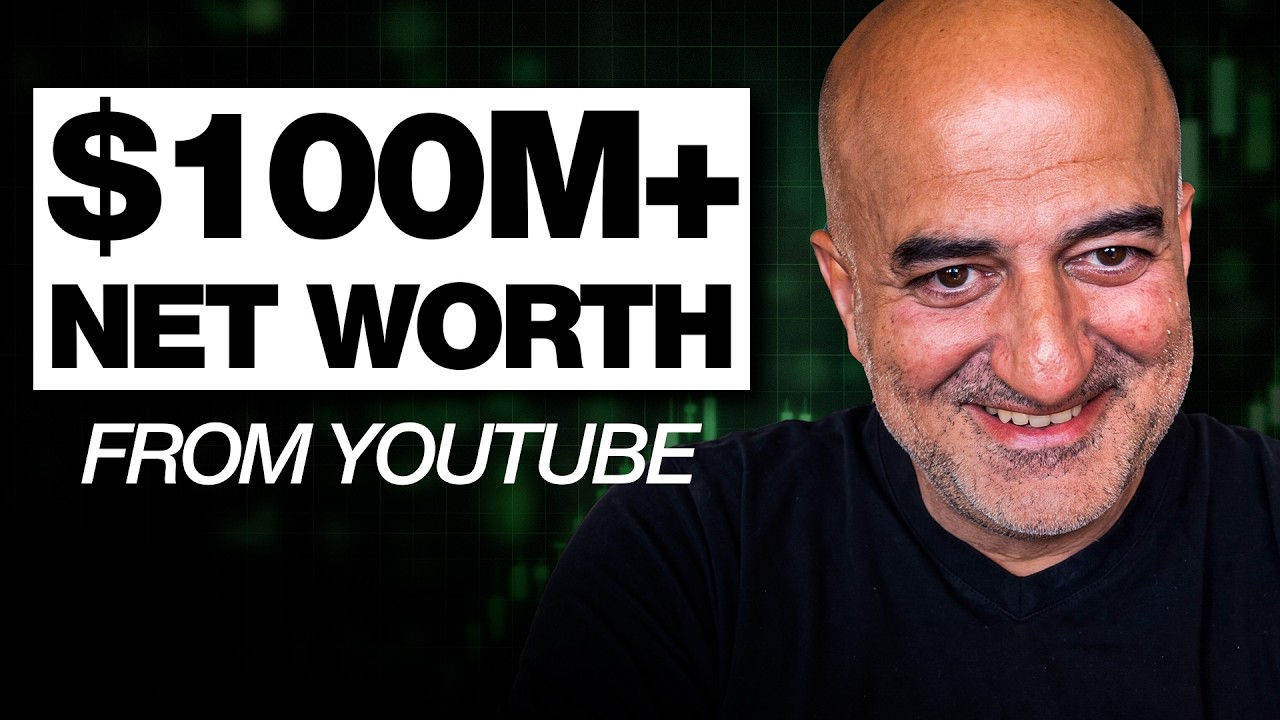
Ashkan “Ash” Karbasfrooshan built WatchMojo into one of the biggest channels on YouTube — close to 26 million subscribers and something like 18 billion views — without raising a dollar for almost 15 years. To get there he sold his retirement savings, took a second mortgage, and paid himself $32,000 a year. Then the offers came, including $64 million in cash, and he said no. Today he's worth over $100 million and is trying to bring the Montreal Expos back to Major League Baseball.
Like all Moneywise episodes, Ash breaks down his net worth, income, portfolio, and monthly expenses and then I, your humble host, pick it all apart.
We also went deep on: what it's like to sign a second mortgage not knowing if you'll end up homeless, why he moved payroll to twice a month, the real reason he walked away from an $80M offer (it wasn't greed), how saying yes to everything cut his EBITDA in half, the 2020 Star Mountain deal, how he invests now, and his mission to bring back the Expos.
Below you'll find my summary of the episode along with the entire transcript.
And by the way...this podcast, the concept of it came from Hampton. Hampton is a private, highly vetted community for high net worth founders started by Sam Parr. Members range from companies doing 3-5 million in revenue all the way up to hundreds of millions. The reason we started this podcast is because there are amazing conversations about money and growing companies that typically happen only behind closed doors, and we thought it would be awesome to share all of this information. If you're a CEO, founder, or business owner, check this out. New Moneywise episodes come out weekly.
Listen to this episode on:
Now, below are the notes and the full transcript.
The Numbers
- Net worth: over $100 million, counting WatchMojo and his investments.
- First exit: owned ~2% of AskMen when it sold for ~$15M. His check: $282,500 USD at age 27, plus ~$150K in options when News Corp bought IGN. Under half a million Canadian all in, barely taxed thanks to Canada's capital gains exemption.
- Starting bankroll for WatchMojo (2006): ~$250K of his own money — $50K cash plus $200K from selling stocks and his RRSPs (Canada's 401(k)), penalties and all.
- The hole: ~$820K–$1M in cumulative losses by 2011, fully bootstrapped, then a second mortgage on the house, personally liable for the debt.
- His salary: $32,000 a year for the first five to six years, then $40K, $60K, $50K, and eventually around $100K. Never a hired-gun CEO salary.
- The hockey stick: revenue went ~$800K → $1M → $3M → $5M → $8–10M, with 60–80% EBITDA margins in the best year. Team grew from under 10 to 50–60 people.
- Offers he walked away from: $3.5M + a $6M earn-out in 2012 (the buyer pulled out — he was relieved). In 2017: 25% at a $75M valuation from a Canadian fund, and $80M for 80% (10x $8M EBITDA, $64M cash to close) from Canada's largest media company.
- What saying yes to everything cost: EBITDA fell by more than half; offers dropped to the $30–60M range.
- The 2020 deal: sold 25% to Star Mountain Capital at a $90M CAD valuation (~10x EBITDA). He owned ~90% going in; the family kept roughly 70%.
- Private investing: ~$5M across 15 startups (five dead or dying, five okay, five doing really well), plus five first-time funds and a handful of pre-IPO SPVs.
- Public stocks: one-third managed by professionals ("very conservative, boring, like kill me, but safe"), two-thirds self-managed.
- Housing: first house ~$600K–$800K in 2011, paid off as soon as the money came in. After the 2020 deal, bought a bigger house with a driveway — with cash — as a hedge against WatchMojo's platform risk.
The $282,500 Check That Became a Seed Round
Ash graduated with a finance degree in 1999 — right into the dot-com crash and 9/11. "Wall Street is not rolling out the carpet for anybody named Ashkan Karbasfrooshan," he says. So he worked through what he calls 31 hats: bank customer service, an early search engine called Mama, then five years at AskMen doing sales, partnerships, writing and interviews.
When AskMen sold, his ~2% came to a $282,500 check. It wasn't a life-changing number, but he treated it like a seed round he wrote himself. At 27 he bet all of it on the idea that online video was going to do to TV what cable did to network.
The Dark Years: RRSPs, a Second Mortgage, and 24 Payrolls Instead of 26
WatchMojo bled for years. Ash burned through his cash, sold his retirement accounts at a penalty, and then signed a second mortgage at a notary with no idea whether he'd end up homeless. His wife, one of the co-founders, signed next to him. "A condition of success as an entrepreneur is a supportive spouse."
Firing the team never crossed his mind. He was personally liable for the debt, so quitting would have meant being in debt forever. He even switched payroll from every two weeks to twice a month — same salaries, but 24 anxiety attacks a year instead of 26.
Lightning in a Bottle: Top 10s, Fair Use, and Geek Culture
The turnaround came from four bets: YouTube, lists, fair use, and the idea that "geek culture was going to overtake pop culture." Around 2011–2012 the top-10 format took off. Because YouTube's ad products (TrueView, skippable ads) did the selling for him, revenue ran way ahead of costs, and some years the company threw off 60–80% EBITDA margins.
Ash was still covering the CEO, CFO and counsel jobs himself for a $32K salary, which is a big reason the margins were that high.
Why He Turned Down $80 Million
In 2017, Canada's largest media company offered $80M for 80% — $64M cash to close. Ash says it wasn't greed. The deal gave the buyer a call option on the rest of the company, but gave him no put option to sell it to them. He worried a legacy media buyer could park its money-losing divisions under WatchMojo, shrink its EBITDA on paper, and then buy the rest cheap and lay off his team. "I didn't kill myself to save my team for you guys to come a year later, financial engineer us into destitute and fire my team."
The cost was real, though. Right after that he went on a hiring and expansion spree — "like a drunk sailor at a bar saying yes to everything" — and EBITDA fell by more than half. Offers dropped into the $30–60M range, and everyone kept asking why he'd turned the first ones down.
The 2020 Deal and What He's Worth Now
Then COVID hit, private equity had half its usual targets to invest in, and WatchMojo's numbers were back near their best. Star Mountain Capital bought 25% at a $90M CAD valuation, which was higher than the 2017 offers. Ash says he didn't need the money. He sold because everything ran through him: if he got hit by a bus, nobody would be filing the company's statements.
Today he puts his net worth at over $100 million. He put ~$5M into 15 startups (which taught him that writing passive checks is frustrating for an operator), backed five first-time fund managers, and manages two-thirds of his public stock portfolio himself.
Money Mindset: Frugal, Not Cheap
No Scott Galloway–style $400K months. The only big purchase after the deal was a bigger, paid-off house as a hedge against platform risk. He still notices the flight that's $40 cheaper. "Frugality, at most, it affects you. Cheap is your decisions affect others." He hates the term FU money and calls it "I don't care money" instead: the real benefit is that you can take your time.
Was the 2020 deal life-changing? "More mindset changing than life changing."
What's Next: Bringing the Expos Back
Ash's current project is bringing Major League Baseball back to Montreal. Modern team ownership is a consortium (an anchor investor, a PE fund or two, a strategic partner), and he's spent the last 298 days lining up capital and looking for land for a stadium. It feels a lot like the early WatchMojo days: "A lot of people thought it was impossible. I said, 'No, it's improbable.' The question is, as an entrepreneur, how do you make it inevitable?"
Other Key Quotes
"Entrepreneurship literally is living a few years of your life like few people can, so that you could then live your life the way few people can."
"I just wanted, like, 24 anxiety incidences and not 26."
"Every time I thought we were at the end of the tunnel, the oncoming light was really just an oncoming train."
"I was like a drunk sailor at a bar saying yes to everything, every expansion, every event, every initiative. Our EBITDA fell by more than half."
"Sometimes you as an entrepreneur think you're late, but you're really early."
"Everybody stands on somebody's shoulder."
"It was mindset changing, and it took time. It wasn't overnight."
Links You Might Like
- Join Hampton Community: https://joinhampton.com
- The Hampton Wealth Report (50+ founders worth $10M–$4B reveal their personal finances): https://joinhampton.com/mw-wr
- MoneyWise Podcast: Full episode archive
Full Transcript
Daniel Berk: Ash built one of the biggest channels on YouTube, almost twenty-six million subscribers, and he did it without raising a dollar for almost 15 years. Then the offers started showing up. One of them was sixty-four million dollars in cash. He said no. By the end of this episode, you'll know what that cost him and what he's worth now. And I'm not really sure if he knows whether saying no was the right call. I'm Daniel Berk, and this is Moneywise. Every episode, I sit down with one founder or exited founder and go through their actual money, what they made, what they spend, what they own, and the stuff they'd never post about online. Some quick context on why people even tell me this stuff. Moneywise is a Hampton show. Hampton is a private community for founders, and it's full of people who already talk real numbers with each other behind closed doors. So when they sit down here on Moneywise, they'll say that number out loud with me on the show, and that's the whole deal. You come on the show, you talk about your spend, your net worth, all the ways that you really have your personal finance broken down. We know that personal finance is so much more personal than it is finance. That's what this show is about. My guest today is Ashkan Karbasfrooshan. He goes by Ash. He was born in Iran, and his dad worked for the Spanish Embassy there, and after the revolution, the family went to Spain, then Montreal. He graduated with a finance degree in nineteen ninety-nine, which he'll tell us a little bit more, is the worst timing possible for a finance degree for Ash. And so then he ended up working a bunch of jobs, bank customer service, early search engine called Mama, then a men's site called AskMen, where he wrote, sold, and did interviews, really whatever needed to be done. He owned about two percent of AskMen when it sold, and that check became his whole starting bankroll. He tells you the exact number. In two thousand and six, he put roughly two hundred and fifty thousand of his own dollars into WatchMojo. If you've ever watched a top ten video on YouTube, there's a decent chance it was theirs. Today, it's close to twenty-six million subscribers and something like eighteen billion views. The reason I wanted Ash on the show is to figure out how he paid for all of this. There was no investors, and six years before the company made actual money, he was in the red. A second mortgage on his house. He paid himself thirty-two thousand dollars a year. Then around twenty seventeen, with a company worth something like eighty million dollars on paper, he started turning down offers, and today he's trying to bring Major League Baseball back to Montreal with the Montreal Expos. Ash goes over a lot of the details of his story. He'll get through Hearst, Hugh Hefner, Don Rumsfeld in about ninety seconds. I'm gonna jump in a few times with context because, uh, I think it's just gonna help you understand some of the story, some of the complexities, and understand a little bit more about what makes Ash, Ash. Welcome back to another episode of Moneywise. Today, I have a very special guest, Ashkan. He goes by Ash, and he told me I can say Ash to introduce him, so I'm gonna do that. Thanks so much for joining Moneywise today, Ash.
Ashkan Karbasfrooshan: Thank you for having me.
Daniel Berk: Can you, for just sixty seconds, give me a quick rundown of what you're trying to do with the Montreal Expos?
Ashkan Karbasfrooshan: Sure. So in today's era of sports ownership, it's no longer just one, like, multibillionaire that writes the check. It is usually, like, yeah, there is an anchor investor, and then you have, like, a private equity or two. You might have, like, a strategic. And so I've spent the last, uh, two hundred and ninety-eight days lining up all of the ingredients, and after a hundred days, we address capital. And then the second thing that MLB cares about is a stadium.
Ashkan Karbasfrooshan: So right now, I'm just literally, like, looking around for land that is fair to everybody, um, that is, like, close to downtown, that could fit a stadium, and, like, a district for entertainment. And then MLB, to, to wrap it up, MLB ultimately cares about the size of the market, and Montreal, given its history-
Daniel Berk: Yeah
Ashkan Karbasfrooshan: ... legacy and all that, if I could-
Daniel Berk: Well, and Expos were in the MLB up until two thousand and six, if I'm not mistaken.
Ashkan Karbasfrooshan: Two thousand and four.
Daniel Berk: So it's not an-
Ashkan Karbasfrooshan: Two thousand and four
Daniel Berk: ... it's not an... Okay, two thousand and four. It's not an unheard-of idea.
Ashkan Karbasfrooshan: Yeah.
Daniel Berk: It's really bringing back what already existed.
Ashkan Karbasfrooshan: Yeah, and I think what they just wanna see is you have the ownership, and you have a stadium that befits, you know, baseball.
Daniel Berk: Exactly.
Ashkan Karbasfrooshan: And that's what I've been working on. And I would say after two hun- I mean, it's funny, the parallels of WatchMojo, starting with a clean slate, nothing, people thinking you're crazy, "Good luck with that business, pal." "I always believed in you, buddy." Um, you know, the, I'll say this, entrepreneurship literally is living a few years of your life, like few people can, uh, or want, want, so that you could then live your life the way few people can, right? So that's-
Daniel Berk: Yeah
Ashkan Karbasfrooshan: ... it's just, it's a trade-off between satisfaction today versus satisfaction in the future. And then ultimately, though, I think, yeah, like the, the... My favorite line now is just there's, there's no limit to what you can accomplish if you don't let others set the barrier and the ceiling for you. So when I started WatchMojo and when I started the Expos, a lot of people thought it was impossible. I said, "No, it's improbable." The question is you as an entrepreneur, how do you make it inevitable?
Daniel Berk: Ash, I was digging into your background. It looks like you were born in Iran, lived in Spain for a while, and now you're in Montreal. Curious, what was money like in your house, in your household growing up?
Ashkan Karbasfrooshan: That's a great question, and it's all relative. You know, my dad, um, came from a large family, uh, but his mom passed away when he was two and his dad 15. So he really, like, his definition of sacrifice, uh, just for survival was very different than, like, mine. Um, but he also then, you know, was pretty successful and was supporting his siblings. Um, you know, but it wasn't like he came from this, like, super wealthy family, you know, the first ones that fled, uh, when the revolution, uh, happened in '79. My mom's family overall was maybe a bit, like, also well off, but her dad died when she was seven or eight. Um, so neither were, like, you know, uh, wealthy in any sense. And then when we came, you know, we left... W- I'm very lucky because my dad worked for the Spanish Embassy, even though he was Iranian. Uh, and it's Iran, not Iran, but that's okay. Um, it's fine. But, um, but so we were very lucky-
Daniel Berk: Thank you for that.
Ashkan Karbasfrooshan: No, it's fine. It's all good. There's a, there's a great Matt TV skit, but, uh, let's move on. Um, but so he worked for the Spanish Embassy, and the, the Spaniards were kind of grateful for his service Post-revolution.
Daniel Berk: Yeah.
Ashkan Karbasfrooshan: So they're like, "You can go anywhere you want, you know, if you wanna work at a consulate or embassy anywhere." And he looked at many places, but he wanted to be an entrepreneur. He didn't wanna work as a diplomat, and he wanted to come to North America, and he wanted us to speak French, so he said, "The only place that's really gonna be possible is Montreal." And then growing up, I would describe us as, like, middle-upper class, meaning obviously relative to a lot of my classmates, uh, early on, we were fine. You know, we had a decent house. We had a decent car.
Ashkan Karbasfrooshan: No, not at all, like, wealthy, but, you know, I always look at it as even this myth of, like, the self-made man, which is a myth. Like, okay, I didn't inherit Watchmojo. I didn't have a wealthy uncle. But, you know, with all my dad, with all my older brother at a period when, you know, he was... I was in college and I lived with him, um, and many other things. You know, everybody stands on somebody's shoulder. So money-
Daniel Berk: Yes
Ashkan Karbasfrooshan: ... I would say, you know, there was enough where we had a roof on our head, food. But yeah, not like that it was plentiful where, you know, we traveled opulently or anything like that. But, uh, it's relative. To me, I always felt like the richest, luckiest kid in the world.
Daniel Berk: Okay. No, that's helpful. And I saw a LinkedIn post you written... you had written at one point where you had 31 jobs.
Ashkan Karbasfrooshan: Well-
Daniel Berk: And I'm curious at what point... Well, correct me if I'm wrong, right?
Ashkan Karbasfrooshan: No, no, it's true.
Daniel Berk: Was it 31 jobs?
Ashkan Karbasfrooshan: No, no, no. It... Well, it's like, uh, like, one of those jobs could have been, like, interviewer. You know, I interviewed Joe Montana-
Daniel Berk: That's fine
Ashkan Karbasfrooshan: ... for... But it was, like, when I worked at a job where I was also the VP of sales guy, you know? So, um-
Daniel Berk: Yeah
Ashkan Karbasfrooshan: ... yeah, but yeah, if you count waiter, uh, customer service rep, uh, as I was enumerating-
Daniel Berk: Most people would count those. I mean, yeah-
Ashkan Karbasfrooshan: Yeah
Daniel Berk: ... those are jobs. I-
Ashkan Karbasfrooshan: Well, they are definitely jobs, right? But, I mean, I didn't have 31-
Daniel Berk: When-
Ashkan Karbasfrooshan: I had 31-
Daniel Berk: Yeah, I mean, uh-
Ashkan Karbasfrooshan: ... like, roles. Like, I wore 31-
Daniel Berk: Roles
Ashkan Karbasfrooshan: ... hats. Hats is the word.
Daniel Berk: When in that journey did you decide, "I, I gotta start something of my own here"?
Ashkan Karbasfrooshan: So I was a reluctant entrepreneur. Uh, at best, I had developed into the, in my 20s as an intrapreneur. Um, so I joined an online men's magazine called Ask Men. So let's go with when I was in school. I actually studied-
Daniel Berk: Yeah
Ashkan Karbasfrooshan: ... finance. Even though I was more interested in history, psychology, I, I s- I stayed in business and finance 'cause of optionality, which is really critical-
Daniel Berk: Okay
Ashkan Karbasfrooshan: ... as an entrepreneur, right? So business finance just gave me more career paths to pursue. But the reality was that I graduated in '99, the dot-com bubble burst, NASDAQ crash, 9/11, Ashkan Karbasfrooshan. Wall Street is not rolling out the carpet for anybody named Ashkan Karbasfrooshan, born Muslim. You could be as secular atheist as you are. You know, I'm a white male straight guy, so I'm not claiming prejudice, but yeah, trust me, if you start your career then. So I had to pivot. So I wanted to go in consulting or banking. It wasn't gonna happen. I was working at the bank in customer service, one of those 31 jobs, and it became clear, a paradox, that when you're really good at something, sometimes you're, like, shackled. So the bank said, "Look, we're not gonna transfer you to, like, our version of Goldman Sachs or our version of Morgan Stanley, uh, or Mer- Merrill Lynch. You're gonna stay here." And I didn't mind. I was loyal. But I said, "Okay, that means I gotta change." Um, and so then I kinda just went straight into the startup world. And I worked at a tech company, a search engine, and, uh, this was before Google had started to totally eat up the market.
Daniel Berk: And that was Ask Men?
Ashkan Karbasfrooshan: No, this was Mama. So Mama was a meta search.
Daniel Berk: Mama.
Ashkan Karbasfrooshan: It was one of the first, like, handful of, of search engines that started in the late '90s.
Ashkan Karbasfrooshan: So at Mama, I, I realized I loved the startup world, but I felt tech was too zero-sum, and I felt that to win, sometimes you had to, like, either cut corners or, like, be a bit too, like, abrasive to staff or, you know, like-
Daniel Berk: Were you burned by tech at some point? Or, or what-
Ashkan Karbasfrooshan: No, to be honest, I was never-
Daniel Berk: ... brought about some of that conviction?
Ashkan Karbasfrooshan: No, no, no. No, I wasn't burned by tech in that sense. I just realized that, you know, I was more of a writer. I was a storyteller. You know, I studied finance-
Daniel Berk: Mm-hmm
Ashkan Karbasfrooshan: ... but I never grew up reading books. But I was like, yeah, I read a lot, and I had this insane amount of knowledge and information that I thought everybody had, but that was just because I was a curious kid reading encyclopedias and, and a lot of magazines.
Daniel Berk: Of course.
Ashkan Karbasfrooshan: But so after Mama, I went to Ask Men, and Ask Men is where I found my voice. I started to write. I was a, you know, worked in sales, partnerships, a bit of everything, interviewer. You know, had a great five-year run. But that's where I said, "You know what? My boss is fine. Okay, he has his flaws. Everybody has his flaws." But I said, "If you really, really wanna treat stakeholders," like we talk about stakeholder management or servant leadership. But I was like, "If you really, really believe that, and it's not just a tag, a hashtag, or, like, a buzzword, then you really do need to be the decider." And if you wanna be the decider, if you're not gonna inherit your dad's business, if you don't have an uncle to give you a check to go do something, you gotta become an entrepreneur. So I was really not an entrepreneur, an intrapreneur, a reluctant entrepreneur, but I'm also a bit big on numbers. So I was like, Hugh Hefner started Playboy at 27. Like, there's a lot of stories of, like, entrepreneurs at 27. Just got and married, no kids at the time. And I said, "You know what? There's this revolution brewing called, like, YouTube and online video." And I said, "I think I have the, the skill set to build a world-class business."
Daniel Berk: And I wanna hear more about the world-class business with Watchmojo, but before that, you had a, a, some amount of stake in Um, and AskMen when it sold-
Ashkan Karbasfrooshan: Yes
Daniel Berk: ... to IGN, right? And then, and then that sold to News Corp.
Ashkan Karbasfrooshan: Yeah.
Daniel Berk: Tell me what you personally made from that and what that-
Ashkan Karbasfrooshan: Sure
Daniel Berk: ... structure and payout looked like.
Ashkan Karbasfrooshan: Sure. So I own two point something percent. Uh, we only quotation, it was still not bad 'cause the company only had 500,000 of seed funding.
Daniel Berk: Mm-hmm.
Ashkan Karbasfrooshan: So that company got acquired for about 15 million, one five. Not huge, and my pay was, cut was like literally I remember the check in USD, $282,500. I went to the law firm, got a check.
Daniel Berk: That's a good check right there.
Ashkan Karbasfrooshan: Not a bad-
Daniel Berk: Yeah
Ashkan Karbasfrooshan: ... but the thing was, again, life is relative, right? Like this glass, is it half full or half empty? It's up to you to, to look. But so that was not, like, enough to do many things, especially in New York or San Fran, even in 2005. Uh, but to me it was ample. To me, I was like, "You know what? I could be like a Swiss Army C-level, CEO, CFO, CRO culture, HR, partnership, you know, janitor, bottle washer, and then I'll just hire, uh, basically people who have a skill set that I don't have." So I basically made, like, a quarter million there, and then yes, we got options, so then when a few months later, News Corp, Fox Interactive Media bought IGN, I got probably, like, I wanna say another 150,000. So, you know, with about less than half a million Canadian, uh, and then there was not a lot of taxes 'cause we had capital gains tax exemption.
Ashkan Karbasfrooshan: So, you know, it was to me ample, you know? And I, I really had started to, even though I was, everybody's insecure with one way or another, even though I was pretty confident, you know, I won't lie, I was like, "I have no idea what I'm doing," but you ultimately have to bet on yourself.
Daniel Berk: Ash owned about 2% of a company that sold for around $15 million, and his check was 282,500. A few months later, News Corp bought IGN for 650 million, and his options paid out roughly another $150,000. A lot of people skip this in startup stories. His first exit was under half a million Canadian all in, and he treated it like a seed round that he wrote himself. Sometimes the exits that people get in early stage startups are not as big as you'd expect them to be, particularly when the headline is hundreds of millions of dollars. Yeah, and I mean, at the time, let's call it a quarter million, you're 27 years old if I did my math right, and YouTube is still sort of like no man's land. No one knew what it was really. There was probably a couple thousand videos on it at that point. I mean, you out of the blue decided, "I'm gonna start doing YouTube videos." I'd love for you to tell me that story, like what about it at that time enticed you to start this now dynasty, if you call it that, of WatchMojo?
Ashkan Karbasfrooshan: So, you know, the best investor, but also entrepreneur, is a social scientist. You know, they do look at trends, they do look at history, psychology, sociology. So already by now in mid-2000s, I had a good five years of experience working online, but I had like 10 years of experience just studying business. You know, it was a bit like, you know, before ChatGPT, there was AskGPT. Like, I really just would read Business Week, Sports-
Daniel Berk: Yeah
Ashkan Karbasfrooshan: ... like, I mean, I read Business Week like people read Sports Illustrated. I read them both. You know, I would read Fortune, The Economist.
Daniel Berk: Nice.
Ashkan Karbasfrooshan: You know, imagine you're like 18, 19, bored on the subway going to school, and I would be reading, like, the Financial Times, right? I mean, it was kind of a, it wasn't normal in that sense, and I just thought it was interesting. I thought companies were teams. I thought executives were athletes. You know, it was kind of like that's how I looked at it. But anyway, so mid-2000s-
Daniel Berk: Yeah
Ashkan Karbasfrooshan: ... even though I was like a prolific writer, you know, and I was, and, and ironically I was probably one of the most well-read writers in the early 2000s just 'cause AskMen would syndicate content to MSN and AOL, two of the-
Daniel Berk: Mm
Ashkan Karbasfrooshan: ... biggest portals. But so-
Daniel Berk: Yep
Ashkan Karbasfrooshan: ... recognizing all of that, I said, "You know what?" Let's be honest, to quote Jack Welch, "If you're not gonna be number one or number two in a market, get the hell out." And I was like, "I'm not gonna reinvent the wheel and build a world-class media company around text and articles." But I said, "There is this revolution, and it's Wild Wild West. It's kinda like burning the boats." I said, "Just, you have no plan B. Your goal is not to build like a Gawker, you know, or like a, a Conde Nast. Your goal is kind of like figuring out what the next MTV or ESPN looks like." I was sitting in New York, uh, at a bar with, uh, an exec from Hearst, and incidentally Vice's Shane Smith, they both said the same thing. They're like, "It's impressive what you've built, but you're all over the place." You know, we're having beers, and I remember vividly eating chips at the bar, and I was like- ... "What do you mean?" And he was like, "You're all over the place." He's like, "How the hell do I know what to expect from this brand if you got pet videos and the next day you got, like, Batman?"
Daniel Berk: Yeah.
Ashkan Karbasfrooshan: Death, death scenes.
Daniel Berk: Okay, picture YouTube in 2006. It's barely a year old, and it's mostly pirated TV clips.
Daniel Berk: Google buys it that October for $1.65 billion, and a few months later, Viacom sues them for a billion dollars. Two legal things matter for the rest of Ash's story, so here's the fast version. The DMCA is a 1998 law. It says a site like YouTube isn't automatically on the hook for what users upload as long as it takes stuff down when the owner complains. Without that, YouTube probably doesn't exist. Fair use is what lets you show short clips of a movie or a show if you're commenting on it, reviewing it, or ranking it. These are your typical reaction videos. WatchMojo's whole top 10 format lives on fair use. Every Batman clip in one of those videos is Ash betting the law holds. In this episode, he talks about those laws like both you and I already know them. I didn't, and so I looked them up, and now we do.
Ashkan Karbasfrooshan: And I was like, "But we focus on video." He's like, "No, no, no, no, no," you know, as he's, like, tossing back pints. He's like, "No. In media, focus means automotive, fashion and style, travel." He's like, "That's how advertisers think." And I was like, "Yeah, but that world is shifting," I said, "because of programmatic, because of audience targeting." I was kind of skating to where the puck was.
Daniel Berk: Yeah.
Ashkan Karbasfrooshan: But I came back to Montreal, and literally to quote Donald Rumsfeld, I was like, "You don't go to war with the army you want. You go to war with the army you have." And I looked around, I said, "I know what our strengths are." And I said, "We're not-
Daniel Berk: Yeah
Ashkan Karbasfrooshan: ... going to out authenticate, you know, like the grandma from Italy who's making an amazing lasagna. We could go, uh, Italian chef to come here and make it. It won't pass the sniff test. That yaya is gonna kill us. That nonna, her sauce is, is not comparable to ours." And so I was like, "Let's skate away from user generated ... beauty tips.
Daniel Berk: Yeah.
Ashkan Karbasfrooshan: That 16-year-old girl or that 22-year-old guy that's showing you how to coif, and I was like, "That's where-
Daniel Berk: Yeah
Ashkan Karbasfrooshan: ... the world is going. We're not gonna compete with UGC." So the team was like, "Uh-oh." I said then, "I got a process of elimination." But I also said, "Yes, we are all very passionate about movies, TV shows, music, sports, but we're also good at it," because I said ultimately WatchMojo is like a think tank. It's like a research group. You know, like I myself being finance trained, I'm an analyst, right? So we, we make mistakes. Humans make mistakes, but we, our focus is to get things right. And I start off by saying the best investor and entrepreneur is a social scientist. The main epiphany was not just that YouTube was going to do to everything what the internet did to TV and what cable did to network. I just said, look, the bottom line, yeah, okay, I joke that top 10 commandments, Moses, everybody's always liked a good list, but it was more that I understood that, you know, geek culture was going to overtake pop culture. It was very clear to me that the kids that were reading comic books were now ruling Madison Avenue, Silicon Valley, Hollywood-
Daniel Berk: Hm
Ashkan Karbasfrooshan: ... and Wall Street. So I was like, oh, wait, Bob Iger is now buying Lucas, Pixar, Marvel. You know, so again, you gotta as an entrepreneur look for these signals and patterns. So I was like, well, they're not buying the Star Wars franchise to bury it in the back, like next to my-
Daniel Berk: Yeah
Ashkan Karbasfrooshan: ... dog's bone. They're gonna double down on this, and this will become really, really pop- uh, mainstream. So we were already covering all this, right? So it wasn't so much that we predicted-
Daniel Berk: And that started in 2006.
Ashkan Karbasfrooshan: Yeah, 2006.
Daniel Berk: Is that right?
Ashkan Karbasfrooshan: But, like, our four big bets, YouTube lists, relying on fair use, and the whole pop culture, geek culture vertical-
Daniel Berk: Yeah
Ashkan Karbasfrooshan: ... that was probably 2011 and '12, and it's also 'cause we had exhausted a lot of stuff.
Ashkan Karbasfrooshan: We had done bios and profiles of every A-list and B-list actor. By some point, we were, like, you know, doing the, the life and times of Pee-wee Herman, God rest his soul. But my point was top 10s was really something we gravitated to. We were always doing it. We doubled down on it. And then, yeah, then from 2012 onwards, we caught lightning in a bottle and, you know, then we had our hockey growth-
Daniel Berk: Yeah
Ashkan Karbasfrooshan: ... stick years.
Daniel Berk: And, and let's talk about the lightning in a bottle. I was reviewing your P&L ahead of the call and, you know, it looks like cumulative losses of about 820K by 2011. And so early years were, I would call them the dark years. I mean, I would love for you to kind of walk through, it sounds like you took a second mortgage at some point. Like, how deep did the hole actually get before you started seeing a massive return on this big bet you took?
Ashkan Karbasfrooshan: I was in China. I was digging. I was like, "Why am I on the other side of the Earth?" No, I mean, look. So if you do the basic, if you do the basic back of the napkin math, I had about $250,000. And yeah, we racked up, I think the number was, like, 850- or, like, let's just say a million in losses. So the balance-
Daniel Berk: And were you fully bootstrapped from that? Is this your money?
Ashkan Karbasfrooshan: Fully bootstrapped.
Daniel Berk: Yeah.
Ashkan Karbasfrooshan: Fully boots- Like, I literally took, you know, I, I... Let's say I sold, like, I used 50,000 of cash, which was liquid, but then I sold $200,000 of not just stocks. In Canada, your 401Ks are RRSPs, which if you-
Daniel Berk: Okay
Ashkan Karbasfrooshan: ... lose, you get penalized. Oh, I went through those. And then I went out and I took a mortgage.
Daniel Berk: Fun.
Ashkan Karbasfrooshan: And that's the funny part. In my mindset, the thought of, like, firing the team never crossed my mind, you know? It was kind of like, you know, when you're a quarterback, you got two minutes to come up with a win. You're never thinking, "I'm gonna take a knee." Like, you're like, "How do I get in the end zone? Am I gonna run it? Am I gonna throw it? I will eat this ball to get it in the end zone." So I think in hindsight, yeah, I'm just not wired that way, so it was just like, to me, it was like, yeah, obviously I'll go get a mortgage. And then, yeah-
Daniel Berk: Yeah
Ashkan Karbasfrooshan: ... what happened basically, I also didn't pay myself. To me, I never considered giving up. It was more, I won't lie, I'm in a hole, and I'm so in debt, and I'm personally liable for it, that if I give up, then I'm forever in debt it, you know? Even if I go get a job.
Daniel Berk: Like, giving up is not even an option.
Ashkan Karbasfrooshan: So yeah, it was like giving up was, like, you know, uh, death almost. So then I was like, "No, no, we'll just go at it." Now, it's funny. It was... I, I literally would sleep every night, wake up dreading and fearing payroll. You know?
Daniel Berk: Sure.
Ashkan Karbasfrooshan: I even purposely made payroll, I mean, it was the same salary, but I made payroll twice a month. And so 24 times instead of every two weeks, 26 times, 'cause I wanted those l- two less-
Daniel Berk: Tiny bit of extra runway. Yeah
Ashkan Karbasfrooshan: ... I just wanted, like, 24, uh, anxiety in- incidences and not 26. No, as, as ridiculous as it was.
Daniel Berk: So, and second mortgage, we hear this term thrown around all the time. Yeah, we're talking a literal second mortgage. I would love for you to walk me through-
Ashkan Karbasfrooshan: Literal, like I was gonna be homeless.
Daniel Berk: Yeah.
Ashkan Karbasfrooshan: I had this nightmare scenario where I've got-
Daniel Berk: Like, what was the second mortgage?
Ashkan Karbasfrooshan: So the second mortgage-
Daniel Berk: Like, how many months of runway did that buy?
Ashkan Karbasfrooshan: Look, there was so many. Like, in the end, it was, like, late 2000s, so 2009 or even maybe 2011. I think it might've been 2011, the second hurrah.
Ashkan Karbasfrooshan: It was like, I remember sitting at some notary and going like, this is a scene if they ever, like, fictionalize, say, like, The Social Network. Like, Social Network was Facebook, but let's say if somebody wanted the YouTube story that I'm developing, it's called Countdown, um, and through, like, the fictionalized version of WatchMojo. But my point is, I was like, there's gonna be a scene where there's this guy signing away, and you don't know if he ends up homeless or makes it, let's say. And I remember going, my wife, who was one of the co-founders, I was like, "What a saint," because most spouses are like, "Honey, why aren't we taking a trip? Where's my, uh, ring?" And I'm not being stereotypical, but I've always said-
Daniel Berk: Yeah
Ashkan Karbasfrooshan: ... like, a condition of success as an entrepreneur is a supportive spouse. But so the second mortgage was a bit like the equivalent of, like, a float, meaning it was, like, more of, like, a debt, uh, facility, you know, like an extra credit card.
Daniel Berk: Okay.
Ashkan Karbasfrooshan: Because by then-
Daniel Berk: Yeah
Ashkan Karbasfrooshan: ... we had revenue. Okay, and the main thing I want people at all, like an entrepreneur, to be like, never give up, this is a... No. I was in a, in an environment where, like, the macro fundamentals were all- Headwinds
Daniel Berk: I love this moment that he talks about his wife because I personally think that nothing I do in life would work without my amazing wife. And he talks about a second mortgage and a spouse who signed next to him at the notary. Inside Hampton, that type of stuff gets talked about all the time because in Hampton there's a room full of people who have also signed those papers, and many of them have spouses or partners just like that. A lot of this show starts as conversations long before they ever become an episode, and if that's the type of room that you resonate with, highly recommend going to check out Hampton at joinhampton.com. Well, and you were kind of doing something that hadn't been done. It was, there was no playbook. Someone goes and wants to start a million-dollar YouTube channel right now, there's a playbook.
Ashkan Karbasfrooshan: There's a playbook, yeah.
Daniel Berk: You go, you look at who's done it, you talk to the people who's done it 10 times.
Ashkan Karbasfrooshan: Yeah.
Daniel Berk: You go and do it. Obviously, I'm oversimplifying, but in 2006 this had never been done before, so you were creating something from scratch.
Ashkan Karbasfrooshan: Absolutely. When I would be writing for TechCrunch about startups, financing, and for Media Posts about advertising and, and the world of, you know, publishing and all that, I wrote an article like 2010 saying, "YouTube has gone from the pariah to the belle of the ball." In 2020 when COVID was happening, the LA Times wrote an article with the exact same headline. The exact. Like I have it, and I posted this. And not like a told you so, just more for people to understand sometimes you as an entrepreneur think you're late, but you're really early. And you-
Daniel Berk: Yeah
Ashkan Karbasfrooshan: ... wanna be like a little bit early. You don't wanna be so far early, kind of like Quibi and Jeff Katzenberg. You know, there was a lot of structural issues with-
Daniel Berk: Rest in peace, Quibi
Ashkan Karbasfrooshan: ... Quibi, but Quibi and Virtual Video-
Daniel Berk: I watched one show on Quibi and, uh-
Ashkan Karbasfrooshan: There you go
Daniel Berk: ... then it got shut down
Ashkan Karbasfrooshan: ... because you weren't on the train. You weren't going anywhere. You were at home. You're like, "I don't need-"
Daniel Berk: That's right
Ashkan Karbasfrooshan: ... Yeah, you're like, "This is not-"
Daniel Berk: Terrible timing.
Ashkan Karbasfrooshan: Terrible timing.
Daniel Berk: Terrible timing for a, for an 8 out of 10 idea.
Ashkan Karbasfrooshan: Yeah. Well, so, but, but so timing is a big part of it, but, uh, yeah, by the time that last mortgage came, you know, like I kind of knew we would eventually be successful.
Ashkan Karbasfrooshan: But it was like every time I thought we were at the end of the tunnel, the oncoming light was really just an oncoming train. It was just-
Daniel Berk: Well, and eventually y- y- the, the growth curve did start. I mean, by 2011 you were profitable doing I think 35K in profit. I mean, what was the first year where the numbers were just stupid? I mean, I know you eventually went from five to six to seven figures in profit. Now today I would love to hear kind of the breakdown.
Ashkan Karbasfrooshan: Sure, sure. So the thing is YouTube is disruptive for many reasons. Like Netflix is, is evolutionary because it changes like the user experience. It's convenient, but it's not... I stop short always of calling it revolutionaries for the simple reason that it's the same programming. It's long form, scripted, you know, shot like this. You got a director, a showrunner. It became even more bloated, and I love Netflix. I'm a shareholder. Um, this is not a knock.
Daniel Berk: Yeah, of course.
Ashkan Karbasfrooshan: But it kind of became what it wanted to disrupt.
Daniel Berk: Yeah.
Ashkan Karbasfrooshan: But that was evolutionary. With YouTube on the consumer side, uh, it was like revolutionary because it changed the definition of quality. It changed the definition of what-
Daniel Berk: Yeah
Ashkan Karbasfrooshan: ... of a celebrity and all that was.
Daniel Berk: Every year when summer ends, you tell yourself it's finally time to start taking health seriously. But work picks up, schedules fill, and your health slips down the priority list again. Does this sound familiar? This, my friends, is why a growing number of Hampton members have been loving Daily Body Coach. It's become an inside secret within the community for getting lean, strong, and healthy without the mental load of having to think about training and nutrition. Daily Body Coach is run by a Hampton member, Anthony Monica, who's also a software founder, and you feel that pedigree come through in this experience. As a customer, you get your own team of trainers, nutritionists, and psychologists who take the time to understand how you operate, what tends to throw you off, and what your daily life actually looks like. The result is a highly personalized operating system that's guaranteed to deliver results. If you want to avoid falling off, restarting, and repeating the same old cycle, you need a system that can work long-term, which means it needs to be designed around your existing habits. That's what Daily Body Coach builds for you. So if you wanna transform the way you look and feel and start taking your health seriously over the long term, you gotta try Daily Body Coach. Click the link in the description or go to dailybodycoach.com/moneywise and I'll connect you directly with Anthony.
Ashkan Karbasfrooshan: But I also understood that it was revolutionary because of things like TrueView, skippable ads, you know? And it was like revolutionary-
Daniel Berk: Yep
Ashkan Karbasfrooshan: ... because of many other things. So for us it was like a godsend because I didn't need to hire like 20 salespeople. You know, I didn't need to hire-
Daniel Berk: Yeah, or the cost basis didn't go up at the same rate as actual revenue and profit.
Ashkan Karbasfrooshan: Exactly.
Daniel Berk: What was, what was revenue, let's say 2012-
Ashkan Karbasfrooshan: Yeah
Daniel Berk: ... for example?
Ashkan Karbasfrooshan: No, so I think what happened was like looking at the, the table, we went like, you know, 800, but then it was like a million, three million, five million-
Daniel Berk: Mm
Ashkan Karbasfrooshan: ... 10 million, or 8 million, 10 million. And then it kept growing after-
Daniel Berk: Mm.
Ashkan Karbasfrooshan: Oh, and then we... Okay, before, we'll call it, you know, uh, company life st- st- stages. We've gone through four full cycles. We have to avoid debt-
Daniel Berk: Okay
Ashkan Karbasfrooshan: ... but that's part of it. If you're like an entrepreneur, that is part of it, right? But so-
Daniel Berk: Yep
Ashkan Karbasfrooshan: ... in those years from 2012 to 2016, we were still hiring quite a bit.
Ashkan Karbasfrooshan: Like we went from less than 10 people to like 50, 60 people. But it wasn't like we were bringing in, until 2016, like the super-duper expensive C-level types. It was young people who frankly did not have a lot of options, and we were giving full-time jobs employment status. It's not like we're hiring coders who get like a gil- gazillion dollar signing. Like, you're hiring bright young kids who unfortunately because of many reasons don't have that many options. So if you just create a good culture and you treat them respectfully and you give them like stable jobs, stable income, paid vacation, health, like you could recruit the cream of the crop, right? So that wasn't hard. But because our revenue blew up, we didn't even have time to go like invest at the same commensurate rate. So like one year we had like 60, 70, 80% like EBITDA margins, right? It was just like our, our-
Daniel Berk: Wow.
Ashkan Karbasfrooshan: Yeah, yeah. It was like, it was... But false modesty aside, that was because I was like your whatever you would pay a CEO, CFO, a council.
Daniel Berk: Mm.
Ashkan Karbasfrooshan: Like that was what-
Daniel Berk: You weren't hiring executives.
Ashkan Karbasfrooshan: I wasn't, yeah. I was bas- and I was, I was still paying myself like not a lot of money, right? It was like mid-2000s where I was like, "Oh, you could pay yourself."
Daniel Berk: What were you paying yourself? Let's say, uh, let's say 20- 2019, right before you, I, I believe you sold a, a minority stake.
Ashkan Karbasfrooshan: No, then, then I was paying my- then I was paying myself still below, like I wasn't a hired gun CEO. I was paying myself a, a fair rate. But let's start. I was paying myself on the books the first five, six years $32,000, but not even deducting... Sorry, and then I was deducting benefits to keep it kosher and legal with the government, but I was in pain.
Daniel Berk: Steady salary, 32, 32, or 32, 32?
Ashkan Karbasfrooshan: Like I was 32. It didn't go up. It didn't go up And then it was like-
Daniel Berk: Okay
Ashkan Karbasfrooshan: ... 40, 60, 50, and then it was probably, like, at 100. It was, like, never crazy salaries. Like, to be honest with you, I didn't-
Daniel Berk: Interesting
Ashkan Karbasfrooshan: ... 'cause Montreal's not that expensive, to be candid, and I'm not, like, flashy, and we can talk about that. I'm sure you wanna dig in. But what, what ended up changing the profile of the company was, yes, I joked, "We wanna go from being the Montreal Expos, we now think we're the New York Yankees." So I went out and I started to recruit. I felt like I had developed my team quite a bit, but even I myself, you're always coachable. You could learn. Your team can learn. So I was like, "You know what? If we wanna build the next MTV, let's go out there and recruit from those companies." So we brought, like, a-
Daniel Berk: Mm-hmm
Ashkan Karbasfrooshan: ... chief operating officer from, like, let's say, Time Warner. We brought in, like, a chief revenue officer from, like, The Onion. We brought in, like, a CMO who had worked at Digitas, and all these, like, amazing people. I love them. If I see them, like, hugs.
Daniel Berk: Yeah.
Ashkan Karbasfrooshan: Like, I don't burn bridges with anybody. So, but after two, three years, oh, and I, I at this point, I hired them after turning down $80, $90 million valuation LOIs. So when I stepped up-
Daniel Berk: And, and why? I mean, through this time, what, what's going through your head of 80, 90 million offers? Why not?
Ashkan Karbasfrooshan: Well, so, so as in 2012, Bilo, a Dallas-based company, wanted to buy us before we took off, like, our rocket ship years.
Daniel Berk: Mm-hmm.
Ashkan Karbasfrooshan: They offered three and a half million, plus, like, an earn out of six, so, like, three and a half could be 10. I was going to accept it 'cause I'm not driven by greed. At that point, I was like, "I just need a partner." And I was like, these big Americans who have the big ambitions-
Daniel Berk: Well, but y- so let me, let me-
Ashkan Karbasfrooshan: Yes
Daniel Berk: ... ask a question there.
Daniel Berk: Not dr- not driven by greed, I believe you, but you're wearing five, six executive hats.
Ashkan Karbasfrooshan: Yeah.
Daniel Berk: You had to have been-
Ashkan Karbasfrooshan: But that's out of necessity. But it was out of necessity.
Daniel Berk: But you had to have been, it had to have been some type of appeal to, "Oh, I can stop doing this and get $80 million out of it." That'd be pretty-
Ashkan Karbasfrooshan: Well-
Daniel Berk: ... appetizing, no?
Ashkan Karbasfrooshan: But let's explain. Let's explain. So in 2011, I'm, like, super indebted. It's relative. It's like a glass-
Daniel Berk: Yeah
Ashkan Karbasfrooshan: ... of water in the desert.
Daniel Berk: Yeah.
Ashkan Karbasfrooshan: I'm saying it wasn't the three and a half. It was the change in setting. If I now go-
Daniel Berk: Okay
Ashkan Karbasfrooshan: ... and become some VP at Bilo, WatchMojo becomes some unit, uh, there's guaranteed employment for these, my team because we're not a big team.
Daniel Berk: Yeah.
Ashkan Karbasfrooshan: What are you gonna go lay off? I could no longer do 10 roles. I could just focus on, you know, what I'm, like, the Michael Jordan of-
Daniel Berk: Yeah
Ashkan Karbasfrooshan: ... what I'm really good at-
Daniel Berk: Yeah
Ashkan Karbasfrooshan: ... instead of... Uh, so that was, like, a positive. Now, think of what happened from 2012, and then they got acquired by Gannett. So I got a call one day, and they're like, "We're not gonna move forward." And I was relieved because I knew that this hockey stick period was coming, but I didn't wanna be greedy and stupid knowing finally I have a home for myself, for the team, right?
Daniel Berk: Mm-hmm, mm-hmm.
Ashkan Karbasfrooshan: Now, for five, six years, the company, this is in the number, but let's say the company generates $50 million in EBITDA. It was probably a bit lower, but it was still a sizable number that I was like, "Okay, you pay taxes, you pay this, you pay that, you're good." So now all of a sudden when people came and they're like, "40 million, 50 million, 60 million," it's just a number, you know? Like, it's a bit like, yes, as a quarterback, you wanna win the Super Bowl. You wanna throw 50 TDs. You wanna terrorize like you're, you're the safety, you know? Don't dare, you know, like, try to stop this ball. I'm gonna expose you. But you just wanna win. You care about that. So to me-
Daniel Berk: Yeah
Ashkan Karbasfrooshan: ... it was no longer about the money, but I was not enjoying it, you know? Like, I was just like, "Go, go, go, go, go, go." Now-
Daniel Berk: Yeah
Ashkan Karbasfrooshan: ... 2016, '17, after a decade, my third book is called The 10-Year Overnight Success, because all success, overnight success-
Daniel Berk: There you go
Ashkan Karbasfrooshan: ... seemingly are-
Daniel Berk: Yeah, of course
Ashkan Karbasfrooshan: ... a decade in the making. It's as if, like, the world woke up, that there was this well-run professional media company on YouTube that they could acquire, not like a MrBeast or PewDiePie, where okay, without him, what are you buying? So we went from, like, not really having a lot of interest to always having a lot of interest, but not everybody really getting over the fair use, uh, or usually just content, frankly. So all of a sudden we had, like, you know, it started. One company called me. They said, "We wanna acquire you." Then another one. Then I would, like, I literally, I would write down-
Daniel Berk: And how, what are the numbers they're giving you? 100 million?
Ashkan Karbasfrooshan: So the numbers-
Daniel Berk: 200 million?
Ashkan Karbasfrooshan: Okay, so the numbers, no, the numbers, and this we'll use multiples, and then you can just, it would just... So, like, the multiples would usually start off with, like, let's say, oh, you know, like, six, eight times, but we always commanded 10 times EBITDA. And also-
Daniel Berk: Okay
Ashkan Karbasfrooshan: ... I'm in finance, so I could point to the r- it's not like an emotional, "Oh baby-
Daniel Berk: Sure
Ashkan Karbasfrooshan: ...
Ashkan Karbasfrooshan: we're worth a billion." It's like, "Well, w- we're this multiple because of these reasons." And I, I talk about that-
Daniel Berk: So six, eight times EBITDA at what valuation in-
Ashkan Karbasfrooshan: Well, I mean-
Daniel Berk: ... let's say 2016?
Ashkan Karbasfrooshan: No, so, so, okay, so, so, so let's go now to what happened in 2017. 2017, when we started the year, let's say we were at four, five million of EBITDA, and then as the year crept up, we were growing quite a bit. So at one point, a big fund in Canada wanted to invest, and I think they wanted to invest 25% at, like, a 75 million valuation. They were great. Still talk to them, no ill feelings. And then at the same time, we had the largest media company in Canada wanting to buy us, and their CEO and, and myself kinda hit it off, developed a bit of a bromance because he used to run, you know, he used to run Universal Music Canada, so, like, he and-
Daniel Berk: Mm-hmm
Ashkan Karbasfrooshan: ... his team, they kind of found Shania Twain, Bryan Adams, uh, Justin Bieber, The Weeknd. So for me it was interesting. He was like, when I was asking him, like, "Well, why do you wanna buy?" He was like, "Look," he's like, "I definitely like WatchMojo, and, like, what you've built on YouTube. We need digital." But he was like, "You." He's like, "You're an animal." He's like, "In a good way." He's like, "You're a machine." He's like, "We'd love for you to come and help us figure out a lot of these stuff, 'cause we have a ton of assets, but we need, like, your energy. We need the way you see the future." And that was great, and one day he called me, and he was like, "Yeah, you know, we'd like to buy you at, uh..." 10 times eight EBITDA, which was our trailing 12 month, and he was like, "$80 million, but we'll buy 80%."
Daniel Berk: People like Ash throw around EBITDA in these episodes all the time. Many of the listeners likely know what EBITDA is, earnings before interest, taxes, depreciation, and amortization, but I wanted to just break it down anyways. Think of it as the cash the business throws off in a year before the bank and the accountants take their cut. When someone buys a company like WatchMojo, they usually pay a multiple of that number, EBITDA. Ash says buyers would open at six to eight times, and he held out for 10. So 8 million times 10 is 80 million. It's that simple.
Ashkan Karbasfrooshan: So again, I'm like, "64 million cash to close. It's a good outcome. You've done this now-
Daniel Berk: Mm-hmm
Ashkan Karbasfrooshan: ... for 11 years. Don't be greedy." And then not a mistake 'cause it worked out, but I was, like, trying to please the media company and the local investor and effectively kind of build a ménage à trois, for lack of a better word, where I could not decline either of these two behemoths in my backyard. I've turned down these paper offers in the 70, 80, 90 million valuations. Now I've s- saved a bit of money, so I'm... Don't worry about me. Now-
Daniel Berk: But you did sell, you did sell some portion of it-
Ashkan Karbasfrooshan: Later on
Daniel Berk: ... eventually in, in 2020.
Ashkan Karbasfrooshan: '20, yeah.
Daniel Berk: And, and for how much?
Ashkan Karbasfrooshan: I'll get that. But here's what happened in those four years. We invested so much, and I was like a drunk sailor at a bar saying yes to everything, every expansion, every event, every initiative. Our EBITDA fell by more than half. So all of a sudden, whereas we were being valued in, like, the five to eight EBITDA at a 10 val- uh, 10 multiple, all of a sudden your revenue is hitting a wall because everything after a few years of growth eventually matures, and it can decline. You have to avoid that. But now we were not growing hockey curve, so our multiples fell, and our EBITDA was down. So when I-
Daniel Berk: Yeah
Ashkan Karbasfrooshan: ... would have conversations, people were no longer floating the 100 million range. They were like 30, 40, 50, whatever, 60.
Ashkan Karbasfrooshan: Like, the numbers understandably as a finance guy, I wasn't like, "This is crazy." You know?
Daniel Berk: Yeah.
Ashkan Karbasfrooshan: I was like, "Yeah, I, I get it." And it was hard because a lot of people now were in my ear saying, "Why did you turn it down? Why did you turn it down?" The, those initial deals. I'm-
Daniel Berk: Why did you turn it down?
Ashkan Karbasfrooshan: Well, because I felt in one, um, if, if the media buyer at the time wanted to buy 55% and get a call option to buy the rest but not issue me a put option to sell them the rest, and as much as I think they're a great company and they're not a dinosaur, but they view themselves as, like, old legacy, I said their tendency is there is a chance they kill this business. Like, they could take a bunch-
Daniel Berk: Yeah
Ashkan Karbasfrooshan: ... of money-losing departments, put it under ours to make the numbers look better. All of a sudden our EBITDA falls artificially because of the losses in their other divisions, and then they come, they're like, "Now we're gonna buy you." So I knew, like, not being, um, a novice, I understood, like, how deal-making works. It wasn't greed. It was just like, "Well, I didn't kill myself to save my team for you guys to come a year later, financial engineer us into, you know, destitute and fire my team."
Daniel Berk: Yep.
Ashkan Karbasfrooshan: So I, I-
Daniel Berk: Right
Ashkan Karbasfrooshan: ... like, I was just like, "Give me a fair deal," but... And it wasn't that they were acting in bad faith at all. It was just it made sense to walk away. Like, that's the beauty of-
Daniel Berk: So then-
Ashkan Karbasfrooshan: Yeah
Daniel Berk: ... e- eventually, uh, uh, to, to move along to the numbers, what, what ended up happening in 2020? And then what majority stake do you own today? How much is that worth? Where does that bring your actual net worth today, liquid and illiquid?
Ashkan Karbasfrooshan: So after the period where we went down, we in 2018, '19 had embarked on this initiative called WatchMojo WM2020, like 2020 vision, but also where we wanna be in 2020. There was a lot of investments that reduced our EBITDA, but a number of those paid off. One was the Miss Mojo channel. One was our channels on Snap. So we could see that our revenues were starting to grow again, which is the key if you wanna come out of-
Daniel Berk: To what? What was revenue at that time?
Ashkan Karbasfrooshan: Well, revenue now was getting back to where it was. So whatever it was, like, uh-
Daniel Berk: What?
Ashkan Karbasfrooshan: ... a lot, like, it was like if, if we had, like... I'm not around. Let's say if we had hit 10, 11, 12, because we were always high margin. It wasn't like our revenue was-
Daniel Berk: Okay. So 12-
Ashkan Karbasfrooshan: Like-
Daniel Berk: Let's call it 12 million.
Ashkan Karbasfrooshan: Yeah. So if, if... But if le- let's say it was always flat, then all of a sudden it was, like, we could see it was gonna start growing again. You could just see-
Daniel Berk: Yeah
Ashkan Karbasfrooshan: ... the metrics and the momentum. But so we in that moment got an offer to sell for, like, 30, 40 million to Ziff Davis. When COVID hit, um, obviously it was ironic 'cause for a decade everybody was in my ear saying, "What about copyright risk? What about platform risk?" And these are all real risks, and in the end, knock on wood, none of those things happened. So as entrepreneurs, you worry about stuff that usually doesn't even happen. But then there was this externality, a pandemic, which tragically affected, like, half the world, hospitality, travel, leisure. So all of a sudden, private equity had half the targets to go invest in. So one day we're now again crushing it, and we're- our numbers are back to where they were in the 2016 range and growing very quickly.
Daniel Berk: Which was? W- what was the numbers?
Ashkan Karbasfrooshan: Which was like that, you know, the, the, like, the, the five to eight of EBITDA over, like, you know, like the-
Daniel Berk: Yeah
Ashkan Karbasfrooshan: ...
Ashkan Karbasfrooshan: 10, 12 of revenue and not flat revenue or 2 or 3 million of re- uh, EBITDA.
Daniel Berk: Okay.
Ashkan Karbasfrooshan: It was, it was like, again, it was like... And, you know, the numbers were matching, um, our best years, but it was also showing that, like, yes, when we reinvest, we can grow again. So I got a call from one of my advisors, informal, named Peter Horan, former CEO of ask.com, about.com, briefly president of answers.com, and he was advising a PE fund, uh, called Star Mountain Capital, started by a Canadian. Um, and it's funny. All of their, like, managing partners had worked, like, the US offices of, like, Canadian banks, so they kind of understood Canadian culture and all that as well.
Daniel Berk: Yeah.
Ashkan Karbasfrooshan: Um, and we chatted from, like, June of 2020 And same thing, it was always basically at about a 10 times, uh, EBITDA. So that deal, and I'll tell you, was, uh, we valued us at 90 million Canadian, so even higher than those offers we had received like in 2017 from the others. Now, what made the difference, even though I absolutely did not need the money, is, and people are gonna go, "Yeah, sure," but I'll tell you. I had built a really, really good team, you know, VP of finance, control, you know, like it was a good system, but I was like, if God forbid tomorrow I get hit by a bus, yeah, payroll will be made, but there's no real like ongoing true succession planning. Like, I could have a CEO-
Daniel Berk: Yeah
Ashkan Karbasfrooshan: ... uh, in, in, in mind, but I'm like the CEO, the secretary, the CFO, the, you know, the... It's just, I go, "There's way too much concentration from a governance and administrative sense on me, so fine-
Daniel Berk: Yeah
Ashkan Karbasfrooshan: ... we'll make payroll 'cause it's automated, but in a year, who's filing our, our statements?" You know? I go, I, okay, I have like heirs, but like they're not gonna run it. And then I was like, yeah, that would suck, you know? And I go, I am really alone because if there's an externality where like Donald Trump goes, "I'm shutting down YouTube," yeah, that would affect us, right? So-
Daniel Berk: Mm-hmm
Ashkan Karbasfrooshan: ... when the PE came, I explained that to them. I said, "Look, you tell me what your like, not deal breakers, but like what your parameters are. I'm not gonna waste your time." I'm gonna use- "Enumerate what you look for" ... it for the music video. If they would've come a bit like Vice and TPG or TVQ, whatever, and been like, "We want a 3X liquidation preference, and we need that-
Daniel Berk: Yeah
Ashkan Karbasfrooshan: ... and we want that," I would've been like, "Thank you. Bravo. Go elsewhere." You know? So we struck what was a fair deal. Like, I could have in, in peak COVID gone out and sold a, a stake for like 150, 200 million because there was just nowhere to put money, and we-
Daniel Berk: What was the deal amount that you struck?
Ashkan Karbasfrooshan: The deal amount was 90 million. We sold 25%, and it was, uh, it was a-
Daniel Berk: And you made personally what that day?
Ashkan Karbasfrooshan: Well, I owned 90% of the business, so I made-
Daniel Berk: So you made 80 million.
Ashkan Karbasfrooshan: Well, no, but I didn't sell. This is the difference between net worth. I sold 25% of the business. I didn't sell-
Daniel Berk: You sold 25%.
Ashkan Karbasfrooshan: Yeah.
Daniel Berk: I thought you sold 80%. My apologies.
Ashkan Karbasfrooshan: No, no, no, no.
Daniel Berk: So what, where does that bring your net worth today?
Ashkan Karbasfrooshan: My net worth could be anywhere, if you include my investments, from 100 to 250 million.
Daniel Berk: And what is that in? Is that mostly in public stocks?
Ashkan Karbasfrooshan: It's, yeah. So, so basically I had started to-
Daniel Berk: Break that down for me. What's the pie?
Ashkan Karbasfrooshan: Yeah.
Daniel Berk: What percent is in public stocks and-
Ashkan Karbasfrooshan: We're gonna get, we're gonna get there.
Ashkan Karbasfrooshan: So my stock portfolio, there is, let's say if the stock portfolio is 100%, one-third of the equity, public equity, is managed by the pros, exactly where it should be, banking, retail, some mine plants that I-
Daniel Berk: Conservative long holds.
Ashkan Karbasfrooshan: Very conservative, boring, like kill me, but safe.
Daniel Berk: Yep.
Ashkan Karbasfrooshan: So that has not appreciated the way my portfolio has, but it also, like it was a 10.
Daniel Berk: That's fine.
Ashkan Karbasfrooshan: You know, in 22-
Daniel Berk: And then what about the other two-thirds?
Ashkan Karbasfrooshan: The two-thirds, yeah, that's public stock which I manage, and, you know, like, uh, crowdsource-
Daniel Berk: And you're calling that 100 million in public stock?
Ashkan Karbasfrooshan: The, the combination. The combination with other liquid stuff that I have.
Daniel Berk: Okay.
Ashkan Karbasfrooshan: That would be that stuff. And then-
Daniel Berk: And what's, let's, let's talk about your, your monthly spend and your burn and what that comes out to. Like, what are you using your money for in day-to-day life?
Ashkan Karbasfrooshan: I remember watching Scott Galloway like go on, and he's like, "I spend 400,000," and I was like, "Brother, more power to you. That's crazy." So this is not the video where something goes viral 'cause I'm a prolific spender. My lifestyle's pretty chill, so my monthly expenses are like whatever. I mean, I, the only expensive thing I did after the deal, I sat down my wife and I said, "Look," I go, um, "You're very smart. You didn't study finance, so let me just explain the rationale." I said, "We have a beautiful house. We paid it off. It's like in a great but let's-"
Daniel Berk: How much was your house?
Ashkan Karbasfrooshan: No, the first one was like, Montreal's very cheap. Whatever numbers I throw out is batches. Like, I bought a house for 100-
Daniel Berk: I'm just curious.
Ashkan Karbasfrooshan: No, like the house that I bought in 2011 was maybe like $600,000, but that house was in the neighborhood of-
Daniel Berk: Okay. And the house you're in now?
Ashkan Karbasfrooshan: Yeah, slightly more. I don't, I don't mind the ballpark. But the point is that house was 800, but it needed TLC, but all I had was, you know, with a mortgage. But then when we started to make money, the first thing I did was just pay off the mortgage 'cause I didn't really like-
Daniel Berk: Yeah
Ashkan Karbasfrooshan: ... to pay mortgage. So that house was paid off. I didn't have a driveway or a garage, and during COVID, working from home, I was getting tickets, and I could see my daughters were like teenagers. I was like, "Okay, we need maybe another bathroom." So I sat down my wife. I said, "Look," I go, "We literally just transacted. We have this cash that I have to deploy, like we'll pay our taxes and this and that, but I have to deploy." So I said, "I'm gonna invest in some startups," but that's like pissing money away 'cause it's illiquid. Most of them go to zero, and you know-
Daniel Berk: How many did you invest in?
Ashkan Karbasfrooshan: I invested in a lot because I wanted to help entrepreneurs. Let's say fif-
Daniel Berk: Like five?
Ashkan Karbasfrooshan: No, 15
Daniel Berk: 50? 50?
Ashkan Karbasfrooshan: I invested in 15 startups.
Daniel Berk: 15.
Ashkan Karbasfrooshan: I invested in like-
Daniel Berk: Total money toward that, uh, approximately?
Ashkan Karbasfrooshan: Um, 5 million, not a-
Daniel Berk: Okay
Ashkan Karbasfrooshan: ... insane number. I just wa-
Daniel Berk: And that was like back-to-back investments or how-
Ashkan Karbasfrooshan: No, no, no
Daniel Berk: ... how long was that time period?
Ashkan Karbasfrooshan: It was like, no, it was, so my private is like 15 companies of which five have probably died or, or should die, power law in effect, five that are still managing-
Daniel Berk: Okay
Ashkan Karbasfrooshan: ... and doing okay, and five that are doing really, really well. And then, but I also-
Daniel Berk: Yeah
Ashkan Karbasfrooshan: ... invested in five, um, like investors, you know? Like, uh-
Daniel Berk: Yeah
Ashkan Karbasfrooshan: ...
Ashkan Karbasfrooshan: you know, uh, you know, just people starting their first fund and me being like, "Okay, why not?" 'Cause I wanted to see if investing through like building a fund of funds approach. Um, and then I invested in like a handful of pre-IPO SPVs just to, again-
Daniel Berk: Mm-hmm
Ashkan Karbasfrooshan: ... like understand as I was doing-
Daniel Berk: Yep
Ashkan Karbasfrooshan: ... the, the public. And I do, I love working with entrepreneurs, but that has proved more frustrating because I realized, like I am a pretty good operator. I'm a pretty good problem solver. And if you just write a check, random example, 2%, 200,000 What impact do you really have? That's good for people that really just-
Daniel Berk: Yeah
Ashkan Karbasfrooshan: ... want, like, passive. Anyway, um, but so what... I sat down my wife and I said, "We now have, like, a, a, a large sum of cash, which is liquid, and I gotta figure out what to do with it, and I know what I wanna do with it." But before I said, "It would be really, really smart," because we retained seventy percent of WatchMojo, and that's a digital media company. Look at what COVID did. You know, I used the Donald Trump shuts down YouTube example. I said, "We should have more exposure in a different asset, such as real estate." I said, "I don't think you or I wanna be like some slumlord owning a number-
Daniel Berk: Yep
Ashkan Karbasfrooshan: ... of, you know, that's not who we are. Um, and I can't. Like, the second your toilet breaks, I can't fix my toilet. I would be there with a wrench. You know, so it's just, it's not really, I'm not wired that way.
Daniel Berk: Yeah, yeah, yeah.
Ashkan Karbasfrooshan: But I said, "Why don't we just buy a bigger house with a driveway in a nicer neighborhood?" And then that house, if random example, if our first house was worth six hundred thousand or whatever, could be worth ten times more or three times more or whatever more. But let's buy that cash, never have to worry, but if whatever happens, if there's, like, a nuclear strike on all YouTube infrastructure, and hopefully that doesn't happen, you have a house that's paid off for, right?
Daniel Berk: Yep.
Ashkan Karbasfrooshan: And still have all your stock and all that. But otherwise-
Daniel Berk: Yeah
Ashkan Karbasfrooshan: ... nothing opulent. Sure, maybe you travel, you don't necessarily think twice about that first flight that's earliest that's, like, forty dollars cheaper, and it's a rem-reminder every day of your privilege and your hard work. But I also realized at a point that I'm like, yeah, if you're not, like, gonna be splurging, and you know you're already gonna leave your kids a decent size, then you just start to kind of not sweat it. And to me, first of all, I hate the term FU money. I call it I don't care, which is the extent of how crude I will be. But, like, to me, the benefits of I don't care money is you can take your time.
Daniel Berk: Do you feel like the acquisition in twenty twenty for twenty-five percent was life-changing for you, or was it just another day in your journey? Did it make you happy?
Ashkan Karbasfrooshan: It was mindset changing, and it took time. It wasn't overnight. You know? Like, when you're... Like, the difference between frugality and cheapness is there's many, but frugality, at most, it affects you. Like, oh, I'll take that early flight. I'll pick the middle r- seat instead of business class, you know? Cheap is your decisions affect others, and it harms, right? So, like, I've always been like, you know, I mortgage my place. I don't think anybody would accuse me of that. But you yourself as an entrepreneur, if you're not, like, a third-generation wealthy guy who wakes up with, like, you know, eating caviar, and you think that's, like, the, the default mode, it is hard for you to change and go, "Hey, wait, like, I'm not the same guy who was struggling with payroll. I'm not the same guy that had to use a cash advance to pay my mortgage or whatever," you know? Um, so-
Daniel Berk: Yeah
Ashkan Karbasfrooshan: ...
Ashkan Karbasfrooshan: more mindset changing than life changing.
Daniel Berk: I understand that. That's a, that's a good response. I wanna bring the plane in for a landing and ask you, what is one thing about your money that you typically just don't share with people?
Ashkan Karbasfrooshan: That's a good question. I mean, everything I've said on this call are things I usually don't share. You know? Like, I, I legit only took after five years, I even referenced the PE deal 'cause I didn't want people, like, as a distraction being like, "Oh, this guy's coming asking us for money 'cause he's-
Daniel Berk: Yeah
Ashkan Karbasfrooshan: ... like struggling," you know? Um, and now with the expos, um, it's more just showing people that, like, yeah, you don't have to be necessarily the person with the ultimate solution, but if you can help reach the desired outcome, you should, right? Um, that's a good question. I mean, look, I'm a pretty transparent person, but, uh, I would say everything I said on this, on this interview were usually the things that I didn't share, you know?
Daniel Berk: Yeah. Well, I appreciate that. And, uh, the Montreal Expos acquisition, you know, bidding, whatever you wanna call it, that's an interesting part. That's exciting. Well, I'll be keeping my eyes peeled for a potential MLB team joining from, uh, just north of us in the, uh, on the East Coast, and good luck to you, Ash. Thanks for joining Moneywise. Everything about Ash's story says don't quit. He has second mortgage, and he didn't quit. Personally on the hook for the debt, not quitting. No plan B. And for him, it worked. But there's a study from the '70s by a researcher named Barry Staw. He had business students make investment calls, and the people who poured the most money back into a losing project were the ones personally responsible for the first bad decision that the project had. The short story in that sense is that being on the hook makes you double down. Sometimes that's grit, and sometimes it's just not wanting to admit that you were the one on the hook and that you're trying to really get past that to make your story a success story. There's another study from the '80s. About three thousand new business owners were asked their odds of success. Eighty-one percent said seven out of ten or better. But a third said ten out of ten. Ash knows this, and it comes out in the way that he talks about his story and really about continuing to double down because there was no other choice. My read is the lesson isn't just to never quit, it's know why you're not quitting. Ash had been writing publicly for years about where YouTube was going before anyone understood what he was talking about or agreed with him. Ash had a very good read on the market. So if you own a business, take ten minutes this week, pull your last twelve months of profit, multiply it by a boring multiple, then write down the price where you'd say yes on the phone. Then write down what would have to happen for that number to get cut in half. For Ash, it was one expensive year of hiring. If an offer ever comes in above your number, you want to have already made the decision back when you were calm whether or not you're going to accept the offer at that number. If you want the other side of this, watch my episode with Thibault. He took a deal, sold for eight million dollars, and then tells me he regrets it. If he were to go back and do it all over again, he wouldn't sell. Ash, on the other hand, didn't sell and watches the offers drop. Between the two of them, you get the entire problem and a lot of what we deal with on this show. Last thing, if you run a company doing at least three million dollars in revenue and you wanna be in the room where founders talk through stuff like what Ash is talking about before they ever get onto a show like this, that is Hampton. It's where this show comes from, and it's where a lot of these conversations happen before they're on Moneywise. Go check it out at joinhampton.com.
Daniel Berk: Thanks as always for listening to Moneywise. If you got this far, please go ahead and hit subscribe, and I will see you next week. Thanks again.

Personally, I find being the CEO of a startup to be downright exhilarating. But, as I'm sure you well know, it can also be a bit lonely and stressful at times, too.
Because, let's be honest, if you're the kind of person with the guts to actually launch and run a startup, then you can bet everyone will always be asking you a thousand questions, expecting you to have all the right answers -- all the time.
And that's okay! Navigating this kind of pressure is the job.
But what about all the difficult questions that you have as you reach each new level of growth and success? For tax questions, you have an accountant. For legal, your attorney. And for tech. your dev team.
This is where Hampton comes in.
Hampton's a private and highly vetted network for high-growth founders and CEOs.