This Scientist Studied 38,000 People and Says Your Money Habits Are Genetic
Behavioral finance professor Henrik Cronqvist studied 38,000 twins and found that roughly one-third of your investment behavior is hardwired in your DNA. He breaks down the science of why smart founders make irrational money decisions and what to do about it.
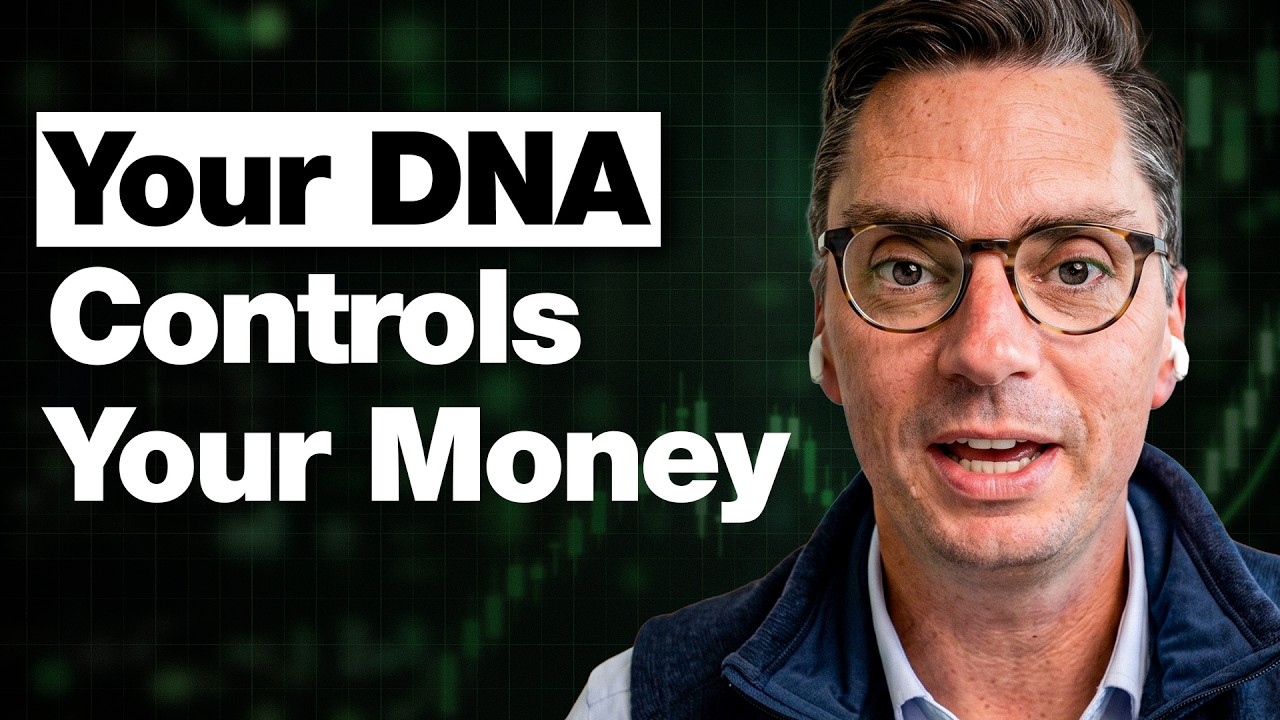
Henrik Cronqvist is a behavioral finance professor who has spent twenty-five years studying why smart, successful people make irrational decisions with their money. He did his PhD at the University of Chicago under Richard Thaler — the Nobel laureate who invented the concept of nudges in behavioral economics — and has published research cited over seven thousand times. His most striking study used data from 38,000 twins to figure out how much of your investment behavior is actually hardwired into your DNA. The answer: roughly one-third. In this episode, Henrik explains why the same traits that make founders successful are the exact traits that sabotage them as investors, and what the science says you can do to protect yourself from your own brain.
We went deep on: the twin study that proved genetics drive your investment behavior, why the traits that make great founders make terrible investors, loss aversion and performance chasing, how the color red on brokerage screens changes your decisions, why CEOs with daughters run more socially responsible companies, and the one practical thing every exited founder should do this week
Below you'll find my summary of the episode along with the entire transcript.
And by the way...this podcast, the concept of it came from Hampton. Hampton is a private, highly vetted community for high net worth founders started by Sam Parr. Members range from companies doing 3-5 million in revenue all the way up to hundreds of millions. The reason we started this podcast is because there are amazing conversations about money and growing companies that typically happen only behind closed doors, and we thought it would be awesome to share all of this information. If you're a CEO, founder, or business owner, check this out. New Moneywise episodes come out weekly.
Listen to this episode on:
Now, below are the notes and the full transcript.
Why Great Founders Make Terrible Investors
Henrik's core thesis is counterintuitive: the traits that make someone a successful founder — conviction, concentrated bets, bias to action, and optimism — are the exact traits that backfire in the stock market. Founders are wired to go all-in on one bet, trust their gut, and move fast. But investing rewards the opposite: diversification, patience, and a willingness to be "boring."
"There's no entrepreneur that I know that is striving to become average," Henrik says. But when it comes to the S&P 500, "average" beats 92% of actively managed mutual funds over a twenty-year period. The challenge for founders is accepting that the best investment strategy looks nothing like the mindset that made them rich in the first place.
The Twin Study: One-Third of Your Investment Behavior Is in Your DNA
Henrik's landmark study used data from the Swedish Twin Registry — 38,000 twins matched with tax records showing their actual investment portfolios. By comparing identical twins (who share 100% of their DNA) against fraternal twins (who share about 50%), the research isolated the genetic component of financial behavior.
The finding: identical twins had significantly more similar investment portfolios than fraternal twins, which allowed the researchers to conclude that roughly one-third of how you behave in the stock market is biologically hardwired. That includes how much risk you take, whether you're a spender or a saver, and which cognitive biases you're most susceptible to.
But Henrik is careful to note this isn't a death sentence. "It's like diabetes," he says. "Just because you know you have that propensity doesn't mean you're doomed. It means you can take actions to counter that." The two-thirds that isn't genetic? That's influenced by experience, relationships, and — crucially — financial education in the domain of investing.
The 90-Day Rule: Don't Go Grocery Shopping When You're Hungry
Henrik's most practical advice for founders who just had an exit is deceptively simple: do nothing for 90 days. "When you're in that state that you've sold your company, it's a pretty emotional process," he explains. "Could be good emotion, could be bad emotion, but it's emotional."
His analogy: don't go grocery shopping when you're hungry. If the stock market goes up 10% while you're waiting, that's fine — because the cost of rushing into a bad strategy driven by post-exit emotions is far greater than missing a short-term rally.
After the cooling period, Henrik recommends creating an investment policy statement — a written document outlining how you'll allocate your money across asset classes, your risk tolerance, and your savings-versus-spending ratio. He points to Yale's David Swensen, who grew the university's endowment from $1 billion to over $30 billion not by timing the market, but by sticking to a disciplined policy document for decades.
Loss Aversion and the Bias to Action
One of the most dangerous biases for founders is loss aversion — the tendency to hate losses far more than you appreciate equivalent gains. When a stock drops 20%, the instinct is to hold on and wait for it to recover rather than cutting losses. Founders compound this with a "bias to action" that served them well in business but can be destructive in the market.
"A lot of successful entrepreneurs, they have a bias to action. They are people that get stuff done," Henrik explains. "They may take action quicker than what you should in the stock market, which is about the longer term."
Performance chasing is another trap. Just like going back to a great restaurant, founders instinctively extrapolate past stock performance into the future. It works for consumer products — past quality predicts future quality for a BMW or a restaurant. But the stock market is different, and our brains aren't wired to recognize that distinction.
The Red Screen Effect: How Design Manipulates Your Decisions
Henrik's research on color psychology in finance produced a striking finding: simply presenting investment losses in red text (versus black) makes people measurably more risk-averse. Show someone a return graph in red, and they'll predict the future more pessimistically — purely because of the color.
"Biologically, we have been set up in such a way that red tends to signal caution," Henrik says. "Think about the stop sign. Think about red lights. Blood." This response is evolutionarily hardwired and nearly impossible to override through awareness alone.
Interestingly, when Henrik replicated the study in China — where red is associated with prosperity and celebration — the effect disappeared. The color still triggered a response, but the cultural context neutralized the fear association. It's a reminder that even "irrational" behaviors are shaped by environment, not just biology.
CEOs, Mortgages, and Behavioral Consistency
In a separate line of research, Henrik studied whether CEOs' personal financial habits predicted how they ran their companies. He looked at how much personal mortgage debt CEOs carried — and found a strong positive correlation with their company's leverage. Debt-averse CEOs ran debt-averse companies, and vice versa.
For founders, the implication is clear: your personal relationship with debt, risk, and spending doesn't stay personal. It leaks into every financial decision you make for your company. If you're a debt avoider, you might be under-leveraging your business and leaving growth on the table. If you're a risk lover, you might be over-extending.
Henrik also found that CEOs with daughters tend to run more socially responsible companies — a phenomenon he attributes to "lived experience." Seeing a daughter navigate the world firsthand changes how a leader weighs stakeholder interests beyond pure shareholder returns.
The A/B Testing Approach to Wealth Management
Henrik highlights Moneywise's very first guest, Ankur Nagpal (founder of Teachable), as an example of a founder who handled post-exit investing intelligently. Ankur split his money: part went to a top-tier asset manager, and part he managed himself. Essentially, he A/B tested his own wealth.
This approach appeals to the founder mentality — it's data-driven, it creates a control group, and it builds financial literacy through direct experience. Henrik's research shows that hands-on experience in the financial domain is one of the few things that actually reduces the influence of genetic biases on investment behavior. General education alone doesn't do it — you need domain-specific experience.
What Every Founder Should Do This Week
Henrik's final recommendation is straightforward: write an investment policy statement. It sounds institutional, but it's one of the most effective tools for combating genetic biases and emotional decision-making. The document should cover:
- How much to save vs. spend
- Your target risk profile across asset classes
- How much to index vs. actively manage
- Whether to use an advisor (and for what portion)
- Rules for when you will and won't make changes
"It sounds incredibly boring," Henrik admits, "but it can be successful." The founders who protect their wealth aren't the ones who outsmart the market — they're the ones who outsmart themselves.
Other Key Quotes
"The same traits that make you a great founder are likely the exact traits that will make you a bad investor. The conviction, the concentrated bets, the bias to action, the optimism — all of it flips when the wire actually hits your account."
"Don't go grocery shopping when you're hungry. When you've had a liquidity event, get out of that emotional space before you start thinking about what to do with the money."
"About a third of the variation across different people is explained by genetic factors. That leaves two-thirds for being influenced by other things like family, friends, and things that happen to you."
"Just because you know that you have that propensity, that doesn't mean you're doomed. It's like diabetes — when you know what type you are, you can take actions to counter that."
"If you look at all actively managed mutual funds, the S&P 500 falls in the top ten percent. So investing in the index beats ninety percent of actively managed funds over a twenty-year period."
"There is not one entrepreneur that I know that is striving to become average. But the indexing — it's not targeting the average. It's in the top eight percent."
Links You Might Like
- Join Hampton Community: https://joinhampton.com
- Henrik Cronqvist's research: Google Scholar
- Moneywise Podcast: Full episode archive
Full Transcript
Daniel Berk: You've probably spent a lot of time thinking about how to make money because most founders have. But something you've probably thought a lot less about is the same traits that make you a great founder are likely the exact traits that will make you a bad investor. The conviction, the concentrated bets, the bias to action, the optimism, all of it flips when the wire actually hits your account. My guest today is Henrik Cronqvist. He's a behavioral finance professor who has spent twenty-five years running the exact science on why smart, successful people make irrational decisions with their money. He did his PhD at the University of Chicago under Richard Thaler, the Nobel laureate who basically invented the concept of nudges in behavioral economics. He published research that has been cited over seven thousand times and covered everywhere from The Wall Street Journal to Harvard Business Review. One of his most striking studies used data from thirty-eight thousand twins to figure out how much of your investment behavior is actually hardwired into your DNA. And the answer surprises a lot of people, including him. The episode isn't about how to make money. It's about what the science says about what you're probably going to do with it and why that's gonna be bad and what you can actually do to protect yourself from your own brain. This is Money Wise. Let's get into it. Welcome back to another episode of Money Wise. Today, we have a really special guest, Henrik Cronqvist, who joins us as a behavioral finance expert, which I'm gonna have you, Henrik, uh, actually explain what that is. Uh, if you could actually jump off here right into the episode and give me kind of your one-sentence breakdown that tells us what you do.
Henrik Cronqvist: Sure. Now, first of all, it's, it's really, um, a, a pleasure to be on today, and I'm a big fan, uh, of the podcast, so it's really an honor to be on and chat with you today and, and the audience as well about behavioral finance and founders and all of those kind of topics. So what is behavioral finance? Well, it's... at the end of the day, it sounds very fancy, but at the end of the day, it is that we take a couple of different ingredients. We take a little bit of finance and economics, and we mix that with a little bit of psychology, uh, and then we get behavioral finance. And it really started back in the '80s as a, as a discipline within finance, uh, research. And then a bunch of people have popularized it. So many people have read books like Nudge or, um, Thinking Fast and Slow. And so that's what behavioral finance is about.
Daniel Berk: Okay. So tell me why... let's say someone just sold their company for twenty million dollars. Why should that person care about behavioral finance?
Henrik Cronqvist: I think they should very much care. What makes many people successful entrepreneurs and founders and startup people may be exactly the type of characteristics that make them, uh, more challenged as an investor in the stock market. So what am I talking about? Well, if you think about conviction, that's not-- we want, uh, founders to have strong conviction. We want them to be optimistic. We want them to take, take a concentrated bet. And, um, many of those things actually flips when it comes to investment. And, uh, just to give one example on concentrated bets. We have one of the biases that we have identified in behavioral finance is what we call the home bias. People tend to hold a lot more stocks in their home market than in other international markets. That might be okay if you're in America, but if you're in my home country of Sweden, a very small country that is maybe less than one percent of the world economy, then you can end up with a very concentrated portfolio. And in finance and in stock market, we should diversify, and we should be in many different, uh, stocks and securities. So that may be something that is counterintuitive to many founders.
Daniel Berk: Yeah. And when...
Daniel Berk: before we jump into the research, when you think of someone messing up with money, 'cause I, I feel like behavioral finance, you've, you've studied so much about what people do well with their money, what people do, of course, poorly with their money. What made you start studying this? How did you end up in a career and research about this specific topic?
Henrik Cronqvist: Yeah. It's a long story. The short version of it is that I came to America in nineteen ninety-nine, uh, to do my PhD at University of Chicago, and I got really attracted to this field of, uh, of behavioral finance. It actually start... not to bore anyone, but it started with when I was writing my dissertation. I, uh, went back home to my home country of Sweden. And I still remember, I was coming out of the subway, coming up to the, uh, to the, to the ground floor. And this is, like, around the year two thousand. And I realized that it looked like someone had carpet bombed the entire city of Stockholm with advertisement for different mutual funds. So I was like, "Okay. Well, what's going on here?" And I took that back to my advisor at University of Chicago, who told me, "Oh, that's sort of interesting. You should, uh, you know, look into that more and see what's, uh, what's going on, uh, and research that more." So that's how it all got started. Behavioral finance is the study of why people make irrational decisions with their money. It combines economics with psychology, and the field really took off in the two thousands when researchers started noticing that even smart, educated investors were consistently making the same predictable mistakes. Today, it's used by everyone from the world's biggest banks to the apps on your phone, often to understand you better than you understand yourself, how you're going to invest, what's going to cause you to invest or sell your stocks, and really all about the way that you think about money based on who you are. It's a really fascinating study.
Daniel Berk: That's very cool. Uh, and you've been researching now behavioral finance for how many years?
Henrik Cronqvist: Uh, too many probably. Twenty, twenty-five years or so.
Daniel Berk: Okay. Time flies, man. That's a very long time. And tell me like a real story of a, a pattern you've seen with wealthy investors that Uh, maybe shocked you or you maybe didn't expect once you saw the data, um, and, and you correlated that with some of your hypotheses. Tell me, like, a real story that the listeners can really resonate with.
Henrik Cronqvist: Sure. I think one of the things that we have researched is about, um, uh, and as I think how you and I got connected as well, is about, uh, genetics and the kind of the, the DNA that people have and how that is, uh, related to people's, uh, investment behavior. Uh, and, um, that is, uh, that is something that is pretty interesting. So we started by studying twins, so identical twins and, uh, fraternal twins, and tried to understand how much of your behavior as an investor you're hardwired with and how much of that is driven by the environment. I think we all learn in school about nature and nurture, right? Uh, it's more complicated than that. It's sort of nature through nurture. But in any case, uh, that was one of the research projects that we started, uh, to kick off, and we have some pretty interesting findings there.
Daniel Berk: And you, you studied thirty-eight thousand twins.
Henrik Cronqvist: Yeah. So that's a ton of twins. They were all in Sweden? It's ton... Yes, they are. You know-
Daniel Berk: Okay ...
Henrik Cronqvist: but it's sort of, you know, why Swedish twins? It just turns out, uh, in, in Sweden, in my home country, we keep really good track, uh, of data on the twins.
Daniel Berk: Interesting.
Henrik Cronqvist: And so that's why we ended up working with what is called the Swedish Twin Registry, which is, uh, a lab, uh, in Stockholm, Sweden, and they have data on, as you say, tens of thousands of different twins. It was originally used for, like, medical research back in the day when people tried to understand things like what is the role of genetics for, like, cancer and things like that.
Henrik Cronqvist: So we took all of these twins, and then we matched them up with the data from the tax registry on what kind of investments that these twins have made. And the point is, if you, if you think about it, those, the identical twins have the same DNA, and then the fraternal twins, they share about fifty percent of their DNA. So then the way you go about this is that you compare how similar are the identical twins in their investment portfolios to the fraternal twins. And what we found is that the identical twins, their investment portfolios are a lot more similar than the fraternal twins. And then, uh, that enabled us to conclude that part of how you behave in the stock market is because of how you're wired. It's, part of it is biology, part of it is DNA.
Daniel Berk: Henrik's twin study is one of the largest of its kind ever conducted. By comparing the investment portfolios of identical twins who share one hundred percent of their DNA against fraternal twins who share about fifty percent, researchers were able to isolate exactly how much of your financial behavior is inherited from literal genetics, and the answer was roughly one-third. That means if your dad was a panic seller, there's a real chance you are too, and no amount of reading is going to fully rewire that. So would it be appropriate to say that according to research, your investment choices and your personal spending and the way you think about building wealth is actually just genetic and that there's no real control over it?
Henrik Cronqvist: So that's not really true. So we find that about a third of, uh, the variation across different people is explained by genetic factors, so about a third. That leaves two-thirds, if you think about it, for being, uh, influenced by other things like family, friends, uh, other relationships and things that happen to you. And I think also, it, we got a lot of questions about this, and it's sort of like, what does this mean? Does this mean that because this is in your DNA, you're, uh, you're doomed? And, and that's not what you should conclude from this, uh, research. And because, one, it's, uh, explains only about one-third of the variation. And number two is that I like the parallel with, like, uh, diabetes. So if you learn that you have a predisposition to diabetes or to, you know, high blood pressure or whatever it might be, that doesn't mean that you're doomed, but it does mean that you may be aware of those conditions. And then you can, uh, you know, take actions to counter that. And it's the same thing here, uh, with your investment behaviors. It's not like you're doomed, but, uh, when you know what type you are, you may wanna think about how you behave in the stock market and in your investments based on that.
Daniel Berk: That's very interesting. So you've studied identical twins, fraternal twins, their DNA and specific decision philosophy that is correlated with, uh, it sounds like a third of their genetics. So I, I guess my question is if you're predisposed as a founder or someone building wealth to make certain decisions based on your genetics, then what is there for a wealthy founder or maybe a recently exited founder out there to help train or change some of these decision processes they have with what they do with their money?
Henrik Cronqvist: Yeah, sure. I think if you, you know, are just got liquidity as a founder, then the first thing that you probably should do is to do nothing. Uh, so-
Daniel Berk: Okay ...
Henrik Cronqvist: uh, meaning that when you're in that state that you've sold your company, then, uh, that process is for most founders that I've ever talked to, it's a pretty emotional process. Could be good emotion, uh, could be bad emotion, but it's a pretty emotional process. So I think, uh, the first thing that you want to do when you have made an exit, uh, got a liquidity event, is to, to wait. You can wait ninety days, wait some time, and get out of that emotional, um, space.
Henrik Cronqvist: Uh, and, uh, if the stock market in the meantime goes up by ten percent, that's okay, uh, because by you rushing into a particular investment strategy at that point, I think the price of that could be a lot bigger than losing out on the, on the ten percent that the stock market may be going up. And so I think that that is something, uh, that is important to, uh, to be calm. And there's the, there's the old expression, right? That don't go, uh, grocery shopping when you're hungry. And I think it's sort of a similar kind of thing for founders when you had the liquidity event and to first get out of the emotional state before you start-
Daniel Berk: To think about what should be your allocation, what should you do with the money. That's very interesting. And is this-- does this play into your research around loss aversion? As I was looking at some of your research papers, there's a lot of conversation about home bias, which you mentioned, loss aversion, overconfidence, uh, performance chasing. Walk me through some of the ways that emotions and genetics play into some of this, and, and also define them for us. What is loss aversion in this instance?
Henrik Cronqvist: Sure. Yeah, people, you know, people don't like losses. I mean, none of us like losses. That's sort of obvious. But the point is that people hate losses a lot more by a bigger factor and by a much bigger factor than they appreciate gains. So that means that when we have a, a loss on a stock in the stock market, for example, a lot of people, they just don't wanna realize that loss and, you know, go to Robinhood and hit the sell button, but they wait for the stock to try to come back at least into a positive t-territory. And that's what we mean by loss aversion, and a lot of us display that. Yeah, you mentioned, uh, there's many other behavioral biases as well. Yeah. So performance chasing would be one, for example. And a lot of us, we, we look back at the performance of stocks in the recent past, and then we extrapolate that into the future, which may or may not be a good idea. Uh, if we were standing in, I mentioned before year two thousand, we were at a similar time maybe as we are now with the dot-com, and now we have the AI revolution. And if you stand there and you extrapolate the past performance, uh, to the future, uh, things could go wrong. But a lot of us do that. We have this behavior of, uh, of, uh, performance, uh, chasing.
Daniel Berk: Very interesting. And, and I would love for you to help me understand. Let's say, so a recent guest we just had, they sold their company for ten million dollars. They had a two million dollar upfront with an eight million dollar earn-out period. Let's say that that founder put half of their liquidity into the stock market, and those stocks dropped twenty percent three months later. Walk me through what's happening in that person's brain during that time that the stocks drop.
Henrik Cronqvist: I think it hurts, man. Uh, that's the, uh, simple, maybe non-scientific-
Daniel Berk: Sure.
Henrik Cronqvist: ... uh, explanation for that. The question is then, what, what to do about that? I think that's where, uh, maintaining the calm and, uh, not, uh, immediately act on any loss that is happening in the stock market. That's the key thing. But, uh, a lot of, uh, successful entrepreneur have, they have a bias to action. They are people that get stuff done, and they may take action, uh, quicker than what you should in the, uh, in the stock market, which is about the longer term. Uh, and I think also when you put the money into the stock market as if you've been, um, uh, a founder, and now you have your liquidity event, then, uh, you know, I oftentimes get the question about indexing, so putting, uh, money into an index, uh, fund. And I think, uh, the, the, the short answer to what you should do is for sure a lot should probably be indexed.
Henrik Cronqvist: And indexing had a bad rep in the sense of, "Isn't that incredibly boring?" So if you think any-- there's no entrepreneur that I know that is striving to become average, right? Like, "Oh, I'm gonna become an average entrepreneur." No, of course, everyone wants to be in the top, top quartile, wanna be in the top ten percent. You, you, you wanna be a winner. But the, the indexing sounds extremely boring, and it sounds like you're targeting the average. But that's, that's not really how to think about it. Because if you look at all actively managed mutual funds, and there, there's, you know, hundreds, thousands of them out there. If you look at all of them and you see where does the S&P five hundred, which is this boring index, where does that fall in that distribution? It's in the top ten percent. So that means that, uh, investing in the index, that beats like ninety percent of the actively managed mutual funds over a twenty-year period. That's amazing. Most people want to be in the, you know, top eight percent of, uh, of, of a lot of things. So that's the way to think about it, uh, rather than, uh, trying to target the, the average.
Daniel Berk: Does your research show that someone, even against logic, is actually predisposed to thinking differently about what you just said, just one hundred percent based on genetics and upbringing?
Henrik Cronqvist: It's the nature and nurture, and I think, um, yeah, that's, uh, uh, if you go back to what we actually look at in the genetic studies, we, we actually look at... We started with the first choice you have to make. So if you're, if you're a founder that is now getting liquidity, the first choice is, "Okay, so how much am I gonna consume versus gonna save for the future?" Right?
Daniel Berk: Mm.
Henrik Cronqvist: "And so how many Lambos am I gonna have now versus saving for, uh, my family or for my retirement or whatever?" So that's the first thing. And we looked at that choice, save versus spend. Actually, it turns out that that also has a genetic component. It's about one-third there as well of the variation that is attributable, uh, to, uh, the choice of being more of a spender versus being more of a saver. And then once you decide, "Okay, well, I'm gonna save X percent," then the question becomes, what kind of risk profile are you most comfortable with? And that's where we started to study risk aversion and how much people put in equity versus other kind of investments. Uh, and we found that that is also driven by about one-third or so, twenty percent to forty percent is driven by your, uh, d-- genetic factors. Um, and then overlaying on top of all of this is what we have talked about, which are these cognitive biases that may influence you to do things that, uh, may seem, you know, irrational. But I think one, one point that is important to make is that what we talk about today in the modern, uh, society as looking, maybe looks irrational, you have to look at it from the perspective of, like, evolution and biology. So we have been, as humans, we had evolved over thousands of years, right? This, this fall it will be four years since the ChatGPT moment. That's like a sliver of history that is not even showing up anywhere.
Daniel Berk: Yeah.
Henrik Cronqvist: So as humans, we had evolved over this very long period of time, and we had got collectively, like, properties as humans that makes us survive, and we have successfully survived as a species on this planet for many, many years. But some of the factors that have driven the selection of what traits we have, they will make you go wrong in the, uh, area of, um, of investments. Right? Perfo- we talked about performance chasing. For many things that we do in life, looking at the past quality or the past performance of any product is a great thing. If I go to a restaurant, I like it, I go back, because the past quality of that restaurant is usually a pretty good predictor of the future quality of that restaurant. I buy a BMW, I like it, I buy another BMW in the future, because past quality predicts future quality.
Henrik Cronqvist: Stock market is different, and that means that we're not really wired all the time to, to see those kind of behaviors, if that makes sense.
Daniel Berk: It does. I, I wanna ask you about a paper you published where you kind of dove into CEOs' personal mortgage behavior and how that behavior predicts the way that they're going to run their company's finances. And so I'd love for you to explain to me, like I'm a founder who just took his, his, you know, first $5 million distribution, how is my behavior with that money going to be impacted by the way that I've, you know, lived my own personal finance life when it comes to mortgage or rent or my personal housing?
Henrik Cronqvist: Yeah. Psychologists have this concept that they call behavioral consistency, and the idea is that we have a personal life and a personal domain, and we exhibit certain behaviors there. And then we have a professional life, uh, leadership, uh, corporate life. And so the question is, is there like a correlation, is there a similarity between how people behave in those different, uh, domains? And so one interesting domain that we decided to look at is... And that was stimulated by the fact that I know so many people that have different attitude to how much debt or leverage you wanna have. Uh, and so some people, they really, really do not like having any debt or having mortgage. And I'm, of course, I'm talking about people that have the luxury of having that choice. Some people, they don't have that, and then it's a different story. But even for people that can have more or less, uh, leverage or debt, uh, they have a different view on it. And so what we were doing in this particular, uh, research article that you mentioned, is that we tried to correlate that. So we looked at CEOs of publicly traded companies, and we looked at how much debt, mortgage do they use in their houses. You say, "How do you know that?" Well, there is public data that is available that we could, uh, collect a- and look into how much, uh, leverage that they have. So that some of them have no leverage, no debt at all, no mortgage, and others have much more, uh, debt. And these are wealthy CEOs, so for them it's a choice whether or not to have any debt. And then we were looking at, okay, well, what about the firm that they are at the top of that firm as the top leader? Uh, is there a correlation then between how they behave with their personal debt situation and the corporate debt situation? And we found very strong positive correlation between them. So, uh, that is sort of consistent with this behavioral, uh, consistency phenomenon and concept.
Daniel Berk: So say I'm a founder, uh, and I guess what do I do with that? What, uh, should I, if I'm a debt avoider personally-
Henrik Cronqvist: Yeah
Daniel Berk: ... should I be more or less worried about my company's balance sheet?
Henrik Cronqvist: Yeah. Uh, yeah, I would think, uh, the, the way you, uh, think about your own personal situation with, uh, respect to, to debt, that will be reflected in the firm, uh, and I guess vice versa. Yeah, so if you're a person that, um, uh, you know, you really, uh, hate debt, uh, then, uh, probably the way you will grow your business is also with taking on relatively less of that external financing and less debt, which could, uh, impact the growth of the firm. So there is this sort of, uh... A- and th- this effect is probably stronger if you run a smaller business because then you have more control over it. Actually, what we studied were big publicly traded companies where you would expect there to be a lot of other factors that also influence this. Uh, and so as a founder of a smaller company, there's probably a even stronger link between those.
Daniel Berk: What's the solution to these concepts that are, it sounds like, deeply wired in a founder's psyche? How do they go about learning these behaviors about themselves so that they can be at least, one, mindful and, you know, at best case, two, like proactive about potentially solving their propensities to be one way or another?
Henrik Cronqvist: Yeah, it's interesting because for the genetic effect, we asked the very basic question: What about education? So if you have more education, I'm in the education space, so we asked, does that reduce these, um, uh, genetic effects? But we didn't find that, so we thought that was pretty interesting. But if you think about it, you can be really highly educated, you could be a chemical engineer with a master's degree, but you don't know that much about finance. And so in that case, the education doesn't really matter that much. What we did find that matters is experience in the financial domain. Uh, and so if you work in finance and you've seen the in and outs of how things are being done in finance, then that actually reduces the influence of the genetic effect. But of course, not everyone has that experience because they don't work in the finance industry. But by being able to educate yourself on financial matters, uh, that could be helpful. That would be one of the implications of what we found.
Daniel Berk: Okay. Uh, let's, let's shift gears to more practical. We've had founders on this show who had a huge exit and then immediately bought super expensive houses, uh, maybe started angel investing in their buddies' startups, uh, you know, put the rest into familiar stocks. You know, a lot of different decisions someone would make when they come into, you know, eight or nine figures. Based on your research, what happens psychologically when someone is doing, you know, what I just described right after they come into a lot of money? Maybe they haven't had that money before, and they're now for the first time experiencing extreme wealth. What's happening to them in their brain, and how is that correlated with maybe genetics?
Henrik Cronqvist: I think it's, uh, what you say is very common in my experience as well. So a couple of, uh, you know, concrete things that we can, uh, do about it. So the- The, the first one I would say is don't rush into something right away with, uh, once you have a liquidity event and exit, then, uh, take your time and, uh, give it 90 days, give it three months. Uh, as I said, d- don't go grocery shopping when you're hun- hungry. Get out of that emotional state, uh, before you make any, uh, commitments. And then another thing that I would say is to have an investment policy statement, and it sounds incredibly boring, but it can be successful. And thinking through what should you do with your money, how should you allocate it? And, um, if you look at in my world of, um, uh, of universities, so Yale University had a chief investment officer for many years. He's passed away now, but he's incredibly famous, David Swensen, and he had a couple of different principles that Yale used to grow their endowment. And, you know, if you think about it, during the time that he was the CIO for Yale's investment, grow from something like maybe about one billion to over 30 billion. That's, uh, that's an incredible growth, uh, over the decades. And that was not because they were, like, timing the market and try to get into certain stocks that they were, uh, thinking about going up or, or getting out of certain sectors. But because they developed an, um, a, a policy document, and then they were sticking to that. So I think once you get this money from the exit, develop a policy document where you think through w- how much are you gonna save for the future versus how much are you gonna consume now, and what is the risk profile that you're comfortable taking on, and what are some of the asset classes that you're going to invest in? Those will be some concrete things that I think, um, founders can do.
Daniel Berk: Okay.
Daniel Berk: And, and do they read books, or should they ask friends, or do they, do you know-
Henrik Cronqvist: Yeah.
Daniel Berk: ... delve deep into themselves? Like, I guess what, what should they do really on that day? They get the money. Let's say they don't have that investment, uh, you know, guideline written for themselves. What's, like, a really practical way for them to start going about learning some of these tendencies they might have?
Henrik Cronqvist: So one, uh, interesting example of one successful founder, uh, uh, Ankur Nagpal, I don't know if you know him.
Daniel Berk: I do.
Henrik Cronqvist: Uh, he had a company Teachable, right?
Daniel Berk: Yeah.
Henrik Cronqvist: I think he did basically the equivalent of A/B testing. So he took some of the money that he got from, uh, an exit, and then he gave it to some top-tier, uh, asset manager, and then he took another fraction of that money, and he decided to manage that by himself. And of course, then you have to read up if you're, if you're going from being a founder specializing in building companies to now being into investment. You have to read up and try to understand how should you allocate the money. I thought, I always thought that was a pretty cool idea of, uh-
Daniel Berk: Yeah ... basically doing an A/B testing on your money.
Henrik Cronqvist: Yeah.
Daniel Berk: He was, uh, the very first guest we had on Moneywise. And if you haven't listened to that episode yet, go back and check it out. All of our episodes are at Moneywise wherever you get your podcast. And if you're a founder who wants to be a part of this community that inspired the show, check out Hampton at joinhampton.com. So for those listening-
Henrik Cronqvist: Oh, he's cool ... if you wanna go back and listen to his exit story, uh, it's great. I've talked to him a few times, and he's, he's great.
Daniel Berk: So I, I think that's a great example. I wanted to ask as well, there's this study about brokerage screens and the design tendencies to use red versus green. When stocks go up, it's green. When stocks go down, it's red. And some of the effects that it has for people's behavior to buy or sell stocks, the, some of the fear and uncertainty that comes from a red stock that's down. And I'd love to understand what the research says about, one, why people behave that way when they see red and green, and then two, how, if, and why some of these companies like, you know, the stock brokerages we're familiar with lean into that. I mean, that's a design choice. They're using red and green very specifically. Tell me about what the research says about that.
Henrik Cronqvist: Sure. Uh, it's pretty interesting. So if you think about the color red, so, you know, biologically, we have been set up in such a way that red tends to signal to us caution. You should be, uh, uh, you know, aware of the environment. Think about the stop sign. Think about red lights, many different things that are red. Blood, if you're out in the old, old days on the savanna and you see red, you see the blood, you know-
Daniel Berk: Mm-hmm ... then you better watch out.
Henrik Cronqvist: Gotta be-
Daniel Berk: Yeah ... extra careful.
Henrik Cronqvist: So what we looked at in our study is if you give people a choice of different gambles that they can take on in an experiment, and then if you present to people the potential losses that they can make, uh, if you used, uh, red for the font versus you use black for the font, uh, does that actually matter? It turns out that it does matter. So if you present, uh, losses to people in red, people get more, uh, risk averse. And if you show people a, a graph with returns, so think about the stock return graph, and if you show that graph in a red, uh, color and you ask people to make a prediction about the future, people are a lot more pessimistic about the future just because of the color red. So it's sort of like programmed in us that red is associated with, uh, with danger. And, um, sort of one follow-up to, to that study, which is interesting for people that are also interested in, in different cultures. So I used to live and work for, for three years in China, and in China, red color has a bit of a different-
Daniel Berk: Connotation than in Western culture.
Henrik Cronqvist: It's the color of the flag, it's the color of, uh, the festivals and so on. So we redid this study, uh, using Chinese participants in China where, by the way, if you're in China and on a day when the stock market goes up, the board is all red because they use red color for, for a, a good day.
Daniel Berk: Really? Interesting.
Henrik Cronqvist: And yeah. So, so actually, um, what we found is not that the effect reversed, but we did find that in the cultural context of China, uh, the, uh, the effect of red went away. It was not, uh, no longer significant. And so what do we take away from this? I think that a lot of ways that the information is presented to investors, it matters. You know, for... Robinhood had, for many years they had the confetti. Uh, when you did a trade, there was like this confetti and then they got rid of that because maybe that will lead to excitement around trading, uh, and may not be in the, the, the individual investor's best interests. Uh, but anyways, these small things in the design can actually have a pretty interesting and important effect on people.
Daniel Berk: So should wealthy people just not look at their brokerage account during a correction?
Henrik Cronqvist: We shouldn't look at our brokerage account too much. On the other hand, we should also, uh, sometimes look at it. So there's a fine balance there. I think one of the issues, uh, is that maybe, uh, we look too much at the brokerage account and we get too much information, too much excitement, or too much emotion, and then we act on that too quickly. I... On the other hand, uh, in, in, uh, one study that we did showed that, uh, a lot of investors, they don't log in at all to their retirement, uh, account over a very long period of time. They don't look at the portfolio at all. Of course, that's great if you originally made a choice that makes sense. But if you originally happened to make a choice that was not that great, then leaving it alone for 16 years is probably not a good idea. You make, wake up in your mid-life and realize that this, this doesn't look good. But, you know, on a, on a serious note though, there has been a lot of, uh, development in that space that have helped people over the last 25 years, so basically during my career. If you look at the default in retirement plans, it's much more sensible the default right now than it used to be 25 years ago. So if you take no action in your, uh, pension plan, 401plan, your money automatically get into what is called a default, and the defaults that we, are used now by most companies are much more sensible than back then. Because if you default into, say, a very low bond fund, what if you for the next 16 years don't pay much attention to that? You have really lost out a lot during that period of time. But if you instead default into like a life cycle fund that will adjust their allocation of the fund depending on your age, then as you get older, your equity exposure may be reduced automatically, uh, in the fund. And so there's a lot of positive things that had happened because of, I think, research in behavioral finance that is really helping people out for the longer term.
Daniel Berk: And it sounds like some of the genetics that are at play here will probably say whether or not someone's predisposed to taking a bit more control over that 401or retirement plan or just kind of letting it be and not touching it for 20, 30 years. Is that right?
Henrik Cronqvist: Uh, right. So we d- we didn't actually look too much on that, whether you look into your investments or not, to what extent that is driven by the genetic, uh, effect. So we were sticking with we're looking at how much you're saving, how much risk you take, and what kind of cognitive biases that people have.
Daniel Berk: Okay. There's a topic that comes up all the time on Moneywise, and it's the post-exit emotions that people feel, that actual moment the wire hits.
Daniel Berk: The founder sells, the money hits, and instead of, you know, feeling great, sometimes we've found counterintuitive, they actually feel lost or depressed or almost like they've given up some part of themselves. Does behavioral finance research say anything about that moment in a founder's life?
Henrik Cronqvist: Part of that is probably loss aversion in the sense of you do... When you have the exit, of course you get a, a big check, right? Uh, that's the whole point. So you have a liquidity event. But you do lose something. You lose, uh, your business maybe if you, if you don't have any control anymore, and that's painful, and we know that because of loss aversion. And so that is incredibly, uh, painful to, to lose that. Uh, and so that, that is part of what's going on, why people have that feeling. That's one thing. The second thing is, um, there is always... We always... Many of us believe that we need in order to get to happiness, however that is defined, we need a lot more money than probably we do need. Uh, and there's a lot of research related to that that shows that happiness i- in, in life, the money that would lead to that is probably lower than most people think. It's not... That number is not $1 billion or $100 million or even $10 million. It's a lot lower than that. And I think that that is also the reality that kicks in for a lot of founders.
Daniel Berk: Is there a number that research says is, is kind of the threshold number? Once you get this, that happiness, like according to research, happiness doesn't change after more comes?
Henrik Cronqvist: Yeah, I think that there are some numbers that I... My research has not estimated those numbers, but, uh-
Daniel Berk: Okay
Henrik Cronqvist: ... the, the impression that I have is that those numbers are a lot lower than we may think, uh, that they would be.
Daniel Berk: Yep. No, that makes sense. Knowing everything we've discussed so far about genetics, biases, and, uh, some of the inertia of someone's buying propensity and some of the way they think about finances, is there something anyone can actually do about their behavior? Or is research effectively saying, "You're w- you're wired a certain way because your genetics, so just accept this is the way you're going to behave"?
Henrik Cronqvist: Yeah, you don't have to accept it for sure, so that's not what we are, um, uh, reporting. But we say that genetics plays an important role, uh, in how much risk you take on and how you make the decision between how much to, to spend right now and save for the future. But I always like the, the parallel with, say, diabetes or heart disease. Just because you know that you may have that, uh, propensity to develop those kind of conditions, that doesn't mean that you have to be passive and not do anything about it. You can eat less sugar and have fewer donuts if you have a, uh, tendency to have, uh, diabetes in your family. And so same thing for the, for the risk-taking, depending on what type you are. So, uh, a lot of, uh, entrepreneurs, uh, may be the more the risk-taking type, right? That's what made them successful as an entrepreneur, as a founder. And you should be aware of that then. Uh, when it comes to the stock market, uh, by, uh, doing a lot of indexing in your portfolio, that can be an excellent choice. Uh, it's not a boring choice, and it's not going for the average. But, uh, if you index a big portion of your portfolio, then you would, uh, you will still be in the very top distribution across all the different investment opportunities that would be available to you. So, uh, S&P 500 as an index, if you look at over a 20-year period, S&P 500 is basically in the top 8% among all actively managed mutual funds.
Daniel Berk: To put that in perspective, there are thousands of actively managed mutual funds in the United States, teams of professional analysts, portfolio managers, and researchers whose entire job is to beat the market. According to data going back 20 years, a basic S&P 500 index fund outperforms roughly 92% of them, and it charges only a fraction of the fees.
Henrik Cronqvist: I put a lot of my money in the S&P 500, and a lot of people I respect who are incredibly wealthy also put their money in the S&P 500. Obviously, this is not investment advice, but the data definitely points to the S&P 500 being a fund that's worth looking at. Uh, and I think a lot of people would like to be in the top 8%, right? And then I think another thing is, um, in the, uh, finance industry, one thing that can be counterintuitive is that it's not always that higher price, meaning higher fees associated with a product, will necessarily lead to something that is better. There's a lot of research that is indicating the opposite. Uh, some products that have really low, uh, fees, uh, mutual funds or, or ETFs and, and different investment vehicles that have low fees, uh, actually perform better on an after-fee basis. That's also something that is perhaps a little bit counterintuitive to a lot of people because for many products we think, okay, higher price, higher quality.
Daniel Berk: My honest fear, I feel like, uh, in general, that I'm the exception to the rule. Like, that's just how I live my life. Like, oh, yeah, that's, that's what the research says, but that, that doesn't apply to me. So my honest fear is I know about the biases from what you've been talking about. Let's say I've read some of the books about how to think through investments and wealth. Your research tends to suggest that that doesn't always help. And so what's, I guess, me and anyone who feels similar, what's the actual defense if knowing better doesn't make me better?
Henrik Cronqvist: I think knowing more and reading up about finance, I think is always a, a good, uh, idea. You can always do a combo of, uh, some of it is to, um, outsource some of your, uh, money management. If you're a founder, you make $100 million to do sort of an A/B testing. Uh, so some of it you may, uh, farm out, uh, to an advisor that you trust and see how they do, and then you take another part of it and you really start to understand the very basics of how investments work, which is a different ballgame than to be an entrepreneur and a founder. And then you see, uh, what is doing best in that A/B testing. Of course, the, uh, the, uh, company that you're farming out some of it to, they would like to manage all your money. Uh, so you would then have to, uh, keep some of it, uh, to yourself and then really think through at a deeper level, uh, how to go about tho- those investment decisions, including, uh, how much should go into equities, how much should go into bonds and lower risk, how much should be indexed, and, uh, how much, uh, should go into different asset classes. So that's one concrete thing that founders can do.
Daniel Berk: I noticed you said online recently that it's probably one of the most difficult times in history to stay rational with your money. Why now specifically? What's changed?
Henrik Cronqvist: I think it is difficult because of, um, uh, uh, the, uh, the revolution, the AI revolution that we're going through now. There's some parallels back to the dot-com period for, for those that are old enough to remember that, but there's also a lot of things that are entirely different. And, uh, prediction about the future, it's so incredibly difficult. That is why we need to pursue strategies that are diversified a- and um, uh, that have a good mix, uh, and that have l- low fees associated with your investment vehicles and do all of those basic rules that were in place twenty-five years ago during the dot-com period. They are still, uh, in place now. Um, and so that will be, uh, part of, uh, how I think founders and others should think about the world, uh, in this very, uh, unusual point in time when so many things are changing so quickly.
Daniel Berk: So anyone who says they can tell the future, don't, don't listen to them.
Henrik Cronqvist: Yeah.
Daniel Berk: We're recording this episode with Henrik in the middle of what many people are calling the AI revolution.
Daniel Berk: A lot of that energy now feels similar to the dot-com boom of the late 1990s, a once in a generation technological shift that made everyone feel like they had an edge. Back then, the Nasdaq dropped 78% from the peak, and that's not a real prediction about what happens next. It's just a reminder of what Henrik has spent twenty-five years studying. The most dangerous time to trust your instincts with money is when everyone around you feels certain.
Henrik Cronqvist: Uh, well, we have a lot more ways these days to, uh, think about the future. There's prediction markets-
Daniel Berk: Yeah ...
Henrik Cronqvist: and many different things-
Daniel Berk: That's right ...
Henrik Cronqvist: which is a whole different kind of a can of worms, I guess.
Daniel Berk: That is.
Henrik Cronqvist: Uh, but, uh, but, but that doesn't-
Daniel Berk: That's a different podcast episode.
Henrik Cronqvist: It is. But the interesting point I think is despite the existence of all of those markets, not sure that we really truly know a whole lot more about the future than in the past, but I guess future will tell, right, on that.
Daniel Berk: That's right. The future will tell. Uh, there's a really interesting study. So I'm a, I'm a dad. Uh, I have two kids, and you did a study on how a CEO having daughters changes the way that he operates his company's social responsibilities and the way he operates his company in general. I wanted to ask you, like, what does your research say about how kids-
Henrik Cronqvist: Change the way founders or company leaders think about money. We looked at whether CEOs of big publicly traded companies, uh, whether they had a daughter or not, whether that impacted their, uh, attitude towards, um, social responsibility a- and, uh, stakeholders other than their shareholders. And the short version of what we found is that, uh, CEOs that have a daughter, they tend to be more socially responsible, and we got some different metrics from, uh, a data provider to analyze, and this is controlling for many other factors that can influence that.
Daniel Berk: Yeah.
Henrik Cronqvist: So there's something about, um, it, not only having kids or not having kids, but in this particular case, what we found is that having a daughter that made these s- seem to make these CEOs more, um, uh, pro-, uh, uh, societal i- in their decision-making. And it's an interesting finding that I think a l- there's a lot of research teams that have followed up on it to really try to nail down and understand what exactly is the mechanism behind this finding.
Daniel Berk: What is the mechanism, and why do you think that is? Why is... Is there a correlation truly, or is it coincidental?
Henrik Cronqvist: I think definitely there is the, uh, the correlation. So I think that is not the issue. When it comes to the mechanism, then if you have a daughter, you may have different kind of experiences as a dad than if you, uh, don't have any daughter at all. Uh, because you see when the kids are growing up, you get, you get to see both as kids, but then also as young adults and as adults, and how they may be, uh, treated in the labor market, uh, and at school, and you get a more f- firsthand glimpse into that, uh, than if you don't have a daughter. So we think that it has to do with those lived experiences are different, uh, for, for in this case that we studied CEOs that have daughters vers- uh, versus those that do not. Uh, and this phenomenon about different kind of lived experiences that people have, that is a much bigger, uh, research topics that a lot of people have looked at, and, uh, depending on if you, if you grow up in the Great Depression, for example, how does that shape you? So there's a lot of research about those kind of lived experiences and how they matter for how, uh, you behave later on in life. And even as a top leader of a, a big company, that's what we find.
Daniel Berk: Yeah. That's so fascinating. I mean, I think, uh, every day about how being a dad shapes the way I think about building companies, um, money in general, my own money, the, the, the world. I mean, how the world chooses to spend money, and so it's certainly resonates with me, and, uh, I'm not surprised.
Henrik Cronqvist: Uh, the, the part that surprised me is daughters specifically, not just being a parent as a CEO, but the daughter specifically. I think that correlation is incredibly surprising to me. And probably even in the m- more equal society now than, uh, many decades ago may still be that the type of experiences that, uh, we face as we go through life are different depending if you had a son or a daughter. Uh-
Daniel Berk: Mm-hmm
Henrik Cronqvist: ... and as a parent, you're closer to and see more firsthand those experiences than if you don't have that. Uh, and it's one thing to hear about, it's one thing to talk about it, it's another thing to experience it. Uh, and I think that that is what matters here, uh, and I think that's what our result is pointing to.
Daniel Berk: Yeah. Okay, last one. I want you to think of every founder, exited founder, you know, wealthy person listening to this episode right now. Tell them one specific thing they can do in their lives this week, today, with their money based on the research that you've found, uh, in your 25 years researching behavioral finance.
Henrik Cronqvist: Yeah, sure. I think, uh, definitely, um, a thinking through what their investment policy should be like. Again, it sounds pretty boring, and it sounds very institutional or corporate. But, uh, even for an individual to think that through, uh, and have an investment policy for yourself, where you think through where your money is gonna go and, and what kind of buckets is it gonna be in, uh, and the, the, the distribution of risk that you're gonna have. I think that's something that is, um, uh, for every founder, something that they should think through, either by themselves or with the help of some advisor or some- someone that they can really trust.
Daniel Berk: There's a lot of competing thoughts on whether or not to use a wealth advisor or financial planner. I've heard, you know, both sides of the spectrum. Someone who is, you know, $100 million exit, they have 70 million liquid, they don't use financial planners at all. They, they manage it entirely themselves. And then on the other side of the spectrum, they don't wanna think about it. They trust whoever is thinking about it. They know, you know, getting into the weeds is likely not gonna beat the market anyways, and so they're really just index and financial planner approach. What do you think the, you know, the exited founder should do with that information? Should they, should they have a wealth planner so they're not, you know, affecting the, the outcome with their genetics, or is there, is it unrelated?
Henrik Cronqvist: First of all, I think that there is not one answer for everybody. So I think it depends. Uh, that's the short version of it. It depends what you are comfortable with. I think that there are many wealth managers that are really excellent, that add a lot of value to helping out their clients with many things, including finance, but other things in life as well. There's no question about that. Of course, like with every industry, there's also some that are not so great. That's sort of on the, on the financial advisor side. Then also, for you as a person, uh, it also depends on your interest. So, uh, to really, if you have the big portfolio, if we're talking about tens of millions of dollars, to manage part of that by yourself, that takes some effort i- if you don't have the knowledge and the interest. If you're a successful founder, so you have created wealth of, uh, tens or hundreds of millions of dollars, I'm comfortable saying that you will be able to learn an understanding about finance as well and get up to speed. But some people just don't, are not interested in that. So I think that's the side of the individual. So it's both. It... That's why there is not one, uh, story that will apply to everybody.
Daniel Berk: Yeah. Fair enough. Henrik, this has been, uh, really fascinating.
Daniel Berk: I, I honestly, before this episode, before researching who you were, had no idea genetics and psychology played as much as it does into the way that founders manage their money and spend even their company's money. Uh, it's really, really fascinating research you've been doing.
Henrik Cronqvist: I really appreciate the opportunity to, uh, to chat about these topics, which, uh, has been part of my life for, wow, quarter of a century.
Daniel Berk: That's one way of putting it. Sounds like really old-
Henrik Cronqvist: Oh, man, 25 years-
Daniel Berk: ... and very long.
Henrik Cronqvist: ... sounds way better. 25 years sounds way better than quarter of a century. In, in, uh, depending on what point you want to make, right? It's all about-
Daniel Berk: That's right.
Henrik Cronqvist: ... as we say in, in psychology, it's all about the framing. Uh, and-
Daniel Berk: That is true. And I really appreciate-
Henrik Cronqvist: This has been awesome ... the opportunity to, to talk about, uh, these topics. Thank you very much.
Daniel Berk: Yeah. No, absolutely. Thanks so much for coming on Money Wise. We'll look forward to chatting again soon.

Personally, I find being the CEO of a startup to be downright exhilarating. But, as I'm sure you well know, it can also be a bit lonely and stressful at times, too.
Because, let's be honest, if you're the kind of person with the guts to actually launch and run a startup, then you can bet everyone will always be asking you a thousand questions, expecting you to have all the right answers -- all the time.
And that's okay! Navigating this kind of pressure is the job.
But what about all the difficult questions that you have as you reach each new level of growth and success? For tax questions, you have an accountant. For legal, your attorney. And for tech. your dev team.
This is where Hampton comes in.
Hampton's a private and highly vetted network for high-growth founders and CEOs.