I Turned Down 8 Figures at 27... It Cost Me Millions
Jesse Pujji left Goldman Sachs at 25, bootstrapped Ampush to half a billion in ad spend, turned down $25M at 27, and sold to New Mountain Capital for $40-60M. He breaks down his portfolio, spending, and why the first big check was one of the most disappointing days of his life.
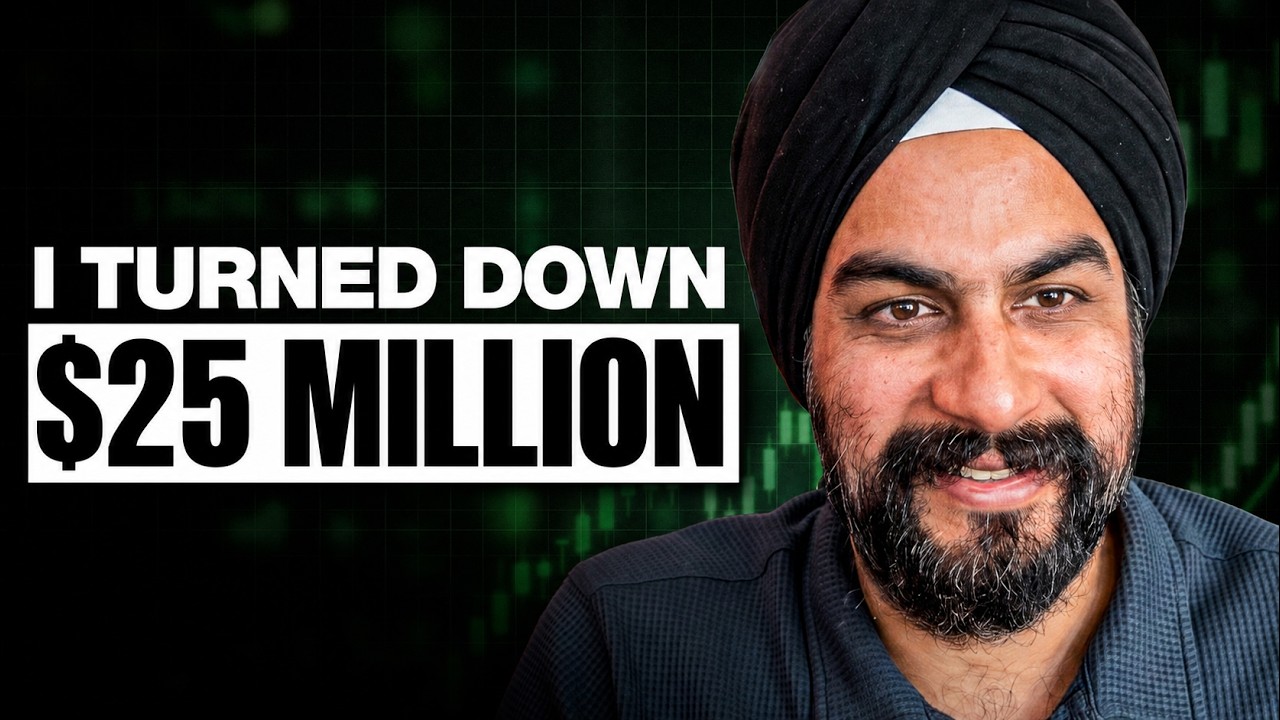
Jesse Pujji left a $500K-a-year job at Goldman Sachs at 25, pooled $33,000 with his college roommates, loaded up some Amex cards, and bootstrapped an ad agency called Ampush without raising a single dollar of outside money. Within fourteen months of cracking the Facebook ads channel, the company went from $100K in monthly revenue to $2 million — with $600K in EBITDA in a single month. He scaled it to half a billion in annual ad spend and 250 employees, turned down a $25 million acquisition at 27, sold 20% to Red Ventures in 2015, and sold the whole thing to New Mountain Capital in 2022 for somewhere between $40 million and $60 million. He says the day his first big check hit was one of the most exciting days of his life — and the next day was one of the most disappointing.
Like all Moneywise episodes, Jesse breaks down his net worth, income, portfolio, and monthly expenses and then I, your humble host, pick it all apart.
We also went deep on: why he walked away from Goldman Sachs, how $33K and an Amex card turned into half a billion in ad spend, the $25 million offer he turned down at 27, the magic number that haunted him for years, his full portfolio breakdown (50% public markets, 20% PE, 20% real estate), spending $500K a year in St. Louis, the Zone of Genius framework that changed his post-exit life, why he tells his financial advisors to mark his startup equity at zero, the Starbucks P&L game he plays with his nine-year-old, and why his kids are getting hourly jobs at 16 — non-negotiable
Below you'll find my summary of the episode along with the entire transcript.
And by the way...this podcast, the concept of it came from Hampton. Hampton is a private, highly vetted community for high net worth founders started by Sam Parr. Members range from companies doing 3-5 million in revenue all the way up to hundreds of millions. The reason we started this podcast is because there are amazing conversations about money and growing companies that typically happen only behind closed doors, and we thought it would be awesome to share all of this information. If you're a CEO, founder, or business owner, check this out. New Moneywise episodes come out weekly.
Listen to this episode on:
Now, below are the notes and the full transcript.
The Numbers
- $500K/year — Jesse's salary at Goldman Sachs when he quit at 25
- $33K each — What each co-founder put in to start Ampush, plus some Amex cards
- $100K → $2M/month — Revenue jump in 14 months after cracking the Facebook ads channel
- $600K — EBITDA in a single month once Facebook was working
- $500M — Peak annual ad spend managed by Ampush
- 250 — Employees at peak, never having raised outside money
- $25M — The acquisition offer he turned down at 27
- $3M dividend — What the three founders took instead ($1M each) — Jesse bought his San Francisco house with it
- $3M → $30M — Net revenue growth over four years of going "all in"
- 20% sold to Red Ventures (2015) — Jesse's take: ~$5M after tax
- $40–60M — Full exit range when they sold to New Mountain Capital in 2022
- ~35% — Jesse's personal stake at exit (~$17–18M from the deal)
- 50%+ public markets, 20% PE, 20% real estate — Current portfolio allocation
- 70% indexed — His public markets split (rest is stock-picking, including Meta at $80–90 and Shopify at $30–40 during COVID)
- ~$500K/year — Annual personal spending ("It's hard to spend more in St. Louis")
- $35M revenue, $10M EBITDA — Combined performance of his two breakout GatewayX ventures this year, growing 50%/year
- $63 — His first paycheck from JCPenney at 16, the moment he understood what money actually cost
From Goldman Sachs to Amex Cards
Jesse grew up in an immigrant household in St. Louis. His dad came to the U.S. at seventeen "with a dollar in his pocket" and built a small business. Jesse was running his own ventures from the jump — a snow shoveling business in middle school, a DJ business in high school, a T-shirt business in college.
After Penn (Wharton), he took a six-figure consulting job at McKinsey instead of a hedge fund gig at Citadel — his first sign that money wasn't everything. He moved to an investing group at Goldman Sachs, where at 25 he was pulling in $500K. His boss, 29, was making $2–3 million. The group head was making $20 million.
"I would rather make half of my future expected earnings and do something that I feel excited about," Jesse said. He left Goldman, pooled $33K each with his college roommates, stacked up some Amex cards, and bet on ad arbitrage.
"We looked around at what are industries where you can make a dollar. Realized digital marketing was kind of similar to Wall Street — number crunching and data. Someone pays you a $50 CPA, you buy an ad on Google for a dollar per click with a 5% conversion rate — that's a $20 cost and a $50 revenue. You can arbitrage ads."
The Facebook Arbitrage That Changed Everything
The first year was brutal. Google Ads margins were basically zero. Then they tried Facebook.
"What was barely basically zero percent margin on Google Ads, we started making like 70% margins on Facebook ads."
The numbers moved fast. In June 2010, Ampush did $100K in gross revenue, maybe $30–40K in gross profit, and was basically break-even. Fourteen months later, in one month: $2 million in revenue, $800K in gross profit, $600K in EBITDA.
"It was like minting money."
Facebook noticed. They called and said, "Who the hell are you guys? You're one of our top 100 advertisers. Come meet us." Ampush became one of Facebook's earliest most-favored-nation partners. The client list followed: Uber, Dollar Shave Club, Peloton. The business grew to half a billion a year in ad spend and 250 employees — all without raising a dime.
"Sometimes I tell people you gotta do sandbox entrepreneurship. You get in the sandbox, you play around, and you find the thing."
Turning Down $25 Million at 27
Two years in, Ampush got a $25 million acquisition offer. Jesse and his co-founders were twenty-seven-year-olds who'd never seen that kind of money.
"We weren't planning on selling, but we were like, 'Damn. This seems worth way more than we thought.'"
They shopped the deal. Nobody would give them credit for the Facebook channel they'd cracked — it was "too small." So they turned down the $25M and instead took a $3 million dividend — roughly $1 million each. Jesse bought his first house in San Francisco with it.
Then the race started. Marin Software and Rocket Fuel were billion-dollar public companies. Ampush was growing over 100% a year. Everyone said five times revenue was coming. So they went all in, putting every dollar back into the business, growing net revenue from $3 million to nearly $30 million in four years.
When they finally went to sell, ad tech had cratered — Rocket Fuel and Marin were down 99%. The $150 million check they'd been hoping for came back as $60–75 million offers. One $190 million offer, all stock, from Marin (which would later go under).
"We were crestfallen. We were depressed 'cause we, in our heads, we thought the number was way bigger."
They'd made up a magic number — a nine-figure exit — and couldn't let it go. Jesse's advice: "I don't recommend that to anyone because it just hurts."
$5 Million After Tax — and Nothing Changed
In 2015, they sold 20% to Red Ventures. Jesse walked away with roughly $5 million after tax. He'd already bought the house. He went out and bought an M5.
"The day we got it was one of the most exciting days of my life. The next day was one of the most disappointing days of my life because I thought I would get wings or superhuman strength. I thought something was gonna change about me, and then nothing changed. Everything was the same."
That year his first son was born. There was security — the rest of the business was still his, still profitable. But the emotional payoff he'd been chasing for years just wasn't there.
"I thought I would feel different, and I didn't."
The Full Exit to New Mountain Capital
Between the Red Ventures deal and the full exit, a lot changed. By 2017, Jesse was burnt out. He hired a coach (Dave Kashian), who shifted his perspective. The business went from 60 clients to 20, doubled profitability, and started investing off the balance sheet in holdco mode.
Before COVID, Jesse and his wife moved back to St. Louis. He promoted the head of the New York office to CEO, stepped back, and eventually the business sold to New Mountain Capital in 2022.
"We literally got a huge check and walked away from the business."
The exit range: $40 to $60 million. Jesse's stake was "a little more than a third" — roughly 35%, putting his personal take somewhere around $17–18 million from the deal alone, on top of years of dividends and the Red Ventures money.
Where the Money Sits Now
Jesse's approach to his balance sheet is deliberately conservative. He tells his financial advisors to mark all illiquid startup equity — including his GatewayX companies and an early investment in Figure Robotics — at zero.
"The numbers look silly when they're illiquid. That's zero until there's something that comes from it."
For liquid assets, the breakdown is roughly:
- 50%+ public markets — ~70% indexed, the rest in individual stock picks. He loaded up on Meta at $80–90/share and Shopify at $30–40 during the COVID pullback.
- ~20% private equity — LP positions in New Mountain (the firm that bought Ampush), Silver Lake, and other PE funds through his financial advisors at Matter Family Office.
- ~20% real estate — Primary residence in St. Louis, the SF house he still owns, the Deer Valley condo, plus real estate funds and individual project investments.
Spending $500K a Year (and Struggling to Spend More)
"It's probably half a million bucks a year as normal core stuff," Jesse said. That covers a mortgage (he doesn't own his houses outright), travel, public school for the kids, cars, financial advisors, accountant, food, and the Amazon bill. Big one-offs — a 40th birthday party, a basement remodel — push the number up, but not by much.
"I was asking my financial advisors once: 'So how do people spend more money than this?'"
Their answer: flying private, six houses, and staff. Jesse has none of those. They charter occasionally for a special trip, but that's it.
"The last thing I want is more work."
The biggest post-exit purchase was the condo in Deer Valley. His wife — who "generally doesn't care much about money" — told him it would make great family memories. She was right.
"I didn't understand why people buy vacation homes, and now I understand it because it becomes just like a really special place for the family."
The Zone of Genius That Changed Everything
After the exit, Jesse found himself sitting in a room in St. Louis with more money than he'd ever need and no obligation to work. He spent a year with his coach working through a framework called the Zone of Genius:
- Zone of Incompetence: "I'm a horrible cook."
- Zone of Competence: Driving, accounting — decent but not special.
- Zone of Excellence: Analysis, selling, being a CEO — good at it, drained by it.
- Zone of Genius: Coaching, teaching, relationship building, and the "negative one to one" creation stage of a business.
"From the time I was 15 until 31, money and success were the number one priorities for me, and they were far less fulfilling than I expected them to be."
That clarity led him to GatewayX, a venture studio where he could coach founders, build relationships, and stay in the creation stage without being a CEO. In four years, they've launched six businesses — two shut down, two in the middle, and two breakouts doing $35 million in revenue and $10 million in EBITDA combined, growing at 50% a year.
Raising Kids Who Never Saw the Grind
Jesse has three kids — eleven, nine, and two. The thing that keeps him up at night: they got all the fruits of his grind without watching any of it.
"They've gotten all the fruits of the grind without actually observing the grind. And that has some danger."
His approach is hands-on. The kids get a weekly allowance equal to their age on Greenlight, split into thirds: spend, save, give. He and his wife are building a "philanthropic orientation" he never had growing up in a household focused on survival.
And then there's the Starbucks game. Every time Jesse is with one of his kids at a business, he turns it into a consulting case:
"How many cups of coffee you think they sell a day? How much do they charge? Is it a high-margin product or low? How many workers? How much do they pay?"
His daughter, nine, can walk through a basic P&L. But Jesse's honest about the limits of parenting around money. The real teacher, he says, was his $63 JCPenney paycheck at 16 — eight hours during a Saturday blowout sale, feet aching, head pounding.
"That's when I was like, 'Oh my God, Dad, thanks for buying me a plane ticket for $200 to go to camp.'"
The rule: all three kids are getting hourly jobs at 16. Non-negotiable.
The Four Buckets — and Why He Almost Just Spends More
Jesse's financial advisor gave him the framework: there are only four things you can do with money in the long run. Spend it, give it to the government, give it to charity, or give it to your kids.
"When I first tell people that framework, they go, 'What do you mean? I can invest it.' I go, 'Yeah, but in the long run it's gotta go into one of those four buckets.'"
Nobody wants to give it to the government. Charity has been a struggle — "most charities unfortunately are like government. They're just one step above." Giving it to the kids felt risky for a long time. So the running joke after every financial planning meeting:
"Let's just go spend some more money because none of the other options are very good."
But Jesse's evolving on the kids question. A board member at Schnucks, the multi-generational St. Louis grocery chain, told him something that stuck: "Money doesn't ruin kids. Lack of values does."
"I'm becoming more oriented towards playing offense. My kids are bright. They're good people. What could I do to enable them to soar as high as they can?"
Camels, Not Unicorns
Jesse's next chapter is institutionalizing what he's always done: building profitable companies without venture capital. Through GatewayX, he wants to fund founders with $1–2 million — the only capital they ever take — and help them get profitable in year one.
"My dream is that I'm the Paul Graham and GatewayX is the Y Combinator of seed strapping."
The thesis: the space between venture-funded startups and "lifestyle businesses" (a term Jesse hates) is about to get much bigger, especially with AI. More founders will want a small check, a few people around the table, and profitability from day one.
"We like to say we're gonna build camels, not unicorns. Camels can work in any weather. They're not maybe as pretty, but they're much more common."
The vision came from an exercise with his coach: "If you were a billionaire, if you had all the money, none of it mattered — how would you spend your time?" Jesse's answer was density — scores of entrepreneurs physically around him, working on the latest companies.
"It gave me clarity as to how I wanted to spend my time."
Other Key Quotes
"I would rather make half of my future expected earnings and do something that I feel excited about."
"Sometimes I tell people you gotta do sandbox entrepreneurship. You get in the sandbox, you play around, and you find the thing."
"We'd made up a magic number in our head, which I don't recommend to anyone because it just hurts."
"I thought I would get wings or superhuman strength. I thought something was gonna change about me, and then nothing changed."
"I tell my financial advisors to put it on my balance sheet, and I'm like, 'Nah, that's zero until there's something that comes from it.'"
"I was asking my financial advisors once: 'So how do people spend more money than this?'"
"Money doesn't ruin kids. Lack of values does."
"My dream is that I'm the Paul Graham and GatewayX is the Y Combinator of seed strapping."
Links You Might Like
- Join Hampton Community: https://joinhampton.com
- GatewayX — Jesse's venture studio
- Jesse Pujji on X
- Growth Assistant — One of Jesse's breakout ventures
- Daniel Berk on X
- MoneyWise Podcast: Full episode archive
Full Transcript
Jesse Pujji: I actually walked away from a pretty lucrative job, uh, at Goldman Sachs.
Daniel Berk: I would love for you to introduce yourself and really tell the story about Ampush.
Jesse Pujji: Um- We pooled together thirty-three grand each and some Amex cards and, and said we're gonna bootstrap this thing. And in one month we did two million in revenue, eight hundred thousand in gross profit, and like six hundred thousand in EBITDA. So within like two years when we cracked the Facebook channel, we were-- it was like minting money. Money and success were the number one priorities for me, and they were far less fulfilling than I expected them to be.
Daniel Berk: All right, Jesse, thanks so much for joining us today on Moneywise. Quick thing before we start, my guest today made his money arbitraging ads. Buy a click for a dollar, sell it for fifty. Subscribing to this show is the same trade, except it costs you zero dollars and pays out an episode like this every week. He would tell you to take that deal, and so I'm asking you to take that deal as well. Please subscribe to Moneywise wherever you're listening. Okay, now today's guest, Jesse Pujji. At twenty-five, he was at Goldman Sachs making half a million dollars a year, and he walked away. He started the company with his college roommates, thirty-three grand each and some Amex cards. And he never raised a dime of outside money. In this episode, he tells me about the day the first life-changing wire hit his account and why the next day was one of the most disappointing days of his life. He walks me through exactly where his money sits, down to the percentages, and he tells me the number he turned down at twenty-seven that most people would have grabbed with both hands. There's also a game he makes his kids play at Starbucks. We'll get into that. I get to talk to founders just like Jesse inside of Hampton, a private network for high-growth founders who are doing twenty-five million a year on average. If that's you, you need to check it out at joinhampton.com. Now let's get into the show. I'm Daniel Burke. Here is Jesse Pujji on Moneywise. How you doing?
Jesse Pujji: I'm doing great, Daniel. How are you?
Daniel Berk: I'm doing well. Technical difficulties are always fun, but we got through it together. Uh, I would love for you to introduce yourself and really tell the story about Ampush. I'm most interested in the bootstrapped angle of Ampush. And from day one, I know you started with an Amex credit card and some co-founders. I mean, tell me the story about how all that came to be.
Jesse Pujji: Yeah, yeah. So, I mean, quick story. You know, I, I was, I was born and raised in St. Louis. I grew up in an immigrant household, and I think, you know, early on that shapes your perspectives on money. I think, you know, you kind of saw, you know, the kind... My dad was a classic, like came here when he was seventeen with a dollar in his pocket and grinded, and he was a small business owner, and so I got to work inside those businesses early. But you're, you know, really early on understood entrepreneurship and business and probably shaped my perspective on bootstrapping, which is like a business is one where you, you know, your revenues are higher than your expenses and you generate a profit. But I was a kid who, you know, I had a snow shoveling business in middle school. I had a deejaying business in high school. I had a T-shirt business in college. Um, and I spent a few years working, consulting and then a few years on Wall Street. And I actually walked away from a pretty lucrative job, uh, at Goldman Sachs, and I can talk about that decision a bit as it relates to money. But started Ampush with my college roommates and, you know, we, we really wanted to, to, to bootstrap. I think we looked around at like what are industries and markets that you can like make a dollar, you can kinda get in. Realized digital marketing was kinda similar to Wall Street.
Jesse Pujji: There was number crunching and data and, you know, learned about, okay, there's like performance marketing where someone pays you a fifty dollars CPA and then if you could buy an ad on Google for a dollar per click and it had a five percent conversion rate, that's a twenty dollar cost and a fifty dollar revenue, like you can arbitrage ads. And we were like, "Hey, we know, we know that word arbitrage. Like let's try it." Now, it was way harder than we thought. It took us a year to even get to, to kind of make any money, but we, the, we pooled together thirty-three grand each and some Amex cards and, and said we're gonna bootstrap this thing. And, you know, our real break came in the first year when we actually started running ads on Facebook and, you know, what was barely basically zero percent margin on Google Ads, we started making like seventy percent margins on Facebook ads. And, you know, our-- I actually remember this very distinctly. Our revenue and profits in June of twenty ten pre-pre-trying Facebook were a hundred thousand in gross revenue, maybe like forty thousand in, in, uh, thirty or forty thousand in gross profit and basically break even, maybe made five or ten thousand dollars. The following August, fourteen months later, we did in one month, we did two million in revenue, eight hundred thousand in gross profit, and like six hundred thousand in EBITDA. So within like two years when we cracked the Facebook channel, we were-- it was like minting money, um, and that kind of got us off to this bootstrap direction.
Daniel Berk: Do you think the Ampush success is because you were one of the earliest to do the Facebook arbitrage?
Jesse Pujji: Yeah, I mean, I think, uh, you know, I think we were super early to it, but like we had to take the tr-- we had to try it. So yeah, sometimes I tell people you gotta do sandbox entrepreneurship. You like get in the sandbox, you play around, and you find the thing, and so we found it that way. I think from there, you know, we increasingly took it more seriously, but around that time when we were, we were sort of grew the business a bunch, Facebook called us and was like, "Who the hell are you guys? You're one of our top hundred advertisers. Come meet us." And then we became one of their early most favored nation partners, and then our, you know, we were able to go get clients. They were all startups at the time, but it was like Uber, Dollar Shave Club, Peloton. And then from there, the business just ripped. It grew to about half a billion a year in ad spend, two hundred and fifty employees. Never raised any outside money. We did a couple M&A deals where we bought businesses. We were doing cash flow and distributions, which I could talk about. And then, you know, we sold a minority investment. We sold a minority interest in the business for the first, kinda first liquidity event was twenty fifteen, and then we sold the whole business around twenty twenty-two, uh, to a private equity firm called New Mountain Capital. So all in all, it was like a ten-plus year journey, um, but and I went from twenty-six years old to thirty-six, but, you know, learned a ton about entrepreneurship, growth marketing, all the things during that journey.
Daniel Berk: Wow. Uh, and walk me through year to year how that journey actually started to grow with Ampush up until the-- Well, there's two really. There's a, there's a partial acquisition and there's a, a full acquisition. Tell me how that looked year to year.
Jesse Pujji: Yeah. Yeah, let me go-- I mean, I know this is Moneywise. Let me go back one second and I, I, I was, I think it's an important thing. You know, I was working at Goldman Sachs in this like, in this investing group. And just thinking about money and, and... Well, actually, I'll even go back even further than that. Like, I- when you come out of-- I went to Penn, I went to Wharton. You know, it's, it's like one of the most lucrative job paths. Like, you, you get immediately get six-figure jobs.
Jesse Pujji: Like, I had a six-figure job at Citadel out of college. And instead, I went and I worked at McKinsey and, and, you know, it was kind of my first sign to myself that money wasn't the most important thing to me. Like, I wanted a little bit more of a wide perspective. I wanted optionality versus kind of jumping right into the, the hedge fund world. And then I ended up working in an investing group inside of Goldman. And, and I think when I was twenty-five, I made, like, half a million bucks that year. And despite that, I... And, and by the way, my boss was twenty-nine. She was making two or three million, and the head of our group was, he's probably forty something, and he was making twenty million bucks a year. So, like, you get on Wall Street, and you see how much money people make, and it's, it's crazy, and it's, it's real, right? But I sort of had this moment where, you know, I was a public markets investor. You know, to be fair, it was the middle of the financial crisis, but I was like, "Man, this job is forty percent reading, forty percent Excel, twenty percent meetings." It didn't feel dynamic enough to me. It didn't feel... I didn't feel happy, and I had this, like, really specific moment where I was like, "I would rather make half of my future expected earnings and do something that, like, I feel excited about," which was starting a business, rather than, like, stick in this corporate job for the next X amount of years, even though it's incredibly lucrative. And so for, you know, as far as money goes, that was sort of the first cer- first sign to me that it wasn't all just about money for me.
Daniel Berk: Yeah. And so, um, when you decided to sell, you sold about twenty percent originally.
Jesse Pujji: Mm-hmm.
Daniel Berk: What was the thinking behind the twenty percent stake to Red Ventures, correct?
Jesse Pujji: Yeah. Yeah. I mean, you know, we originally wanted to sell the whole business, and, you know, if I could do it all over again, I probably would have sold the whole business. And not because, again, of a financial decision, but we were just tired, you know. And, and we had-- It, it was kind of a crazy thing. Like, we had figured out the Facebook channel by twenty twelve. We were growing over a hundred percent a year. The first part of our business, we divested. So, you know, we had a lot of interesting little bites at the apple. Like I mentioned earlier, we did, we were doing profitability in our first year. So within two years of starting, we got an offer to buy the company for twenty-five million dollars. And we weren't planning on selling, but we were, like, a bunch of twenty-seven-year-olds, and we were like, "Damn."
Daniel Berk: Sure.
Jesse Pujji: "This seems worth way more than we thought."
Daniel Berk: Yep.
Jesse Pujji: And we actually went out and considered it, and nobody was giving us any credit for this, like, Facebook thing that we had figured out. They were like, "Yeah, it's too small." So we were like, "All right, we don't wanna sell the business, but let's do a three million dollar dividend. Let-- Basically a million each to each partner." And that's-
Daniel Berk: Yeah ...
Jesse Pujji: how I bought my first house in San Francisco, which I still own.
Daniel Berk: Wow.
Jesse Pujji: So it was good to get, like, a little bite after having that run and deciding not to sell. And then at that time, you m- you may not remember this, but Marin Software, Rocket Fuel were billion-dollar market cap publicly traded companies. And we were growing over a hundred percent a year running ads on Facebook as kind of a tech-enabled service. And everyone was like, "Man, if you guys grow this thing, keep growing like that, like, you're gonna sell for five times revenue." And so we did that, and we went hard, and it was bootstrapped. We put all the money back in the business during that period, and we went from three million in net revenue to close to thirty million in net revenue over four years, three or four years.
Jesse Pujji: And so then we were like, "All right." We, like, ran really hard, and we were like, "We gotta sell this thing." And we were hoping for a hundred and fifty million dollar check. But during that time, Rocket Fuel and Marin had, had, their market caps had gone down ninety-nine percent. Like, ad tech was in a, a total... And so we went out, and we got sixty, seventy, seventy-five million dollar offers. We got, we got one ninety million dollar offer, all stock, which I'm glad we didn't take, from Marin. Marin ended up kinda going, going out of business. But we, but you know, we had a few offers, and, but we were, like, crestfallen. Like, we were depressed 'cause we, in our heads, we thought the number was way bigger. And so we ended up doing this deal with Red Ventures, and, you know, I think p- partially because we were like, "You know what? We gotta take some chips off the table. That's important." But it also gave us a chance to keep growing the business to kinda hit the magic. We'd made up a magic number in our head, which I don't recommend to anyone because it's, it just hurts. But, but we had made up, we were like, "We gotta have a nine-figure exit," and, like, we weren't, uh, we weren't quite there. We were like, "All right, but we'll sell twenty percent, then we'll keep growing it, and then we'll get the nine-figure exit," which didn't end up happening. But that kinda gives you the... You know, we, we, we were smart enough, I think, to take some chips off the table. But I think if we'd, if I could do it all over again, I would've just sold the whole business, mostly 'cause we were just tired. We wanted to be done with it.
Daniel Berk: At what point did you start personally to feel like you have a life-changing amount of money access for you personally?
Jesse Pujji: Yeah, I mean, look, I, I think that first deal with Red Ventures was life-changing for us. You know, we-- I got about five million bucks after tax, and I'd already bought the house with the previous distribution I had. I was living in SF. I bought myself an M5. I always tell people the day we got it was one of the most exciting days of my life. The next day was one of the most disappointing days of my life because I thought I would get wings or superhuman strength. Like, I thought something was gonna change about me, and then nothing changed. Everything was the same. That was the same year my first son, my son was born, my first kid. So there was definitely, like, a feeling of, of like, "Okay, we're good, you know, this is gonna be good," 'cause we still had the rest of the business too, and then the business was profitable, and so it was, like, a nice mixture. But it was also, like, disappointing 'cause I thought it was, I thought it was gonna be way more of a, um... I don't know. I thought I would feel different, and I didn't.
Daniel Berk: Five million dollars after tax in his account. And Jesse's review was that it was the best day of his life, followed by one of the most disappointing. He thought he'd wake up with wings. He woke up the same guy. Quick context on what happened here. That was a minority sale, selling a piece of your company while you keep running it. The business stays yours, but the founders finally get the real cash off the table after years of putting every dollar back in. This is the type of stuff I hear inside of Hampton constantly. Not how do I get the number, but what do I actually do now that I have money that I haven't really had before? Almost nobody talks about the morning after. Jesse just did. Check out joinhampton.com if you wanna be in rooms just like this one to talk about those questions. Yeah. Walk me through when someone offers you twenty-five million dollars, how did that feel? Personally, you've never seen that amount of money in your life at that point. Was that difficult to turn down?
Jesse Pujji: Um, that one was not that difficult 'cause I think we were only two years into the journey. You know, we f- we were early to Facebook.
Jesse Pujji: It was, it was an exciting moment of validation, I think, for leaving Wall Street and choosing to do entrepreneurship. So it was that was definitely the case. We didn't love the personalities at that time, like the people who were offering us that. So I think we were, we were all just... We were still so new that we, we, we weren't thinking that much about it. It was harder to not do a full deal in 2015 when we, we ended up doing the Red Ventures deal 'cause we had some, some real full, full offers we could have taken and kind of been done with it. And then fast-forward to 2023, that's when the full acquisition took place. It was really '22. There were some dynamics of the... Yeah, I mean, I mean, a bunch changed between '15 and, and '22. I mean, by 2017, I was, like, burnt out and I was like, "I'm not having fun. Why am I still running this business? I want out." And a bunch of mentors were like, "You should go start working with a coach." So I hired this amazing coach, Dave Kashian, and it was very life-changing for me. It really, like, opened me up and shifted my perspective. So that was one thing. We had really changed the business model with Red Ventures, so we, we actually went from 60 clients to 20 clients, but profitability doubled, so we went deeper with fewer customers and it, it worked. It was, it was a little... It was like redoing the business again , which was tiring, but it, but it worked from a profitability standpoint. We acquired a business. We actually started investing off the balance sheet. We went into, like, holdco mode. We're like, "We're gonna make this thing a holdco. It generates cash," whatever. And then, you know, right before COVID, my wife and I wanted to move back to St. Louis, and as I kind of got more clarity on what I wanted to do is, like, I didn't want to keep running that business. And so I actually, we promoted the head of our New York office, John, to be the CEO of the business. Me and the co-founder, other co-founder stepped back, and then he kind of took the business forward and, and, you know, he... There was a lot of volatility with COVID. There was, like, the COVID bump, and then there was the COVID down, and then he kind of did a great job of growing the business. And then eventually we, you know, then we sold it. But it was, it was a cool experience selling it because we handed the keys and, uh, we didn't go with the deal. We had no... We have a little bit of a non-compete, but we didn't have any real, uh... Like, we didn't have to do anything. We literally got a huge check and walked away from the business.
Daniel Berk: Yeah. And I've seen the public figures are all mid eight figures, but you've never, you've never said the number to my knowledge. Is there something stopping you from saying that number?
Jesse Pujji: The acquirer never wanted us to say it, I guess 'cause they wanted-
Daniel Berk: Yeah. Can you give a range?
Jesse Pujji: It was, like, 40 to 60. I don't know.
Daniel Berk: 40 to 60th?
Jesse Pujji: Yeah. It was like... Yeah.
Daniel Berk: And then what was your personal stake in the company at that point?
Jesse Pujji: Probably a little bit more than a third. 35-plus percent.
Daniel Berk: Okay. So let's say 50, a third of 50 would be, what is that? Just under, like, 18 million, give or take-
Jesse Pujji: Something like that ... 17. Yeah.
Daniel Berk: So then where does that-
Jesse Pujji: My son plays this game with me.
Daniel Berk: Yeah, I know. Where does that bring your, your total net worth then today?
Jesse Pujji: I'd rather not share total. I mean, there's a lot of dividends we took out along the way, plus the original. Like, so we had... But, but we're so, you know, we're good. We, we, we're good on money.
Daniel Berk: Yeah. I'm fine with ranges. Can you give a range for the-
Jesse Pujji: Yeah ... net worth as well? Eh, it's hard to... I mean, now I've got, I've got Growth Assistant and a bunch of other businesses. I, I don't know what it would be. I don't actually look at the number that closely.
Daniel Berk: Yeah, that's fine.
Daniel Berk: What does, like, what does someone in your shoes do then, still in an operator seat on the one hand, but also now in kind of high-growth venture mode with some different investments through your, your own agencies?
Jesse Pujji: Yeah. You know, I, I think one of the realizations I had when we did the Red Ventures deal and got the first sort of life-changing number was, I, you know, from the time I was 15, I think, until 31 or 30, like, m- money and success were the number one priorities for me, and they were far less fulfilling than I expected them to be. And then once I knew that, then I was like, "Oh," like, "well, so what matters to me?" Like, and that was actually, it probably took me half a decade to really put my finger on what mattered to me. And so, you know, to, to paint the picture, we were, we'd moved back to St. Louis. It was the middle of COVID. You know, I, I was probably 36, 37. The company had sold. I didn't have to go with it. So I'm, like, sitting in a r- room by myself. Now I have a ton of money that more than I'll ever need and, you know, I don't have to work anymore. And I'm like, "Well, now what do I do with my life?" And I was working with my coach, and I was like, "Let's go." Like, I wanna figure out... I, I didn't feel like retiring at all. And, and, and I also didn't wanna, like, do something just for the sake of making more money. So I was like, "I gotta figure out what it is that really drives me and motivates me," and, and, you know, there's a lo- Like, I had been very fear motivated, so I was like, "I wanna be motivated by creativity and the things that will energize me endlessly." So there's this exercise around what's called zone of genius, and so the framework is, like, you know, zone of incompetence, zone of competence, zone of excellence, and zone of genius. And somewhat obvious, zone of incompetence, like I'm, I'm a horrible cook. Like, that's a really obvious one to stay away from. Zone of competence is, like, driving. I'm a reasonably good driver. Um, I'd probably be a decent accountant. Zone of excellence is where most people get stuck. It's things you're really good at, but they, they don't bring you energy, so they deplete your energy over time. So for me, that might be, like, analysis or selling or even being the CEO of a company. Like that, I'm actually pretty good at it, but, like, it, it depletes me over time. And zone of genius are the things that you're really good at and they energize you, which means, like, you can have an endless amount of energy. And so I kind of spent the better part of a year with my coach, like, "What's my why? What matters to me?" And like, and then, "What's gonna keep me energized endlessly?" And where I landed was, like, I love helping other people learn and grow. Like, I love learning and growing myself, and I he- love, like, stretching people, especially entrepreneurs, 'cause those are kind of my people. And the things that ener- that are my zones of genius, like, I love coaching and teaching, so anytime I'm, like, imparting knowledge or learning or it doesn't even have to be knowledge. It could be an experiential learning. Like, I love doing that. I love relationship building. Like, I just... You know, you and I know each other. Like, say, like, one plus one gets up to equal to three, and it's, like, one of the coolest parts of life. It's part of the journey. And then from, like, a venture standpoint, as I reflected, you know, by the time I, I was done with Ampush 10 years in, like- I was not having fun. The only things that were fun for me were the net new things, were the experimentation things. Like, and I realized I love the, you know, negative one-to-one parts of the journey. That's kind of like the, you spot an opportunity. Is it real? Ooh, like, let's, let's try it. Oh my God, it worked. Like, let's get the domain name. Let's get the first, you know, set of employees or clients. Okay, now we've got a business. And I love the creativity associated with that.
Jesse Pujji: And so that was kind of the clarity I got after, after the exit.
Daniel Berk: All right, Moneywise listeners, quick reality check. It's that time of year when you catch yourself thinking, "Why didn't I start earlier?" We knew summer was coming. It always does. And if you keep doing what you usually do, you'll blink, and it'll be New Year's again. Same story, same body, same excuses. That's why today's sponsor is Daily Body Coach. Daily Body Coach is a premium online coaching service for ambitious entrepreneurs and executives who want their body to perform at the same level as their business. Training is built around your schedule. Nutrition is built around your specific needs. There are clear targets and clear metrics. And most importantly, there's no guesswork, just science and a multidisciplinary team covering training, nutrition, and the psychology behind behavior change. Daily Body Coach is run by Anthony Monica, who's a Hampton member himself. And in fact, a bunch of other Hampton members are using it and have been showing great results. Yes, you'll look better this summer. Leaner, stronger, sharper. But the real win is that you'll stop carrying a body that's taxing your energy, confidence, and longevity. If you're serious about fat loss, muscle gain, and building a body that supports your standards, don't think about it, don't bookmark it, don't push it to Monday. Click the link in the description and I'll hook you up with Anthony directly. Check out dailybodycoach.com/moneywise. That's dailybodycoach.com/moneywise.
Jesse Pujji: And I was like, "Well, what should I do then?" And, and, you know, looked around at a few different things. Like, I don't wanna just be an investor. I don't wanna be a CEO now. And like k- basically, that's when I started GatewayX, which is a venture studio. And if you think about the venture studio, you kind of get to do all those things. You get to coach and mentor some CEOs, you get to be involved in the creation process, and you launch it. And so in that, you know, in the last four years, we've, we've launched six businesses. Two we've shut down, two are still kind of in the middle, and then two have really broken out. And those two this year will do thirty-five million in revenue and ten million EBITDA combined. They're growing at fifty percent a year. And so, and, and you know, I'm not the CEO of either of those, but we've been able to kind of get those off the ground. And now we're, we're, you know, we're trying to figure out how to take it to the next level with what's going on with AI and some other things. So, but I would say the, the thing that drives me, my energy is no longer I need to be a success and make money, which is really what drove me for a really long time. It's, it's like, man, this is fun. Like, I'm enjoying this. And like, even if it doesn't make any money, I'll have a lot of fun doing it.
Daniel Berk: When you finally did arrive to the point where you could kind of look in hindsight and retroactively decide like, "What do I want? What gives me energy?" Is the money that you got from those early ventures something that actually brought happiness, or was it like a little bit disappointing?
Jesse Pujji: You know, it's, it's such a good question. And, and to be clear, like I would not say I'm like post money scarcity. Like a, a more... I would say like, you know, out of eight days from age fifteen to thirty-one or nine days out of ten, I was like, "Ah, I got..." You know? And now it's probably the opposite. Like I have one day out of ten, I'm still like, "Oh, maybe wait, I should be making more," or... So if I'm being honest, it's not like it just disappears completely, but it's, it's far less of a thing. I, you know, it's, it's, it's a question I don't know the answer to. I've done a ton of like spiritual work, meditation around letting go of scarcity and that. But also, like to your point, I have money, so it's like, it's a...
Jesse Pujji: Sometimes I'm like, am I really? Like, you know, my coach one time was like, "What if you lost all of it? Would you still be okay?" And I was like, "Oh, no. That, that sounds scary to me." So, you know, I, uh, I think it would be disingenuous for me to say that not like, that it hasn't had a big impact on my sense of security and stability, and it's allowed me to go pursue the passion type stuff that I'm doing.
Daniel Berk: Yeah. What is, uh, what's like one fun example of something you've bought that you wouldn't have been able to buy before the acquisition?
Jesse Pujji: I mean, I think the thing that's been... I think the top thing we've done is we bought like a s- a condo in, in Deer Valley. And I think I could have, but I wouldn't have bought it prior to the full acquisition. And mostly 'cause like, and you know, it's my wife generally doesn't care much about money, but she's like, "Man, we're gonna make so many fun memories with the kids there." And we really have. I mean, now we're, we're out there several weeks a year, and the kids, it's like, you know, and, and it really... I didn't understand why people buy vacation homes, and now I understand it because it, it becomes just like a really special place for the family.
Daniel Berk: It's yours.
Jesse Pujji: Yeah.
Daniel Berk: Is that, uh, where, you know, the money sits now? Is it kind of spread across real estate and other different cash public equities, or?
Jesse Pujji: Yeah. My general allocation, there's... So if I think of my total net worth, like there's a bunch of illiquid, the, the stocks in these companies I've started that I own obviously, right? I don't even count it. Like I tell my f- my financial advisors first, like, put it on my balance sheet, and I'm like, "Nah, nah, dude, I don't, like, that's zero until, until there's something that comes from it." And they're like, "That's too conservative, Jesse." But I'm like, "Eh, just..." 'Cause you put sil- the numbers look silly when they're illiquid, you know. Um, or like I was an early investor in Figure Robot, and like, again, if you look at that on the balance sheet, it looks absurd, right? And it's like, well, let's, let's worry about it. So, so there's a bunch of that kind of stuff. But in terms of my like liquid assets, I, I do roughly f- let's call it fifty plus percent in the public markets, of which more than half, more than half is index. I'd say seventy percent index, and I do some stock picking. Most I'm, I'm decent at it. Stuff that I'm like, like especially when there was the, this COVID pullback, like Meta went down to eighty or ninety bucks a share, and I loaded up on a bunch of it. And now it's like six, it's like six hundred bucks a share. Same with Shopify was down to thirty or forty bucks. So things where I'm like, I kinda understand this. And then I do probably about twenty percent in private equity, including I'm in a couple PE funds. So New Mountain, who bought Ambush, I put some money back into their funds, and it's done really well. Silver Lake. So I'm an LP in a few big well-known private equity funds. And then-
Daniel Berk: And so when you say LP, is that through a direct access, or is it a special purpose vehicle, or how does that...?
Jesse Pujji: Through my financial advisors. So, I work with this firm called Matter Family Office, who I highly recommend. I'd be happy to talk about them and how, how they've been helpful. But they... And then the last twenty percent is real estate stuff. Uh, mostly primary residence-
Daniel Berk: Okay. And those are personal homes?
Jesse Pujji: No. That, that includes, like, we still have our place in SF. We s- we have this place in Deer Valley, but then also real estate funds and other random... It's, it's mostly funds or it's, like, individual project based stuff that I've invested in.
Daniel Berk: Yeah. And what's your personal spending look like? You can share monthly or annually. I mean, however you kind of track that.
Jesse Pujji: It ebbs and flows a lot, and I've, like, experimented with a lot of it. I don't know, it's probably half a million bucks a year as, as, like, normal core stuff.
Jesse Pujji: And then if you do something special, like I had a big fortieth birthday party, or we, like, redid our basement, then the number goes up a little bit. But then, you know, there's nothing that we want for that much, I'd say beyond, beyond that. Like, we have a nice house. We live in St. Louis. It's kind of hard to spend money beyond a certain level. Like, I was asking my financial advisors once. I was like, I was like, "So how do people spend more money than this?" Yeah. You know? Like-
Daniel Berk: Flying private is the answer I hear.
Jesse Pujji: And the answer was like, you know, flying private and if you, you know, you actually for your net worth and income, Jesse, you're conservative on the number of homes you have. Like, they, they told me that most people that have whatever, like, they're, they're, uh, they're, they're owning like six homes. And they end up, like, having huge carrying costs and all that stuff, and I was like, "Yeah, that doesn't... That sounds like work to me. I'm not interested in that."
Daniel Berk: To me, that's like, it's not as illiquid as private equity, but man, with selling a house, uh, I don't know. That always sounds scary.
Jesse Pujji: It just sounds like a lot of work, dude. It does. Like, and I... The last thing I want is more work. And so I don't know. We, we've, like, it, it really is hard to spend more. I think, I think staff is the other one. So private, private jets, lots of homes, and staff. We don't have any of those things. We charter every now and again, but just, like, for a fun occasion or something like that, we'll do it as a splurge. But, but I, I just... There's nothing beyond that that I think you can actually spend that much money on.
Daniel Berk: Yeah. I've, uh, I've heard a number of times that, you know, anyone under the hundreds of millions of net worth who flies private, it, it's the fastest way to lose all your money. Uh, it's just extremely expensive, but that makes sense. So we're looking at like, I don't know, what is that? Forty, forty-five thousand a month, give or take, and that's probably across mortgage. Or do you own your houses outright or?
Jesse Pujji: No, we have a mortgage. Yeah. I mean, mortgage, travel. Kids are in public school, so that's not a big one. Cars, finance, like, you know, finan- financial advisors, an accountant, like just, uh, some of that. What else? Food. Shop- We're not big shopper. I mean, you know, it all adds up. Amazon bill, whatever. But like, our primary residence is probably all in... I mean, we have a pretty good interest rate, but it's probably ten or ten, twelve grand a y- a month, not including if we're gonna add a pool or whatever to it.
Daniel Berk: Right. Right. I like that a lot. Um, and you have kids, right? You're a dad.
Jesse Pujji: Yeah. Eleven, nine, and two.
Daniel Berk: How does some of this story... You said, how, how old are they?
Jesse Pujji: Eleven, nine, and two.
Daniel Berk: Eleven, nine, and two. How does being an entrepreneur and, and really having basically a family office, investing in different companies, starting different companies, how does that affect your life as a dad?
Jesse Pujji: Yeah. I mean, I, I think one of the reasons I probably am doing this the way I'm doing it now is 'cause I want the flexibility to be spending more time, and I'm not sure if you could be the, a startup founder CEO and still have the time for your family. And so I'm pretty regimented about my schedule. Like, two nights a week, Tuesday, Thursdays, like, I don't see my kids before bedtime usually 'cause I'm gonna either work late or take a dinner. And then Monday, Wednesday, Friday, like, I do bedtime. That's been the case since my son was born eleven years ago. Friday nights and Saturdays, I'm usually all family mode. And then Sunday afternoons, I'll work a little bit and maybe work out and get some just some personal time. So I have a pretty, like... The only way I've been able to do it is have like a pretty regimented schedule. And then I think we travel, I don't know, we travel probably six weeks a year, maybe more than that.
Jesse Pujji: So w- that's the other place I probably indulge more than I would otherwise of just like, we'll go on vacations and that'll be all. Like, I don't... I'm known to turn off, like, I delete my Slack and email. Like, I like give the team my hotel phone number. I'm like, "This is where I'll be. If you need me, call me," and they never call. Um, so that's the other place where I, we probably, like, as a family, we, we bond and hang out a lot.
Daniel Berk: How do you think about some of this building and even when you think of legacy, leaving some to your family or not leaving any to your family, what is that?
Jesse Pujji: Yeah. That's such a good question, man. I listened to this podcast a little bit on it 'cause it's helpful to get the perspective from like Dr. Becky and, and that other person. You know, I, I'll, I'll, I'll tell you a few different... I'll jump around to a few different things that I, that I think are have been helpful for us. You know, one is like, it is, I think one of the hardest things for me is like we... my kids didn't see me grind, and I still work fifty, fifty, sixty hours a week. So I still work reasonably, you know, not, it's, I'm not working twenty hours a week. So they see me working and, you know, I'm not always home or whatever, but they didn't really see me grind, and so they've gotten all the fruits of the grind without actually observing the grind. And like that has some danger just in their heads of shaping how things might play out and, and what they might be. And then, so that's just always on my mind. Like, I kinda wish they had seen the grind. I think my thing for, for, like, getting the kids, first of all, to understand money, like we do the allowance thing of their, their age every week. They have like, we do it on Gree- Greenlight now. The Greenlight app has been amazing. I think Dr. Becky said it is like we make, they have to make trade-offs. Like, they don't just have an unlimited spigot of money where they're going, "Oh, if I buy this, then I can't buy this." And like, they're young, they're old enough and young enough to kind of start that thought process and understand how it matters. We do the one-third goes into spending, one-third into savings, one-third into giving. So like would like to create more of a philan- you know, philanthropic orientation. As an immigrant son You know, the focus was making money. There wasn't actually any of this philanthropy or giving. It was like, "Dude, we're trying to survive here." And so, like, that's been in my ethos. So now I'm like, "Okay, that's not their ethos. Like, we gotta give them a different ethos." And so I think just making them money savvy has been, like, teaching them about investing. We'll talk, like... I literally, this is kind of nerdy, but, like, every time we interact with a business and I'm with one of my kids, I'll be like, "Let's put the P&L together of this." Like, we just ate at Starbucks. Like, "How many, how many cups do you think?" Like, it's like a consulting business case. I'm like, "How many cups of coffee you think they sell a day?" And then if they give me a weird answer, which they're pretty smart, but if they, if they're like, "I think they sell 100 a day," I'll be like, "Oh, really? How many do you think they sell in an hour? Like, how many people were just in there?" And then they're like, "Oh, no. Okay. Okay, yeah, they probably sell 1,000 a day." Right? And I'm like, "Okay, well, how much do they charge for that?" Like, I was asking this to my daughter the other day. "Okay, six, seven bucks. Okay. Do you think they... It's a high margin product or lo-" Like, they know what that means. They're like, "I think it's high margin. It's coffee." And then how many workers, and how much do they pay in real, like... And they, they, like, they start to develop this perspective on business, um, that I think is valuable. And then the last thing I'll say is, like, I don't think you can actually teach anybody the value of money as a parent.
Jesse Pujji: I don't think I knew... I grew up middle class, but I don't think I knew the value of money. I'll tell you, you wanna learn the value of money? I was 16 years old. I got my first job at JCPenney in the men's sportswear section, and I worked eight hours during a Saturday blowout sale. And I... My feet were hurting. My head, I had a headache. I was standing on my feet all day, and then I got my check, and it was, like, $63 after tax.
Daniel Berk: Nice.
Jesse Pujji: And that's when I was like, "Oh my God, Dad, thanks for buying me a plane ticket for $200 to go to camp. Oh, shoot, Dad, thanks for dinner the other ni-" Like, and I just don't, I don't think no matter what you do to your kids, un- unless... Like, our big thing is they are definitely gonna get hourly jobs when they're 16. Also, nothing made me wanna be an entrepreneur more than that. My... I, I started a, my first business in college after I worked at the gym swiping. I thought it would be a great... It was in the basement, and there were... You had to take someone's card and swipe it to give them a towel. And I'm like, "Oh, who's gonna come to the basement to get a towel? I'm gonna do my homework all day." It was my work study job in college. Turns out, lots of people come to the basement to get a towel. So all I did was swipe for to- And I was like, "Dude, this is horrible." Like, it was $12 an hour. And so I think, I think the best way you can do... My, this is my opinion, is, like, teaching kids is actually making them work and then understanding how work translates into money, and then from there they'll go forward. And then, so that's, that's that. And then on the giving side, man, you know, again, it's a conversation I'm on the fin- my financial advisor, and it's, it's the most... Well, it, you probably have heard this, but financial advisors go, "There's four things you can do with your money in the long run. You can spend it, you can give it to the government, you can give it to charity, or you can give it to your kids or family." And, and, like, when I first tell people that framework, they go, "What do you mean? I can invest it." I go, "Yeah, but in the long run it's gotta go into one of those four buckets. It's just, that's the only four places it can go." So nobody really wants to give money to the government, you know? I mean, I pay my taxes and stuff, but, like, that's not my goal.
Daniel Berk: Right.
Jesse Pujji: Charities, I've struggled with charity, to be honest. I mean, I, I made a rule that if anybody asks me, I'll just give them a few thousand dollars, 'cause I'm like, I've gi- been given a lot and I wanna give, but-
Daniel Berk: Sure.
Jesse Pujji: ... you either really have to dig in and understand what they're doing, and, and most charities unfortunately are like government. I mean, they're just a one step above government. This is the un- unfortunate reality.
Daniel Berk: You're right.
Jesse Pujji: Yeah. And maybe at one, at some point we're gonna start incubating charities out of the, the GatewayX platform 'cause we think we can... But anyway. And then you can give it to your kids, but, like, up until recently I've been like, "Man, I don't know if I wanna do that." Like, it doesn't seem like a, you know, a way to set them up for success. And then every time we leave these meetings with my wife, I'm like, "Let's just go spend some more money because, because none of the other options are very good." But for the kids, you know, I think... I love the book Die With Zero. Have you read that book?
Daniel Berk: It's a good one. Yeah. That's a great book.
Jesse Pujji: So I think, I think there's some way to support them while we're still alive to have them, if they're aligned to kind of like the, you know, the goals of growing themselves, being better persons, adding value into the world, support them in the ways they need to be supported. I don't... I've still, I'm still on the fence of whether or not to leave any money or create some kind of a family office thing.
Daniel Berk: Yeah.
Daniel Berk: And I mean, like, you know, u- unless happen chance you l- die before you're old, you have a long time before that really matters, right? It's, uh-
Jesse Pujji: In theory, yeah ... your kids are young, and I think there could be, there could be- I- ... a number of different unique ways even that exist that we are not even aware of right now in 30, 40 years from now. Yeah, I know. I'm, I'm becoming more oriented towards, like, rather than playing defense around it, maybe play offense around it. Like, my kids are bright. They're good people. Like, what would... If they could actually soar as high as they could, what, what, what could I do to enable that? I was, I'm on the board of a, a family-owned grocery store here in town called Schnucks. It's multi-billion dollar revenue business owned by the family still. Um, and they're almost, I think they're on the fourth genera- third or fourth generation. So if they, like, really stood the test of time. And one of the brothers, I was talking to him about these kinds of questions, and he was like, "You know, money doesn't ruin kids. Lack of values does." And so they've done a really nice job of, like, they pass down values around service, hard work, other things. And so that's something that's really on my mind, especially now my kids are getting to that age where it's like, let's talk more about what we stand for, what are our values. And if we do that right, then the money shouldn't, one way or another, shouldn't affect them too much.
Daniel Berk: That's very cool. I want to bring the plane in for a landing and ask what you, Jesse, want to be remembered for after all is said and done. Some of the companies you've built, the acquisitions, being a dad, a husband, uh, what do you want to be remembered for?
Jesse Pujji: That's a great question. I'm somewhat new in my relationship to service, but I think, I ultimately believe that, like, serving others is the only way to, like, serve the universe and serve God and serve... Because everybody, you know, th- that's... And so I think being someone who served others and helped others be the best versions of themselves, and that, you, that could be my wife, that could be my kids. Like, so my funeral's like, "Man, this guy, like, my game is better because of him," or, "I am a better person," or, "I have learned something because he existed." I think that's probably the best gift I can give to anybody I know and, and what I'd wanna be remembered for.
Daniel Berk: Yeah. Jesse, what are you up to now?
Jesse Pujji: Yeah, so, you know, as I mentioned, we've been incubating companies the last several years, and I had this, you know, as it relates to money, a powerful session with my coach where he said, "Are, you know, are you a 10 out of 10 in your life, Jesse?" And I'm like, "I'm an eight out of 10. I'm loving it." He's like, "Well, what would be a 10 out of 10?" And, and, you know, then he was like, "Well, if you were a billionaire, if you had all the money, none, none of it mattered, how would you just... How would you spend your time? Not what would you buy, but how would you actually spend your time?" And I think that's one area of money we could talk about more is actually a lot of times my financial advisors are like, "Well, how do you wanna spend your time? Like, get a better office. Do things that are just gonna make you happy." And so I, my answer to the question was, like, I'd love to have more density of entrepreneurs around me, like scores of entrepreneurs physically around me, working on the latest companies, and basically doing what I've been doing at more scale and more volume and density. And so, you know, uh, I can't share too much just now, but that's what we're doing. So now we're looking to attract lots of entrepreneurs, funding them. You know, we almost wanna create like a... One of the big things that, that I, I think is missing in the world is a, is funding for founders who want to seed strap.
Jesse Pujji: So if you think about the narrative today, there's two narratives, and, and, you know, Hampton knows a lot about this. It's like, oh, I can either, uh, raise venture money, and I have to raise round after round after round, and I don't know, 1% become unicorns and, you know, really well, but the rest of them are like, "I got too much money in my cap table. I'm, I'm stuck. I'm a zombie." Or you can have this lifestyle business, which is totally used as a pejorative, and someone, like, puts their nose down at you and goes, "Oh, lifestyle business." But again, Hampton more than anyone is like, there's so many founders who are building ambitious, big companies, but they're doing it profitably, and they don't wanna get into the venture game, and that's what I've done my whole career. And so what we wanna do is we actually kinda wanna institutionalize that. So we're, we're... We have, you know, we wanna put $1 to $2 million in the company. That's the only round of capital you ever take, and we help you get profitable. It's almost like a, you know... My dream is that I'm the Paul Graham and Gateway X is the Y Combinator of seed strapping. Um, and we like to say we, we're gonna build camels, not unicorns, so camels can work in any weather. They're not, maybe not as pretty, but they're more, much more common. And so I think with AI, by the way, that white space in between venture funded and lifestyle is gonna become much, much bigger. So we think there are gonna be a lot more companies who go, "Yeah, I, I need a million or two to kinda get going. I want a few people around the table, but then get profitable that first year, and then grow profitably, and, and kinda control your own destiny." So that's now how we're spending our time, and, and it w- it came from an exercise around assuming I had an unlimited amount of money because it gave me clarity as to how I wanted to spend my time and maybe how I wanted to change what I've been up to, which I've been loving what I've been up to, but, but I was like, "Oh, I can make it even better this way."
Daniel Berk: Very cool. That's awesome. Well, Jesse, this has been a great episode. I really appreciate you coming on Money Wise, uh, sharing some of your thoughts. I love your values. I think-
Jesse Pujji: Thanks, man.
Daniel Berk: ... working in service of other people, I mean, there's, there's really nothing more serendipitous, I think, and, you know, just giving generosity. What goes around comes around. I think you're making the world a better place. I appreciate that about you.
Jesse Pujji: Appreciate it, man.
Daniel Berk: Here's Jesse's whole situation. He counts every liquid asset at zero. His advisors think he's crazy. 70% of his public portfolio is indexed, and he spends about 500K a year. His kids are in public school, and all three of them are getting hourly jobs at 16, non-negotiable. From 15 to 31, he says money was the only thing nine times out of 10. Now, it's 1 out of 10. It took getting the money to find that out. People in Hampton always talk about what to do with kids and how much money to leave them if you leave them any at all. Hampton has conversations just like the one we just had on Money Wise, but all the time. Hampton's a private network for founders and CEOs doing on average 25 million in revenue. If you're doing 3 million or more or have exited for 10 million or more, you need to go check it out at joinhampton.com. And that's Money Wise. I'm Daniel Burke. See you next week.

Personally, I find being the CEO of a startup to be downright exhilarating. But, as I'm sure you well know, it can also be a bit lonely and stressful at times, too.
Because, let's be honest, if you're the kind of person with the guts to actually launch and run a startup, then you can bet everyone will always be asking you a thousand questions, expecting you to have all the right answers -- all the time.
And that's okay! Navigating this kind of pressure is the job.
But what about all the difficult questions that you have as you reach each new level of growth and success? For tax questions, you have an accountant. For legal, your attorney. And for tech. your dev team.
This is where Hampton comes in.
Hampton's a private and highly vetted network for high-growth founders and CEOs.