
Shane Cultra: Worth $10M at 57 With No Exit, and Why He Won't Trade His Time for More Zeros
Domain Shane is 57, worth about $10M without ever having a liquidity event, and just ran 100 miles. He breaks down the 10 Bitcoin he sold, the family-nursery stake he can't sell, his $300K domain income and the paycheck deal with his wife.
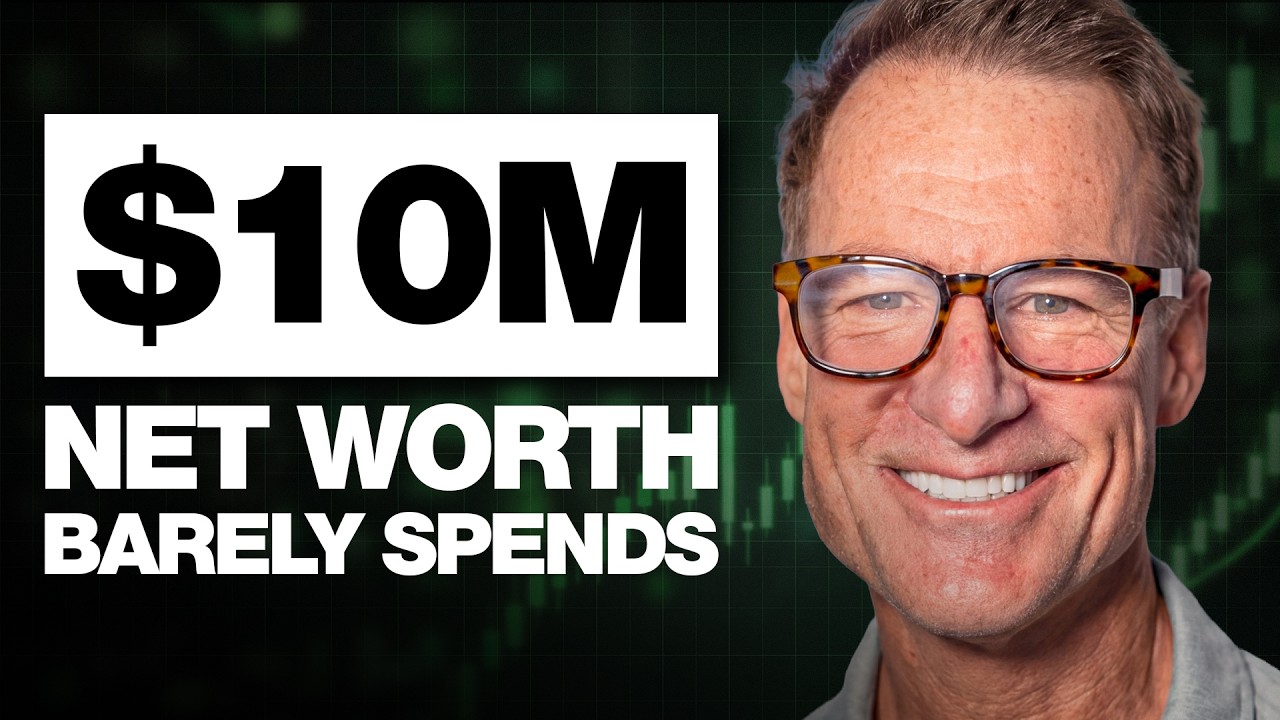
Shane Cultra, known online as Domain Shane, is 57, has lived in the same house for 23 years, buys a car every decade and just finished a 100-mile race. He's worth about $10 million and never had a liquidity event: he went from the trading floor to 30 years at his family's plant nursery, and the year he left trading his old group each made $1 million while he made $18,000. Today he has no W-2 and no pension, brings in about $300K a year from domain names, and still hands his wife the same paycheck he drew at the nursery.
Like all Moneywise episodes, Shane breaks down his net worth, income, portfolio, and monthly expenses and then I, your humble host, pick it all apart.
We also went deep on: selling all 10 of his Bitcoin for AI stocks, why a third of a family business can be the most illiquid asset there is, Illinois estate tax and his trust, the paycheck deal with his wife, running 100 miles seven minutes at a time, raising a kid by example, and why he'd rather ask "do you love where you're at?" than "any regrets?"
Below you'll find my summary of the episode along with the entire transcript.
And by the way...this podcast, the concept of it came from Hampton. Hampton is a private, highly vetted community for high net worth founders started by Sam Parr. Members range from companies doing 3-5 million in revenue all the way up to hundreds of millions. The reason we started this podcast is because there are amazing conversations about money and growing companies that typically happen only behind closed doors, and we thought it would be awesome to share all of this information. If you're a CEO, founder, or business owner, check this out. New Moneywise episodes come out weekly.
Listen to this episode on:
Now, below are the notes and the full transcript.
The Numbers
- Net worth: about $10 million, with no liquidity event. That figure includes his one-third stake in the family plant nursery, which he can't realistically sell.
- Income: about $300K a year from domain names, plus trading, websites and lead generation. No W-2, no pension, and still in the 33% tax bracket.
- Bitcoin: sold all 10 BTC at once, worth $1.2M at the time, and moved it into AI stocks. "I looked like a genius." A few months before recording his net worth was up "a couple million dollars"; on the day of recording he was down about $500K in a single session.
- The family nursery: four owners, he owns a third. No buy-sell agreement, and the family can't afford to buy him out without borrowing. "On paper, it's worth millions and millions of dollars," but he still pays tax on it.
- Estate planning: rebuilding his trust because Illinois' estate tax kicks in at $4M.
- The paycheck deal: after he left the nursery, his wife asked him to keep handing over the exact salary he used to draw until they're 62. He still does. He plans to keep adding to savings until about 65.
- Fixed costs: same house for 23 years (paid off), a car every 10 years, one child who went to college on a scholarship.
- The year he left trading: everyone in his old group made $1M. He made $18,000.
- His floor: on mission trips to Kenya he thinks, "I could move here and live for $20 a week."
From the Trading Floor to the Family Farm
Shane's path starts like a lot of Moneywise stories: runner on the trading floor, phone broker, pit broker, trader. Then he left to join his father's plant nursery in Illinois, and the year after he walked out, everyone in his old trading group made a million dollars. He made $18,000. "I'll never forget that."
He doesn't frame it as a miss. He admits he "wasn't that good a trader at the time," and he got something his friends were working toward anyway: "There's a reason why tech people make hundreds of millions of dollars, and what do they do? They wanna buy a farm." He worked outside every day, moving, breathing fresh air, touching plants. "What they're working for every day was to get the money to be there. I was already there."
He says he was "born with no envy." Two billionaires live in his town and he has never been jealous of either. What he envies is their choices, not their money: "I'm willing to trade some zeros or some money. I'm not willing to trade time."
Privilege Is the Ability to Fail
Shane's definition of privilege isn't money. "The privilege that I grew up with and the privilege that my daughter grew up with is not the money side of it. It's the ability to go ahead and fail and try things and really not worry that you're gonna be sleeping on the streets." He's been married 30 years, and his wife has always known any failure was a shot he could reshoot.
The same thinking runs through how he treats markets. Daniel recalls Sam's line about the difference between risk and uncertainty, and Shane, the former trader, agrees: "If it's certain, that means there's not a lot of opportunity." On the day they recorded, AI stocks were getting dumped and he was down about half a million dollars. His wife told him he was enjoying it. "Volatility is how we all make money."
The $10M on Paper: Bitcoin, AI Stocks and a Nursery He Can't Sell
His net worth is about the same $10M as on his first Moneywise appearance, but what's in it has changed. He sold all 10 of his Bitcoin, about $1.2M at the time, because he thought the stock market would beat it as a store of value and he felt the sentiment turning. He put the money into AI stocks, looked like a genius for a while ("up millions and millions of dollars") and handed himself a large tax bill. "It's come back to earth. It's still been a great trade."
The bigger lesson is the nursery. He owns a third of a second-generation family business (another branch of the family has run its own nursery since arriving in Illinois in 1865). When he decided he wanted a more remote life, he found there was no exit: no buy-sell agreement, and no cash in the business to buy him out. "My father was so generous in giving me the business over the years that I never felt right asking him how to sell it." In his words: "I traded equity for 30 years of hard work," and it's "the most illiquid asset that any human could ever have."
His point for the audience: most "wealthy" people aren't worth hundreds of millions. They're in the $5–10M range, wondering how long it lasts, what they can spend, and how liquid any of it really is. "Most people don't [look closely] 'cause it's too scary."
No W-2, No Pension, and the Paycheck He Still Hands His Wife
When Shane left the nursery, his wife set the rule: the family keeps contributing income until 62, when Social Security starts. "You don't have to work at the nursery anymore, but you still have to bring in the same paycheck and give it to me every month." He still pays her the exact salary he used to draw, from a mix of domain brokerage (about $300K a year), trading, websites and lead generation. "It's just a free job that lets me have an open day that doesn't look like work."
The only fixed event on his calendar is breakfast with his mom on Fridays. Everything else flexes around running, lifting and calls, and AI agents now triage his inbox each morning: "At this age I feel like I'm 30 again." His wife thinks he'll still be earning at 85. "My hobby is creating revenue."
Run Seven, Walk Three
Weeks before recording, Shane finished a 100-mile race. His wife pointed out it's the distance from their house to Indianapolis. He did it the way he thinks about business: run seven minutes, walk three, repeat. "You can really do anything if you break it into pieces and don't think of the overall thing." People rush in business, he says, because the whole picture is too overwhelming to look at.
Failures go in the story file. His worst marathon was a 4:30 at Boston, where he collapsed at mile 25 and a paramedic walked him across the finish line. "It's by far my worst marathon ever. It's my best story." He tells his daughter the same thing before races: go out as hard as you can, and if you finish last, "it's gonna be the best story we ever told."
Raising a Kid by Example
Shane has never given his daughter "the speech." Kids copy the norms you set: come home tired and complaining every night and they decide your job is miserable. "Your only job as a parent, as a father, is to love their mother." His daughter saw her parents get up at 4:30 every morning to run, and she started running without anyone asking her to. "You don't have to say a word to raise a good kid."
He also rejects the idea that kids from money should be ashamed of it: "Be proud that your father worked hard, because that's what people come to the United States to do." And staying in one house for 23 years taught her something too: find a house you really like and stay in it.
No Threshold Number, No Regrets
Asked for his threshold number, Shane says he never stopped chasing, because money is how he keeps score. "Money, to me, it just measures how well the event went," like a race measures your training. But he has always known he'd have enough, so it has never cost him sleep.
His advice to someone under $1M: leave it alone. At market averages it doubles every seven or eight years, and "once you're at a million dollars and you're under 50, you're probably gonna be okay if you can just not touch that money." His advice to people with hundreds of millions: stop letting money buy every experience. The sunrise from the top of the mountain is the point, not the first-class flight there.
And regrets? "When you love where you're at, you just can't regret anything that happened." Daniel says that's the question he'll ask guests from now on: not "do you have regrets?" but "do you love where you're at?"
Other Key Quotes
"I'm willing to trade some zeros or some money. I'm not willing to trade time."
"The privilege that I grew up with is not the money side of it. It's the ability to go ahead and fail and try things and really not worry that you're gonna be sleeping on the streets."
"Volatility is how we all make money."
"I traded equity for 30 years of hard work."
"Money, to me, it just measures how well the event went."
"You don't have to say a word to raise a good kid."
"When you love where you're at, you just can't regret anything that happened."
"Your health and your happiness are two of the three parts of wealth, not just money."
Links You Might Like
- Join Hampton Community: https://joinhampton.com
- The Hampton Wealth Report (50+ founders worth $10M–$4B reveal their personal finances): https://joinhampton.com/mw-wr
- MoneyWise Podcast: Full episode archive
Full Transcript
Daniel Berk: I mean, you kind of just do what you want, and you mentioned what you want happens to be cheap, but it doesn't mean it's less. But I'm curious, like, how did you end up here?
Shane Cultra: I've always wanted freedom, and I'm willing to trade some zeros or some money. I'm not willing to trade time.
Daniel Berk: What is your net worth today?
Shane Cultra: My net worth is pretty much still around the ten million mark. Wanna be happy or do you wanna be wealthy or do you wanna be both? And all three can happen, but most people have one. Your health and your happiness are the s- two of the three parts of wealth, not just money.
Daniel Berk: My guest on Moneywise today is Shane. A couple weeks before we recorded this, Shane ran a one hundred mile race. His wife said it was like running from their house to Indianapolis. Shane is fifty-seven years old, and he's been in the same house in Illinois for twenty-three years. He drives a car for about ten years before he replaces it. Like many other guests on the show, he started on a trading floor, then spent decades at his family's plant nursery. The year he left the trading floor, the guys he traded with each made a million dollars, and he only made eighteen thousand. Still today, he puts his net worth at around ten million dollars, and part of that is a third of the family nursery, which he can't really sell. In today's episode, you're gonna hear all about how he sold ten Bitcoin, how he optimizes life for health instead of money, how time really is his most valuable asset. You're gonna hear some of his parenting philosophies and how he really chooses to live by example, by the way he loves his family and his wife, which is awesome. And ultimately, you're just gonna hear from a really cool guy that is all about living a healthy, long, enriched, free life. And yeah, he has a lot of money, but life to him isn't about money. It's more about freedom. You'll find in this episode what's most important to him. Founders in Hampton talk a lot about the problem of money versus time, how to optimize for one over the other. Hampton's a private network for high growth founders and CEOs, and on average, they're doing around twenty-five million dollars in revenue. Of all the things I've done in my career, being associated with Hampton has probably been the most impactful to my network in the shortest amount of time. If you're a founder or CEO doing at least three million in revenue or you've exited already for ten million or more, you have to check out joinhampton.com. I promise it's a community you don't wanna miss. Now, let's get in the show. This is Moneywise. I'm Daniel Berk. Here's Shane. Moneywise guests and listeners know that when it comes to exit planning and selling your company, it's not about how much you make, but about how much you keep. For founders and investors of startups, the single biggest lever that exists to mitigate the drag of taxes after an acquisition is being able to claim QSBS, which stands for Qualified Small Business Stock. So one of the biggest problems that founders face when exploring whether QSBS is an option is realizing they don't meet the three to five-year holding period requirement for their shares. You see, most liquidity events actually happen before the five-year QSBS maturity window, leaving many founders just shy of QSBS status and on the hook for a huge tax bill. QSBS Rollover is the only full-service QSBS advisory in the entire country, helping founders navigate liquidity at any stage of their startup journey and still maintain their QSBS status. So if you want real help navigating liquidity and wanna keep more of your next exit or secondary sale, keep in touch with the founders at QSBS Rollover by visiting qsbsrollover.com. That's qsbsrollover.com.
Daniel Berk: Uh, last time you were on Moneywise, you told Sam you barely spend money, and as I'm looking at your net worth and some of your portfolio that you divulged in the last Moneywise episode, it doesn't really add up to me that you don't ever spend money. So tell me more about your money spending philosophy. What's that all about?
Shane Cultra: Yeah, I mean, in the Midwest, it's a little different than living on the coast. Like our saying in our group or my family is you, is most people go live on the outside of the country and make all their money and then move to the middle of the country and live like a king. I kinda did it the opposite, and I, I've stayed in the same house for twenty-three years. I drive a car till ten years. I made an immediate decision to live a couple miles away from where I went into work, so I didn't have to drive very far. And then I only had one child. And children, I lo- I would have more children, but, you know, children definitely add up into the overall cost. So you combine all of that, and then I had a kid that got a scholarship, so I didn't have to pay for education. Those little things start adding up to the point where you don't have a house bill. You don't have very much insurance 'cause you don't drive. It's... You just don't have any bills. So it comes down to travel, um, or any other things that you buy. And you'll see through this conversation that the things I like are pretty cheap: hiking, running, uh, traveling with friends. It's just not an expensive lifestyle. It's super fulfilled lifestyle. And I, and I have found that people now tell me that at fifty-seven, I'm living the life that they're working towards, and it makes me feel pretty good.
Daniel Berk: Yeah, and, uh, I've been connected with you on Twitter X for, you know, a while now, and I, I, I admire the life that you live. I, you know, I, I'm just now in the very beginning of my running journey. I just did my first marathon.
Shane Cultra: I know. So exciting.
Daniel Berk: And I, I tell people, you know, my, my goal is to finish. But looking at people like you, I mean, you're doing fifty Ks. You've done Ironmans. Um-
Shane Cultra: I just finished a hundred miler a couple weeks ago. Mm-hmm.
Daniel Berk: That's unbelievable, but super inspiring to me because you'd-- if, three years ago, if you'd asked me even if I would ever accomplish a marathon, I would have absolutely said no. But the idea of running a hundred miles, even for me twenty years from now-
Shane Cultra: Same with me
Daniel Berk: ... insane.
Shane Cultra: Yeah. I mean, even myself, and I, I've said this, uh, to other people since I've done it. It's the most rewarding thing I've done. Like-
Daniel Berk: Wow
Shane Cultra: ... even I have been super proud of myself, which I just... I, I don't get like that very often. I, I, I'm fairly humble. I do talk a lot about the things I do 'cause I want others to see and what they can experience. But yeah, i- mean, just like your-- I know you are proud of your marathon, as you should be.
Daniel Berk: I was.
Shane Cultra: The hundred miler was the same way. I was like, I-- it doesn't make any sense. Like, if, if s- my wife said, "You know, that's like leaving our house and running to Indianapolis." W- w- that's stupid.
Daniel Berk: I literally can't comprehend doing four times-
Shane Cultra: Yeah
Daniel Berk: ... what I did in Chicago.
Shane Cultra: That doesn't make any sense.
Daniel Berk: Just so
Shane Cultra: But you break it down. You break it down.
Daniel Berk: Yeah.
Shane Cultra: And that's what I did the whole race. Run seven minutes, walk three minutes, and you just break it down into pieces, and it just-- like, at the end of it, I was-- I, I, I've said this during the race and I said after. You can really do anything if you break it into pieces and don't think of the overall ... thing that you have to do.
Shane Cultra: It just becomes overwhelming to think of the pie, to build a business and think, "Oh my God, I'm gonna have to work 30 years to make this happen, or 10 years?" So that's why people are anxious and they move-
Daniel Berk: Yeah
Shane Cultra: ... too fast because the picture in life of trying to accomplish something in, is in whole, it's just too overwhelming. And it's a race, it's building a business. There's just so many metaphors in there that-
Daniel Berk: Yeah
Shane Cultra: ... um, I just, man, I got done from that race, and I've had, like, a new energy that I haven't had in a decade. It's just amazing. And I know you feel the same way. Like, I can see it-
Daniel Berk: I do
Shane Cultra: ... in your posts, I can see it in your energy. Like, that marathon really doesn't mean anything for business, but for you, it was like, "Dude, I, I did something pretty special."
Daniel Berk: Well, and I, I think even to push back a little bit, I think it does mean something for business if people who operate businesses can do hard things just for the sake of accomplishing them.
Shane Cultra: Yeah.
Daniel Berk: There's a lot to say about that, the resilience of actually building a business. Obviously, there's a lot of, uh, of nuances and parallels there. You know, when I look at your life, and listening to your past episode and, and kind of following you from afar on X, and you've mentioned this yourself, you, you kind of live a life right now that a lot of people who are listening to this episode right now, and m- maybe many of your peers aspire to live. It's a free life. I mean, you kind of just do what you want, and you mentioned what you want happens to be cheap, but it doesn't mean it's less.
Shane Cultra: Exactly.
Daniel Berk: It's just you love hiking and running, and those are, you know, relatively cheap things. But I'm curious, like, how did you end up here? I mean, you never had, my understanding, you never had a liquidity event. You just kind of built wealth over how- however many years. Walk me through that. Like, what led to you today in this seat?
Shane Cultra: Yeah. It's, um, I've always been, you know, the stories, I listen to your podcast and I listen to My First Million, and the stories are all pretty similar in my journey and theirs, except there's a lot more zeros to theirs, right? So trader, like I, I've listened to the last couple of My First Million. There's a similarity. We start as a runner on the trading floor. We become a, a, a phone broker. Then we become a pit broker. Then we become a trader, and then we explore these things. And it's not the trading that is a similarity. It's the willing to work your way up in everything to get to where you're at. That's what all of us did. It happened to be the same way through the pits, but all of us were willing to take a job for no money to get into something and explore something that we knew we wanted to try, and then that led to other things. And so for my life, you know, I never really thought when I was younger, what do I wanna be doing when I was 50, or what do I wanna... But I knew I didn't want somebody telling me what to do all the time. I wanted to be, I wanted to explore and I wanted to create my own way. I was born with no envy, and it's not something I ever realized, but, uh, my mom lives down the street, and she told me recently, "When, when you were young, I had to explain to your teachers that it's not that you didn't care, it's just that you were not gonna be ex, uh, inspired by many things because you just wanted to-"
Daniel Berk: Interesting
Shane Cultra: ... do your own thing." And-
Daniel Berk: Why was that, do you think?
Shane Cultra: I have no idea. It's just some- it's my personality. I just-
Daniel Berk: Yeah
Shane Cultra: ... when I see, you know, we, in our town, we have Jimmy John, who's a billionaire, and we have Shad Khan, who's a billionaire, and I've never been envious. I've just looked at them and thought, man, they're lucky they get to do whatever they wanna do.
Shane Cultra: That-
Daniel Berk: Yeah
Shane Cultra: ... it's not the money. It's not the cars. It's like they can get to buy the cars, and they can get to travel. They get choices. So when you ask me about what, you know, this freedom that I have, it's just I've always wanted freedom, and I'm willing to trade some zeros or some money. Uh, I'm not willing to trade time. Like, I don't mind-
Daniel Berk: Hm
Shane Cultra: ... putting a ton of time into something, but it's my choice to put that time into it, so.
Daniel Berk: When did that start? I, I talked to a lot of people who look-
Shane Cultra: Yeah
Daniel Berk: ... retroactively at their life and realize they spent more time than they wish they had, and that time is the most valuable thing now, kind of-
Shane Cultra: Yeah
Daniel Berk: ... toward the end of their life. But you've actually done the opposite. You've optimized for time-
Shane Cultra: Yeah, well-
Daniel Berk: ... far earlier than a lot of these people.
Shane Cultra: And, and also-
Daniel Berk: Walk me through how you came to that decision and what that-
Shane Cultra: Yeah
Daniel Berk: ... what that was like.
Shane Cultra: Um, I'm a, I am a, a type A, where maybe you could say early that I didn't listen well or I didn't work well with others. But, but again, the reality is I just, I, I always felt like I could do anything I want. I just never felt, and it's still today, which is, you know, it's a little scarier today, and I had a great conversation yesterday with, with a, a, a person, and we're the same way in that we always feel that if everything goes wrong, we could pick up tomorrow and start right back again and do well fine. Like every-
Daniel Berk: Hm
Shane Cultra: ... single point in our life. But I'm 57, and that's a stupid situation to think that I could lose everything and start over and be fine. But yet I still have that same thought. So even when I was 18-
Daniel Berk: Hm
Shane Cultra: ... I always knew I'd be fine. At 21, I... And so that ability to fail and not worry about it, I think it comes from my parents and, and, and I've said this several times is privilege, the privilege that I grew up with and the privilege that my daughter grew up with is not the money side of it. It's the ability to go ahead and fail and try things and really not worry that you're gonna be sleeping on the streets. And a lot of men-
Daniel Berk: Mm-hmm
Shane Cultra: ... and women can't say that because you have, like for yourself, you've got young children. You feel a little bit more responsibility to, to be successful because you don't wanna hurt your family.
Daniel Berk: Yep.
Shane Cultra: I s- I surrounded my self with people that didn't care, that knew that I was g- my wife has always, I've been married 30 years, she's always known that I would not hurt the family long term.
Daniel Berk: Mm-hmm.
Shane Cultra: That I was, I, I was gonna fail, but we'd still be fine, even when I retired. So, you know, just kind of rolling this all together, I, I just felt like I could always shoot my shot and, and if it didn't-
Daniel Berk: Yeah
Shane Cultra: ... work, I could shoot another shot, and if that didn't work, I... and eventually something's gonna hit. So I was always shooting shots on my own terms, and the result is some of them did really well.
Daniel Berk: That's cool. I, I had a conversation, uh, about five, six months ago when I left corporate- Kind of bet on myself. And, uh, I was confusing the term uncertainty with risk. And I was talking to Sam-
Shane Cultra: 100%
Daniel Berk: ... actually, and I was like, "I, I just feel like there's a lot of risk, and I'm not exactly sure, you know, what the next 12, 24, 36 months look like." And he kinda stopped me and he said, "There's a difference between risk and uncertainty. What you're talking about is uncertainty. There's actually not that much risk because you betting on yourself is a great bet. Like, I would take that bet."
Shane Cultra: Yeah.
Daniel Berk: "And what you've done in the last 15 years, it, it kinda speaks for itself.
Daniel Berk: So you're g- you're gonna be fine. You just don't exactly know how it's going to work out. So there's not risk, there's uncertainty."
Shane Cultra: Yeah.
Daniel Berk: I think people confuse the two, and so that's, uh, that's an interesting thought you-
Shane Cultra: It's a, it's a, it's a v- such an exact statement. It's so correct, and I mean, if it's certain, that means there's not a lot of opportunity, to be honest with you.
Daniel Berk: Yeah.
Shane Cultra: Like, that's-
Daniel Berk: Yeah
Shane Cultra: ... if everybody knows what the result's gonna be, we're li- we're talking wrestling, it becomes entertainment. It's not-
Daniel Berk: That's right
Shane Cultra: ... it's not opportunity. So uncertainty is what makes it fun, right?
Daniel Berk: It does.
Shane Cultra: Volatility is how we all make money. That's, as a trader, you learn that volatility is what you want. It's how you make the most-
Daniel Berk: Yeah
Shane Cultra: ... money. Most people can't take that kind of risk. I mean, we're presently sitting here in a market day that's horrible, that everything in AI is getting dumped. Um-
Daniel Berk: I know
Shane Cultra: ... my wife is looking at me and just going, "You're enjoying this." And I'm like, "No, I, I probably lost half a million dollars, but I'm smart enough to know that things will come around and, and-
Daniel Berk: Mm-hmm
Shane Cultra: ... this is just part of a cycle in volatility." Volatility is good, but most people don't like that. We like-
Daniel Berk: That's right
Shane Cultra: ... patterns. We like consistency.
Daniel Berk: People like control. Yeah.
Shane Cultra: I tell this story all the time, and this is how I explain it to my child. If I come home and every day a man punches me in the stomach or when I come in the door, I'm pretty much gonna be used to it. By the end of the year, I know that I'm gonna get punched in the stomach. But if he only does it three times a year or every once in a while, that's kind of a, that's a worse situation because you just don't know-
Daniel Berk: Yeah
Shane Cultra: ... when it's coming. It ruins-
Daniel Berk: You never know
Shane Cultra: ... every single day. So.
Daniel Berk: That's funny.
Shane Cultra: Yeah.
Daniel Berk: That's a good analogy.
Shane Cultra: Yeah.
Daniel Berk: Well, that's a good segue to talk about the numbers. I'd love to understand from the last episode to now, um, we can start with net worth, uh, total net worth, then we can maybe break that down to liquid and illiquid. Um, and then I'd love to talk about some of the things that I think make you unique. Um, but let's start with the numbers. What is your net worth today?
Shane Cultra: Yeah. So my net worth is pretty much still around the 10 million mark. I, I've actually started working on a better trust. Uh, in Illinois we have a little issue that our state only caps you at four million and taxes the heck out of you. So we're trying-
Daniel Berk: Interesting
Shane Cultra: ... to figure out, one, y- you know, that's what a trust is all about. That's why you hire lawyers. I'm not a huge-
Daniel Berk: Yeah
Shane Cultra: ... lawyer person, but, but when you start really drilling down the numbers, you find a couple things. A- and one we found, uh, we've got money all over the place. Uh, two, my businesses are all over the place. Like, I've done so many crazy things. Explaining to a lawyer about domain names and social-
Daniel Berk: Which you-
Shane Cultra: ... media handles
Daniel Berk: ... correct me if I'm wrong, you do about 300 a year with domain revenue, right?
Shane Cultra: Yeah. Yeah, yeah, exa- exactly. I try-
Daniel Berk: That's so random to me.
Shane Cultra: Yeah, nobody really understands-
Daniel Berk: But pretty cool
Shane Cultra: ... that business. Trying to explain it to a lawyer, so she's like, "When you pass, it's just gonna be liquidated." And I'm like, "No, no, no, no, no. No, we would never sell it wholesale.
Shane Cultra: Like, we want retail." Like, my daughter has h- heard me for 15 years
Daniel Berk: See, I don't even know what any of that means.
Shane Cultra: Yeah. So and same thing with her. So describing my assets, even 20 years ago with my financial advisor, he just, you know, shakes his head. Then when crypto came along, same thing. But so-
Daniel Berk: Yeah
Shane Cultra: ... like my 10 million is there. What changed between that segment, uh, are a couple things. One, I did sell all my Bitcoin. It's not that I don't believe-
Daniel Berk: Interesting.
Shane Cultra: Yeah. So I sold all my Bitcoin.
Daniel Berk: Do, can you tell me how much you had? I know some people are-
Shane Cultra: I had, uh, I actually had 10, which at the time was 1.2 million.
Daniel Berk: Okay. And you sold it all at once?
Shane Cultra: I sold it all, and-
Daniel Berk: Why is that?
Shane Cultra: Um, I just felt, I just personally didn't believe that it was the best store of value that I could get with my money. I felt that the stock market would still have a better return than Bitcoin. I felt the sentiment changing a little bit.
Daniel Berk: Mm-hmm.
Shane Cultra: And I had done pretty well with it, and it w- it was a pretty good opportunity, uh, for taxes.
Daniel Berk: Yeah.
Shane Cultra: The problem was I sold it and put it into AI stocks, and then-
Daniel Berk: Oof
Shane Cultra: ... I had a really big tax problem. And then as of the last couple of months, uh, it doesn't look quite as pretty. I was a genius last year when I started moving, when I sold it and moved it over. I looked like a genius. I was probably five, 5X where Bitcoin was.
Daniel Berk: Wow. Okay.
Shane Cultra: And then when we got into spring, I was probably 15X what my original... I mean, I was up millions and millions of dollars. It's come back to earth.
Daniel Berk: Mm.
Shane Cultra: It's still been a great trade, uh, but I think I'm gonna get a lot of quarterlies back, um, from this-
Daniel Berk: Yeah
Shane Cultra: ... year, this end of the year.
Daniel Berk: That'll be fun. Um-
Shane Cultra: Yeah, it's, it's been one of those trades. But, but that has affected my net worth. It was probably up a couple million dollars-
Daniel Berk: Okay
Shane Cultra: ... if you'd a asked me this three months ago, four months ago. Um, what also has changed is my business with my family. When we go through the trust process, we realize it is the most illiquid asset that any human could ever have because it's family business that really can't be sold.
Daniel Berk: Hmm.
Shane Cultra: So-
Daniel Berk: So walk me through that.
Shane Cultra: Yes.
Daniel Berk: What's the family business-
Shane Cultra: Yeah, so family business-
Daniel Berk: ... and what's the actual value of it?
Shane Cultra: We have, we have four owners in a family business that's been around for, this one's been around for two generations. And I love my brother and I love my father, but it just got to the point where it, it came to the realization for me that I wanted to leave and do other things, maybe concentrate on more remote lifestyle, 'cause I was in a retail business working 50, 60 hours a week. My choice.
Daniel Berk: Mm-hmm.
Shane Cultra: Loved every minute of it, but it is something that I had to stay here. It's like having a, a farm. It literally is a farm with plants. And I just wanted to maybe see some of the things I hadn't seen, to have a remote lifestyle, and my wife had a remote job, and I could have a remote job with domain names and the other things that were successful. So I chose to leave, and it's not something that you Could sell. Like, my, my family probably could not afford to buy my percentage out.
Daniel Berk: Hmm.
Shane Cultra: So there's not cash. They would have to borrow money.
Daniel Berk: Were you a quarter percent? Or sorry, quarter ownership?
Shane Cultra: I, yeah, I own a third of the business.
Daniel Berk: Oh, a third. Okay.
Shane Cultra: And, um, I don't wanna force anything.
Shane Cultra: Like, I l- I, I really don't want, like, them to force buy me out, 'cause there's really not a pathway for that. So it's kind of a, a situation where I didn't do a great job making sure what an exit looked like.
Daniel Berk: Hmm.
Shane Cultra: Because when you join a family business, there is no thought of exit. There is no... You should think of it. You should have your paperwork all set in stone. You should have a buy/sell agreement. You should everything you know in case things don't work out. But my father was so generous in giving me the business over the years that I never felt right asking him how do, to sell it. And that's the honest truth, and I think a lot of people fall into that.
Daniel Berk: Interesting.
Shane Cultra: You know?
Daniel Berk: And this is a second-generation business, or how many generations?
Shane Cultra: This gen- this one's only a second generation. Our, our, our other business is a five-generation business. So we came to Illinois in 1865, and my grandfather's grandfather set up the business. My father split off because he did struggle working with his brother and his father, so he said, "I'll just-
Daniel Berk: Mm-hmm
Shane Cultra: ... I love this business, but I'd rather do it myself." And so he did that, and I joined him, and, and again, loved every minute of it. But, but you don't really set up the paperwork and the fin- finances right when, when your father kinda gives you the business, and essentially that's what he did. He... I traded equity for 30 years of hard work.
Daniel Berk: Hmm.
Shane Cultra: And it's not something you can just-
Daniel Berk: Interesting
Shane Cultra: ... trade in. You know, my father's in his 80s. My brother now runs a business, and again, I love them both, but essentially walked away. Um, you know, there's some retained earnings and some other things, but essentially, uh, think about that decision. On paper, it's worth millions and millions of dollars.
Daniel Berk: No.
Shane Cultra: But there's really no way to, to take advantage of that in any way. And, and it-
Daniel Berk: So is that included in your total net worth figure?
Shane Cultra: That is included in there.
Daniel Berk: It is. Okay.
Shane Cultra: Yeah, and it has to be in my taxes 'cause I pay taxes on it.
Daniel Berk: Yeah. Yeah.
Shane Cultra: It's in my trust. It's in all the things on paperwork, but it's not very liquid, and I feel a lot of people face those kind of things, where, you know, you have to look at your finances, and on paper you look really good. But how liquid is that? H- if, if something goes wrong, what does that mean to you? And, and so, um, I, I-
Daniel Berk: Hmm
Shane Cultra: ... I love the Moneywise, where the people are, are worth hundreds of millions of dollars. But the reality, most of the, the people that are, quote, "wealthy" are in the $5 to $10 million range, and they're facing, what does life look like from here on in? How-
Daniel Berk: Hmm
Shane Cultra: ... what does my spend look like? What is my... When am I gonna start drawing on this? What is the liquidity of each one? There, there's... After going through the trust, you can really see the importance of, of drilling down on your money situation. Most people don't 'cause it's too scary.
Daniel Berk: How do you manage all that? And what is liquid, and how do you think through the next 25, 30 years of your life with your current net worth, the fact that you've left the family business? And then obviously you have some of the diversified assets you've mentioned. Like, how do you think through, you know, pulling out some of the money and spending it and-
Shane Cultra: 100%
Daniel Berk: ... catastrophe? I, I imagine there's, you know, some, some, some thought-
Shane Cultra: Yeah
Daniel Berk: ... at least of what if catastrophe strikes. I mean, I'd love to understand this.
Shane Cultra: Yeah, so my wife had a lot of dictation on what this looks like. So-
Daniel Berk: Which is good.
Daniel Berk: Good for you.
Shane Cultra: That's what, that's what-
Daniel Berk: Your wife should always be involved is my opinion
Shane Cultra: ... the most successful people you ever meet will have an incredible spouse. Look at Sahil Bloom. His wife is his anchor. You can tell in his post. You can tell-
Daniel Berk: Yeah
Shane Cultra: ... everything. That's... It doesn't mean that you have to have a spouse. It, it, it doesn't mean that you have to have a partner. But I can promise you, if you have one that supports you, there's, that, that takes all the uncertainty out, right? So-
Daniel Berk: I agree
Shane Cultra: ... so-
Daniel Berk: I say that every day.
Shane Cultra: Yeah.
Daniel Berk: Yeah, I agree 100%.
Shane Cultra: So that's where I've always had that ability to fall back. That's, that's, that's what I've had is my wife. And so the way that... The way, reason I felt comfortable is because of my domain names, because of my ability to trade, um, because of my ability to do business, and a, just an, an extra cash over the years. So I don't have a retirement. I don't get a paycheck. Like, when they ask me for my W-2, I don't have one. They ask me for a pension, I don't have one. It's-
Daniel Berk: Do you pay really low taxes because your technical income is so low? How does that work?
Shane Cultra: Well, that's the, the problem is I sell the domain names, uh, and I have to-
Daniel Berk: Oh, right
Shane Cultra: ... and I have to pay those, and then my trading. So I, I, I'm fortunate to still be in the 33% tax bracket. Um-
Daniel Berk: Nice. Fist bump. Virtual fist bump.
Shane Cultra: Yeah, exactly. So, so, I, I mean, it... People have complained about taxes. Pr- trust me, brother, you'd, you'd much rather to be complaining about paying taxes than-
Daniel Berk: Yeah
Shane Cultra: ... than not, so.
Daniel Berk: Yeah, yeah.
Shane Cultra: Um, but, but what my wife said to me when I retired is she said, "You know, we still as a family have a goal to contribute income to this family until we're 62." That's just a number we picked 'cause that's when Social Security...
Daniel Berk: Yeah
Shane Cultra: ... and she said, "You don't have to work at the nursery anymore, but you still have to bring in the same paycheck and give it to me every month as you did when you were working. I don't care where it comes from."
Daniel Berk: Yep.
Shane Cultra: "Doesn't have to come from the nursery."
Daniel Berk: Yep.
Shane Cultra: So I still pay her the exact amount that I paid, that I was drawing as a salary from the nursery.
Daniel Berk: Wow.
Shane Cultra: And I take a lot of pride out of that because I'm s- I'm still doing that. But if you ask me, like, it's such an odd combination of websites and lead generation and domain names, and, like, it's just all over the board of how that income comes in.
Daniel Berk: Yeah.
Shane Cultra: But it still comes in, and our family is still banking hundreds of thousands of dollars in our family's, you know, assets. And yet we, we, I don't have a job. Now I, I then I broker domain names. Like I do have a job. It's just a free job that's, that lets me have a, a- an open day that doesn't look like work. And that's-
Daniel Berk: And when you, like when you think of commitments and time, let's say you're, you're doing 100 mile and you're training and you're in a heavy training block and you wanna go hiking, you take away, you know, a few weeks.
Shane Cultra: Yeah.
Daniel Berk: Like, are there any people relying on you for consistent work, or are those domains just on sale and you can kind of get back to it when you want? Like what's, what's your time commitment day to day or week to week?
Shane Cultra: Yeah. So I, I still consider myself a 40-hour a week person.
Daniel Berk: Okay.
Shane Cultra: Maybe even 60 hours. But it is, it is 24 hours a day. So somebody may say, "You, you're always working." But I'll also say I'm always also doing whatever I want. It just depends on-
Daniel Berk: Mm-hmm
Shane Cultra: ... how people's schedules on the other side look. I'm so flexible.
Shane Cultra: Like when somebody... Like the, the only thing that I do every week, and this sounds like, aw, shucks, but I take my mom to breakfast or lunch on Fridays. That's a no-
Daniel Berk: That's awesome.
Shane Cultra: That's it. I ha- She has given me the flexibility to not be lunch and to be breakfast. Uh, before it was lunch every, every Friday at noon. You're just not gonna break that. Now we've changed it 'cause sometimes there's just some meetings, but that's the only thing on my calendar that's a, that's a no-
Daniel Berk: That's great
Shane Cultra: ... you know, it's not gonna change. Running, it can come in the morning, it can come in the afternoon. I go lift weights every day. It can come. When I wake up, I check my emails and go over it. We all know, we've talked about this, that agents have made life... The one thing that I've been terrible at my entire life is organizing. I have so many things, organizing it. With agents, every morning, all the things I need to respond to, all the people that haven't responded to an email that I need to get back to, like everything's organized and I feel like superhuman. That's, that's one thing-
Daniel Berk: Mm-hmm
Shane Cultra: ... where at this age I feel like I'm 30 again because I took all the things that I struggle with most and agents have really helped me with that. And it's opened my day more than ever. More than ever. Because when you're organized, you seem like you have 50 times more hours than you did when you're unorganized. So that's what's-
Daniel Berk: Yeah
Shane Cultra: ... really, that's what's really changed. So it is a free day, but I'm always working, I'm always checking, I'm always taking phone calls. I still have meetings during the day, but they're pretty flexible. Like, uh, you know, I don't... My schedule is never full. I don't want it to be full, but it's always active. It's always active.
Daniel Berk: Take me back 20 years. You, you chose, whether you knew it or not at the time, not to chase 100, 200, 500 million because of freedom and optimizing for time. What was that like? What's it been like building wealth and freedom from money without, you know, the threshold number that some Moneywise guests would give, you know, 10X of, you know, $10 million, maybe $100 million-
Shane Cultra: Yeah
Daniel Berk: ... or, or they're still in the game because they need a billion before they're happy. How do you balance what you have now and what you could have if you went really and tried to 10X your, your net worth today?
Shane Cultra: Yeah, I mean, it, I think it gets back-
Daniel Berk: I ask every guest on this show what their net worth is. Most of them have to think about it, and it's not because they're hiding something. It's because their money is in dozens of different places. Two brokerages, a business account, some real estate, a crypto wallet they forgot about, a syndicate, and so much more. But we know that personal finance really is not that simple. Silvia fixes that. Silvia is an AI built for one very specific and important job, managing your money. You connect your bank accounts, your brokerage, your credit cards, your crypto. You add your real estate and whatever else you own and now it knows your entire financial picture. And you can just ask it questions in plain English like, "Should I refinance?" Or, "How do I lower my tax rate?" Or, "What's actually risky in my portfolio?" Or you can ask, "What's the smartest way to pass this to my kids?" You could ask ChatGPT those questions, but ChatGPT doesn't know what you own. It also isn't trained on personal finance. Silvia is. In accuracy tests on tax, mortgages, and credit cards, it beat ChatGPT, Claude, Gemini, and Grok. In all three categories, Silvia won. The more complicated your money is, the better Silvia gets. Their data shows people who use Silvia regularly grow their net worth faster than people who don't, and this is the case at every income level and net worth bracket.
Daniel Berk: Go to silvia.com, connect your accounts, ask it the question you've been avoiding, and start understanding your personal finance more accurately than you ever have.
Shane Cultra: So again, I came from the trading world. When I came, left the trading world and came into the nursery, the group that I was trading with the next year, everyone made a million dollars. I made $18,000. I'll never forget that. Like-
Daniel Berk: Hmm
Shane Cultra: ... you would look at it and say, "God, I, if I'd have just stayed, I could have made a million dollars." Um, but, but the reality is I wasn't that good a trader at the time, um, and they didn't want me to be part of it, so I can look at it that way and say, "Oh, well, I wouldn't have gotten it because, um, they were gonna let me go 'cause I wasn't trading well." Or you can look at it as, you know, I'm doing, I made the choice to do what I want. So, so 20 years ago, I have, I come from a, a wealthy suburb from great families and smart, intelligent friends, and they all were doing great right out of the gate. And I was building a business. But they just had something that I didn't have. There's a reason why tech people make hundreds of millions of dollars, and what do they do?
Daniel Berk: Mm-hmm.
Shane Cultra: They wanna buy a farm. They want to-
Daniel Berk: Yep
Shane Cultra: ... they wanna go and do what I was doing for a living, growing plants. I just reversed it, and I had the security of, you know... I knew the business would be fi- I knew I'd always make enough to live, so I could always build a house on the property if I had... Like, I had the security of having my own business and property And, and doing well enough. But that envy that I talked about before has just kept me from... I, I-- what they're looking for in life was the same thing I already had, and that's freedom, right? What, what's the money gonna give them that I didn't already have a piece of? They're working hard-
Daniel Berk: Hmm
Shane Cultra: ... to buy into the mental status, the, the health status, the... You know, I work outside every day. I was moving every day. I was breathing fresh air every day. I was touching plants. What they're working for every day was to get the money to be there. I was already there.
Daniel Berk: Hmm.
Shane Cultra: And I've always felt that, like that. Like, nobody's better than me. If anything, they, they hope to get to where I'm at from a health standpoint. But I've just-- I, I've never... Again, I, I try not to judge others in that way. But I do-
Daniel Berk: Yeah
Shane Cultra: ... look at someone and say, "You're not, you're not as great as you think you are because you're not X or Y. You're not healthy. You're not in a great relationship. You don't have enough people around you that love you." Those are the measurements of wealth. And, and that's so cliché, but it's sup-
Daniel Berk: Hmm
Shane Cultra: ... incredibly true. Like-
Daniel Berk: Yeah
Shane Cultra: ... do you wanna be happy, or do you wanna be wealthy, or do you wanna be both? And, and, and all three can happen, but most people have one.
Daniel Berk: Yeah, and I, I think that probably resonates with a lot of the listeners. It resonates with me, certainly. I'm always wrestling with what do I optimize for right now. I have three kids under five, and I run a company, and I host this podcast. So time is slim. And-
Shane Cultra: Yeah
Daniel Berk: ... time is also very valuable. I'm painfully aware of what being present as a father and a husband looks like in this stage of life, and commitments make me, you know, a-away from the house sometimes. Like right now I'm in the studio, and I know my newborn and the kids are at home.
Shane Cultra: Yeah.
Daniel Berk: And it's like that's just the, the, the stage of life I'm in. I, I'm curious, like, what was your liquid net worth when you stopped caring about having more? Like, the threshold number we call it on Moneywise. How much money did you have when you thought, "I'm, I'm free now.
Daniel Berk: I don't have to chase anymore"?
Shane Cultra: I never, ever felt that I didn't have to chase because I-
Daniel Berk: Hmm
Shane Cultra: ... that's how I've always kept score, right? So it's not-- I don't consider it a chase. I've kept score in life by how much money I make. That's the chips. That's really how I measure the game. It's kinda like your-
Daniel Berk: Yeah
Shane Cultra: ... marathon is only a measurement of your training, right? It's not-
Daniel Berk: Yeah.
Shane Cultra: A race is a run. It's not a race. We're not winning anything, so we don't even need to call it a race. It's-
Daniel Berk: Yeah
Shane Cultra: ... a run, and it's just a measurement of training. The f-
Daniel Berk: Mm-hmm
Shane Cultra: ... the effort was in the, was in the training. That's where your fun came. That's where your learning came.
Daniel Berk: Yeah.
Shane Cultra: The race is just to tell you how it went. That's how money is. Money, to me, it just measures how well the event went. So I've really-
Daniel Berk: Mm-hmm
Shane Cultra: ... never, never felt that I wouldn't have enough. I've always felt like I could have better than what I have. So I've always had enough.
Daniel Berk: Interesting.
Shane Cultra: Since the day I started working, I knew I would have a home, I knew I would have a vehicle that worked, and I knew that that would be enough to somebody, and I knew it was enough-
Daniel Berk: Yeah
Shane Cultra: ... to me. When I go to Kenya and work, we have a mission, I go to Kenya. I look at Kenya, and the thing I think, "I could move here and live for $20 a week and be fine the rest of my life. This is an option."
Daniel Berk: Yeah.
Shane Cultra: So, so I've had that thought all along, but what I have always is searching for more. Do I wanna fly-
Daniel Berk: Hmm
Shane Cultra: ... business class when I go to the conference next week? Yeah, I do. Uh-
Daniel Berk: Hmm
Shane Cultra: ... do, do I yearn to, to have a nicer car or an extra car? Yes. I have all those goals, but it's not I don't have to have any of it. It's just part of kind of the challenge of business. So I, I knew it r- out of the gate that I would have enough, and so I never worried-
Daniel Berk: Hmm
Shane Cultra: ... about that. I've never worried about bills. Again, when you have a spouse that has a good job. You know, the only thing I think you find yourself is college. You know, you-- everybody tells you-
Daniel Berk: Hmm
Shane Cultra: ... how expensive it's gonna be and taking hundreds of thousands of dollars away from your net worth or not being able to give your child the education and making them take on debt. Those are the things I did consider early. But again, I think I'm just a little different. And this is also the difference of the Midwest and the home-hometown is y-you know, there's farmers. Farmers are wealthy, but you just don't tell. Like, you can't tell who has money-
Daniel Berk: Hmm
Shane Cultra: ... in our town. Everybody's dirty.
Daniel Berk: Yeah.
Shane Cultra: Everybody -
Daniel Berk: Yeah
Shane Cultra: ... everybody looks broke. The tr-- you can maybe-
Daniel Berk: Yeah
Shane Cultra: ... tell by the $100,000 truck. But, but same thing. You pull into a parking lot at the nursery. A, a guy pulls in in a Porsche, and everybody's like, "Whoa, look at that car." There's 70 other Ford trucks that cost as much as that Porsche.
Daniel Berk: Yeah. Yeah.
Shane Cultra: You just don't realize it.
Daniel Berk: Oh, there's some expensive trucks. Yeah, Charleston too. I mean, shoot.
Shane Cultra: Yeah.
Daniel Berk: A lot of, lot of expensive trucks here.
Shane Cultra: Yeah.
Daniel Berk: Uh, you, you own-- one of your domains is uncomfortable.com.
Shane Cultra: Yeah.
Daniel Berk: What is, what is uncomfortable.com all about?
Shane Cultra: It's everything in life. Like, it's, it's... Again, it's become so popular lately, but I have felt for my entire life that the only way to get better at something is to get uncomfortable because that's where all the, the progress is made. If you're comfortable every day, i-it's routine.
Shane Cultra: It's not progress. It's routine. So uncomfortable, pushing yourself. You know, previous generations were forced into uncomfortable. My grandfather had to go to war at 18 and fly a plane and s- try and survive. My father had Vietnam and other types of war. You know, some had depression. We kind of force our own uncomfortable, uh, because we have to, right? We have to force ourselves into situations because life has become pretty easy as a generation. That's why we call it the snowflake generation, participation trophies. But you have to get uncomfortable. I, I tell a story. I used to give-- I, I still give speeches all the time, but I've become really good at it to the point where I almost didn't even need to practice or take notes. I could give a, a commencement speech And kill it by barely having just a couple notes because I've become such a good speech-
Daniel Berk: Yeah
Shane Cultra: ... speaker. But then I got so comfortable, I gave a speech that I thought I had prepared and I bombed it because I wasn't nervous about it.
Daniel Berk: Hmm.
Shane Cultra: I didn't have any anxiety, and I did a terrible job. If I was nervous-
Daniel Berk: Sometimes a little bit of nervousness is-
Shane Cultra: ... prepared, excited
Daniel Berk: ... is good
Shane Cultra: ... I would've done so much better. And public speaking, like my daughter, if you ask her these same questions about me, she will tell you that I've told her this her whole life. Like, if you do this and y- it's hard, awesome. You're gonna d- it's gonna be a great story. If you do something and you fail, great. What a great story. I t- she told me, "Dad, what'd I do on the race?" I say, "Go out as hard as you can, and if you come in last place, guess what? It's gonna be the best story we ever told." Remember the time Libby went out, was in first place at the half, and at the end she was very last? Like, if you fail, you're gonna get a great story. People love great stories.
Daniel Berk: Yeah.
Shane Cultra: That's really-
Daniel Berk: That is true
Shane Cultra: ... what it's all about, right? Like, get a good story about it. If it's not gonna ... If it doesn't work out, at least grab a memory. That's gonna be way-
Daniel Berk: Yeah
Shane Cultra: ... more valuable than anything else I got out of it.
Daniel Berk: Man, I have plenty of memories from my, uh, you know, 52,000th place run Chicago, so, uh, I, I, I, I love it. I agree with that. Uh, you mentioned your daughter a couple times. How do you think about life legacy and passing on some of what your wealth does look like, particularly in light of the family business when you think of, like, the next generation?
Shane Cultra: This is something we battle. One of the things that I really hate is the mistreatment of nepo-babies and, and children that h- come from wealth. And, you know, they kind of disregard anything that they do because they come from a family that gave them wealth. And that's, that, that part has always bothered me because I, I think the goal of every parent is to have their child with a better life and more opportunity.
Daniel Berk: Hmm. Hmm.
Shane Cultra: And to, to put them down, that's, that's never made any sense to me. Uh, you can certainly judge them on what they do with it and, and how they approach life on it. But I, I, I'm a, I, I'm a ... Privilege, again, comes from two parents that love them. The money is the opportunity side. So from that side, I ... You know, I always have taught her that, um, don't worry about what people say about how you've earned your things. Like, if you've gotten it-
Daniel Berk: Hmm
Shane Cultra: ... through opportunity that I've gotten, be proud of that. Like, be proud that your father worked hard because that's what, that's what people come to the United States to do, right? To provide a better life for their family.
Daniel Berk: Yeah.
Shane Cultra: So, so that's a thought that's always, always gotten, uh, deep inside of me.
Shane Cultra: The other one is, um, your kids are based on your actions, right? So I, I have never sat my daughter down and given her this speech.
Daniel Berk: I need to placard that on the top of my-
Shane Cultra: Yeah
Daniel Berk: ... wall. Yeah. Uh, not to interrupt you.
Shane Cultra: Yeah.
Daniel Berk: That just gets me. I, I ... Every time someone says it, it gets me.
Shane Cultra: Yeah. It's ... They, the norms that you set are what your daughter or your son think is how life should be. If you-
Daniel Berk: Hmm
Shane Cultra: ... come home from work, if you're an architect and you come home from work and every night you're tired and you don't pay attention to them, you complain a little bit, your daughter now thinks that an architect's job is horrible. Like, I would never be an architect 'cause I know that's what Da- that's what my daddy does.
Daniel Berk: Hmm.
Shane Cultra: Your only job as a parent is to, as a father, is to love their mother. Whether you're divorced or married-
Daniel Berk: Hmm
Shane Cultra: ... your kid doesn't care that you're fighting. "When you go over to your, your ex's house, pre- at least pretend like you love that person because they're the father of your daughter."
Daniel Berk: Hmm.
Shane Cultra: That kid does not care how much you argue. Just show them that you love their other parent because they don't, they're not participating in this fight. They have two parents that they love. Show some love to that person and that kid will love you more than ever because of the way you treated their, their parent. So that's, that's an important part. So by showing, by showing my daughter what norm looks like, loving her mother, laughing, having fun, having a, an atmosphere around the house that shows that life is good is better than any story you will read them, any, any little lesson you give them.
Daniel Berk: Wow.
Shane Cultra: You don't have to say a word to raise a good kid. You don't have to say anything. You just be happy and show them what life can look like, and they're gonna follow that path. There's no doubt in my mind that that's true. My daughter, I don't know that she was a great runner, but she saw mom and dad getting up every morning at 4:30 in the morning and going to run, and she thought, "That's what parents do. They must get up and exercise, so that's what-
Daniel Berk: Hmm
Shane Cultra: ... I'm going to do." I didn't say you need to run. I didn't even care if she ran. That was her choice, but she saw two parents doing one thing, and she thinks they look happy. Maybe I'll do that.
Daniel Berk: That's huge.
Shane Cultra: Yeah.
Daniel Berk: Uh, yeah. I feel like we could s- we could clip that-
Shane Cultra: No, I could-
Daniel Berk: ... and just make it an episode in itself.
Shane Cultra: Yeah, I mean, it's ... You know, people say I'm a great dad, and I say, "No, I'm a happy person. I love my life." All the things that you and I-
Daniel Berk: And a great dad by extension, really.
Shane Cultra: Yeah. A good dad is somebody that, that makes their child feel safe and comfortable and gives them goals. My daughter thinks I'm cool. She loves the fact I do a million things, talk to great people, um, you know, do these podcasts, friends with people that she sees on the internet. And it's because we all are hardworking. Like, if you're a runner-
Daniel Berk: Yeah
Shane Cultra: ... you're, you know, you're a grinder. Like, the, th- there's a reason the top GPA in all of college sports is women's, like, running. That's, they're all crazy. They all run. They-
Daniel Berk: I didn't even know that. That's wild.
Shane Cultra: Yeah.
Daniel Berk: That's cool.
Shane Cultra: There's a reason. So, you know, I, I, again, I think that just setting that example of having a driven parent, a parent that Laughs off the hard times. And again, I realize that life is not that easy for a lot of people in, in smaller communities, and there are people that are struggling paycheck to paycheck.
Shane Cultra: But there's, there's some people that are truly struggling paycheck to paycheck, meaning they're not spending their whole paycheck on excess.
Daniel Berk: Mm.
Shane Cultra: Like this, we're living paycheck to paycheck? Well, let me look at your paycheck and see what you spend it on and see if you have to live that. Like, there's a lot of things-
Daniel Berk: Yeah
Shane Cultra: ... that people... You know, w- we in America, and again, I won't go on a tangent here. We in America have houses that are way too big. We just don't-
Daniel Berk: Mm-hmm
Shane Cultra: ... need these houses. Even I'm guilty of it. Like, y- if you look at the size of a house 50 years ago and now, we're so excess. Maybe you could scale the house down and do other things and travel more.
Daniel Berk: Yeah.
Shane Cultra: But we just, we really, we really like nice cars. We really like big homes.
Daniel Berk: Mm-hmm.
Shane Cultra: We, we really love living, you know, in suburban and close to other people. So the, uh, the thing that y- you, again, you're teaching your... my child that I think is so important is what's important and then showing them that.
Daniel Berk: Mm-hmm.
Shane Cultra: Like, we've lived in the same house for 23 years. My, my daughter isn't part of having to switch schools 500 times, change houses because daddy's trying to buy a bigger house. This house is enough, and she thinks-
Daniel Berk: Hmm
Shane Cultra: ... that's, that's kind of a goal, like to find a house you really like and stay in it.
Daniel Berk: Yeah. That's cool. You, you, uh, you, you're 57 years old. You've said that a couple times.
Shane Cultra: Yeah.
Daniel Berk: When do you settle down? What does that mean for you? When do you stop-
Shane Cultra: Yeah
Daniel Berk: ... operating these, you know, trillion different things you have going on?
Shane Cultra: You know, so I, I've already, I've already wh- whittled down some of the things. Like, I do realize that, um, I can only do so much, right? So-
Daniel Berk: Hmm
Shane Cultra: ... you know, the first year that I came out of the nursery business, all I did is just try to find my identity. Like who am I? 'Cause, you know, I was their nursery guy to everybody. Like, that's what I did.
Daniel Berk: Hmm.
Shane Cultra: And that was my routine. So really the first year is I, I said, "What do I w- who am I, and what am I gonna do?" And so over the last year or so since we've talked on the podcast, I've kinda narrowed it down. I love domain brokerage. I'll, I'm gonna do buy and sell domains. I'm gonna help other people buy and sell domains. I'm going to run and do as hard of things as I can do while I can. There's only so many years we have left of this 100-mile mountain races and 200 mile races and, um-
Daniel Berk: Yeah
Shane Cultra: ... you know, running three-hour marathons. There's only so much of that body. But I will say that, um, peptides and other things, um, you know, have definitely made, I think, the extension of what I'll be able to do longer. I think medicine-
Daniel Berk: Hmm
Shane Cultra: ... and where we are in exercise. So, so basically that's what my life looks like, is trying to build the domain business and help other build t- build their businesses. Um, I'll continue to trade. Uh, I'm doing some social media stuff, so I own, with a partner, runner.com, but we also have the runner Instagram handle and TikTok handle. And I've decided why not showcase some of the things I'm doing as a runner and just go ahead and put them-
Daniel Berk: Mm-hmm
Shane Cultra: ... on the social media. So I've kinda added that, but then that's really about it. The rest is good conversations. Those things alone will be able to keep my income coming in to the, the level that I need. And I, I feel like when does a draw come? That's a, that's the question is when in life do you start removing money from your savings and not-
Daniel Berk: Yeah
Shane Cultra: ... adding to 'em? And my goal is probably till I'm 65. I'll, I'll continue hopefully to be-
Daniel Berk: Yeah.
Daniel Berk: Say eight years.
Shane Cultra: Yeah. To be, to be adding money to it, but, uh, but it could be eternally. That's what my wife said. She's like, "I think you'll be earning income until you're 85 years old on the stuff you do because that's what you do. You love-"
Daniel Berk: Yeah
Shane Cultra: "... making money. That's your hobby." That is... That's my hobby. My hobby is creating revenue. I mean, I still have websites-
Daniel Berk: Yeah
Shane Cultra: ... I'm working on, like I have no business doing them, but I really like working on websites to see if I can monetize them. Can I-
Daniel Berk: Yeah
Shane Cultra: ... can I get AI citations now? I built drugtrials.org because I was really interested in peptides, and I couldn't get all my... I couldn't get all the, uh, trials together. I wanted to see the Russian trials and the Chinese trials and American trials. So I had AI build all the trials, and then I thought, "Well, people like to sign up for trials. Like, if you have cancer, they're always looking for a new drug. Well, maybe we should put all those on there so people can find where the trial is." Now I got a, like a little business going of drug trials. That, that's what my life looks like. I think that life continues forever. My father's brain is... My brother's 87. No, uh, sorry, 83. I was thinking of my, uh... And his brain is unbelievable. He's the most sponge brain, smartest-
Daniel Berk: Still
Shane Cultra: ... human being.
Daniel Berk: It's good.
Shane Cultra: It's absolutely incredible. I compare him to other men of that age, a- and they're living in the past, and they complain about how expensive things are, and they talk about what they used to do. My dad wants to know about tomorrow still. I hope I-
Daniel Berk: Hmm
Shane Cultra: ... that's, I hope that's what I look like. I hope when I'm 83, I'm asking you what the future looks like instead of reminiscing about the past.
Daniel Berk: When people listen to this episode, I think a lot of them will resonate with even aspiring to, to live a, a similar life that you have lived and are living. Um, and you mentioned, you know, there's a lot more 5 to 10 millionaires than there are 100 to-
Shane Cultra: Yeah
Daniel Berk: ... you know, billionaire. Do you have any regrets, or do you do it all over again, go back 30 years, would you do this the same way as you have?
Shane Cultra: Yeah. It's, that's such an easy... And I... That's the answer I give every time. When you love where you're at, you just, you can't regret anything that happened. Like that's, that's the, that's the question. Rather than ask if they have regrets, you just ask, do you love where you're at? 'Cause if they love-
Daniel Berk: Hmm
Shane Cultra: ... where they're at, you don't have to ask the other question. And I, I just couldn't be happier. I mean, what's not to love about where I'm at? And there's just, again, any of the bad stuff's just a great story. My worst marathon ever, 4:30, I collapsed at mile, uh, at mile 25 at Boston, had to have a paramedic walk me across the finish line. It's by far my worst marathon ever. It's my best story. So-
Daniel Berk: Yeah
Shane Cultra: ... you know, saying the regrets, no, no, I need to f- I needed to really just bomb things to have great stories and to know what looks good. And I remind, I remind my running friends every morning is like, I- if you ask them, they're gonna tell you I film this. We are doing things today that people train all year to do. So we run a half marathon every weekend just for training to talk. People train all year to be able to do this. People would give so much to be able to do what we do and to run and exercise.
Daniel Berk: Mm-hmm.
Shane Cultra: People would do anything to have a home that's paid for, that they, they don't have to worry about a, a payment. There's so many things that you have that people would be grateful for, and as long as you understand that during the entire process, it, it really makes the chasing a lot easier. So no regrets.
Shane Cultra: Like, I, I mean, I don't... If I would've been younger and had money and travel more, I don't think I'd have been ready, right? Like, I would've been too young-
Daniel Berk: Mm
Shane Cultra: ... and naive, and I would've done stupid stuff. So it's good that I was older when I decided I had time to do things. Like money, you know, they always say what? That y- youth is wasted on the young, and, and-
Daniel Berk: Hmm
Shane Cultra: ... that's, that's not true. I would've been stupid. Like, if you'd have given me all that money-
Daniel Berk: Yeah
Shane Cultra: ... when I was young, I'd have done stupid stuff. I'd have gambled it. I'd have maybe done something s- stupid and had to get a divorce. Like, it just, it, it worked out really well. But I do think, you know, saying that, I, I think there's... What did I say the other day? You, you either inspire people, or you be someone that they aspire to be, or you show your perspiration-
Daniel Berk: Hmm
Shane Cultra: ... it took to get there. So inspire, aspire, or perspire are really the ways that you can show people what, what they can do or what they can be.
Daniel Berk: So I wanna bring the plane in for a landing. Two different questions. Uh, the first one is someone's listening to this show, and let's say they're sub 1 million net worth, and they listen to guests like you, and they, you know, they're still aspiring to be someone like you or someone like any of the past guests. What advice do you have when they listen to your story and then maybe put that against someone who's had a, you know, $10 billion exit type of story and, you know, they have hundreds of millions of dollars, you know, two kinda sides of the spectrum of what wealth might look like? What advice do you have for that person of things to consider as they do kinda plan the next few years of their lives?
Shane Cultra: Yeah, I mean, I think I would be a horrible financial advisor, and the fact that I remind people is the longer you can keep from taking from that 1 million, time will make that, you know, based on averages, every seven or eight years, that's going to double, right? So when you have a million year, uh, a million dollars, if you can make it seven years and c- and, and not take away from that or even contribute it, realistically, you'll probably have $2 million if it's in the markets or in something that appreciates. If you, you prob- almost everybody probably has more than they think they, they need, right? So-
Daniel Berk: Hmm
Shane Cultra: ... people just feel like they never have enough. Everybody you talk to is, it doesn't really matter the amount. If you talk to my wife, she's still not comfortable that we have enough money.
Daniel Berk: Hmm.
Shane Cultra: That's how most people think. So I'm not really telling people that, "Hey, you're gonna be okay. You have enough money." But I can promise most people, once you're at a million dollars and you're under 50, you're probably gonna be okay if you can just not touch that money and let it keep rolling. The, uh, i- it's great to have hundreds of million dollars and, and of course, we all wanna be there, and you should all work hard hoping that the business that you build gets to that level someday. But it's also okay to feel comfortable when you're not that person and you have-
Daniel Berk: Hmm
Shane Cultra: ... other things. So, you know, for that person with a million dollars, you're doing great. That's a really-
Daniel Berk: Hmm
Shane Cultra: ... good start. Now, let's not touch that for a while, as long as we can, and get that up, and let's watch what our spend is, and let's, let's budget for a life that allows you to keep saving for as long as you can and still find happiness. And that's what most people struggle with. They just, they just can't find happiness that doesn't cost a ton of money.
Daniel Berk: Hmm.
Shane Cultra: Plain and simple. Just, just can't for whatever reason that is.
Shane Cultra: And you know, that's where most of, uh, uh, wealthy America is though, in a period where they don't know if they have enough, they're continuously saving, they're calling Dave Ramsey to ask questions about, you know... 99% of the questions that come into Dave Ramsey are, are such easy answers, like yeah.
Daniel Berk: Yeah.
Shane Cultra: You have credit card debt. You're, if you have credit card debt-
Daniel Berk: Spend less, make more
Shane Cultra: ... you're done. Just saying-
Daniel Berk: Yeah
Shane Cultra: ... the word credit card debt means you have big problems, right?
Daniel Berk: Yes. So now the other side of the spectrum where people maybe are listening to the show who have tens of millions or hundreds of millions of dollars or guests who are listening to the show, they've already made life-changing amounts of money. What would you say to them given that you have optimized really for time, happiness, and relationships and health? I mean, advice and maybe some thoughts that they can take away with them given, to your point, it's a lot harder to optimize for those things when you have, in some cases, hundreds of millions of dollars.
Shane Cultra: Yeah, I mean, I, I, since I don't have it, it's obviously a little harder to say, but I do have friends that, that have that type of money, and I do find There are certain people that I've seen that are living their dreams at a higher level. Like, Shad Khan's dream was always to buy a sports team, like, even when he wasn't very wealthy, and he's living his dream buying a sports team. Well, there's, what, a couple hundred people in the world that own a sports team? But my advice is happiness is, is something that your money not-- won't necessarily buy you. So, so find the thing that, that makes you happy, but it shouldn't always be the money that, that creates it. Like, if everything you do is only derived from the ability to pay for it, uh, to me, that's just not a life I'm looking for. Like, there's just... I know, again, this is all cliché, but the best things re- that I have found only are improved in the way you get there and how you do them. It's not the money that bought the experience. So for me, I love climbing a mountain. Yes, I can pay guides to get there. I can fly first class to get to the mountain. I can pay for the training to be in better shape to climb the mountain. But climbing the mountain, getting to the top, and looking at the sunrise was really the experience that I was looking for. And that, that being said is, that's what I, that's what I look at. Yes, how I got there is better and all those things, but when you're wealthy, you tend to forget the basis of everything, of everything you do and because everything, it becomes easy. It just becomes easy. And so again, that's why you're seeing wealthy people do uncomfortable things because they feel like they have to force uncomfortable into a life that has become quite easy. So you see them running marathons, and you see them climbing, and, uh, I went the opposite. I did all those things before. I just made them better with money. So that's kind of, that's kind of a long-winded answer.
Daniel Berk: I love that. I mean, this has been such a cool episode because I think there's, there's different ways of looking at wealth. I think we focus on one of them a lot on Moneywise, but we don't always focus on like, hey, money is good, and money can help optimize some of these things that make you happy. But like, going after happiness and life and comfort and freedom without the need to have money backing it, I think is what I'm gathering from some of what you've said and-
Shane Cultra: Absolutely.
Daniel Berk: I mean, that's huge. That's huge. I think that's gonna really sit with a lot of people. And, uh, I keep thinking Domain Shane. Your name is Shane-
Shane Cultra: Yeah
Daniel Berk: ... but I, I know you from Twitter, Domain Shane. Shane, this has been a, a great episode. I appreciate you coming on Moneywise a second time.
Shane Cultra: Um- Well, I, I appreciate it, and I'm glad we got to, to talk more about, again, money. Money is what pays the bills. When, when, when, when we talk about how bills are paid, obvio- obviously it's from a paycheck or for profit. But when it comes down to it, if you don't have your health and you don't have your happiness, the paycheck, it just... And again, if you don't have money, it can be quite often and affect the rest of things. But it is. It-- wealth is, is another part. Your health and, and your happiness are the s- two of the three parts of wealth, not just money.
Daniel Berk: That was Shane. I've had a lot of these conversations, and what stuck out to me about this one is about how Shane thinks about privilege. To him, privilege means you can fail and still know that you're gonna be okay. He got that bit from his parents, and he's now giving it to his daughter. Second, he seems to treat the worst things that happened in his life like material because they're gonna be good stories. For example, he collapsed at mile twenty-five of the Boston Marathon, and a paramedic had to walk him across the finish line. He calls it his worst marathon, but his best story. And he tells his daughter the same thing. If you go for it and fail, at least you're gonna get a great story. The other thing that got me was, as a dad, Shane never really sat his daughter down and gave her the speech. He says kids learn from what they watch you do. Something else he said got me as a dad myself. Shane never really tells his daughter how to live her life. He more so really leans into the fact that kids learn from what they watch their parents do. And according to Shane, their only job as a father is to love their mother. His daughter watched her parents get up at about four thirty every morning to run. Nobody told her to run. She just ended up running because she saw her parents doing that. What's obvious to me after talking to Shane is he doesn't really regret any of the decisions he's made in life. He's got tons of freedom, he's got plenty of money, and he just loves life. He's just a genuinely happy dude. What Shane said that I love that I'm gonna ask next time instead of asking people if they regret anything is, "Do you love where you're at?" And if they do, you know they don't regret anything because ultimately, like a lot of the things in life that you might choose to regret are what make you who you are and what brought you to where you are now. Look, I've got three kids under five, including a newborn. I recorded this in the studio while the newborn was at home. Listening to Shane, I keep thinking all about what my boys see when I walk in the door. I want them to see a guy who loves his life. So this week I'm specifically gonna pay attention to what I'm doing for the first ten minutes after I get home from being in the studio. I know from my experience in Hampton that a lot of founders in Hampton are working through the same things. How much to chase, what it costs back at home, whether to defer relationships for money or to defer money for relationships. Hampton is an amazing community. It's a private community for founders and CEOs, and they're doing on average twenty-five million in revenue. I highly recommend that if you're in that similar seat as a founder, an operator, CEO, you've gotta go check it out and consider joining. Go to joinhampton.com. If that sounds like the right room for you, it probably is. Shane said health and happiness are two of the three parts of wealth. Money is only one of them. This is Moneywise. I'm Daniel Berk. I'll see you next week.

Personally, I find being the CEO of a startup to be downright exhilarating. But, as I'm sure you well know, it can also be a bit lonely and stressful at times, too.
Because, let's be honest, if you're the kind of person with the guts to actually launch and run a startup, then you can bet everyone will always be asking you a thousand questions, expecting you to have all the right answers -- all the time.
And that's okay! Navigating this kind of pressure is the job.
But what about all the difficult questions that you have as you reach each new level of growth and success? For tax questions, you have an accountant. For legal, your attorney. And for tech. your dev team.
This is where Hampton comes in.
Hampton's a private and highly vetted network for high-growth founders and CEOs.


