
Justin Welsh: Why He Stopped Chasing $10M at $8.75M (and Why "One More Year" Is a Lie)
Justin Welsh left a $550K CRO salary after a panic attack, built a one-person business that peaked at $4.2M a year, and stopped chasing $10M at about $8.75M. His net worth year by year, $30K/month spending and his die-with-zero plan.
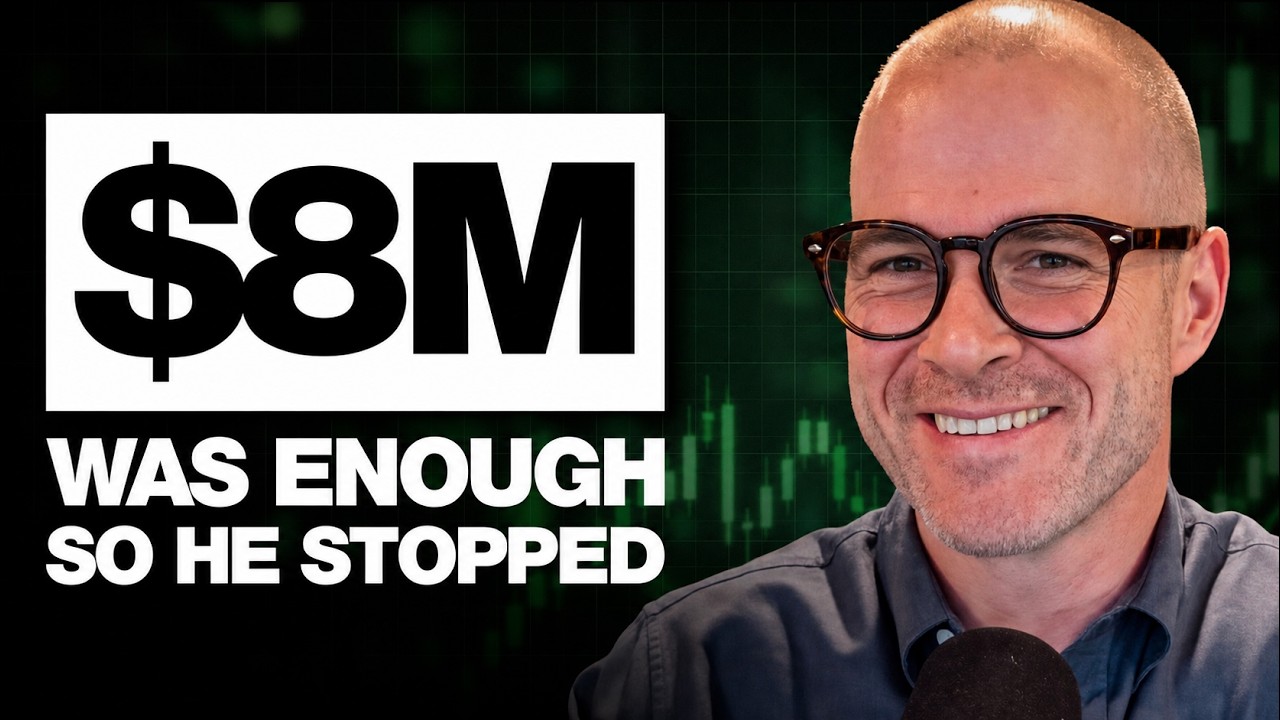
Justin Welsh was a chief revenue officer who helped take a healthcare startup to about $70M in recurring revenue, then walked away from a $550K salary after a panic attack in December 2018. He went solo with one rule taped to his desk, no employees, and his one-person business peaked at $4.2M in a single year. At 45 he's worth about $8.75M, almost all of it liquid. For years his number was $10M. At $8M he decided that was enough.
Like all Moneywise episodes, Justin breaks down his net worth, income, portfolio, and monthly expenses and then I, your humble host, pick it all apart.
We also went deep on: why $1,500-an-hour coaching was really $500 an hour, the "one more year" math that turns a $1M gap into $2,500 a month, $30K a month in spending and his big three, the Monday 7:30am money meeting with his wife, his net worth year by year from $1.4M, and his plan to die with zero
Below you'll find my summary of the episode along with the entire transcript.
And by the way...this podcast, the concept of it came from Hampton. Hampton is a private, highly vetted community for high net worth founders started by Sam Parr. Members range from companies doing 3-5 million in revenue all the way up to hundreds of millions. The reason we started this podcast is because there are amazing conversations about money and growing companies that typically happen only behind closed doors, and we thought it would be awesome to share all of this information. If you're a CEO, founder, or business owner, check this out. New Moneywise episodes come out weekly.
Listen to this episode on:
Now, below are the notes and the full transcript.
The Numbers
- Net worth: about $8.75 million, almost all liquid. The only illiquid piece is about $1M in the house, which is paid off.
- Where it sits: $6.3M in index funds and $1.2M in cash, kept free for a possible second property so he doesn't have to sell equities.
- Net worth by year (each February): $1.4M (2021) → $2.2M (2022) → $2.9M (2023, the year they bought a house) → $4.9M (2024) → $5.8M (2025) → about $8.7M today.
- The salary he walked away from: $550K a year as a chief revenue officer.
- Coaching and consulting: roughly $1M–$1.5M over 18–24 months before he wound it down.
- First product: a 30-minute LinkedIn-writing video at $50 that made about $10K in its first month. Relaunched at triple the price, the course did about $4M over four to five years.
- Best year: his one-person business made $4.2M. If he did nothing next year, it would make about $200K; he plans on $500K–$1M.
- This year: a content deal under NDA paid $1M+ up front. They've never taken draws from their investments.
- Spending: about $30K a month, mostly on his "big three": health, their three dogs, and restaurants.
- The old target: $10M. He stopped chasing it at about $8M.
$70M in Recurring Revenue, 230 Pounds and a Panic Attack
Justin joined a healthcare startup as chief revenue officer in January 2015, expecting to get it to its first few million in recurring revenue before someone more experienced took over. He took it to about $70M. He also got to 230 pounds (he's 175 now), drank a lot, didn't exercise, and woke up at 3am still in his work clothes. "It was a disaster by the time I finished."
In December 2018 he had a panic attack that made him think he was dying. The next Monday he told his co-CEOs he was done. They asked for three months; he stayed eight, and launched his own business on August 1, 2019. His dad was supportive, if a little confused: "When people ask me what you do, I don't really know what to say."
The timing was rough. He had just bought his first home, in Los Angeles, and COVID hit soon after. "We were so scared that we sold our house and we moved to Nashville," into a house that cost half as much in a state with no income tax.
A $50 Webinar and the Rule Taped to His Desk
He started with the obvious move: fractional CRO work for small healthcare SaaS companies, the exact "strike zone" he'd worked in for a decade. He found clients by posting on LinkedIn, and his DMs filled up with people who didn't care about healthcare. They wanted to know how he wrote for LinkedIn. So he packaged it into a 30-minute video, charged $50 and made about $10K in a month. "It's not retirement money, but it was really easy."
One of the first rules he wrote in a notebook and stuck to his desk: no employees. He'd managed a team of 150 and wanted none of the hiring, firing, legal work and office politics that come with it. "How can I scale this without adding headcount?" became the constraint the whole business was built around, years before AI made it easy.
Why $1,500 an Hour Was Really $500
Coaching paid well, about $1M–$1.5M across 18–24 months, but Justin did the math per hour. A $1,500 call took about three hours once you count prep, notes and follow-up, so it was really $500 an hour. Meanwhile his digital products were making more than that every day. "It was a lot less of total money, and it was more like money per hour spent."
He kept a handful of long-time clients he loved working with and said no to almost everyone new.
The "One More Year" Trap
Justin always thought $10M would let him relax. "I have a big fear of money. I inherited that from my father." At about $8M he changed his mind. Hitting $10M might take longer than he thought, and he'd be trading prime years he can't get back. Three close friends he used to work with, all about his age, died in the past two years. "What if at 48, one of those terrible things we all don't want to happen happens?"
His case against "just one more year" is simple arithmetic. At a 3% withdrawal, $9M gives you $270K a year and $10M gives you $300K. "When you break it down, it's like a difference of $2,500 a month." So the question is whether you'd give another year of your prime for that, or find $2,500 a month you don't need to spend. He also points out that the milestones never felt the way he expected: "I just don't know that you hit 10 million, a switch flips, and you're like, 'All's well in the world now.'"
$30K a Month and the Big Three
Justin and his wife spend about $30K a month and don't think of themselves as big spenders. They follow wedding-planning advice from 2014, when they were broke: "Find the three things that matter the most to you and spend on those and skimp on everything else." For them that's health (personal training, supplements, healthcare), their three aging dogs ("the dogs are like the kids"), and eating out in the Hudson Valley, where "it's hard to have a cheap meal."
The house in the Catskills is paid off. They paid off the mortgage with a single course launch.
The Monday 7:30am Money Meeting
He used to check Stripe four times a day, at 8am, noon, 4pm and 8pm, and could predict $4K–$5K in daily sales. Now the only numbers ritual is a Monday meeting with his wife at 7:30am. They're an S corp together, so every week they review what they earned, set aside taxes, see what they spent and pay the credit cards off in full. Then he updates their net worth in a Google Sheet, which he's done by hand every week for about six years. "What gets measured gets managed."
He pulled up the sheet on the show: $1.4M in February 2021, $2.2M in 2022, $2.9M in 2023, $4.9M in 2024, $5.8M in 2025 and about $8.7M now. "Compound interest is starting to..." He grew up middle-class in Cleveland with parents who never made more than $100K. "I never in my wildest dreams expected to ever have a net worth of more than a million dollars."
Die With Zero
"I'm a die with zero guy." Justin and his wife don't have children, and both are the last of their family lines. Their plan is to give to Ohio State, a children's hospital in Cleveland and animal causes, and leave most of whatever is left to their friends' kids.
He doesn't plan to stop earning, though. "Having obligations to nothing sounds cool for a week, and then it'd probably be pretty miserable." He's writing his first book (self-published), hopes to write one every year or two, and wants to invest in third spaces and community projects in the Hudson Valley and in Cleveland, even if they barely make a profit.
Write Your Rules Before Someone Else Does
His advice for high earners who hate their work: if you've already made $5M, $10M or $15M doing something you hate, you're probably capable of being just as successful doing something you love. "Most high performers are smart enough to take a step back and rethink the way they design their business."
And start with the rules. "If you don't write down your rules before you start your business, your customers, your coworkers, your bosses, they will write your rules for you." Decide what a great week looks like first, then build the business to pay for it. "What most high performers do is figure out how to make the most money humanly possible, and then slot their life in the small gaps that are left over."
Other Key Quotes
"What most high performers do is figure out how to make the most money humanly possible, and then slot their life in the small gaps that are left over."
"When you break it down, it's like a difference of 2,500 bucks a month."
"I just don't know that you hit 10 million, a switch flips, and you're like, 'All's well in the world now, and I can now stop.'"
"Find the three things that matter the most to you and spend on those and skimp on everything else."
"What gets measured gets managed."
"I'm a die with zero guy."
"If you don't write down your rules before you start your business, your customers, your coworkers, your bosses, they will write your rules for you."
Links You Might Like
- Join Hampton Community: https://joinhampton.com
- The Hampton Wealth Report (50+ founders worth $10M–$4B reveal their personal finances): https://joinhampton.com/mw-wr
- MoneyWise Podcast: Full episode archive
Full Transcript
Justin Welsh: If you don't write down your rules before you start your business or before you get into a business, your customers, your coworkers, your bosses, they will write your rules for you. What I mean by that, if you're going to try and do something different and earn a living, get what you want your life to look like first.
Daniel Berk: How much did you leave on the table when you left your salary job?
Justin Welsh: Five hundred and fifty thousand. What most high performers do is figure out how to make the most money humanly possible, and then slot their life in the small gaps that are left over.
Daniel Berk: My guest today is Justin Welsh. He was the chief revenue officer at a healthcare company when in December of 2018, he had a massive panic attack. He was overweight, he was drinking a lot, and at night he would wake up at 3:00 in the morning still in his work clothes. The next Monday, he told his co-CEOs that he was done with that life. He gave up over a 550,000 dollar salary right after buying his first house in Los Angeles, and a few months later, COVID hit. So what he decided to do was start creating content online. His first digital product was a 30-minute video on writing for LinkedIn that he sold for 50 bucks. And with that digital product, he made 10,000 dollars the first month, and by the time he had his best year, his one-person business made 4.2 million dollars. Justin is 45 years old now. His net worth is about 8.75 million dollars, and almost all of it is liquid. For years, he told himself that 10 million dollars was the number that would let him relax, but when he got to 8 million, he decided to stop chasing it. 8 million dollars was enough. Today, he's even stopped promoting some of the things that make him money passively. Justin and I have been buddies for years, and I wanted to know how a guy who says he's still afraid of money decides he has enough. By the end of this episode, you'll understand exactly how he made that call. In this episode, Justin talks about a trap that a lot of founders tend to fall into, and they tell themselves they'll work just one more year to hit their number, and then they're going to slow down. Then they say it again the next year, and again the next year, and that comes up inside Hampton all the time. Hampton is a private community for founders and CEOs who, on average, are doing 25 million a year. To qualify, you need at least 3 million in revenue, 3 million raised, or a previous exit of over 10 million dollars. If that sounds like you, you have to go check it out at joinhampton.com. Here's what we cover in today's episode. First, why Justin stops coaching at 1,500 dollars an hour, and then he pulls up his spreadsheet and walks me through his net worth year by year. And we close on why he plans to die with 0 dollars. This is Moneywise. I am Daniel Berk. Here's Justin Welsh. Welcome back to another episode of Moneywise. I have a good buddy of mine, Justin Welsh. We've known each other for years. He's super interesting. We, uh, you might not be able to tell us apart because we, we kind of have little doppelgangers and our little, uh, you know, bald looks going on here, which is fun. Um, but Justin's awesome. He comes from, uh, you know, executive background, but took a bet on himself years ago, and I'd love to start the episode there. Tell me why and when and how you decided to take a bet on yourself, and let's start there in the story.
Justin Welsh: Yeah. I started, um, working for myself on August 1st of 2019. Uh, so what is that? Seven and a half years ago. Is that right? I can't do the math.
Daniel Berk: Yeah, I think so.
Justin Welsh: I think so. Um, and, and really it just, it came out of a place of, of sort of just having to. Um, I think a lot of people are, are really plan-oriented, so they'll, like, sit down and say, "Okay, in the next 12 months, I'm going to do X, Y, and Z, and then I'm going to launch my own business," and they have a 10-year plan and all this stuff.
Justin Welsh: And mine's a little bit different. Um, I was the chief revenue officer at a healthcare company that I joined in 2015 in January, and so I had been there four and a half years at this point, and I thought I was just going to be the guy who maybe got it to its first million or 3 million, or maybe if I was lucky, 5 million in recurring revenue, and then they would go hire someone who had, you know, done it before, you know, been around for a lot longer than, than I certainly had. I was only 33 at the time. Um, but I was lucky, got it to about 70 million in recurring revenue, um, but just burned the midnight oil, uh, doing that. And so, you know, I'm 175 pounds now. I was like 230. I was drinking a lot. I was eating terribly. I wasn't exercising. Like, I was waking up at, like, 3:00 in the morning in my work clothes and, like, stumbling into work. Like, it was a disaster by the time I finished.
Daniel Berk: Mm-hmm.
Justin Welsh: Um, because I just wasn't treating myself very well, and that all, like, culminated in this big panic attack that I had, and panic attack doesn't sound like a big deal if you've never had one.
Daniel Berk: Was that December 15th?
Justin Welsh: Yeah.
Daniel Berk: I read about that one.
Justin Welsh: Yeah, I think it was December, I think it was December 8-- 15th of 2018 or 18th. I can never remember the exact date. It was a Saturday. Um, but if you've never had one, they're, they're horrible. And, like, I thought I was dying, and I didn't know what was going on, and, like, that was the sort of moment where I went in the next, uh, the next Monday and told my co-CEOs that I just, I, I couldn't do it anymore. And so I was sort of, like, forced into this, this idea of having to support myself, and, uh, and they asked me to stick around for three months. It ended up being eight, and, uh, on August 1st, I launched my own business.
Daniel Berk: That's incredible. What-- I'd love to know, you know, from the way you grew up and from the career that you had built for yourself, uh, what was your dad's response when you said, "Hey, I, I quit my fancy, you know, CRO job."
Justin Welsh: I've been really lucky. Like, my parents don't have-- I've never really had this idea that their expectations were going to be my expectations. I grew up in a really supportive household. I'm an only child, so I got a lot of love and attention, um, and a lot of support, and both of my parents have always believed that, like, whatever I could put my mind to, I know it sounds cliché, that I, that I could, could do. Um, but I think my dad was, like, actually kind of interested, but also, like, just didn't really understand what I was doing, right? Like, to this day, he says, like, "When people ask me what you do, I don't really know what to say."
Daniel Berk: Yeah.
Justin Welsh: Um, but for, uh, uh, to make it simple, right, like, all I did was take everything I was selling to one company as a chief revenue officer, started talking about all the experience I had online, and just sold that to other healthcare companies as a, what someone might call, like, a fractional CRO or consultant or advisor. And so, you know, nothing too risky. It's just repeating what I had done for more clients. And so I think my dad was- Not worried or anything. I think he was impressed and happy that I was trying something new.
Daniel Berk: That's great. And I'd love for you to help us understand the, I'll call it a roller coaster. I don't know if that's what you would call it, but going from a career worker executive to what you may have even like coined the word solopreneur. I feel like you've been using that word since before it was cool, and you started with digital products, and you started with coaching, and you've kind of gone through the gamut of like one-person team growing to millions in revenue. Help me understand how you went from one thing to the other.
Justin Welsh: Yeah. It's a-- Sure.
Justin Welsh: It's, it's kind of an interesting, at least I think it's interesting journey where, um, you know, I started by doing what was obvious, and what was obvious was like, okay, I know how to build SaaS companies, specifically in a, in a very specific way, which is small to medium-sized healthcare companies selling directly to physicians, um, not hospitals or long sales cycles, like five grand and 10 grand average contract values, sales cycles of two weeks or less. So I had like this really specific strike zone, and I had done that for 10 years, and I had worked at two companies, um, helping build, especially the second one as an executive, um, to, to pass a billion, billion dollars in valuation. So like that was my strike zone. And so all I did was went out and did that for other companies that fit that mold. But the way that I did it was by generating attention on LinkedIn. So I, I was afraid of what was Twitter at the time. I thought it was mean and nasty, and I didn't want to get made fun of. I had never created content, and so I started just creating content on LinkedIn because I saw an opportunity for that. And this really kind of weird thing happened where as I went back through all my DMs to kind of figure out what were healthcare founders saying, were any CEOs pinging me, I started to realize that I was getting all of these messages from other people that had nothing to do with healthcare and nothing to do with SaaS companies. And they're like, "Hey man, really like your writing. How did you learn to write for LinkedIn? Hey, you're getting a lot of likes on your post, uh, or engagements or comments or, or whatever. How are you doing that? Where'd you learn that? Who taught you that?" And I was just like, "Oh, I don't really know. Like I, I haven't really thought about it too much. It's just tried to figure out how to put what I knew into a medium that would communicate it effectively." And so I, I thought to myself, "Well, I guess I know a little bit about this, right? I have a sales and marketing background, and I seem to be getting some traction." I had like 20,000 followers, which at that point was a lot. Um-
Daniel Berk: Yeah.
Justin Welsh: So I, I packaged up this-
Daniel Berk: Still is to a lot of people.
Justin Welsh: Yeah, yeah, sure, sure. I mean, but like compared to like what the larger accounts have now-
Daniel Berk: Yeah, 100%
Justin Welsh: ... that was like a large account, right? Um, and so I packaged up everything I knew into a 30-minute little like webinar video at the time and charged 50 bucks for it and made like 10 grand in one month. And I was like, "Whoa, it's not retirement money, but it's like, was really easy," right?
Daniel Berk: Yeah, it worked.
Justin Welsh: Like just all automated. And so that was the beginning of like thinking through how can I do more stuff like this? And eventually what I decided to do to kind of end the story is I started to get my advising and consulting clients through different means. I had venture capital relationships, I had relationships with other peers. I went on podcasts and talked about some of the stuff I had built at PatientPop and Zocdoc, and that's where my clients came from. I doubled down on talking about social media and marketing and content and, um, re-released my course at triple the price point, and that course went on to do 4 million in probably five years or four years.
Daniel Berk: Wow.
Justin Welsh: And so that was the beginning of like what I saw was possible with digital products, and that became the first of many digital products that I built. So I had coaching and products and newsletter with sponsors, and it became your typical creator business with multi-rev, uh, revenue streams.
Daniel Berk: And why have you chosen to kind of build your entire brand around being a one-person team?
Justin Welsh: Yeah. Um, because I believe in it.
Justin Welsh: Uh, I believed in it long before AI was a thing, and it unlocked that sort of, I guess, ease and efficiency to be a one-person business. When I left PatientPop, the first rule that I wrote down, or one of the, the first things that I wrote down was I wasn't going to hire anyone. I kind of wrote a few rules down on a, on a notebook and just sort of stuck it to my desk. And the reason why is I had seen-- First of all, I had a team of 150 at PatientPop. Now I had, you know, direct, direct reports in between those, those folks, but like the team was big, you know, it's chaotic, hiring, firing, you know, got paternity and maternity leave, you've got legal stuff, you've got benefits, ego, toxicity, you know, and a lot of good things too, amazing things when you, when you work with a team. But at that point in my life, uh, after having this panic attack, I didn't want any of that stuff. And so I began to think like, if I could build a content-driven business, and most of the stuff I made money on was a pre-recorded thing, I couldn't give myself a good reason to just start adding employees to the business. And that became almost like a sticking point for me as I scaled the business. I was like, "How can I scale this without adding headcount? How can I scale this through automation, through..." Um, at some point, eventually, you know, AI became really, really useful. Um, but that was just a rule that I started with and maybe even stubbornly stuck to as it became sort of the thing I got known for.
Daniel Berk: Yeah, I mean, I think you, you are correct with AI. I think solopreneurship and, and one-person, you know, billion-dollar companies, that's, that's probably going to be more normalized moving into the future. Uh, but I think the fact that you chose to optimize for freedom before a lot of people choose to almost retroactively, I think that's what makes your story so interesting to me. I'd love to discuss some of the numbers. Um, you were-- In your newsletter, you wrote, you pivoted a few different times. You've, you've talked about this on social. You were a consultant at first, and you did coaching and digital products. I'd love to start with the first one. I think it was consulting or, or coaching.
Justin Welsh: Mm-hmm.
Daniel Berk: How much did you make from that before you chose to kind of shut it down and move on to the next thing?
Justin Welsh: I think about a million dollars. I think, um, over the, over the course of- And, and I can't, I can't know the number for sure. It's in a bunch of different systems. But if I recall correctly, probably roughly a million to a million and a half bucks across 18 to 24 months, um, and that's a combination of, uh, both it-- consulting, which was like project-based work, advising, which was like being available for advice, and, uh, and coaching, which was more working one-on-one with sales leaders and executives. And so that kind of in aggregate was, I, I would guess around one and a half million.
Daniel Berk: I actually meant to ask, how much did you leave on the table when you left your salary job?
Justin Welsh: 550,000.
Daniel Berk: Yeah. So healthy amount.
Justin Welsh: Yeah.
Daniel Berk: Maybe kind of scary. Was it scary when you left or was it relieving?
Justin Welsh: Very scary. Um, I had just bought my first home, uh, in Los Angeles of all places, so, uh, an expensive small home, and I left my job, and then not too long after, COVID hit. So-
Daniel Berk: Yeah. Great timing.
Justin Welsh: So like it's terrible timing, right? So like-
Daniel Berk: Yeah, yeah.
Justin Welsh: Yeah, it was super scary. Like actually part-- we were, we were so scared that we sold our house and we moved to Nashville-
Daniel Berk: Oh, wow. Okay.
Justin Welsh: ... and bought a house that was half the cost in a state that had no state income tax.
Daniel Berk: Interesting. And when you decided to stop coaching, what, what were your reasons? I mean, a million and a half-ish over 24 months, maybe even less, that's great.
Daniel Berk: That's even more than you were making as a CRO. Why stop?
Justin Welsh: Let's say you can charge 1500 bucks an hour, and that's a, that's a lot. That's a lot of money for an hour, um, no matter who you are, right? And, uh, and maybe some people on this podcast or listening to this won't think so, but for the average Joe like me who's just an executive at a healthcare company, like that's a lot of money. And at some point, the digital product sales started to become more than that per day, um, every single day for a long time. And I recognized that with that hour, I could either get prepared, run the call, there's no AI, so it's like you got to take notes, you know, all that, like all-- it was all that manual stuff back in the day. So an hour-long call might have taken three hours total in prep and follow-up and all that stuff, email, you had to write all your own stuff back in the day, right? And so like it became three hours for 1500 bucks, and you're at 500 dollars an hour. The question became, could I spend time writing content that would effectively sell more of the products that I had and do it for a longer period of time across the entire globe? And the answer became obviously yes after a period of time. So it, it's, it was a lot less of like total money, and it was more like money per hour spent. And that was something I focused on very early on once I realized that the products were, were going to take off.
Daniel Berk: And so you realized the products were taking off. You decided, "I'm not going to coach anymore." Did you cut it off completely? Like no coaching whatsoever? You say no to every single inquiry?
Justin Welsh: No. I, I kept some, um, some clients that I really enjoyed working with. Like there were some strike zone clients, right? Like exactly the right contract value-
Daniel Berk: Yeah.
Justin Welsh: ... call point, and all the, all those things, where like my advice was the difference between hopefully millions of dollars of revenue for their company, and I loved that.
Daniel Berk: Yeah.
Justin Welsh: And they paid me effectively for it. And a lot of those coaching clients that I kept were like people I've known for a decade or more, and, and I was invested in their success. And so, um, I kept a few, but for the most part, I just started saying no to almost anyone, anyone new that came in.
Daniel Berk: And from all the things I've seen on your newsletters, your social, you're really a family man. You love to spend time with your wife. You love to be outside. You love a good glass of bourbon or scotch. Don't, don't, you know, correct me if I'm wrong, if I got that wrong-
Justin Welsh: Wine.
Daniel Berk: But I believe wine. Okay. I was like, "Oh, I didn't feel right."
Justin Welsh: Wine or craft beer. No, no scotch or bourbon for me. Yeah.
Daniel Berk: Um, you've really optimized for that. I mean, how long have you been married?
Justin Welsh: I've been married 12 years, uh, this past April.
Daniel Berk: And so your whole life, I think, has pointed back to like, "I want to spend more time doing what I love with my wife."
Justin Welsh: Totally.
Daniel Berk: That's pretty cool.
Justin Welsh: Yeah. We live in a-
Daniel Berk: How much did you make? Go ahead.
Justin Welsh: No, it was-- we live in an awesome area to do that. We live up in the Catskill Mountains, and so like we can hike-
Daniel Berk: Yeah.
Justin Welsh: ... and, and we can get out in nature, and we can go for walks, and we can come home and light a fire and drink wine. Like I, I love that stuff, and so I want to be able to do that kind of stuff, and coaching takes away from that stuff.
Daniel Berk: Yeah. What was the number that you looked at on the balance sheet before you decided like, "I don't need to chase more. I just want more time"?
Justin Welsh: Wow, that's a really good question. That, that is relatively recently. Um, so I had always had this idea that like a 10 million dollar net worth would allow me to feel relaxed. And there might be people that say, "That's ridiculous.
Justin Welsh: You could relax at 2 million." I'm just wired a very different way. I have a big fear of money. I inherited that from my father. Um, I don't ever want to be poor or broke or feel like I can't support my family. And so like the idea was 10 million. Um, I got to about 8 and started to recognize that if I kept pushing to 10, based on some of the changes in the world, it could potentially take a little longer than I thought, number one.
Daniel Berk: Hmm.
Justin Welsh: And number two, would I be giving away prime years of my life that I cannot get back? And so I had this fear, I'm 45, that like, okay, let's say maybe I can get to 10 million by 48, 47, right? Doesn't sound unreasonable given, given my, my previous business. But like, what if at 48, one of those terrible things we all don't want to happen happens? And I just started to think that way as it happened to some friends of mine. I've had like three close friends pass away that I used to work with all in the past two years, all about the same age as me. Um, and so I just recognized I needed to start doing it now and have the confidence that I could attain my goals more slowly while enjoying the present. And so that has been a real sort of flip for me over what I would say the last- 18 to 24 months maybe, may-maybe even sooner, maybe even 12 to 18 months.
Daniel Berk: So you, you, you had that realization. Uh, I read a newsletter of yours a few weeks ago, and the whole concept of this newsletter, simple but life-changing. I think it was just one more year, and you were addressing some of these builders and founders and company operators that they have the number, maybe it's the personal net worth or it's the valuation or revenue of their company.
Justin Welsh: Yeah.
Daniel Berk: They're like, "If I can just make it another year, I'll be set. I'll retire. I'll start taking dividends," like whatever that looks like for that person. And you challenged them like, "Hey, you know, you in your shoes, you've consulted and advised many different company operators in your career, and you've seen people fall into this trap of, if I can just go one more year, if I can just hit that, you know, 1 million dollar number, the 10 million, or maybe get a few more, uh, you know, employees or, or a little bit more runway, like whatever that is, then I'll be set." But it's a trap, and people continue the cycle of just a little bit more time. What do you say to those founders or operators about that trap they fall into?
Justin Welsh: I mean, first of all, I try n-never to judge, right? Like, I try never to say like, "Oh, you're not thinking about this right," because there's no right way to think about it. Uh, uh, all I can tell them is that over the course of my life, I thought as I hit different milestones, the way-- especially income, revenue, net worth, whatever you want to call it, that I might feel differently. And the fact is, I really haven't. Like-
Daniel Berk: Hmm.
Justin Welsh: As I got closer to 10, like I, I felt a little less anxiety, but I've never felt like, "I made it. It's all good now." And like, I just don't know that that exists, especially if you come from a competitive background, if you come from sales, if you worry about money. I, I just don't know that you like hit 10 million, a switch flips, and you're like, "All's well in the world now, and I can now stop," right? Like, it just doesn't-
Daniel Berk: Yeah.
Justin Welsh: It doesn't work that way. And so all I can do is tell them stories, right? I can tell them stories about how I feel. I can tell them stories about other operators who I've worked with who thought they would feel so much differently when they got to a number. And then we can put some real boundaries around it, right? So like, I'm not a financial advisor. I'm not a financial coach. I'm not a life coach. I don't do any of that stuff.
Justin Welsh: But like, I, I could talk to someone if you wanted to just use really simple math, right? Let's say someone's at 9 million and you want to withdraw 3%. Let's just forget about taxes for now, right? Okay, it's 270 grand a year, right? Okay, you want to get to 10 million, it's 300 grand a year. When you break it down, it's like a difference of 2500 bucks a month.
Daniel Berk: Yeah.
Justin Welsh: The question you want to ask yourself is, are you willing to give it one more year in your-- in the prime of your life, which is what a lot of these revenue operators or creators are in, um, so that you can spend an extra 2500 dollars a month? Or would you be willing to take a look at what you spend today, five-- find 2500 dollars that you probably don't need to spend and say to yourself, "Now is the right time," right? And that doesn't mean quit working, retire. I'm not suggesting any of that. It's just, can you shift the way that you work? Can you shift how you think about the balance between living and working and do it in a, in a way that doesn't require you to constantly find another year? Because it's, it's habitual. We all do it.
Daniel Berk: Yep. I, uh, I had a tweet go really, really, really viral the other day that was talking about how, uh, 300,000 dollars on a W-2 is very different than 300,000 dollars as a draw from your liquid net worth.
Justin Welsh: Sure.
Daniel Berk: And it, it was really off the cuff, which like 99% of the things I say online are. It was very polarizing because on the one hand, you had people like, like, obviously, like, "Why do you even say this on the internet? That's an obvious thing." And then the other people were like, "No, that's, it's no different at all." My, my belief, and I would suspect your belief and many of the guests on this show, it's like 300 from a draw on a liquid net worth is a life-changing amount of money. The taxation of it is completely different. The breakdown, the fact that you're not, you know, required to go into work and, you know, put in a certain amount of hours, report to someone. It's interesting. Uh, it's interesting to say something like that online and, and find it's polarizing when I didn't think it was.
Justin Welsh: Yeah, but the flip side is it's scarier.
Daniel Berk: Yeah, it is.
Justin Welsh: Because in this version, you're, you're taking from yourself and paying yourself, right?
Daniel Berk: Yes.
Justin Welsh: In the other version, someone else is paying you their money.
Daniel Berk: Yes.
Justin Welsh: And that, that's what just makes it so scary, right? So like-
Daniel Berk: It is.
Justin Welsh: Again, I don't promise to or, or, or, or, uh, promise to like understand everyone's situation.
Daniel Berk: Yeah.
Justin Welsh: Um, I can simply tell people the stories that I've gone through, how I've thought about it and my mindset, what's worked for me and what hasn't. And what I've found is that, um, at some point in your life, and it might be a net worth, it might be an age, it might be a phase, like it can be many different things, um, the, the how you spend your time just becomes so much more important than how much more money you can earn. It just-
Daniel Berk: Mm-hmm.
Justin Welsh: It flips, and it's like time becomes way more important. Some, some folks might say it always is, but that's how I think about it.
Daniel Berk: So yours was, you were 8 million net worth when that flipped. What is your net worth today?
Justin Welsh: Uh, about 8.75 million, so, uh, just, just shy of 9.
Daniel Berk: And that breaks down to what? Liquid versus illiquid assets, if you can break that down for me.
Justin Welsh: It's, it's almost all liquid except for, uh, a million bucks in the house.
Daniel Berk: That's incredible. I mean, that's, that's a dream, people having mostly liquid net worth.
Justin Welsh: So-
Justin Welsh: Yeah.
Daniel Berk: What about the spending? How do you-
Justin Welsh: And we own our, and we own our house outright.
Daniel Berk: You own your house?
Justin Welsh: Yeah.
Daniel Berk: Did you buy in cash?
Justin Welsh: No, we, uh, we bought it. I launched a course that made a lot of money, and we paid the mortgage off.
Daniel Berk: See, that's pretty cool. Uh-
Justin Welsh: Yeah.
Daniel Berk: Maybe I'll launch a course and buy a house. Uh, that's pretty cool. What is, uh, what does your personal spending look like? Where does the money go, and what's the lifestyle like?
Justin Welsh: Yeah, it's, it's interesting because I certainly don't think about us as like big spenders, but I would imagine that some people will, will find this number to be big. Uh, we spend about 30 grand a month, and a lot of that are on like- What we would kind of call our big three. Um, and I listen to like, you know, I go and I'll read financial guys and, you know, I like, I love Morgan Housel, I love JL Collins. And I take this lesson away from our wedding planning, which was when we planned our wedding and we were poor, um, back in 2014, uh, someone told me, "Find the three things that matter the most to you and spend on those and skimp on everything else." And it was great advice. And so-
Daniel Berk: That is great advice.
Justin Welsh: We do that with our monthly spending, and the things we spend our money on is, um, number one, our health. So both me and my wife do a lot of personal training. We buy a lot of supplements. We, we just recently have gotten into the best shape of our lives, so we spend a lot of money on health and healthcare. Um, secondarily, uh, after that is our dogs. Um, uh, we don't have kids and, uh, you know, the dogs are like the kids. And I know, I know that gets a bad rap online and-
Daniel Berk: How many dogs do you have?
Justin Welsh: Three. Yeah.
Daniel Berk: That's awesome. What type?
Justin Welsh: Uh, Chihuahua terrier, uh, Maltese Shih Tzu, and Cairn terrier schnauzer. And-
Daniel Berk: So cool.
Justin Welsh: They're all getting up there in age at the same time, and so a lot of tests, a lot of cardiology visits, a lot of-
Daniel Berk: Yeah.
Justin Welsh: A lot of bills. Uh, so that's a big expenditure. Um, and then the, the one that is kind of more, I guess, personal for us outside of that, the healthcare stuff is we're foodies. So we live up in the Hudson, we live up in the Hudson Valley. We've got great restaurants up here. They have a racket going because there's not a lot of them, so they capture you and they can charge whatever they want. Uh, so it's hard to have a cheap meal up here, you know? It's mostly folks vacationing up from the city, so we live here permanently. So the other kind of big three is just restaurants and, you know, we like to go to breweries and, and wine tasting and things like that.
Daniel Berk: So I remember a conversation you had, uh, with Paul Millerd. It says you, you told him, you said you check your numbers every day and a bad week keeps you up at night.
Justin Welsh: Yeah.
Daniel Berk: And that was the middle of your best year. So I'm curious now, as I don't want to say you're slowing down because you didn't say that, but-
Justin Welsh: I'm totally slowing down.
Daniel Berk: Okay, so let's, let's agree then that's the case. You're slowing down, you're taking draws, you're living your best life, you're in your prime. Like, do you still check your numbers? Does it still keep you up at night or have you decided to just ignore what's happening in the market and...
Justin Welsh: It's a really great question. Check your numbers means something different now. So I'm not taking draws. Um-
Daniel Berk: Okay.
Justin Welsh: I arranged an intelligent way to make money this year, uh, that made a million bucks plus. Uh-
Daniel Berk: You sound like a drug dealer right now, by the way.
Justin Welsh: It's, it's, I'm not, I'm not a drug dealer.
Justin Welsh: It, um, uh, it's, I, I, I'm, I'm under NDA and so I can't, like, talk a lot about it.
Daniel Berk: Okay, no worries.
Justin Welsh: I found, I found a unique and interesting way that is content-related to make a million plus dollars this year.
Daniel Berk: Cool.
Justin Welsh: Um, and so no, no draws. We've never taken money out of our, our stuff.
Daniel Berk: So you're still producing income on top of the 8.75 liquid?
Justin Welsh: Correct. Yeah.
Daniel Berk: Wow.
Justin Welsh: Yeah. Still producing income. Um, that unique and interesting way will end at the end of this year, and then I will essentially have very little ways to make income. So my business made at most 4.2 million in one year, and if I do nothing, it would probably make 200 grand next year. Um, I don't plan on doing nothing.
Daniel Berk: Yeah.
Justin Welsh: So I have a lot of interesting things that I'm spinning up and working on, and I, I plan on making between hopefully 500,000 and a million dollars next year, but I am certainly slowing down. And I no longer check numbers in the way that I was telling Paul about, which was I used to check my, like, kind of Stripe account every four hours, 8:00 AM, noon, 4:00, and 8:00. And I knew exactly where those numbers should be, and it was very, very predictable. People say core selling businesses are not predictable. I had it down to a science. I knew how to get it to about 4 to 5,000 bucks every single day. And so, um, those were the numbers I was alluding to when I talked with Paul.
Daniel Berk: Okay.
Justin Welsh: My wife and I are, we like to think financially obsessed, uh, and so the numbers that we do check is our Monday morning financial meeting. And every Monday morning, we take a look back at the week and we say, "All right, how much did we earn?" Right? We set aside our taxes because it's an LLC, S corp business. Um, we look at our credit card-
Daniel Berk: You and your wife are an LLC? Is that-
Justin Welsh: We're, we're an S corp. Yeah, we're an S corp.
Daniel Berk: Like, you together?
Justin Welsh: Together, yeah.
Daniel Berk: That's awesome.
Justin Welsh: Yeah.
Daniel Berk: I love that. Okay, cool.
Justin Welsh: It's a great way to get a lot of write-offs, but-
Daniel Berk: Yeah.
Justin Welsh: Um, hopefully no one's listening for that. But, um, so we're, we're an S corp, so every Monday we, at 7:30 in the morning, we sit together, we look at how much did we make, how much do we need to set aside for taxes, how much did we spend? We pay our credit cards off. We never carry a credit card balance, so we pay it off every Monday. Um, and then I calculate our net worth every single Monday morning. And so I've been doing this manually on a Google Sheet for seven years. So, like, I can look back over the course of seven years, watch the net worth grow, see how different revenue streams have grown and been killed. Um, it blows my mind when I talk to friends of mine or peers and I'm like, "How much money did you make last year?" "I don't know." "How much debt do you have?" "I don't know." I mean, I know down to the cent how much money I'm making, how much debt I have, you know, that week, right? Our, our credit card bill.
Daniel Berk: That's cool.
Justin Welsh: Um, what my net worth is, what the ratio is between equities, cash, and our house. Like, we are just on top of it because I've been taught as a chief revenue officer, what gets measured gets managed. And so-
Daniel Berk: Yeah.
Justin Welsh: We measure it every Monday morning. A lot of people think it's overkill. Do it monthly, do it quarterly. I don't care what you do, but for me, it's weekly.
Daniel Berk: Do you have that access to that right now? I mean, that, it'd be cool to see how your net worth has grown just yearly. We don't have to go down, you know, every Monday for the last seven years, but-
Justin Welsh: Yeah, I mean-
Daniel Berk: To understand, like, what that number was over the years, that would be really cool.
Justin Welsh: Yeah, I can probably pull it up. Give me one second here.
Justin Welsh: It's 25-
Daniel Berk: And while you're doing that, I'd also love to understand where... So 8.75 total net worth, 1 million in the house. The 7.75, where is that? Is that in stocks? Is that in bonds? Is it in a savings account?
Justin Welsh: 6.3 in index funds and 1.2 in cash. And we, we carry, we carry a lot of cash for a specific reason, which is, um, we're, we're looking to potentially acquire a second property. So we want that cash free, and we don't want to have to sell equities for that. Um, so that is what we do. I'm just pulling up these sheets. So yeah, it's pretty cool to, like, look back, man. Um-
Daniel Berk: It is.
Justin Welsh: It's pretty interesting. Like, I have a bunch of stuff open here. Like, my net worth in February, the la-- it's actually been almost six years, excuse me. So February of '21 was like 1.4, right?
Daniel Berk: Was that cool? Like, when you finally made your first million, was that like-- Did you celebrate? What'd you do? I mean, what'd you guys do together?
Justin Welsh: I don't remember. We were probably living in Nashville. We probably went out for, like, went to Husk probably, which is a great restaurant in Nashville. Um, in, in '22, at the same time in February, it was 2.2, so we gained a million. You know, in '23, it was 2.9. So in '23, it didn't grow that much, uh, probably because we bought a house maybe. And then two point-- in 2024 is where it grew. It was 4.9.
Daniel Berk: Okay, wow. So like 2 million growth there.
Justin Welsh: Yeah. And then 20-
Daniel Berk: And that's with the spending. I mean, you're spending about 360, 400 a year.
Justin Welsh: Yeah.
Daniel Berk: That was similar back then.
Justin Welsh: In '25 was 5.8, and then right now is 8.7. Yeah. It's growing faster, right? Like, it's, it's-
Daniel Berk: Yeah.
Justin Welsh: Compound interest is starting to-- and the market has been ripping. I mean, aside from recently. So, you know, that has all been very-- I mean, the thing is, man, I'm-- I come from a very middle-class family in Cleveland, Ohio, with parents who never made more than 100 grand, which is a nice living, by the way, in Cleveland, Ohio. It's a nice living in most places. But, like, I never in my wildest dreams expected to ever, ever have a net worth of more than a million dollars or 2 million or-- I mean, I guess as I became an executive, like, I saw that. I saw that it was possible. Um, but I just never thought what has happened in my business would ever happen to me. I just didn't see myself as being smart enough or entrepreneurial enough to do that.
Daniel Berk: Well, if your numbers are right, then the million deal that you have currently that will end next year will put you right at about 10 million.
Justin Welsh: It's already been paid. It was paid up front.
Daniel Berk: Okay, so it's already been paid. Okay.
Justin Welsh: Yeah.
Daniel Berk: So what does, what does, like, the rest of your life look like? Are you gonna spend all the money? Do you want it to keep growing with compound interest? Are you gonna, you know, die with some legacy plan, or do you want it to be at zero by the time you die? What's that?
Justin Welsh: I'm a die with zero guy. Like, that's-
Daniel Berk: Die with zero guy.
Justin Welsh: Yeah, that's, that's my goal. Um-
Daniel Berk: Very cool.
Justin Welsh: And like I said, we don't have children, and, you know, it's an odd choice. We're both the end of our lineage, both me and my wife. So the Welsh family will end, and so will the Kelly family. And it's-- I think there's a lot of, like, there's a lot of guilt, and I think there's a lot of, like, what do we do with our legacy kind of thing. And so we've recently sat down and started chatting about that. Like, what does that look like? And I think that looks like, uh, foundations and institutions that we care about. I went to Ohio State. I'm a big Ohio State fan, and I would love to give back to that institution.
Justin Welsh: Um, I'm from Cleveland, and I-- there's a great Cleveland children's hospital called University Hospitals there, so I'd love to give money there. And then I think the majority of our money, you know, if we don't spend it, will go to our friends' children. So, um-
Daniel Berk: Oh, that's cool.
Justin Welsh: We have a lot of, a lot of close friends who have kids. Um, we know those kids really well. We love those kids. And I think giving them a head start would be useful and helpful. Uh, and so that's how we think about it. My wife wants to give to animals and, and things like that. So we're, we're kind of constructing that plan right now.
Daniel Berk: Yeah. No, that's very cool. And you, you-- so you're 45 years old, right?
Justin Welsh: Correct. Yep.
Daniel Berk: So when does, when does all of this stop, and when do you just start spending instead of earning?
Justin Welsh: I mean, I don't really want to stop earning. Um, my goal is, is not really to do nothing. I think that's a terrible life, right?
Daniel Berk: Yeah.
Justin Welsh: Um, I think shirking all responsibilities and having obligations to nothing sounds cool for a week, and then it'd probably, probably be pretty miserable. Um, so, like, I expect to continue writing. I'm currently writing my first book. Um, not, not traditionally published. I decided against that. Um, so I'm just writing my first self-published book. I expect that based on the audience I have, it will hopefully sell relatively well. We will see what the reception is like. And then my hope is that I could write a book every year or two and, uh, share things that I'm, I'm writing in my essays and, uh, what I'm learning in life and, uh, make a living from that. I think outside of that, a big focus of my wife and I is, is community focus. Um, so there are two communities that we have. We have this community up here in Hudson Valley, and so I'd like to start to invest a little bit more in that community. My good buddy Michael Kaufman is a big investor up here in the, in the Hudson Valley. He runs Catskill Crew newsletter.
Daniel Berk: Yeah, he's cool.
Justin Welsh: He's a great guy. And so, like, looking for opportunities where we could make this a better area. And then I have a real attachment to Cleveland. Um, uh, guys from Cleveland just do for a weird way, uh, in a weird way. And so I'd love to go back and start thinking, how can I make investments in that local community to make it better, more entrepreneurial? And so those are things that we think about from an earning perspective. But in the end, like, I'd love to open something that was useful to people, and if it makes very little profit, so be it. Like-
Daniel Berk: Yeah.
Justin Welsh: The goal is community driven, you know?
Daniel Berk: Yeah. I'm, I'm all about the community. My wife and I are, are similar to you guys, where we, we want to just work in service of the community. And in many cases, it's not going to be-- there's no selfish gain. It's like we, we want people to have what we think they should have. Um, we live in a suburb of Charleston, South Carolina, and there's, there's just needs everywhere. And I think a lot of people are like, "Oh, I just, you know, what, what need should I meet? How do I pick?" I'm like, "Well, just open your eyes. They're everywhere." Like, there are so many needs. So that's kind of how we've chosen to try to prioritize our lives is like, well, you know, you can work with the foundation, you can work with a, you know, a community church, something like that. But ultimately, people need things everywhere. We have a, a newsletter, um, a local newsletter company across a few different cities, and we have an onboarding survey where we ask people, uh, mostly parents, uh, we ask them, "What do you need?" And people need diapers, and people need friends. You know, that comes up a lot.
Justin Welsh: Friends, yeah.
Daniel Berk: I mean, people just need something.
Justin Welsh: Um-
Daniel Berk: Yeah.
Daniel Berk: And I think people asking, that's, that's what really solves a problem. Just open your eyes and ask.
Justin Welsh: And I think, like, you know, obviously charitable donations, great stuff. I think one thing that my wife and I really focus on is, like, I hate, I hate seeing the reduction of third spaces. Um-
Daniel Berk: Mm-hmm.
Justin Welsh: So, like-
Daniel Berk: I just opened a co-working space. Uh-
Justin Welsh: Nice.
Daniel Berk: I'm in my studio right now across the hall from the co-working-
Justin Welsh: Love it.
Daniel Berk: Space I have in the center of our, our city for that reason.
Justin Welsh: That, that's awesome, man. I love it. And, like, you know, we, we-- Part of the service to the community is less-- I-I-is certainly about some of the stuff you just talked about, right? People in need.
Daniel Berk: Yeah.
Justin Welsh: Um, but need looks different for a lot of folks, and I think a big need-
Daniel Berk: It does.
Justin Welsh: Is like, is, is friends, community. And so, like-
Daniel Berk: Yeah.
Justin Welsh: I would love to put together things where people can come have a nice glass of wine, right? Get a, get a nice meal. Uh, those are things that are interesting to me, and maybe selfishly so-
Daniel Berk: Yeah.
Justin Welsh: Because I want to spend more time in person with people.
Daniel Berk: Yeah.
Justin Welsh: And so, th-those are things that I, I hope. And, you know, I know the big cool thing now is not to drink wine or beer, you know, indeed only the healthiest of foods, but, like, I'm just not on that trend, so-
Daniel Berk: Yeah, whatever. Yeah.
Justin Welsh: I'm going to go ahead and buck that trend and go for the-
Daniel Berk: Yeah.
Justin Welsh: Poison. But, uh, you know, that-- those are some things we think about.
Daniel Berk: I want to bring the plane in for a landing and ask-
Justin Welsh: Sure.
Daniel Berk: You, you write a lot about optimizing for the way you make money such that you're not ruining your life, and you talk about people who, "Yeah, I make great money, but I hate my job. I hate my day-to-day. I hate waking up. I'm depressed. My company stinks." Like, whatever that reason is, there's a lot of those people listening to this right now, people who make, you know, maybe a good fair amount of money, but they absolutely despise what they do. What would you say to those people?
Justin Welsh: I would say to them, this-- My wife and I have this funny thing, right? We love to watch documentaries on Netflix. That's like our favorite thing is, like, documentaries. I love documentaries. I don't watch a whole lot of, like, movies, like fiction movies. I watch a lot of documentaries. And we watch these documentaries, and so often there's either a character who's a scammer, a person who's a scammer, or someone who's taking advantage of other people, or someone who's running this complex, massive ring. And my wife and I look at each other, and we're like, "Damn, man." Like, that's exhausting, number one.
Daniel Berk: Mm-hmm.
Justin Welsh: Always, like, thinking you're going to get caught by the police and thrown in jail and, like... But it's also someone who's really smart, right? So, like-
Daniel Berk: Yeah, true.
Justin Welsh: If you can run one of those things, you're really smart. And I can't imagine saying, "I'm really smart, and I'm going to use it to do this thing that's really terrible."
Daniel Berk: Mm-hmm.
Justin Welsh: And so, the, the, the thing that I'm ta- kind of taking into this question is, like, if you're really successful and you hate what you do, you can probably be really successful and love what you do, right? Every single time? Maybe not. But for the most part, if you've proven a track record of success, if you've gone out and made 5 million or 10 million or 15 million dollars, that is a good indicator that you are a high performer. And most high performers are smart enough to take a step back and rethink the way they design their business.
Justin Welsh: And there's something I think about a lot, which is if you don't write down your rules before you start your business or before you get into a business, your customers, your coworkers, your bosses, they will write your rules for you. So, what I mean by that is, if you're going to try and do something different and earn a living, get what you want your life to look like first. What do you want a week to look like? What do you want a day to look like? What does an incredible life look like? And then build your business around that. Build your business to support that life. What most high performers do is figure out how to make the most money humanly possible and then slot their life in the small gaps that are left over. So, it's just a different approach. That's what I would recommend.
Daniel Berk: That's huge. Uh, it sounds like you've recommended that before.
Justin Welsh: Yeah.
Daniel Berk: That was really well put.
Justin Welsh: Thank you.
Daniel Berk: Where can people find more about you, the book you're writing? Um, I don't know if you have a launch date already for that. I definitely want you to be able to plug that if you do. But if not, where can they find you?
Justin Welsh: Yeah, I, I don't quite yet. I'm just kind of working on it in the background in silence. But, uh, it'll be on my website when it, when it's ready, which is justinwelsh.me. It's Justin W-E-L-S-H dot me. Um, you know, I write a sat- a thing called the Saturday Essay, which is just an observation or a story about the intersection of life and business, mistakes I've made, hypotheses I've made, and guesses I've gotten lucky, you know, getting right. Like, there's just always something that I'm learning, whether it's in the present or a story that I remember about my past. So, uh, nothing to sell. Just, you know, if you like what you heard or you, you like the way that I think about life and business, uh, being a subscriber to my newsletter, I'd, I'd be honored to have you.
Daniel Berk: That was Justin Welsh. When he left his corporate job, he wrote a few rules in a notebook and stuck it to his desk. One of those rules was that he would never hire anyone. Justin says if you don't write your rules down before you start, other people are going to write those rules for you. Your customers, your coworkers, your boss ends up writing all those rules down, and then those are just rules that you have to follow even though you didn't want to. He says most high performers figure out how to make the most money first, then they fit their life into whatever time is left. But Justin wanted to do the opposite. Justin started with what he wanted a normal week to look like, and he built the business to pay for that. He also got a piece of advice while planning his wedding that he still uses. That advice was to pick three things that matter most to him and spend money on those things and then skimp on everything else. For him and his wife, that's one, their health, their three dogs, and then eating out. Every Monday at 7:30 in the morning, they sit down together and go through their money. They pay off the credit cards, they set aside taxes, and they update their net worth in a Google Sheet. They've done this every week for about six years. I left my corporate job about six months ago to bet on myself. I have three boys under five, including a newborn, and this week I'm going to write out what I want a normal week to look like before I do anything else. A lot of founders in Hampton are trying to build a company that fits the life they want. Hampton is a private community for founders and CEOs, and if this all sounds like your world, I highly recommend going to joinhampton.com. If you made it this far and you haven't subscribed yet, please go ahead and do that right now. That is what helps us to create great content for you every week. Again, this is Moneywise. I'm Daniel Berk, the host, and I'll see you next week.

Personally, I find being the CEO of a startup to be downright exhilarating. But, as I'm sure you well know, it can also be a bit lonely and stressful at times, too.
Because, let's be honest, if you're the kind of person with the guts to actually launch and run a startup, then you can bet everyone will always be asking you a thousand questions, expecting you to have all the right answers -- all the time.
And that's okay! Navigating this kind of pressure is the job.
But what about all the difficult questions that you have as you reach each new level of growth and success? For tax questions, you have an accountant. For legal, your attorney. And for tech. your dev team.
This is where Hampton comes in.
Hampton's a private and highly vetted network for high-growth founders and CEOs.


