
Many founders avoid taking their finances seriously until it's almost too late. Alyona Mysko spent a decade as the person they'd eventually panic-call.
A Hampton member, ex-PwC auditor, and former CFO, Alyona never planned to become a founder... until a Frankenstein-style Google Sheets system she built helped a YC-backed hardware company hit profitability in five months. That messy spreadsheet evolved into Fuelfinance, an FP&A platform now managing over $500M in customer P&Ls and approaching $3M in ARR. Along the way, she rebuilt the entire company during the 2022 invasion of Ukraine, turned her LinkedIn into the company's #3 pipeline source, and launched an AI CFO layer trained on real financial data.
In our exclusive Hampton interview, Alyona reveals:
- How she turned 300+ failed marketing experiments into three channels that actually work
- The "data quality score" feature that makes her AI tool radically different from the competition
- Why she spent $300K on 18 GTM channels simultaneously—and what she learned when it all failed
- How coordinating team evacuations from bomb shelters became her most important lesson in resilience
If you've ever wondered whether a "boring" finance product can scale without a dramatic origin story, Alyona's path from CFO to CEO might change your mind.
Hello! Who are you and what business did you start?
I’m Alyona Mysko, Founder & CEO of Fuelfinance – or just “Fuel,” like our customers call us.
We’re an FP&A and financial management solution for SMBs. In plain English: we help founders actually understand their numbers, plan the future, and not run out of money.
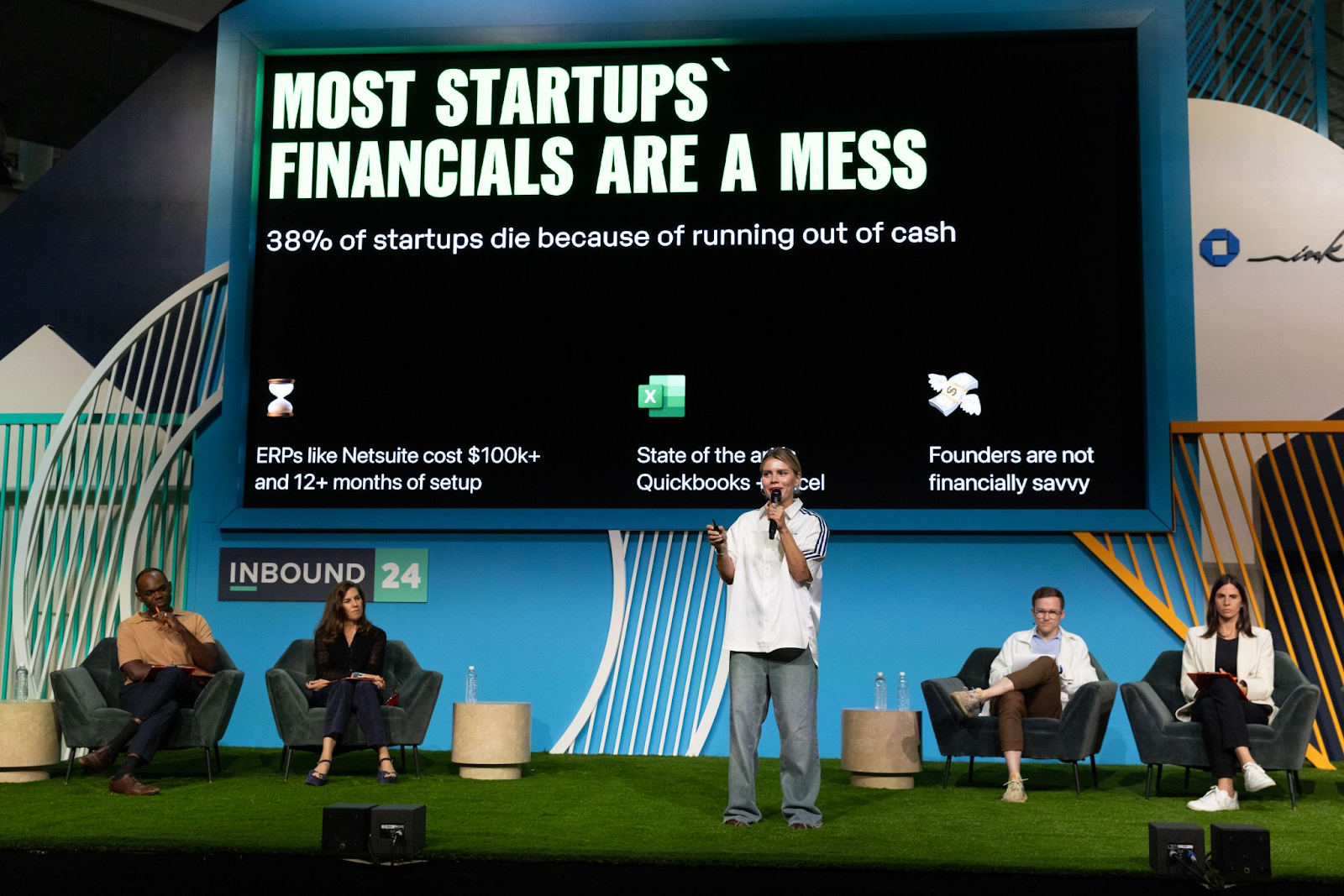
Before Fuel, I spent over 10 years in finance – ex-PwC, former CFO, and someone who has built hundreds of financial models long before I ever planned to become a founder. Along the way, I became a speaker at INBOUND 2025 by HubSpot, was featured on the Masters of Scale podcast, and (unexpectedly) built a LinkedIn thought leadership engine that turned into our #3 pipeline generation channel.
Fuel plugs into the tools companies already use (accounting, banks, CRM, subscriptions, HR, ad platforms) and turns all that chaos into one clean financial system: automated reporting, real financial models, budgets, and dashboards that answer “Are we okay?” in seconds, not weeks.
Recently we launched Fuel AI CFO – an AI layer built right into our FP&A platform that’s trained on your actual data. You can ask it to run “what if” scenarios, build dashboards, analyze marketing efficiency, or stress-test runway in seconds. The part I’m proud of most: every answer comes with a data quality score, so you always know if the insight is rock-solid or directional.
Today Fuel manages over $500M in customer P&Ls across hundreds of businesses. We’re especially strong in agencies, service companies, and SaaS – the segments where our solution truly is the best on the market. We’re close to $3M in ARR, still growing fast, and my personal mission is simple: no ambitious founder should lose sleep because they don’t trust their numbers.
What's your backstory and how did you come up with the idea?
The thing is, I never planned to become a founder.
Most of my career, I was the “finance person” – auditor, analyst, then CFO. I genuinely loved it and fully expected to stay behind the scenes forever. When I was a CFO at a construction company, I started getting lots of proposals to do fractional CFO work for companies and brands – build financial models, fix reporting, consult. That was the moment when I thought, “Maybe I should do my own thing.” So it began as a service business. We had a small team running finance for some really great brands.
In 2019, I built our first Google Sheets MVP – basically, how we believed finance should be managed. And right around that time, a mutual friend introduced me to Yaroslav, then the CEO of Petcube (YC’19). He was looking for a way to finally get their finances under control. I showed him what I had – a Frankenstein-style Google Sheets system that definitely wasn’t pretty, but made perfect financial sense. We plugged it into Petcube, rebuilt their reporting and planning, and five months later they hit profitability. That was their main goal.
For me, that was the moment: “Oh… this is bigger than I think.”
At that point, I didn’t even know the word “MVP.” I just thought of it as “the way finance should work.” Yaroslav was shocked at how well it worked; I was shocked that nothing like it existed yet.
Around that time, Yaroslav and I started talking more seriously. He had a completely different background (product, US go-to-market, fundraising, scaling) and had gone through YC and the whole venture world. I had deep finance and FP&A experience, but zero product or US market experience. For a year, he was technically just an advisor. We even wrote a tiny “agreement” in a Google Doc outlining our expectations if we worked together. Of course, reality turned out nothing like that document.
It quickly became obvious that this wasn’t a typical advisor relationship. His experience filled all the gaps I had, especially around building product and raising capital. My experience filled the gaps on his side around how finance really works inside companies. It was a very natural co-founder match – not something I went out “hunting” for.
A year later, he went from being an advisor to being my co-founder.
That’s how Fuelfinance started.
Take us through the process of building and launching the first version of your product.
The first version of Fuel would make any proper product manager cry.
There was no onboarding, no polished UI, no dashboards. It was a system built entirely on Google Sheets – held together by formulas, duct tape, and too much coffee. But it worked, and founders finally felt like they could breathe when they looked at their numbers.
When I met teams like Petcube, they didn’t need “AI” or “insights.” They needed a P&L they could actually read, a cash flow they could trust, and a planning model that didn’t break the moment someone added a column. So that became the foundation of our MVP: a standardized financial structure that worked across business models, and one solid model at a time.
Our “launch strategy” was very simple: do exceptional work for the first two or three customers, then ask them who else was secretly terrified of their finances. They introduced us. Those founders introduced more founders. There was no marketing at first – just word of mouth.
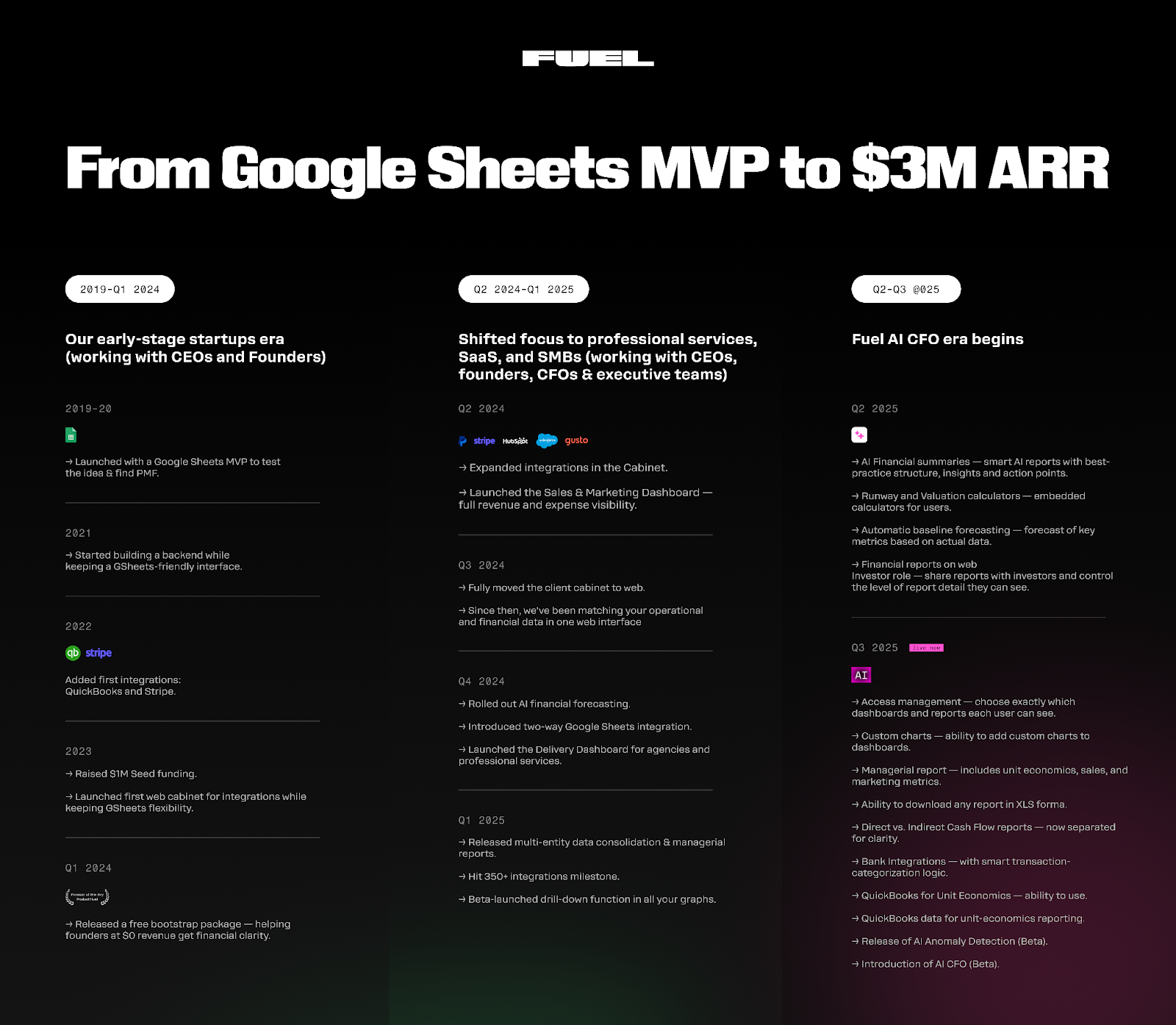
Over time, patterns emerged. That system slowly evolved from Sheets → Sheets + Python → our own FP&A web platform with 300+ integrations, automated reporting, dashboards, and now AI.
There was never a single “launch day.” It was a thousand small steps (shipped weekly) that turned a messy spreadsheet into a real product.
Since launch, what has worked to attract and retain customers?
Honestly, everything we’ve done has been one big cycle of experimenting, failing, learning, and trying again.
There was a year when we spent over $300,000 on sales and marketing. We ran something like 18 GTM channels at the same time – ads, influencers, SEO, conferences, newsletters, cold outreach, everything. On the outside, it looked like we were doing all the “right startup things.” Inside the dashboards, it looked like we were just burning money and energy.
At some point I remember thinking, “Okay… maybe we’re just bad at this.”
So we scrapped the chaos and built a very simple system. Every single initiative became an experiment: who owns it, how much it costs, how long until we see a signal, and how we measure if it actually moves leads or revenue. Over the next twelve months we ran more than 300 of these. Every week we’d sit down and decide what to kill, what to tweak, and what to double down on.
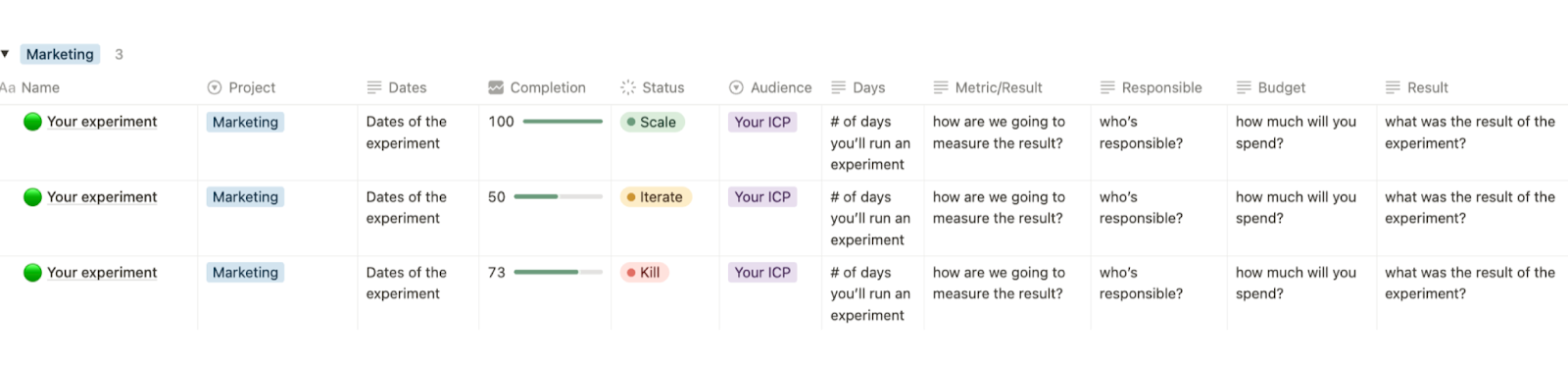
Over time, we found 3 channels that actually worked.
The first big engine was search. SEO and now LLM search. When a founder Googles “AI forecasting” or asks ChatGPT “how much should I spend on marketing?” – and lands on our content – that’s a very warm path. We publish six or seven really deep pieces a month, and it compounds quietly in the background.
The second engine surprised me: my LinkedIn & founder-led-growth. For months, it felt like shouting into the void. Then one day it just started compounding. Over the last year those posts brought in more than 5M impressions and over $100K in MRR pipeline. Founder-led leads convert faster, they already trust you, and they stay longer. We even had someone read a post, scroll through a few threads, book a demo, and sign the same day. Eight hours from discovery to customer.
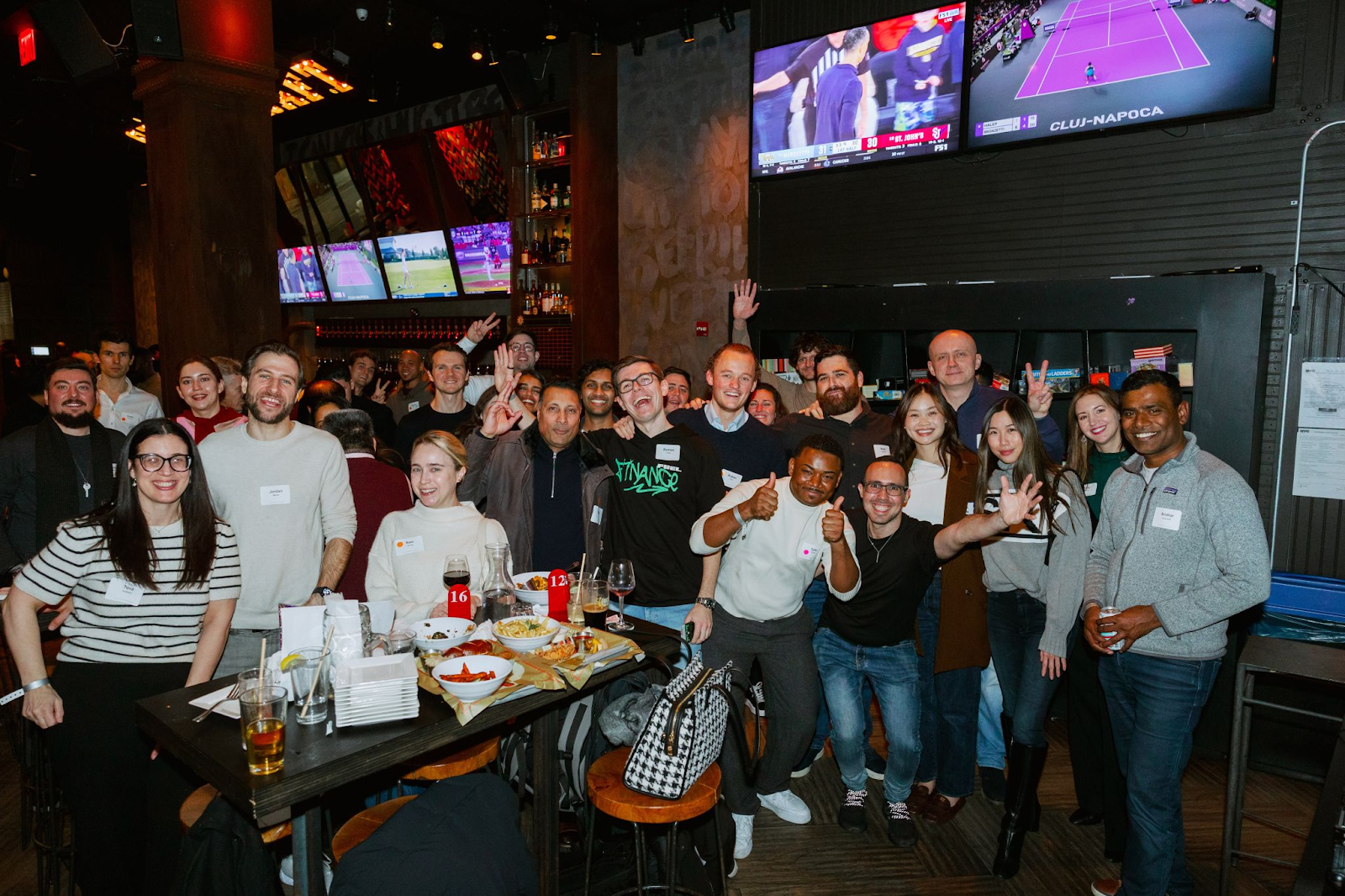
The third engine is partnerships and community. At the end of the day, happy customers are the best growth channel. Founders we worked with started recommending us organically, and those warm intros turned into one of our most reliable sources of new business. Over time, we formalized it with a Head of Partnerships and a proper program so we could scale what was already working.
Retention-wise, the most important decision we made was changing our ICP. In the early days, we worked with a lot of tiny startups. They didn’t churn because we failed – they churned because the company didn’t survive. When we shifted to SMBs and agencies doing a few million a year, and SaaS companies around Series A+, everything stabilized. Better retention, higher LTV, and honestly, a much less stressful sales process.
The biggest lesson for me: the tactics that get you from zero to one million are not the same tactics that get you to five. In the early days you say “yes” to everything. Later, that destroys you. So now we run a simple rule: 70% of budget goes to what we know works, 20% to controlled experiments, and 10% to bold bets. It keeps us focused and keeps the chaos manageable.
How are you doing today and what does the future look like?
We’re doing… busy. Very busy. 😅
But in a good way – the last few months have been all about reshaping our strategy and building what I think is the next chapter of Fuel.
The thing I’m most excited about is something we launched in November: Fuel AI CFO.
Fuel AI CFO sits directly inside our FP&A platform as a chat trained on your actual financial data. You can ask it to run any “what if” scenario in seconds — what happens to runway if a customer pays 60 days late, if you hire 10 sales reps, or if you cut marketing by 30%. You can ask it to build a new dashboard or report and save it right into your finance system. No more waiting days for someone to wire up a new view.
Under the hood, it’s not just one “AI.” It’s a collection of specialized agents (a financial analyst, a financial planner, a dashboard/graph builder, even a lightweight decision-making assistant) all working together to give you accurate, structured answers instead of guesswork.
My favorite part is tiny but important: every answer comes with a data quality banner. It tells you whether the insight is fully reliable (based on reconciled, complete data) or whether it’s directional and needs more input. I never wanted a confident AI sitting on top of bad data. I want honest AI. AI that knows when it knows… and when it doesn’t.
In the short term, we’re focused on deepening the product for the customers we serve best, making the AI layer more powerful, and tightening our own economics. Long term, my dream is pretty straightforward: when a founder thinks, “I need to finally get my financial life together,” Fuel should be the first name that comes to mind.
I genuinely believe that if more founders understood their numbers (really understood them) they could build profitable, financially healthy companies at scale. And if millions of founders did that, it would unlock trillions of dollars in global GDP growth.
That’s not a slogan. It's the compounding effect of better decisions made every single day. We believe we can make that real by empowering founders and their teams with a solution that has the brain of a thousand CFOs.
(here comes an AI CFO Product video)
Did you ever have an “oh shit” moment where you thought it wouldn’t work?
Our biggest “oh shit” moment had nothing to do with churn or bad metrics. It was the full-scale invasion of Ukraine.
In early 2022, we were preparing what we thought would be a new era for Fuel – moving from a service-heavy business to a proper product company. We had a launch plan, a Product Hunt date, a fundraising strategy. The day we were supposed to start that chapter was February 24, 2022.
That morning, Russia invaded.
Within hours, everything we’d been planning became irrelevant. Our team was scattered across the country – some in shelters, some evacuating, some trying to help others while working. Half our customers were Ukrainian, so our revenue dropped almost overnight. I went from planning a product launch to coordinating evacuations and checking who had electricity, who needed help, who was safe.
For the first two weeks, I genuinely thought this might be the end of Fuel. Not because the idea was wrong, but because you can’t out-work missiles. It was the first time in my life when “just work harder” wasn’t an option.
But slowly, we rebuilt. Team members who moved to safer regions took on more. Our international customers gave us patience and pushed us deeper into the US market. In three months, we restored our revenue entirely on the US side.
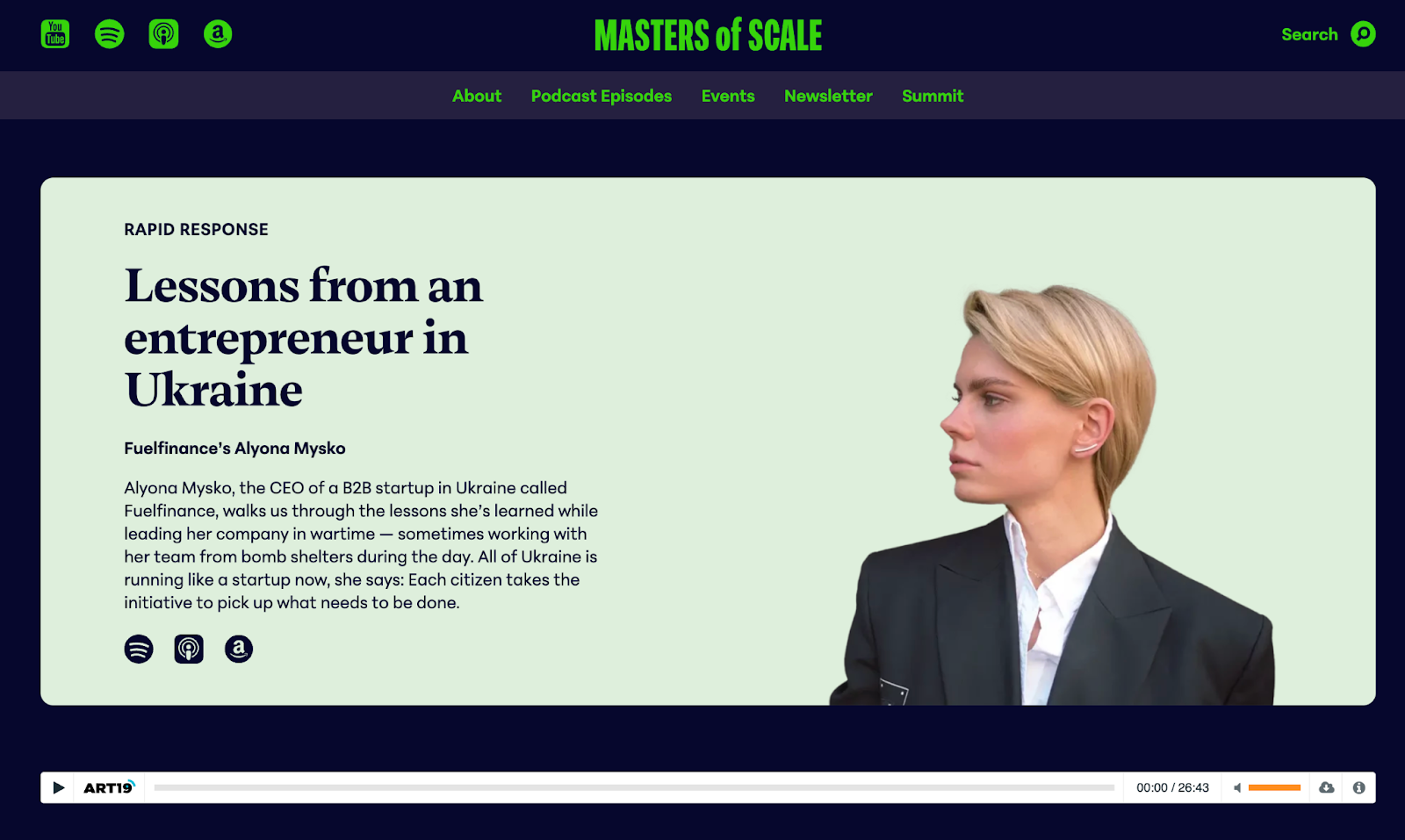
Ironically (and painfully) that moment also put us on the map globally. I told our story on Masters of Scale, we were featured in Business Insider, and suddenly Fuel had visibility we never expected.
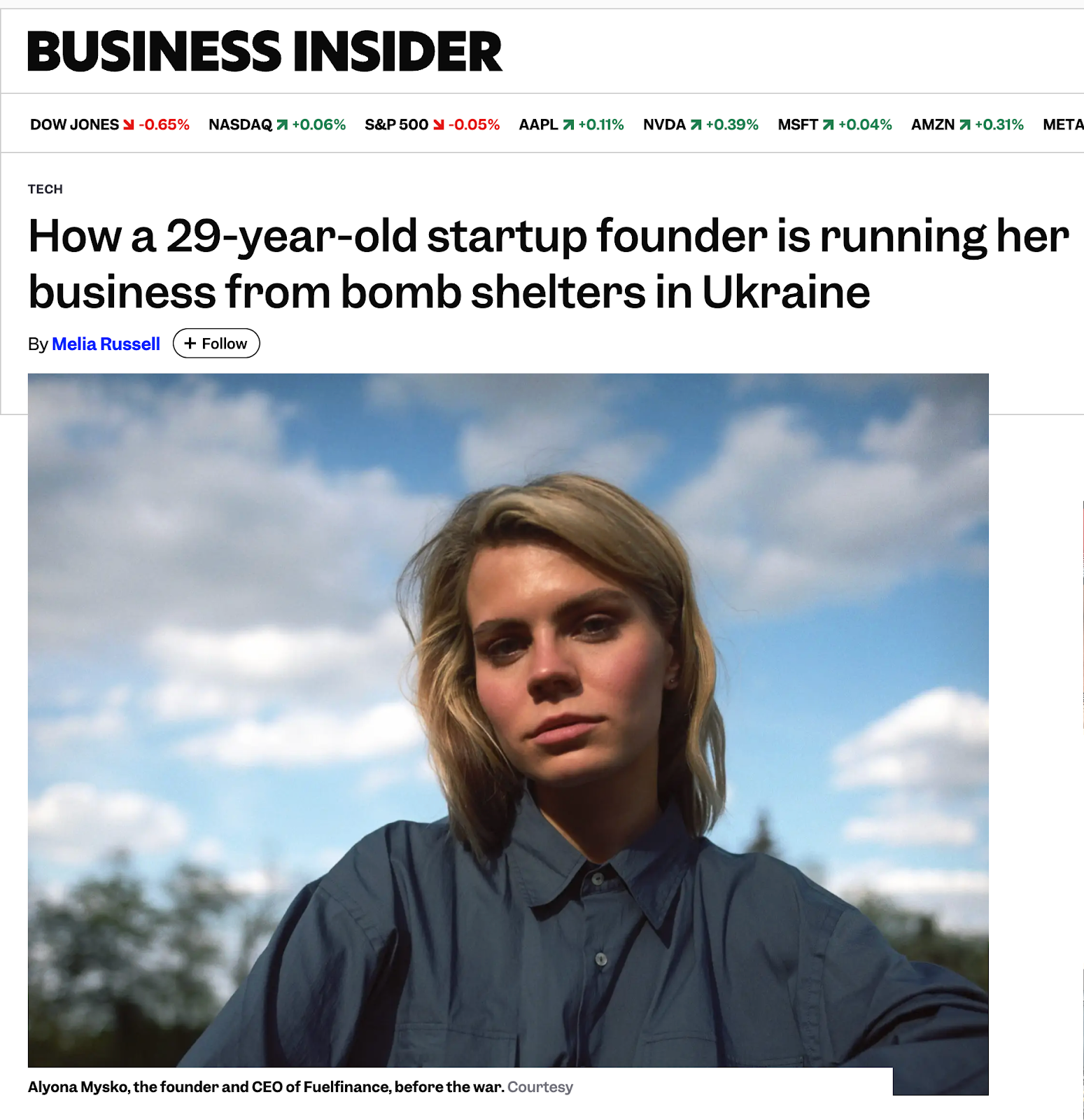
That period completely reset my definition of “hard.” After you’ve had team calls from bomb shelters, a bad quarter feels very fixable – and you understand just how resilient people can be when they care about the mission.
Where do you see untapped opportunity in the market? What business do you wish someone else would build that would make your job easier?
If I’m honest about where the biggest opportunity is, it’s not in something flashy. It’s in something incredibly boring: cleaning and matching data so it’s actually usable for AI and real-time decisions.
Even inside very sophisticated companies, data is a mess. Accounting lives in QuickBooks or NetSuite. Revenue is in Stripe. Sales is in HubSpot or Salesforce. Marketing is scattered across every ad platform. HR is somewhere else entirely. Everyone wants “real-time dashboards” and “AI that predicts everything,” but the truth is… the underlying data usually doesn’t even agree with itself.
Someone has to do the unsexy work – fixing naming conventions, mapping fields, resolving conflicts, reconciling numbers when two systems say two different things. Right now that “someone” is usually an exhausted FP&A person… or a founder at 11pm with a spreadsheet.
We do a lot of that work inside Fuel because we have to. You can’t build reliable forecasts on top of unreliable data. But I genuinely think there’s room for a whole company focused purely on this: sitting on top of tools like QuickBooks, NetSuite, HubSpot, Salesforce, Stripe – automatically detecting mismatches and either fixing them or walking teams through the fixes in a structured way.
It’s not as glamorous as “AI that runs your company,” but whoever solves data accuracy at scale will quietly power half of the next generation of B2B software – and make the whole process cheap and fast.
What platform/tools do you use for your business?
We use a lot of tools, but only a few really matter.
For content and brand, everything starts in Notion. That’s where I write LinkedIn posts, case studies, experiment logs – basically my entire brain lives there. Taplio helps us track performance and Loom is my favorite way to record quick walkthroughs when I need to explain something fast. All our visuals – guides, cheat sheets, dashboards – are done in Figma and FigJam.
On the inbound side, HubSpot is our CRM and email engine. We pair it with Google Analytics and, of course, Fuel’s own Sales & Marketing Dashboard so we can see everything (leads, conversion rates, ROI by channel, payback periods) in one place. Semrush tells us which SEO topics are worth investing in; we publish six or seven SEO pieces a month.
And then there’s the finance stack. Stripe for billing. QuickBooks for accounting. But the center of gravity is, obviously, Fuelfinance itself. We pull data from all these systems (accounting, banks, CRM, HR, marketing) and turn it into one clean financial source of truth with automated reporting, AI forecasting, anomaly detection, and budgeting.
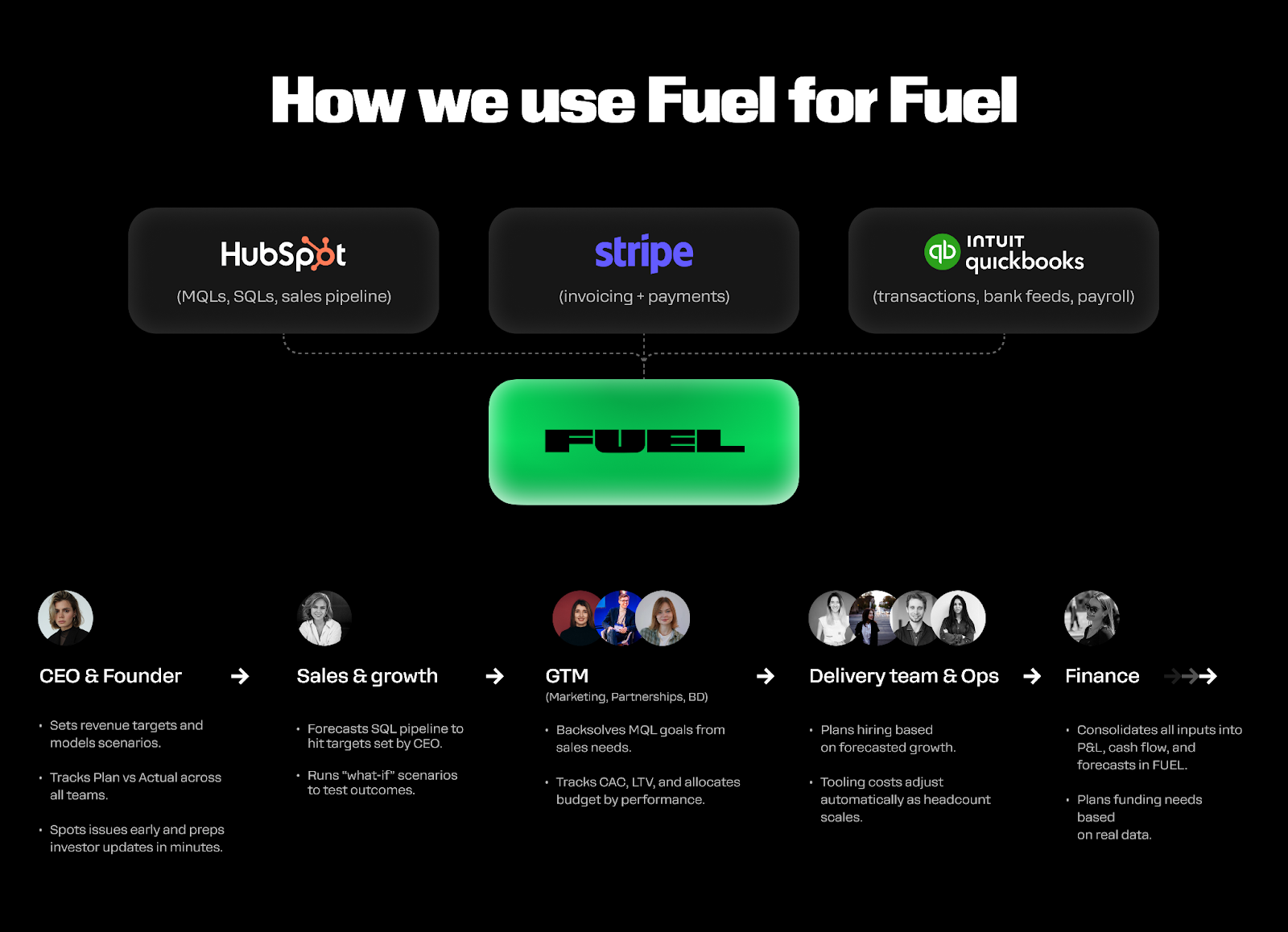
Practically, Fuel saves me 8–10 hours a week of manual “founder finance.” But more importantly, it gives me and the whole team one place where we actually trust the numbers.
What have been the most influential books, podcasts, or other resources?
My reading life splits into two categories: books that help me run the company, and books that help me stay sane while running the company.
On the practical side, High Output Management by Andrew Grove is the one I recommend to almost every founder and manager. There’s zero fluff. It’s basically a manual for how to run teams, meetings, and processes in a way that actually scales. My co-founder pushed me to read it early, and I’ve gone back to it multiple times.
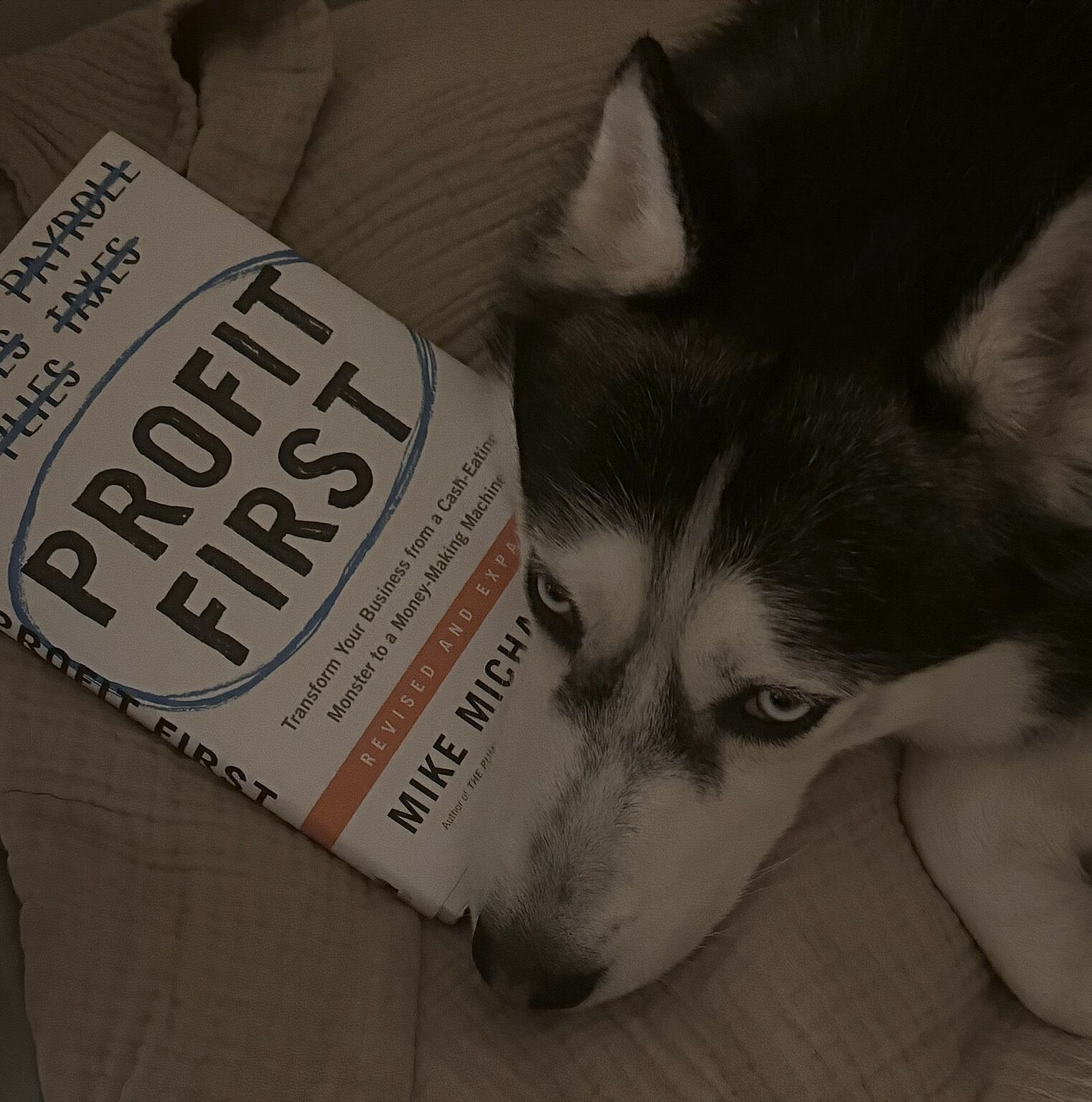
Profit First by Mike Michalowicz is another must-read for small and medium-sized businesses. It teaches you a simple but powerful idea: design your cash flow so profit happens by default, not as a “maybe” at the end of the year.
And The Hard Thing About Hard Things by Ben Horowitz… it hit very differently for me after 2022. It’s one of the few books that talks honestly about fear, layoffs, and what it feels like to lead when nothing is going “up and to the right.”
Then there are the books that keep me grounded. Siddhartha by Hermann Hesse is one I revisit when life feels too fast. It slows you down and makes you question what you’re actually chasing. And Storyworthy by Matthew Dicks genuinely changed the way I think about storytelling. As a founder you’re constantly telling stories – to investors, customers, your team, even to yourself. Learning how to spot and share small, true stories is an underrated superpower.
For podcasts, Masters of Scale has been meaningful for obvious reasons. Being on the show during the war was surreal, but even as a listener, hearing other founders share their messy, non-linear paths is grounding. It reminds you that almost nobody builds anything in a straight line.
I also learn a lot from MoneyWise, The Diary of a CEO, 20VC, The Social Radars, and more technical voices like Andrej Karpathy and Isaac Arthur.
Advice for other entrepreneurs who want to get started or are just starting out?
My first piece of advice is simple: sell first, then build. If you need the perfect brand, the perfect product, and a dramatic “launch” before you can ask someone to pay, the idea probably isn’t as strong as you think. But if you can sell a messy spreadsheet, a Notion doc, or a manual service (and people come back for more) that’s real validation. Don’t overthink it.
Second: be intentional with your ICP from day one. Your first customers are a preview of the kinds of customers you’ll attract later. If your early clients are unstable or tiny businesses that disappear after one bad month, they’ll churn for reasons outside your control and they’ll refer you to more companies just like them. But if you focus on resilient, serious customers, they’ll do the same. It sounds obvious, but in the early days it’s so tempting to say yes to everyone.
Third: know your numbers. You don’t need a full finance team or a perfect model. But you do need a basic understanding of where the money comes from, where it goes, how much runway you have, and what actually drives your business. Most founders avoid this part because it feels intimidating – but if you don’t know your numbers, you’re driving blind. Even simple tracking will save you from terrible decisions and unnecessary anxiety.
Fourth: it will be really, really hard – and that’s normal. There will be days when you question everything, when you feel behind, when you envy everyone’s “massive wins” on LinkedIn. It doesn’t mean you’re doing it wrong. Take breaks. Talk to other founders who can be honest with you. Don’t build your self-worth only around revenue.
Can you share a specific example of how being part of the Hampton community has helped you achieve a goal or tackle a challenge?
My relationship with Hampton actually started before I ever joined as a member.
Sam and Joe became Fuel customers early on, back when Hampton itself was just starting. It created this funny mirror effect: I was watching them build a community for founders, while they were watching me build a finance company for founders.
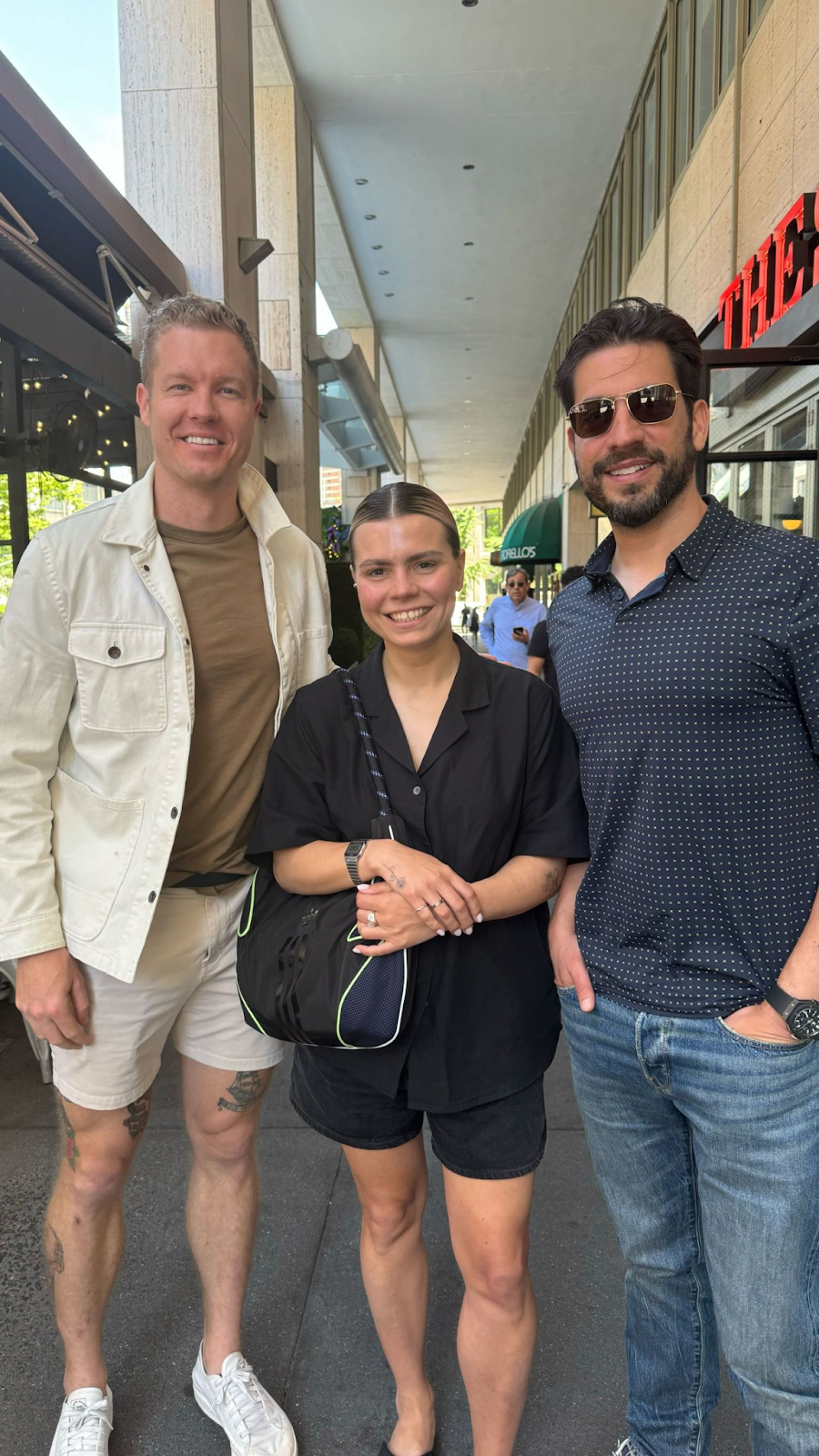
As time went on, more Hampton members became Fuel customers. Some of our warmest, most valuable introductions came directly from inside the community. A founder would work with us, get clarity on their numbers, and then start telling their friends, “You need to talk to Fuel.” At a certain point, I realized a meaningful chunk of our US growth was coming from Hampton – directly or indirectly.
When I finally joined officially, it shifted from “a group many of our customers are in” to “my actual peer group.”
During fundraising, some of the most powerful intros came from Hampton members who weren’t just acquaintances, but actual customers. It’s one thing when someone says, “This founder is smart.” It’s a completely different thing when they say, “We’ve used their product for a year – here’s how it changed our business.” That level of trust is hard to manufacture from the outside.
We’ve also leaned on Hampton for real, tactical things – like our website and positioning. At one point I shared a new version of our site and got extremely direct feedback: what felt confusing, what wasn’t differentiated, what wasn’t compelling. Some of it stung a little, but they were right. We went back, changed the messaging, and saw better conversion.
And I have to mention the Hampton retreat. It was one of the most memorable experiences of my life so far. There’s something rare about being in a room where you can be vulnerable and also fully understood – where people don’t just nod, but get it. It felt like those days when you can finally take a full breath after holding it without realizing. I suddenly saw, very clearly, that I wasn’t alone on this founder journey. That feeling is priceless.
Where can we go to learn more?
You can learn more about what we do at Fuelfinance on our website: fuelfinance.me
I write regularly on LinkedIn about finance, founder anxiety around money, and what we’re learning as we grow Fuel. You can find me here: linkedin.com/in/alyona-mysko
If you’re a founder who quietly feels stressed about your numbers and wants to talk, my DMs are always open.